Information – Positive Thinking

A formula for stress-free driving
A formula for stress-free driving
By Carole Spiers, Special to Gulf News Published: January 29, 2008, 00:22
For Dubai’s motorists, the New Year has not begun well. First, the unexpected visit from President Bush, bringing instant gridlock to a city still not mentally accepting of urban traffic crawl.
Then the equally unaccustomed sight of Shaikh Zayed and Emirates Roads partially flooded during exceptionally heavy rainfall. And then the UAE road-accident figures for 2007, one of the worst in the world – 829 deaths and more than 10,000 injuries – a most unwelcome symptom of increasing traffic jams and driver frustration, in this fast-expanding emirate.
To you, all of this may look like something new and unnatural on your horizon. To me, as a UK-based stress consultant, it is something depressingly familiar and inevitable. So perhaps this is the moment for me to offer you my little rule-of-thumb guide to stress management on the road. It takes the form of a simple acronym – S.A.F.E.
S is for SURE. Be sure of your vehicle, sure of your itinerary, and sure of your own fitness to drive. Stress builds up especially when you’re driving an unfamiliar vehicle, either new or borrowed. So take trouble to check all the features, especially those that you need in an emergency. And when someone else is having to familiarise themselves with new controls, don’t raise the tension by standing over them, expressing impatience.
A is for ACCEPTING. This is an underlying philosophy which takes the heat out of many potentially stressful situations at the wheel. It is to accept that you are not master of the road, and that your journey will always be influenced by conditions you can’t change. You can’t stop it raining. You can’t stop your children grumbling. You can’t speed up that traffic jam as you approach the bridge to cross the creek. So – don’t get excited or agitated – it will not get you there any faster.
F is for FOCUSED. A driver’s first duty is to concentrate on the road. Even under perfect conditions, mistakes can be made. So when the car is full of distractions like music, quiz-games or long-running arguments with the children, driving errors can happen. Equally, the sheer familiarity of the same daily route may cause loss of concentration. To stay focused, try to make a habit of ignoring distractions, and make sure you’re properly nourished and exercised and take breaks on long journeys.
E is for EGO-FREE. Your car reflects your ego, and this lies behind many reckless actions on the road – trying to live up to that macho image, and wanting to hit back at any insults to your dignity or driving skills. Ego can be a major stressor, and you will do better to practise remaining calm and not rising to challenges that can spiral into fatal accidents.
Four little letters that may keep you safe by helping to set up the right kind of atmosphere in your car, as you learn to combat the growing pressures of driving in Dubai.
Good luck!
Key points: Safe drive
Dubai’s traffic congestion and high accident rate is predictable.
Constant pressure on the road leads to harmful stress for drivers.
Be Sure, Accepting, Focused and Ego-free.
– The writer is a BBC broadcaster and motivational speaker, with 20 years’ experience as CEO of Carole Spiers Group, an international stress consultancy based in London.
Plan for your child’s future
Plan for your child’s future
27 Jan, 2008, 0050 hrs IST,SRIKALA BHASHYAM, TNN
When it comes to children, parents turn generous. In most cases, asset allocation is not an issue as every parent makes it a point to set aside a corpus for the child’s future.
A few years ago, the parents of girl children made a conscious effort to get into the saving mood as the corpus for the marriage was considered a long-term goal. Today, planning for the child’s future has taken a different meaning as parents are increasingly setting aside money for their child’s education.
With the cost of education expenses galloping at a faster pace, it has become a necessity for parents to think of a savings plan for their children at the earliest.
Earlier the better. This is one dictum which holds well whether you think of retirement planning or investing for children. Needless to add, the more period you have on hand, bigger can the corpus get. Ideally, think of saving for the child immediately after birth simply because you will be faced with huge expenses at regular intervals.
Experience has shown that those who get into the saving mood at a child’s birth end up as more disciplined parents. Also, it helps them to start with a small sum.
Those looking at funding a children’s education through investments need to look at the cost in a staggered way.
The education cost for a parent can be divided into 3-4 phases. It first comes when the child is around 3-4 years old and is ready for schooling. Investment for this is possible only when a parent starts saving even before the child completes one year.
The next big bill arrives when the child is 18 and is ready for an entry into professional education. After a gap of three years, parents in most cases, have to prepare for an investment which depends on various other factors such as choice of educational course, location etc.
While setting aside a portion of earnings on a monthly basis is one of the options, it is definitely not an efficient method as savings bank offers a paltry interest of 3.5 per cent, and is well below the rate of inflation. Hence, one needs to look at different products.
The most popular option for children’s education has been insurance but it need not be the only option. The advantage with insurance is that it offers protection to the child even in the event of the death of the parent.
Since insurance companies allow investment options through their unit-linked plans, it offers the added advantage of cover and investment. In fact, it may not be a bad idea for every parent to look at the option of a child insurance plan at an early age.
While insurance can be a long-term option, mutual funds too offer the advantage of long-term capital appreciation for parents. One of the best options would be the systematic investment plan (SIP) in equity funds as they allow investment growth over the long term. The choice of fund could be a combination of aggressive and diversified funds with a time horizon of 10-15 years.
Mutual funds also offer dedicated children’s products which also carry a lower entry load. The fact that the parent cannot withdraw these plans before the child’s age of 18, allows them to build a corpus over the long term.
Let’s play the game, not politics
Let’s play the game, not politics
20 Jan 2008, 0414 hrs IST,Shashi Tharoor
It is dangerous to act as if the undoubted financial weight of India in world cricket entitles us to our own set of rules. Despite the witty private comment to me of a senior BCCI official – “why shouldn’t we now behave in the ICC as the US has always behaved in the WTO?” – we should not destroy world cricket over a misplaced sense of national pride. Racism is as abhorrent when a bunch of under-educated young Indians in our stadiums make monkey-like gestures as Symonds comes out to bat, as it was when Mike Procter walked routinely into a dressing-room from which coloured players were barred.
With the Perth Test underway as I write, the news that the Harbhajan case is on hold till the end of the month, when his (and India’s) appeal against his three-Test ban for alleged racial abuse will be heard, offers a brief respite in which to consider some of the broader issues that have emerged from the recent cricket fracas in Australia.
The cricketing aspects of the controversy are clear enough. India suffered from umpiring that was incompetent and quite conceivably biased, and it was right to make it clear that Steve Bucknor no longer enjoyed the confidence of the touring team. What appears to have been overlooked, though, is the question of why the BCCI did not object to Mr Bucknor’s standing well before the series even began. This is hardly the first time the egregious gentleman has erred against Indian players, denied reasonable appeals, and refused to take recourse to available technology which in multiple cases would have vindicated the Indian side. Indeed I can hardly recall a Test match involving India in which Mr Bucknor has stood in the last decade which was not replete with such incidents: Tendulkar has been a repeated victim. Could the BCCI not, with all appropriate discretion, have privately indicated that Mr Bucknor was not welcome to stand in matches involving India, well before he was appointed (yet again) for a series? Did we have to wait for him to cost us a Test match before we finally declared that enough was enough?
Again, was there nothing that could have been done about the Harbhajan crisis before the dung hit the fan? Australia is the world capital of sledging in sports; the very tactic was invented by them. Australian cricketers pride themselves on their mental toughness and believe other teams are deficient in this attribute; they therefore resort to unpleasant comments, usually involving references to the opposing players’ mothers, sisters or wives, in an effort to disturb the opponents’ concentration and distract them into making errors. The approach involves crude psychology, and while it is rarely witty (“how’s your wife and my kids?” is how an Australian slip fielder once greeted a homesick English batsman arriving at the crease), it is often effective: angry players make rash mistakes. Does the BCCI provide anti-sledging counselling to our players, training them to ignore such provocations and instructing them not to offer any of their own? Was any special attention paid to the hotter-headed amongst our team members, a category into which Harbhajan clearly falls? Would a cooler head have tapped Brett Lee on the posterior with a bat, thereby prompting Andrew Symonds to unleash the diatribe that in turn allegedly provoked Harbhajan’s punishable response? Cooler heads are not just born, they can be made; but there is little evidence that our team management thought that counselling on such on-field matters was likely to be as important as net practice.
Once the complaint was lodged, how hard did we work to get it withdrawn before it came to a hearing? It is not clear that we did; instead of Kumble speaking to the insolent Ponting when the latter said it was already too late, could a higher-level approach to Cricket Australia, pointing to the likely consequences for the tour if this matter got out of hand, have prevented matters coming to a head? The nationwide outrage at the three-Test ban that followed caught our administrators by surprise. But was it wise to imply that the very charge was unacceptable? (Indians are hardly incapable of racism, despite the country’s long and honourable record of opposition to South African apartheid, a system within which Mike Procter played and flourished before discovering its evils in Sydney.)
Once we have lodged an appeal, though, we have every obligation, as a responsible and law-abiding country, to honour its findings. To imply that we would reject any guilty verdict as a slight to our national honour is to undermine the very process in which we have engaged. Once again, the best thing would be to see if the complaint can be withdrawn and the proceedings quashed. But if that is now legally impossible, we have no choice but to present our best arguments to the appeals judge — a professional who, unlike Procter, actually understands the rules of evidence and the meaning of the phrase “beyond a reasonable doubt” — and then to accept his verdict in good grace, whatever it is.
If the judge finds that Harbhajan did say what the Australians accuse him of saying, and that the intent was to disparage Symonds’ racial origins, then we must accept the punishment he imposes, without further cavil. It is dangerous to act as if the undoubted financial weight of India in world cricket entitles us to our own set of rules.
Despite the witty private comment to me of a senior BCCI official — “why shouldn’t we now behave in the ICC as the US has always behaved in the WTO?” — we should not destroy world cricket over a misplaced sense of national pride. Racism is as abhorrent when a bunch of under-educated young Indians in our stadiums make monkey-like gestures as Symonds comes out to bat, as it was when Mike Procter walked routinely into a dressing-room from which coloured players were barred.
Yet one area in which India should definitely use its financial clout is in denying the benefits of Indian corporate sponsorship to players who have violated the spirit of the game. After the appalling behaviour of young Michael Clarke in Sydney, I wouldn’t trust him to tell me the time of day, let alone buy a product he endorses. It seems to me entirely reasonable that Indian companies should rethink the value of associating with such behaviour. If Australian cricketers want to win at all costs, let them realize that there will be costs — to them. But let us always, whatever the provocation, play the game.
Can’t focus on work? Hire a mind trainer
Can’t focus on work? Hire a mind trainer
20 Jan 2008, 0329 hrs IST,Amrita Singh,TNN
January is usually the time for resolutions. But if you find yourself breaking them as you slip into February, don’t lose heart. Try hiring a mind trainer. That’s someone who would help you understand your emotions and show why you haven’t been able to keep your promises. Mind trainers work on making your brain more fit so you are better equipped to excel in life and face various situations with a collected mind.
However, it’s not as easy as it sounds. Training the mind involves an understanding of how your mind works, visualisation techniques and exercises for the brain — popularly called brain gym.
There are people who swear by its effectiveness. Indian cricket coach Gary Kirsten has requested the BCCI for a mental conditioning coach for the team and even recommended his own mind coach Paddy Upton for the job. Kirsten apparently believes Upton was instrumental in shaping his career by making him understand and deal with his emotions while batting.
But it’s not just Team India who is getting a mental coach. As urban Indians are feeling the stress of a more competitive life, even young professionals, students and sportspersons are hiring a mind trainer to help them excel.
In the last two years, several mind training institutes like Brainobrain, Mindtrainers and Mind Gym have come up in the country. At the Delhi Police Public School’s brain gym center, students are encouraged to try out exercises that help them keep their mind strong and agile. Chennai-based SIP Academy, that uses brain exercises to make children learn faster, has grown at more than 60% annually and has over 300 branches in India now. Even individual mind trainers have never had it better. N Renuka, a mind trainer based in Hyderabad, has interacted with over 150 clients in the last two years.
The current interest in mind training focusses on enhancing performance. “Broadly, all the mind trainers, irrespective of the technique they use, work on making the brain cognitively fit,” says Pawan Choudhary, mind coach and author of the book When you are sinking, become a submarine. Among the most popular options for mind training is the brain gym. Sareylom Poole, one of the two instructors approved for India by the US-based Braingym International Foundation, says, “Brain exercises could help just about anyone, whether you are wanting to lose weight or learn faster or improve sales.”
“Brain gym exercises increase the flow of energy between the right and left brain, which in turn increases alertness, concentration, focus and other brain functions,” says Dinesh Victor, a master trainer who also happens to be cricketer Sreesanth’s coach.
To start with, a private session with a gym instructor is recommended, which typically lasts one-two hours and focusses on a specific goal like increasing creativity, imagination, focus etc. At the end of the session, says Sareylom, one typically experiences what is termed as a ‘balance’, which means that the process of learning is complete.
Though the concept of a mind coach has been there for centuries (in the Mahabharata, for instance, Krishna turned into a mind coach for Arjun, while Napoleon is said to have employed the services of Indian hypnotist Abbe Faria, who even accompanied him to several battlefields, including the wars against Italy and England), mind training in the country is at a very nascent stage. Which is why, before you settle on a mind coach for yourself, ask for past experience and proof and only then, enroll for a mind training session.
amrita.singh@timesgroup.com
‘Fight with spouse & live longer’
‘Fight with spouse & live longer’
24 Jan 2008, 0038 hrs IST,REUTERS
NEW YORK: Fighting with your spouse can actually be good for your health with people who bottle it all up found to die earlier, a new study shows.
Researchers at the University of Michigan School of Public Health and its psychology department released preliminary findings after 17 years of following 192 couples.
The couples fell into four categories: where both partners expressed anger when they felt unfairly attacked, where neither partner expressed their anger, and one category each for where the wife suppressed her feelings and where the husband did so.
“I would say that if you don’t express your feelings to your partner and tell them what the problem is when you’re unfairly attacked, then you’re in trouble,” said Ernest Harburg, lead author of the study, in an interview.
The study found that those who kept their anger in were twice as likely to die earlier than those who don’t.
There were 13 deaths in the group of 26 pairs where both partners suppressed their emotions, as opposed to only 41 deaths in the remaining 166 pairs. “When couples get together, one of their main jobs is reconciliation about conflict,” Harburg said.
“Usually nobody is trained to do this. If they have good parents, they can imitate, that’s fine, but usually the couple is ignorant about the process of resolving conflict.”
Harburg said resentment was the real threat – and suppressing anger led to resentment.
He said it is the resentment that interacts with any medical vulnerabilities, a person might have, increasing their chances of succumbing to that medical problem.
“It’s healthy to recognise that you’re being attacked unfairly and it’s even more healthy to speak up and to talk about it and try to resolve the problem if you want to live longer,” said Harburg.
This study comes within a week of a survey that said that it is the price of divorce that is holding many couples together.
In a survey of married men and women in Britain, the majority of wives – 59% – said they would divorce immediately if their future economic security was assured.
Among both sexes, more than one in ten wished they had married someone else. The survey found than half of husbands thought their marriage was “loveless”. Relationship experts in the United Kingdom have warned couples to avoid getting stuck in a rut – or risk the trauma of divorce.
Company is family
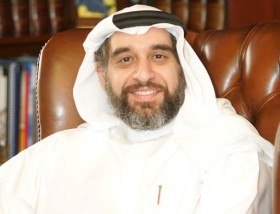
Company is family
By Suchitra Bajpai Chaudhary, Staff Writer GULF NEWS Published: January 10, 2008, 23:32
Change is inevitable, says Mishal Hamed Kanoo, But people should be prepared for and adapt to it. While he rues the loss of old-world charm, this scion of a highly respected business family believes that finding the balance between tradition and modernity is the best way forward.
“It is lovely to have a dream … you must have a dream. Anyone who doesn’t dream is dead.”
Eloquent words from a man who has dreams for himself and his country, and strives hard to make those dreams come true.
Meet Mishal Hamed Kanoo, a bold new face of the bold new UAE.
Enlightened, educated, deeply humane and sensitive to maintaining the balance between the traditional and the modern, Kanoo combines the positive qualities of the new generation of Emiratis who are determined to take the nation forward.
Belonging to a family that has a century-old business tradition in the Gulf, Kanoo, who is deputy chairman of the Kanoo Group in UAE and Oman, exudes grace and wisdom that is far beyond his 38 years.
Although he is euphoric about the great business opportunities the economic boom in Dubai has ushered in, he is upset that the old-world charm of the little fishing hamlet that he grew up in is fast changing.
“In a brief span of time, Dubai has exploded in population ten-fold. From a village, it has grown to a metropolitan city.”
While he admits that change is inevitable, he is unhappy about losing the “close-knit neighbourhood” that he grew up in.
He also feels that the modern steel-and-glass buildings “lack the charm of regional design and architecture.
“Probably the closest we have come to recreating our (style of) architecture is in building Madinat Jumeirah,”
he says.
But that said, Kanoo is not entirely nostalgic. He appreciates some of the benefits the society has derived with change.
“Earlier, the only major road (in Dubai) was the one leading to the airport. Now we have so many flyovers and cloverleaves in the city.
“Culturally too, it was very limited. Now with the amalgamation of so many nationalities, we have such great cultural dialogue that it has made the UAE, particularly Dubai, a very attractive place, culturally.
“In terms of work, it has become a bit more formal now,” he says. “Earlier, (business was conducted in) a more relaxed atmosphere but (then) productivity was low.”
Work culture
When it comes to his work, Kanoo is a humanist, deeply aware of the consequences every decision of his can have on his employees’ life. He holds hardworking employees in high esteem and feels greatly responsible for the safety and security of their future.
“Having a company (like the Kanoo group) is a huge responsibility. I do think about the 700 people working in our company.
“The thought that I am directly or indirectly liable for their livelihood through my decisions is a great responsibility and I do not take that lightly. The decisions I take affect their lives and this is not (a trivial issue).
“If a division does badly, I might have to (let) people go. I am less worried about people who make Dh15,000-Dh20,000 per month in my office, as I believe they will most likely find alternative work.
“The people I am more worried about are those who make just Dh2,000 or Dh3,000.” The challenge in managing a company like this is realising that you can do something that you enjoy while affecting people’s life positively, he says.
“One can use this office as a pulpit to propagate ideas on art and culture and add value to the company and to people’s life. Doing good things does affect life positively,” believes Kanoo. However, he has no respect for those who fail to adapt to change and allow their skills to rust.
“People sometimes don’t take the trouble to upgrade their skills and move ahead in their jobs. People love to complain about (almost everything) because everyone thinks (solving problems) is somebody else’s responsibility. Usually, a company will treat you as an adult, if you treat yourself as an adult,” he says.
Tradition vs. modernity
“I think every age has its share of tradition and modernity. It is the issue of looking at culture and society as a whole.
“In the world of art, we had the old masters in 1400-1600; we also had modern art in the 1960s … now we have contemporary art. These are just labels. I am sure that in Botticelli’s time, traditionalists condemned his art as ‘modern’.
“I take a holistic perspective towards it. A person who is living and adding something new is ‘modern’. If I take something from the past to interpret the present, then I am reviving tradition in a positive manner. That’s the difference.”
Kanoo’s thinking has been shaped by core cultural values of the Arab world. He grew up in Dubai and attended a local school before moving to the US to complete his graduation and post-graduation.
During his time in the West, he assimilated the best of American values and used them to broaden his perspective. Today he talks with a fondness for both – the Western and Arab value systems.
“Within the Arab family life, tradition plays a significant role. For tradition to succeed, one has to teach it to the next generation and allow them to adapt to it. When we talk of tradition, people think of it as something that can never change.”
Sometimes people follow certain practices blindly without questioning the rationale or meaning behind them, he says, and quotes an example of just such a practice which he saw on TV recently.
“A woman blindly follows the family tradition of trimming the end of roast beef before serving it to the family. Why does she do it? Because she had seen her mother doing it.
“She eventually gathers courage to ask her mother why the end of the roast was being trimmed. The mother tells her that she did it because her mother had done it.
“The woman then goes to her grandmother and puts the question to her who eventually solves the mystery. The elderly lady tells her that she used to trim the tail end of the roast simply because it never used to fit into the pan!”
Kanoo feels that tradition should not be eradicated, but neither should it be followed blindly.
People should set traditions that positively impact the society such as establishing a tradition of sending children to school and colleges for education; allowing youngsters to work for their living; telling children to be generous and to give to charity.
He feels there is a certain resistance to change in the present society.
Meritocracy should be the basis of a society, he says. “Evaluate the merit of the person and not his social status,” he says, highlighting an aspect of culture he imbibed from the US.
“In the US … they (rely) meritocracy. It is okay to challenge a parent respectfully,” he says, adding that
a child’s thoughts should be accorded respect.
“In the US, children are taught to challenge what is the accepted norm. Challenge is not an aggression against authority but an effort to learn and create something new.
“It is the same in business. Companies cannot be successful if no one challenges them. If there is no one to challenge me and if I always want to be surrounded by ‘yes-men’, I will soon become irrelevant.
“When we teach our children not to challenge, think or be creative, it affects their contribution to society. More particularly, the children of the rich have to be challenged to be humane and modest. They need to know that they can’t get away with anything because they can buy their way out of any situation.”
Kanoo thinks it is important to encourage the new generation to be innovative and creative in their approach to life. This will benefit organisations and businesses in the long run, he says.
“Art is a great way to teach our children to be creative. This allows them to start the creative process that the mind needs to expand.”
His strong views on education and building a sound work culture have inspired him to teach what he has learned through experience to the younger generation.
“That is why I teach family business at the American University in Sharjah (AUS). My friends often ask me why I am wasting my time (teaching). But I think part of completing the education cycle is to give back what you learned to a newer generation of students.
“If I can’t do that, then I have done nothing with my life. I hope they will challenge my ideas and create something better.”
Kanoo believes that legacies created by the previous generation in the family are to be valued and improvised upon with the passage of time. He has great respect for the principles his father, Hamed Ali Kanoo, believed in and established for the family.
He thinks it is now the prerogative of the present generation and the successive generations to imbibe the lessons of his father, who passed away in 1994.
“My father was never comfortable being a bureaucrat. It bothered him and it bothers me too. There is a saying: ‘The operation was a success but the patient died’. The surgeon may have followed all the procedures but as far as the patient was concerned it was useless … because he did not survive. This is something I learnt from my father.
“If I am put in a position where I need to make a decision and if I behave like a paper pusher and don’t make a meaningful decision, then what is the use of being in that position? Bureaucracy is supposed to set guidelines to help; not to rule.
“I learnt a lot of things from my father and of them were lessons in humility and candour. He was open to new thoughts and ideas, and never discriminated between people based on their class or social standing. Wherever he was invited, he would go – be it the home of a low-paid worker or of a very wealthy person.
“I am open to (ideas) and allow people to correct me. I don’t have a problem in people telling me I am wrong as long as they can explain to me how or why I am wrong.
“To be humble does not mean that you cannot enjoy the luxuries of life. You can, but you should not allow these luxuries to control your life. You can be humble and still drive a Rolls Royce, if you can afford it.”
A tradition of excellence
The foundation of the Kanoo business group rests on two important features – Family and Quality. The business may be based on family traditions but they are moulded to fit into the total quality management approach to business he believes in.
The organisation has received several TQM awards including the Shaikh Khalifa Excellence Award in 2002.
“We take pride in the quality of our work,” says Kanoo. “We ensure a good product, good quality and good service because that is the only way to guarantee return customers.
“Quality starts from the family. People who work for our company are also family. You have some well-organised and well-run organisations out there and then you have some reckless cowboys who tarnish what these quality companies have built up for years. This is the price you pay for progress.
“As a company we want to conserve the legacy created by my father. The customer is the lifeline; he has allowed us to prosper. If we do not fulfil his expectations, then we are not going to have a company.
“Essentially, we must deal with professional managers who will run our company in a professional manner. Even within the family, you must follow this rule and allow the present generation to decide for themselves as responsible adults.”
Kanoo accepts and acknowledges the great changes have taken place in business practices in the UAE and thinks it is important for the new generation – who plan to take over – to be ready to take on the challenges in the future. “We cannot dictate legacies to generations.
“On an average, every 20 years there is a generation shift. Rules change, sensibilities and perceptions change. So how can we apply today the rules that were laid down during the Second World War?
“Today we have outsourcing, globalisation, taxation, WTO, interests, commissions. Things have shifted. How do I reach out and sell some stuff to a farmer in Madurai (in South India)?
“The paradigm shift has already happened. I am not sure if the 20-somethings of today are up to the challenge because the impression I get is that they rely on others to do the work for them.
“That said, I do know of some excellent 20-somethings who are capable of running with the best out there. I am hoping the generation younger to them will challenge (their ideas).
“Those who are willing to put in extra hours and sacrifice certain things to get to their goal will (succeed).
The wheel of fortune
Like life, Kanoo believes success and failure in business depends a lot on destiny. Sometimes the best of things do not work because they were not meant to.
“A love or an arranged marriage has equal chances of success. People perceive an arranged marriage as cold, calculated, focused on social advantages to be derived out of the alliance, etc. Love marriage is perceived as emotional and spontaneous. But no one knows which one has a greater chance to succeed.
“The same can be said about business collaborations. You can calculate on paper how something will succeed and what ingredients would be required for its success, but that doesn’t guarantee that the business will be a success.
“Many factors play a pivotal role in that success and luck is definitely a major factor. Take the instance of Daimler Chrysler.
“On paper, it was a perfect business merger but it failed miserably and had to be sold at one-tenth of its value later. Even the best calculating minds cannot predict success or failure. Sometimes, gut is the way to go.
“I think luck plays a very strong factor in anything we do. We can calculate, assume and plan a lot before we jump into something hoping for the right thing to happen. But will it? That depends on pure luck.
“Luck is an important factor but not the only factor required for success. When you meet a person you (may have some preconceived) notions about him. But if you allow a person to talk to you, he might win you over.
“Even meeting the right person at the right time depends on luck. A person may have been around for a long time, but only at a certain stage will he or she enter your life in a way that changes life forever. For me, that person was my mother – Lulwa Kanoo.
“There was a time when everything looked black; she helped me by shining a light (in my life) when I felt there was no light. I think all of us have peaks and troughs, happiness and sadness in life. The world is not as bleak as it sometimes seems to be but it needs someone to help you see the light,” he says.
Kanoo thinks it is the duty of every one to give back when they receive so much from society and feels charity is a tradition intrinsic to all cultures and religions of the world.
“Our religious convictions tell us that we have to give alms and charity, and I think charity is the springboard of all cultures and religion. We feel it is our religious obligation and religion has been the greatest influence on me.
“Personally, I do philanthropy for art not because it’s a Corporate Social Responsibility but because I love it. Philanthropy should find expression in human needs rather than human aspirations.
“You must do things because of a personal sense of responsibility, not because of a governmental watchdog.”
Kanoo believes passionately in the power of education and feels the biggest act of philanthropy should be done in the field of education, which is the propelling force for lasting progress in any society.
“There has to be an emphasis on education, education and education. What one has learnt, one must learn to give back to society.
“If you want a good life for your children, give and give generously – because it comes back.”
Promises to make in New Year
Promises to make in New Year
5 Jan, 2008, 0000 hrs IST,Rukshana Eisa,ET
Vision: Form a clear idea of where and what you want to be in five years’ time. Draw up a mission plan to achieve your goals and make sure you follow through to get there.
Ambition: Write down a high stretching target for the year and try your best to achieve it. Learn to have faith in your dreams and aim for the impossible as it has often been achieved.
Be positive: Adopt the best mental attitude and concentrate on the potential of positive thinking. As the book The Secret by Rhonda Byrne rightfully says “Every thought of yours is a real thing – a force.”
Accept criticism: Do not allow constructive criticism to damage your self-esteem. Learn to use it in a more effective manner by growing from it.
Be punctual: It is disrespectful to keep someone waiting. Plan effectively beforehand so that you get there 10 minutes before time.
Stress control: Set aside quiet time for yourself to de-stress and do things you enjoy. Meditate, dance or take up a sport or a hobby. Anything that lets you unwind from the daily hustle and bustle and helps you find inner peace and tranquility to take on yet another hectic day in your life.
Welcome competition: Choose the best adversary you can and make them the one to beat. However, play fair and keep the aggression under control. A little bit of healthy competition only makes you strive harder to achieve your goals. So welcome it!
Take calculated risks: Never let an opportunity pass you by. Do your research and if it is worthwhile have the courage and self-confidence to take that risk to make your goals a reality.
Be aware of your appearance: Enhance your appearance by leading a healthy lifestyle. Ensure you get adequate rest, regular exercise and a balanced diet. Flip through the latest magazine to help you follow current fashion trends and styles to help guide you. Of course, do keep in mind that what is most important is that it should suit your body type and flatter you, not render you a fashion victim! Sport a new haircut.
Find a mentor: Have a role model who has had a profound influence in your life and learn to imbibe their ways in order to help guide you to achieve your goals and strive towards perfection.
(Rukshana Eisa is a Mumbai-based image consultant)
Quieten your mind to listen
Quieten your mind to listen
4 Jan, 2008, 0000 hrs IST,N Kalyani, TNN
As children we played Chinese Whispers, where, a phrase that originated with one of us went around the entire group with each one whispering it in the ear of the other. And the last one to hear it in the group would announce it. This was followed by the original phrase being spelt out.
It was always amusing and amazing to see the distortion: what the original phrase was, and what was heard ultimately. Sometimes it was spoonerism at work, sometimes it got diametrically opposite in meaning, at other times it turned into a humorous concoction and at still others it ended up as gibberish.
Today our human intercourse and communication is carried on like a game of Chinese Whispers. Effective communication, which holds the key to understanding and harmony, is as much about good listening skills as it is about effective speaking skills. Listening. Do we listen? Apparently not.
And what hinders us from listening? In one of his discourses Osho explains thus: “The mind goes on spinning a thousand and one thoughts, and the mind goes on moving — in the past, in the future. How can you listen? And whatever you listen to, it will not be right listening at all .You will listen to something else which has not been said at all, you will go on missing that which is said — because you will not be in tune.”
Our perceptions, prejudices, apprehensions, in short, our distinct, particular mindset interferes in our listening with clarity. Clarity is really a certain transparency of the mind. With such a mind it is possible to listen disinterestedly, with genuine interest, true concern, and absolute honesty. “To listen means to be here, now,…without any thought, alert and aware, to listen in a deep receptivity,” says Osho.
Hermann Hesse, writes in his novel, Siddhartha (1922), about the protagonist, a spiritual seeker, of the same name, who learns from a river, a universal preceptor. “….he learned from it how to listen, to listen with a still heart, with a waiting, open soul, without passion, without desire, without judgement, without opinions.”
And through Siddhartha’s mentor, Vasudeva, a ferryman, Hesse alludes to a good listener, worthy of emulation: “… (he) took in every word, quietly, expectantly,…he missed nothing. He did not await anything with impatience and gave neither praise nor blame — he only listened.”
Eyes, the doorway to our mind
Eyes, the doorway to our mind
3 Jan, 2008, 0500 hrs IST,PARAMAHAMSA SRI NITHYANANDA, TNN
Let us scan a day in our life. From the moment we are out of bed to the time we return to it, it’s filled with unreality. Almost everything we do is a sham. Even our smile is phony. In fact, we use our smiles as masks. We sport broad smiles even when our hearts are boiling. When we smile, we don’t want the other person to know what is on our minds. We avoid looking into each other’s eyes. Why?
Eyes are the doorways to our mind. We can see a person’s nature mirrored in their eyes. Eyes hide nothing. When we want to hide something from another person, we don’t look into their eyes. We cannot. Our eyes reveal everything. We think that we need to prepare, to hide, even from our experiences. We live with a constant inner chatter. We are always thinking while preparing to talk.
We are scared to show the world that our inner chattering is our thinking. Without preparation, we are worried that our inner chattering will spill out. We aren’t open to experiencing whatever comes our way. If we have experienced, then there is no need to prepare. Do you prepare to answer if someone asks your name? Do you need to carry hints?
What we have experienced we don’t need to prepare. If something hasn’t become a part of our experience, then we need to prepare. If we need to prepare to deliver a lecture, or we are afraid of public speaking, then it doesn’t come from our inner experience. It simply means that we are not truthful to ourselves. Our life then becomes untruthful as well.
Why are we afraid of public speaking? We are afraid that we might speak our thoughts. We fear that we might spell out whatever is happening inside. We know that there is so much negativity inside us. We are scared that something might erupt out or something unpleasant might tumble out.
That is why we must prepare whatever we need to speak about. If we don’t, we are afraid that we might start saying something that is really in our mind. We prepare to make sure that we don’t speak anything else. We prepare to hide the truth of our inner chattering.
Learn to be spontaneous. Let what happens inside be what is seen outside. That will be the first step to bliss.
 ClicksandWrites
You must be logged in to post a comment.