Information – Positive Thinking
To us must you return
To us must you return
M Yusuf Khan/HINDUSTAN TIMES New Delhi, August 30, 2007
A friend called the other day, sounding pensive. He had lost a dear friend the previous day. His friend had sent a ‘friendship day’ SMS to him and thirty others wishing them well and hoping to enjoy their friendship for many years.
He died that very afternoon of a massive heart attack. My friend’s biggest regret was that he did not reply immediately but postponed messaging to the evening, an evening that never came.
The Quran says: Every soul shall have a taste of death … to us must you return (35:21). If there is any thing certain in this life it is death. Yet the very mention of it is considered inauspicious and unpleasant.
We are scared of so many things in life and we try to overcome the fear by rationalising. Somehow we do not apply the same approach to our fear of death.
Death, most believe, is transition from one life to another. But the next life is not the extension of the one we are living and that is the scary part.
We go to another world or life alone, not knowing what awaits us. But the Sufis look at the death differently. They long to be united with their beloved God and for them death provides the opportunity to fulfill their mission.
The uncertainty of life should never be a reason for gloom. On the contrary it should encourage us to treat every day as special, make us try and complete our unfinished tasks with a sense of urgency.
It should urge us to enjoy every moment and to be nice and kind to the people around us. When Alexander the Great, who ruled half the then known world, died, his hands were placed outside the coffin as willed by him.
This was to remind all that everyone, pauper or the king, would go from this world empty-handed. In most Sufi orders, death is remembered as a daily ritual in one form or the other. It brings humility, softens the heart and makes us humane.
Abu Dhabi Awards winners to get honours
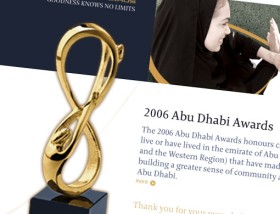
Abu Dhabi Awards winners to get honours
By Dina El Shammaa, Staff Reporter/GULF NEWS Published: August 28, 2007, 18:43
Abu Dhabi: The winners of the Abu Dhabi Awards 2007 will be honoured in mid-December.
The nominations for ‘2007 awards’ will be held between September 9 to October 7. The judging period will be held in October and November, which will be followed by an awards ceremony.
General Shaikh Mohammad Bin Zayed Al Nahyan, Crown Prince of Abu Dhabi and Deputy Supreme Commander of the UAE Armed Forces, will present an award to the ten winners at the Emirates Palace by mid-December.
The awards will mainly go to the top ten nominees recognized by residents and citizens for their humanitarian acts and contributions to the society.
“The award honors citizens and residents who have contributed to building a greater sense of community and social welfare within Abu Dhabi. Everyone is given the chance to nominate those whose goodness knows no limits and in doing so share in their goodwill,” said Mariam Ameri from the Organizing Committee in Abu Dhabi.
All nominations are reviewed individually and reported by a nomination panel. This is then reviewed by a judging committee comprising senior government officials. The merit of those people nominated will determine the final number of awards given.
The nomination process requires completing a “nomination form” available at stands in 26 key locations, including malls in Abu Dhabi and Al Ain. The form can either be faxed or posted back and there are no limits to the number of people one person can nominate.
“Let your voice speak of their actions, in honouring people in this way. The awards raise awareness of the value of such contributions and in turn encourage others to make similar contributions,” stressed Amiri.
The 2006 awards received over 50,000 nominations, up from 42,000 in 2005. Three winners of the 2005 awards were present at the conference and spoke to the media.
“I never thought or expected to win this award. I received a call to bring along my husband and children to attend the event. They never gave me details. I only knew I was one of the winners when they announced my name that same day,” said Amira Al Shaibani.
Al Shaibani received nominations for her efforts in 1982 in a project to build a sports centre for children with special needs in the UAE.
Huda Kanoo, was nominated for her efforts in establishing the Abu Dhabi Classical Music and Arts Foundation in 1996 and a music library at the National Library in Abu Dhabi.
In addition, she launched an award carrying her name as a contribution to urge students to participate and compete at the Abu Dhabi Festival for Classical Music.
Dr. B.R. Shetty known for his medical achievements established the New Medical Center (NMC) Hospital with branches in Abu Dhabi, Dubai and Sharjah.
He also opened the National Hospital, New National Medical Centre, NMC Specialty Hospitals and NMC Family Clinic that treats over one million patients a year.
“My father came to this country in 1973 with only 8 Dollars in his pocket. If it weren’t for this country offering opportunities and opening their arms to him he wouldn’t have succeeded in helping others and we wouldn’t have received this award today,” said one of Shetty’s daughters who represented him in his absence.
About the ADA 2007 Awards
-Through the commitment of the President His Highness Sheikh Khalifa Bin Zayed Al Nahyan, Abu Dhabi has chosen to celebrate compassionate individuals who have silently volunteered their time to build and support the community of Abu Dhabi.
-The Emirate of Abu Dhabi recognizes the accomplishments of individuals through the Abu Dhabi Awards 2007, which marks the third year of awards.
-2005 was the inaugural year of the event
Vision
To make the Emirate of Abu Dhabi a better place, where humanity and goodness are cherished and celebrated.
Mission
To encourage and motivate citizens and residents of the Emirate of Abu Dhabi to reach out and help each other live more fulfilling and rewarding lives.
Who can nominate
-Residents and citizens of the Emirate of Abu Dhabi, including Al Ain and the Western Region.
-Those who know someone whose goodness has contributed to the community and spirit of Abu Dhabi.
Why Participate?
-Recognize and celebrate citizens and residents of the Emirate of Abu Dhabi who have contributed to building a greater sense of community and social welfare within Abu Dhabi.
-The awards raise awareness of the value of such contributions and in turn encourage others to make similar contributions.
The Nomination Process
-Going to any of the many nomination stations across the Emirate of Abu Dhabi including roving nomination stations
-Filling out a nomination form, these are currently being delivered to homes across the UAE and can be returned by post, fax or by placing them in collection boxes placed at the nomination stations.
-Visiting http://www.abudhabiawards.ae
-Filling out your nomination form and faxing it 800-333-00
Previous winner summaries
Winners 2006
Ahmad Khalifa Al Suwaidi
Dedicated his life and money to the welfare of the local community. He played an important role in the union of the UAE and was personal advisor to the Nation’s late father
Shaikh Salem bin Ham Al Amri
Strong supporter of the protection and welfare of the UAE
Contributed immensely to the protection and welfare of the nation both before and after the union and contributed to the social development in Abu Dhabi through the National Consultative Council
Shamsa Hazim Al Muhairi
Active member of the Abu Dhabi Women Development Association. Al Muhairi created awareness on the importance of women’s education and other social problems facing today’s community. Al Muhairi also launched a health program in the Emirate in cooperation with UNICEF and was pivotal in the establishment of the UAE Women Affairs bureau in 1991
Ahmed Awad Kareem
In collaboration with the Abu Dhabi Municipality, contributed to developing several important infrastructure projects in the Emirate including the establishment of the current industrial area
Sana’a Darwish Al Kitby
Dedicated her efforts to supporting people with special needs, women in the Emirate and autistic children. She contributed to the establishment of the General Women’s Union and the Abu Dhabi Women’s Development Association
Dr. Izzeidein Ibrahim Mustafa
Established several cultural and social associations, including the Women’s Union in the UAE
Wahida Ibrahim
Contributed to the education sector by providing free classes to special students and organized fund raising activities to support her school
Ahlam Yahya Al Shateri
Created a platform for parents, teachers and children to better use their time and better understand each others needs. Al Shateri delivers seminars to promote loyalty to the country and charitable causes
Shaikha Siddeeqa Al Qasimi
One of the first UAE women graduates and a leader in supporting education and her school is now known as being one of the best governmental schools in the country. Al Qasimi focused on educating women and helping them excel in their communities and businesses and promoted principles of equality and ethics among her students
Winners in 2005
Dr Rawdha Al Mutawa
Established the Abu Dhabi Business Women Council, Chairwoman of the Gulf Business Committee and a member of the board of directors of the UAE Red Crescent
Strong supporter of National business women
The Late Abdul Jaleel Mohammad Al Fahim
His desire to help others led him into the trading business to allow him the means and resources to fulfill his selfless goals. His activities and generosity contributed to the economic backbone of the Emirate of Abu Dhabi
Amira Al Shaibani
In 1982 Amira Al Shaibani spearheaded a project to build a sports centre for children with special needs in the Emirate.
She also launched the Olympics for children with special needs.
Colonel Edward Wilson
Supervised and trained the first defense battalions between 1964 and 1968, which evolved into the UAE Armed Forces
Established the Royal Stables, whose first cornerstones were laid by the late Shaikh Zayed bin Sultan Al Nahyan
Major General Hamad Al Khaili
The late Shaikh Zayed civil escort until the establishment of the Special Guards in 1971. He joined many training courses and was promoted up the military ranks till he received the rank of Major General. A sleepless soldier, man of strength and careful protector of the safety of the leader
Huda Kanoo
Established the Abu Dhabi Classical Music and Arts Foundation in 1996 and a music library at the National Library in Abu Dhabi. Kanoo launched an award carrying her name as a contribution to urge students to participate and compete at the Abu Dhabi Festival for Classical Music
Pat & Marian Kennedy
Established the first hospital in Al Ain. Their efforts significantly contributed to the reduction of mortality rates, particularly among infants, and raised the birth rates during the many years they spent in Abu Dhabi. At least 4,000 babies came to life by virtue of their efforts.
Major General Khalfan Al Rumaithi
Served Abu Dhabi for 45 years and occupied many military posts from the day he joined the Trucial Oman Scouts.
Founded the Emiri Guards. This service earned him the UAE first-class medal
Sally Benge
Sally approached the Future Centre to provide help for a group of children from Central Hospital. Sally looks after them all day, every day in return for the Future Centre taking them in and giving them homes. She has since adopted and sponsored other children
B R Shetty
His sense of purpose and determination culminated in the establishment of the NMC Hospital in Abu Dhabi, the first of its kind in the country, with branches in Dubai and Sharjah following that. These hospitals along with National Hospital, New National Medical Centre, Abu Dhabi, the state of the art NMC Specialty Hospitals in Abu Dhabi, Dubai, Al Ain and NMC Family Clinic, Dubai treat over one million patients a year
Happy Raksha Bandhan
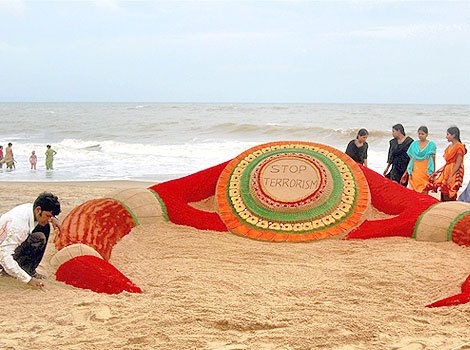
Happy Raksha Bandhan… Artist Sudarsan Pattnaik makes a sculpture of Rakhi, with a message against terrorism inscribed on it, at Puri beach in Orissa on Monday. 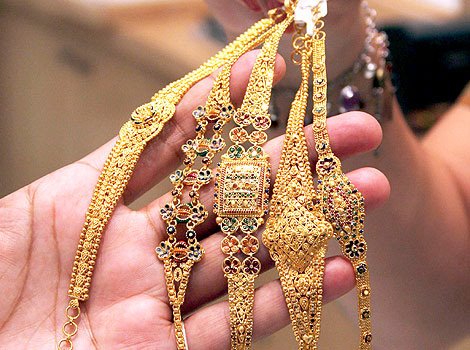
And this special one to all my sisters……… Please select the one you like and wish for me Good luck. Team 1 protection is all yours.
Are Leaders Born?
Are Leaders Born?
Most people fantasise about being in a leader’s shoes. But many believe this would remain wishful thinking because they are convinced that leaders are born. For them, people who influence their societies and workplaces are the ones who are born into certain families, have a certain pedigree and possess certain traits. According to research at the London School of Economics (LSE), leaders are very rarely born. Instead, they are the ones who are willing to take a decision to lead in situations when it is most expected from them.
Leaders are rarely born because:
They often do not carry any legacy nor are they from great families. People who have initiated and propagated great changes are seldom there because of a birthright. They emerged as and remained great leaders out of their own merit. They began with a decision to take on leadership and a determination to lead a cause that they believed in.
Traditionally, leadership skills were always thought to be something people are born with; that leadership is about being genetically lucky. But as researchers correlated scores on IQ and personality tests, they found only a modest and moderate relationship that did not differentiate leaders from non-leaders in any way. Even a behavioural correlation established the same. So, leaders were proved to be non-distinguishable from other people in terms of their intelligence and other abilities. Even as we study history, leaders seldom appear to have a past where they exhibited some extraordinary physical or mental capabilities, setting them several notches above other people. On the contrary, many of the world’s great leaders had been branded below average or just average individuals at some point in their lives. Each of them emerged as leaders because they took a decision to lead.
Leaders are hardly ever exceptional. And they need not be. Leadership is not something with which you are born, it is not inherited, but it is something you decide to do. Leaders are the ones who are bold enough to take a decision when they are faced with a defining moment.
If we examine corporate leaders, we see that this hypothesis holds good most of the time. Take Henry Ford. He not only revolutionised industrial production, but also had such influence over the 20th century economy and society that his combination of mass production, high wages and low prices to consumers is still called “Fordism”. His parents were poor immigrants from Western England where they were evicted from their land in Somerset. They underwent great tribulations as they came over to America looking for a new start.
As a child, Ford was quiet and inward looking, and spent much of his time around his mother. She died while he was very young, leading him into depression. His father despised him for not showing any interest or skill in farm work and literally wrote Henry off, saying he would never amount to anything. During most of his younger days, Ford apprenticed as a low-level machinist at various places, not even earning enough to lead a decent living. He did not own anything that could make him a born leader — no birthright, no pedigree and certainly no extraordinary attributes. Nobody ever recognised that he could do anything worthwhile. But when he took the decision to lead, he went on to be one of the greatest leaders the corporate world has ever seen. He brought on a new age of industrialisation and urbanisation owing mostly to his leadership in the automobile industry.
Even if we look at India, we see several first-generation corporate leaders who have built and led their empires, devoid of any family legacy. We can either learn from all their success stories and strive to be leaders ourselves, or we can retreat into our shell, presuming leadership to be something beyond our reach, reserved for those born with silver spoons in their mouths.
by Sangeeth Varghese / moneycontrol
The author is a leadership scholar from the LSE and founder of LeadCap. His book, Decide to Lead: Eight Decisions That Can Make You A Leader, will soon be published by Businessworld. He can be contacted at sangeethv@leadcap.org This email address is being protected from spam bots, you need Javascript enabled to view it
Shocked into creative living
Shocked into creative living
27 Aug, 2007, 0253 hrs IST,K VIJAYARAGHAVAN, TNN
The process of “getting tired of being tired”, in a larger context, can also be extended to one’s advantage, through waking up to the shocking realisation that he is drifting and is dissipating his talents and potential. It was rightly noted that even fault finding and impatience can be virtues, provided these are directed upon oneself.
In this manner, the seeker realises his infirmities and limitations — the starting point to laying down a path to emerge into a new world of excellence, right relationships and joie de vivre. This verily is also process of ‘waking up to make one’s dreams come true’.
The immortal Kannada film, Hamsagethe powerfully depicts the progression in the transformation of Venkanna, a gifted singer, who also yearns for moral perfection. In stages, through particular interactions and developments in his life, he overcomes the retarding factors of arrogance, pride, infatuation and overconfidence, which stand in the way of the pursuit of his vision.
Though accomplished and gifted in many ways, he realises that he has miles to go to even comprehend the spark of that divinity, which verily is that power, in all bliss and joy and harmony with all aspects within and without, expressed often as outpourings of true Bhakthi.
The prerequisite, therefore, in many cases, for this awakening, is often that of being shocked into feelings of dissatisfaction, if not disgust, with one’s present state of mind, body, heart and soul. This state within is also reflected in situations, relationships and circumstances which attend upon him. Such wake-up calls, as blessings in disguises, transform, sometimes, even the most ordinary into extraordinary beings, endowed with supreme powers.
The story is often told of a great saint and poet, who once was highly attached to worldly comforts and fiercely infatuated with his newly wedded wife. One day, during the height of his over powering passion, his wife jokingly taunted him, “Why don’t you divert at least a part of this attachment for me to God?” As if instantaneously, the young man experienced a metamorphosis, to realise his mission in life.
Indeed, contentment stays as a virtue, only when applied to material and mundane pursuits. For sublime aspirations, the seeking aspirant should hitch his wagon to the highest star. Only then would he be truly fulfilled and be satisfied in the self by his own self, delighting in himself and be genuinely contended — in the manner conceived of by Bhagawad Gita.
Identify your goal and follow instructions
Identify your goal and follow instructions
13 Aug 2007, 0043 hrs IST,Satsang: SADHGURU JAGGI VASUDEV
Only a part of my mind is under my control, the rest of it is not. Tell me, how to control my mind? Now you’re driving a car, the drive, drive shaft and steering wheel are in the front wheel. So all you have control over are these two wheels, the rest of the car is actually not in your control. Still, they can take the car wherever you want.
When you’re driving, are you aware that there’s an explosion happening in the engine? An internal combustion engine means there’s an explosion happening. The pistons are moving, the crank shaft is moving, then the drive shaft is moving, then the wheels’ axial is moving, the wheels are moving, the other wheel is moving, and so on. You are not aware of all this.
When you’re driving, if you just take the steering wheel in your hands it goes where you want. The whole car goes. The same way, if you just take charge of your steering wheel, and steer it properly, everything else goes with it. If you try to take charge of all parts of the car, you will go crazy. If you try to take charge of all the bits and pieces of this car into your control when you’re driving, if you start thinking in terms of what could be happening with this part, that part, all these different parts of the car, you will go crazy.
So, you don’t have to take your whole mind into your control. You don’t even know how many parts in the car exist. You’re just controlling two wheels, everything else is following it. Similarly with your mind, your spiritual process, you don’t have to take grasp of everything. If you try to take every cell in your body, every atom in your body in one direction, you will go crazy.
When you approach the subjective dimensions of life intellectually, this is what happens, you’re trying to take charge of everything. That is not necessary. Just take the steering wheel in your hands, keep it steady and it will go where you want. It will not go anywhere else. So how much of your mind is in your control is not relevant. The right drop is in your hands, that’s enough, rest of it follows anyway.
If your intention is just reaching a certain destination, go by the instruction; if you also want to create a bigger possibility, then you have to know many things. If you want to manufacture a car, you have to understand many things, know all the parts. Driving a car, and manufacturing a car, they are two very different things. Are you looking for enlightenment or do you want to become a guru?
If you are just looking for enlightenment, you don’t bother about all these things. Just the way your driving instructor taught you how to drive. He may not be educated like you, he may not know anything that you know. Just take his instructions, steadily you get to drive.
Similarly, if you just want to go to a place you call as liberation, enlightenment or freedom, blissfulness, peacefulness; if you want to get there, just take a few driving lessons, that’s all. You don’t worry about all the complexities of creation.
Seven-day Inner Engineering class, Delhi Aug 15-21, Gurgaon Sept 12-18, Noida Oct 3-9. Contact: 9810291461 or 9811309576.
Four Mudras Of Tantra: Live In The Present
Four Mudras Of Tantra: Live In The Present
15 Aug 2007, 0133 hrs IST,Osho
Tantra talks about four seals, four mudras. To attain to the ultimate, a person passes through four doors; he has to open four locks. Those four locks are called four mudras.
The first mudra is karma mudra. It is the outermost door, the periphery of your being. Karma means action, is the outermost core of your being. What you do is your periphery. You hate or kill somebody, you love or protect somebody.
Action is the outermost part of your being.
The first seal is opened through becoming total in your action. Whatso-ever you do, do totally, and there will arise great joy, not by repeating some mantra, but by doing it totally. If you are angry, be totally angry; and be fully aware of your anger, anger will disappear one day. You have understood it. It can be dropped now. Anything that is understood can be dropped easily.
Only non-understood things go on hanging around you. Remember, Tantra is scientific. It does not say: Repeat a mantra. It says: Become aware in your action.
The second seal is called gyana mudra — a little deeper and more inner than the first — that is somewhat like knowledge. Action is the outermost thing, knowledge is a little deeper. You can watch what i am doing, you cannot watch what i am knowing. Knowing is inner.
Now, start knowing what you really know, and stop believing things which you really don’t know. Somebody asks you “Is there a God?” and you say “Yes, God is”. Do you really know? If you don’t know, please don’t say that you do. Say “I don’t know”. If you are honest and you only say what you know, and you only believe what you know, the second lock will be broken. False knowledge is the enemy of true knowledge. And all beliefs are false knowledge; you simply believe them.
Out of a hundred things you will be unburdened of almost 98. Only a few things will remain that you really know. You will feel great freedom. Your head will not be so heavy. And with that freedom and weightlessness you enter the second mudra. The third mudra is called samaya mudra. Samaya means time. Knowledge has disappeared, you are only in the now; only the purest of time has remained. Watch, meditate over it. In the now-moment, there is no knowledge. Knowledge is always about past. Just this moment, what do you know? Nothing is known.
So samaya mudra is to be in this moment. Ordinarily you think that past, present and future are three divisions of time; that is not the Tantra understanding. Tantra says: Only present is time. Past is not, it has already gone. Future is not, it has not come yet. Only the present is. To be in the present is to be really in time. Otherwise you are either in memory or you are in dreams, both of which are delusions.
So the third seal is broken by being in the now.
The fourth seal is called mahamudra, the great gesture, the innermost, like space. Now, purest space has remained. Action, knowing, time, space — these are the four seals. Space is your innermost core, the hub of the wheel, or the centre of the cyclone. In your innermost emptiness is space, sky. These are the three layers: of time, of knowing, of action. These are the four seals to be broken.
Excerpted from The Tantra Vision Vol 2, courtesy Osho International Foundation. http://www.osho.com
Rabbit’s Discovery Of The Dance Of Life
Rabbit’s Discovery Of The Dance Of Life
18 Aug 2007, 0020 hrs IST,Janina Gomes/TIMES OF INDIA
The little rabbit stood alone, watching the other rabbits around hop and skip in the forest. They were playing her favourite rabbit game.
Try as she might, each time she attempted to join in, she tripped about awkwardly. When this happened, the other rabbits laughed at her and called her “Grace”. Soon even she forgot her real name. In moments when Grace was alone, she danced around the trees with ease. She was as smooth and graceful as any ballerina. An old owl sat high above her one night, watching her intently.
The moonlight streamed through the treetops like a soft spotlight and he sat and watched as little Grace moved in and out of the moonbeams. Finally he said, “Grace, you are more graceful than any creature I’ve ever seen”.
Grace was startled that someone had been watching her, but listened carefully to the wise owl’s words as he continued. “You have carried this beauty within you all this time, but locked it inside when you tried too hard”. Often we are too intent on proving ourselves and pleasing others. The harder we try the more impossible the task becomes. We begin to lose our identity and all sense of who we really are and what we can do.
Then come the power robbers who through negative talk, remarks and jibes would rather have us believe that we cannot. Some of us may be fortunate to run into those like the old owl, the power enablers and facilitators, who bring back to us a sense of who we really are and what we are really meant to be. They help us see the beauty that is locked away inside, the potential that we all have. Others finally realise that they have two friends who can always be counted on.
The first, themselves, and the second, nature, which never calls us names or whispers behind our backs. We come to a point when we begin to be honest with ourselves. We see the truth that we are all creatures of our times, that imperfections and faults are part of every being’s life tapestry and that all elements are woven into our lives, some frozen in time, others still open to inside work and shaping out. Then in a moment of great discovery we embrace all that is part of ourselves.
Like the rabbit we learn to dance and celebrate our wholeness. We become less obsessed with the scorn that can be heaped on us by others. The negative is drowned by positive images. We realise like the rabbit that nature is our friend. Nature waits patiently. There is no pressure to be anyone else than who we already are. We relearn the dance of life. All the while we have just tried too hard. Grace is not some sophisticated word used only for artists or models on a catwalk.
It is the ability to live life on one’s own terms, the ability to kindle true life in others, the strength and courage to overcome those who would control and manipulate us. Sometimes grace in living comes after repeated failures.
The rabbit Grace picked herself up when she came to a sense of her true self. Many walk through your life, but few leave footprints on your heart. Take long spells of rest in nature. Become like Grace the rabbit who found that she had an identity of her own, so precious, that she had to first discover it by herself. And then when you discover your true identity and your own voice, become a power broker in this world, for gentleness and understanding.
Words of Wisdom – Azim Premji to Professionals
Words of Wisdom – Azim Premji to Professionals
Here are some powerful advice from Azim Premji,Chairman, Wipro Ltd based on his successes, setbacksand the lessons learnt during his corporate journey.
Respond, don’t react
Always be aware of your emotions and learn to manage them. There is a huge difference between people who react impulsively and those who can disengage themselves and then respond at will. Bychoosing to respond differently, we can prevent another person from controlling our behaviour. I remember a small story that illustrates this well. There was once anewspaper vendor who had a rude customer. Every morning, the customer would walk by, refuse to return the greeting, grab the paper off the shelf and throw the money at the vendor. The vendor would pickup the money,smile politely and say, Thank you, Sir. One day, the vendor’s assistant asked him, Why are you always so polite with him when he is so rude toyou? Why don’t you throw the newspaper at him when he comes back tomorrow? The vendor smiled and replied, “He can’t help being rude and I can’t help being polite. Why should I let his rude behaviour dictate mine?’’
Put yourself first
This does not mean being selfish. Nor does it mean that you mustbecome so full of yourself that that you become vain or arrogant.
It means developing your self-confidence. It means, developing aninner faith in yourself that is not shaken by external events. It requires perseverance. It shows up in the ability to rebound from a setback withdouble enthusiasm and energy. I came across a recent Harvard BusinessReview which describes this very effectively: No one can truly define success and failure for us. Only we can define that for ourselves. No one can take away our dignity unless we surrender it. No one can take away our hope and pride unless we relinquish them. No one can steal our creativity, imagination and skills unless we stop thinking.
Courtesy: Executive Knowledge Lines
Develop intuitive powers, tells top Tata executive
Develop intuitive powers, tells top Tata executive
Tuesday,21 August 2007 18:15 hrs IST /MALAYALA MANORAMA English edition
New Delhi: Intuition, along with traditional tools like logic and analyses, plays an equal role in the management of today’s corporations that are increasingly becoming global in outlook, a top Tata Sons executive said Tuesday.
“Logic and analysis are very important to leadership not making mistakes,” R. Gopalakrishnan, executive director of Tata Sons, who played a key role in the mega acquisitions of the group, said in a lecture here.
“But they have limitations. Intuition is a powerful outlay, after the powers of logic have been exhausted,” he said in the lecture on “The Manager’s Dilemma: Analysis vs Intuition” at the Federation of Indian Chambers of Commerce and Industry (Ficci).
Gopalakrishnan, who has also authored a book on corporate management titled “The Case of the Bonsai Manager”, also emphasised that it is intuition that will play a key role in the success of smaller firms in a world ruled by conglomerates.
Stating that his book deals with a key leadership issue – on what the balance between logic and intuition is – Gopalakrishnan said, “The world of business is a world of practicality.”
He said that in today’s world, sticking to only analysis before taking any strategic decision would not lessen chances of mistakes on the part of the leader.
“Continuous analysis can lead to paralysis. It is here that intuition plays an important part.”
He, however, added, “Intuition is not a substitute to analysis. It is a companion to analysis.”
Elaborating, he said, “Knowledge is ‘what you know you know’. Intuition is ‘what you don’t know you know’. A combination of both is wisdom.”
So, how can a person be intuitive?
“If we cannot hear beyond our hearing range, see beyond our visual range or feel beyond our immediate environment, we cannot be intuitive,” said Gopalakrishnan.
In a lighter vein, he said that analysis and intuition are as opposite to each other as corporate governance and sex.
“Everybody practises sex but does not talk about it. Everybody talks about corporate governance but nobody practises it.”
Stating that analysis can lead one into thinking only on a linear path, he said, “It is intuition, that sudden ‘aha’ moment of life, that will help a manager reduce mistakes.”
To emphasise his point, he referred to the examples of Archimedes and his bathtub moment and the apple falling on Isaac Newton’s head.
Giving a powerpoint presentation, he said that intuition can be developed by immersion and contemplation. This should be followed by filling what he called the ‘brain’s remote implicit memory’ or BRIM with emotion-rich stories.
“Your first day in school, your first job or the day your girlfriend rejected you. It can be anything – positive or negative. But it should be emotion-rich,” he said.
And then sensing at the edge of the spectrum is the final stage of the process of developing intuitive powers.
“Management schools teach you not to be emotional. I say, ‘Be emotional’,” the Tata Sons executive director said.
Earlier, welcoming the gathering, Ficci vice-president Rajeev Chandrasekhar said that Gopalakrishnan’s views are significant in today’s world of conglomerates.
“Big conglomerates are very risk averse. This throws up huge opportunities for new entrepreneurs. But these opportunities can be successfully exploited only when approached with a good gut feeling after being properly analysed,” he said.
 ClicksandWrites
You must be logged in to post a comment.