Information – Positive Thinking
Fasting for the first time

Fasting for the first time
By Ruqya Khan, Gulf News Report Published: September 30, 2007, 00:33
Growing up means different things to different children. Some feel grown up when they are given responsibility, while others feel content when they are allowed to interact more closely with their elders. But what exactly is growing up all about? It’s a process of learning and understanding day to day life and accounting for one’s actions.
Though there is no set age to begin fasting, it becomes compulsory for every Muslim, male or female, after he or she reaches puberty. Often children as young as seven choose to fast.
Though they may not fast the entire month, this practice strengthens them mentally and spiritually.
Excited
Al Hajjaj Bin Habib is 9. He is in grade 4 at Al Hikmah Private School in Ajman. This year was his first fasting experience. He said: “I am very excited about fasting as all my classmates are fasting as well. I felt so proud of myself for having hung on till iftar time. As a means of encouragement I was given a monetary reward to save in my piggy bank and it was the ultimate treat. Last year I tried to fast, but was only able to fast half a day.”
“I’ve learnt that with intention and a strong will, desires can easily be defeated. Now I understand the pain of hunger and want to share the extra food left over with the poor at Al Ihsan Charity Centre.”
Ten-year-old Sidra Momin agreed. “On other days I would not feel hungry. My mum would have to force me to eat, but when I fasted I knew what the needy feel. 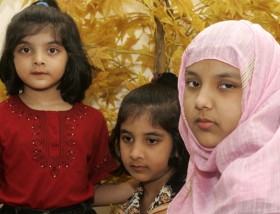
Effort
“Now I don’t take my blessings for granted. It helped me realise how much effort my parents put into the day when they fast. I now enjoy helping my mother set the table, arrange the fruits, etc, at iftar time. It doesn’t feel like a chore anymore,” said Sidra.
“In Ramadan everything and everyone is different. We visit places like parks and mosques instead of the usual routine of spending time in the malls. My parents are more relaxed, dad comes home early and we get to meet with the family and friends more often during iftar gatherings. I like that. Plus, I get to select my clothes for Eid, which is great!”
Kahkashan Kareem, a grade 4 student at the Gulf Indian High School, said, “I think fasting makes us better people. We are able to wait from suhour to iftar to eat and drink. Plus, when I’m fasting I make sure I don’t get angry at my sisters – Safoora, 6, and Darakhshan, 12. In fact, my elder sister encourages me to be punctual for my prayers. She supports me and keeps me away from the mischief of my little sister.
“I think Ramadan is exciting. The relatives get together each weekend and I like to exchange ideas with my cousins about how we fasted, what we did at school, etc. I also enjoy the iftar spread – my favourite is chocolate juice. Mummy makes this by adding milk, cream and sugar to melted chocolate ice cream. It’s really yummy and easy to make.
“But that’s not all. We even get to go to the mosque for special Tharaweeh prayers. Sometimes I even attend dars (religious lectures) with my mother and aunts. Here the teacher tells us about the simple rules to follow and it’s said like stories from the Quran or Hadith (sayings of the Prophet Mohammad PBUH). It’s never boring.”
Patience
Mohammad Yousuf and Mohammad Khalid are cousins studying at Al Wataniya Private School. They started fasting on the first day of Ramadan. Yousuf is in grade 5.
He said, “Fasting takes a lot of patience. The first day I was miserable. I could not tolerate having my younger siblings come close to me after they had just eaten. I think my sense of smell had suddenly become stronger because I could smell what they ate or drank and it tempted me a lot.
But I was happy that I made it through the day just like my younger cousin, Khalid.”
Khalid added, “As usual we went to the grocery store that day and bought the goodies we liked, but didn’t eat them until after iftar time. Each year during Ramadan the whole family gathers at my uncle’s house to break the fast. On my first fast it felt really nice when everyone congratulated us. We have been promised a surprise gift after two weeks of fasting, I can hardly wait.
“Most of my friends in school are fasting so I don’t feel out of place during recess. I think school days are easier to go by without food and drink because there is a fixed schedule, we study, play, come home tired, rest and then ready ourselves for the evening meal with the family. But on weekends there is little to do except smell the aroma of dishes in the kitchen.”
Did you know?
Fasting is compulsory for all Muslims once they reach puberty.
However, many children, some as young as 7, also fast during Ramadan.
They may fast only a few days or a few hours.
Children can also attend prayers at the mosque and religious lectures with their family members.
Give it a thought before signing up
Give it a thought before signing up
By Rania Oteify, Features Editor Published: September 28, 2007, 23:14
Please sign here, and here and there. Do you hear this request often? I guess you do if you are financially active, i.e. opening bank accounts, requesting credit cards or finance, or just filling forms.
But as common as it is, the request is usually alarming for me. It is not that I don’t sign my credit card slips with only a quick glance at the price, but in different contexts, I do require longer thinking periods which may extend to days. Why? Because a signature, in a way, formalises or legalises a document even in non-financial situations. I don’t see the argument that you signed a document without reading it standing in a court of law. So, be patient when you’re asked to sign and think of the consequences.
Face value
In many banks, whether local or international, there are common practices which fall in a grey area, and can get you in trouble. One of them is asking clients to sign blank cheques to secure loans and credit cards.
You may be right when you think: “This is a reputable bank with thousands of clients, international branches and much bigger business than mine. Who am I to ask them to change a policy?” But you can always ask, and if they don’t accommodate your request, you’ve the option of walking out of the deal. But if you decided to go along with the trust line that the bank isn’t in the business of tricking people, try to keep it to the absolute minimum. After all, remember that your signature on a blank cheque will grant you credit now, but in case of default, the bank can fill this cheque with the outstanding amount and penalties in addition to the accumulated interest.
Sign now, fix it later
Everyday, we sign documents which may not be as serious as financial ones but they are still sort of contracts which may bring not so nice surprises later on your credit card statements. For example, a friend who was renting a car in Dubai told me the agent asked for all the normal stuff: photocopies of his passport, driving licence and a credit card authorisation. Then she handed him the form for the payment which quoted a price Dh600 higher than the agreed price. Her excuse was: This document doesn’t matter, we will charge your card the correct amount. “So why do you ask me to sign a document that doesn’t matter?” he furiously asked. Here she decided to contain his anger. “No problem. Please sign here and we will fill it with the correct numbers later,” she said, pointing to a blank document.
He found it pointless to argue with her, so he collected his documents and walked out. He definitely did the right thing. Why should he willingly sign a document which quotes the wrong price or another with no price at all while car rental companies are aplenty? Even though credit card transactions can be negotiated and voided, he would not be in a good position since they have a document carrying his signature.
For my loved ones
Co-signing on other people’s credit documents isn’t a good idea. However cruel it might sound to advise someone to say no to a friend or a child, it may be the right thing to do. People do default on their loans – check the statistics. This doesn’t mean you should not consider helping them if you can. But take your time to find out whether you can afford it or not. An additional car payment of Dh1,000 a month for a car that you’re not driving may not be a good surprise. If you do want to help and are willing to bear the burden if things don’t work out for your loved ones, then go ahead and sign here, and here and there.
A signature, in a way, formalises or legalises a document. Be patient when you’re asked to sign and think of the consequences.
Educating children key to ending cycle of poverty, says Maitha

Educating children key to ending cycle of poverty, says Maitha
By Zoi Constantine, Staff Reporter Published: September 28, 2007, 00:00
Dubai: Shaikha Maitha Bint Mohammad Bin Rashid Al Maktoum has urged Dubai’s diverse, multi-cultural communities to unite under the banner of ‘Dubai Cares’ to contribute to the goal of educating 1 million children.
The call came as the amount raised for the initiative launched on September 19 by His Highness Shaikh Mohammad Bin Rashid Al Maktoum, Vice-President and Prime Minister of the UAE and Ruler of Dubai, topped Dh300 million.
Among the latest to donate are Dubai Contracting, which yesterday pledged Dh500,000, and Ahmad Siddiqui and Sons who donated Dh1.5 million to the six-week campaign at an event hosted by Shaikha Maitha, on Wednesday night. 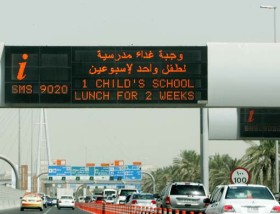
During the event she also announced that she will host the ‘Dubai Cares’ Walkathon, scheduled for October 19 to be attended by members of the public as well as sporting personalities and well-known names from the world of art and culture in the UAE.
“Dubai Cares is an opportunity for all of us – regardless of our race, religion or ethnic background – to bring together the different communities in Dubai’s multicultural landscape to support a common cause and contribute to a greater purpose,” Shaikha Maitha said during her address before the diverse crowd at the Dubai World Trade Centre on Wednesday evening.
“We recognise education as the best long-term solution to poverty alleviation in the developing world -educating children, especially girls, is the key to ending the global ‘cycle of poverty’.”
Present at the event to launch Shaikha Maitha’s participation were various sports personalities, artists and actors, including Abdullah Al Khair, who pledged their support for ‘Dubai Cares.’
Humility and merit go together
Humility and merit go together
24 Sep, 2007, 0035 hrs IST,N K Vijayaraghavan, TNN
Sir Arthur Conan Doyle, in his Valley of Fear, observes: “Mediocrity knows nothing higher than itself but talent instantly recognises genius.” An old English proverb also notes, “Empty vessels make more noise”, while a Tamil aphorism conveys the message, Niraikudam thalumbathu (a vessel full of water doesn’t make gurgling sounds).
Indeed those who earnestly strive for excellence do not ever view others with a condescending or patronising look because they feel earnestly that they themselves have much to traverse in their own quest. They practically live out the message of the Tamil saint Avvaiyar, “What we have learned is just the size of a handful of sand; what we haven’t is as big as the entire sand in this vast earth.”
Egoism (ahamkara) is the root cause of all pride, vain boast and self-assumptions, which discount the merits in and accomplishments of others. In fact, in general, human nature is such that most tend to magnify their own sufferings, contributions made or help rendered. Many also lose themselves in orgies of self-pity, self-justification, self-aggrandisement, vain assumptions and fanciful imagination, through living in a fool’s paradise, evolved out of the hollowness, feelings of inadequacy and pretensions to superiority.
The seeking aspirant, on the other hand, is bestowed with a spiritual insight to look beyond his own limitations and thus be sensitised to the virtues, merits and beauty, which abound in the world around. Drawing thus from the cornucopia of blessings all over and obtaining lessons from others too, he becomes the prime beneficiary in his search for virtues and blessings, which would lead him on.
The beginning is thus through that self-effacing humility which admits to the deficiencies within and through a capacity to appreciate and learn from worthwhile things around. Such virtues cleanse the spirit of the retarding forces of egoism, pride and egotism.
This concept is conveyed brilliantly through a scene in the great Kannada film, Hamsagethe. The main character, Venkanna, in sheer ecstasy and gratitude within, embraces a tall rock, on the top of which a sparrow perches itself, as if to taunt him, “You have much to climb before you attain excellence.” Venkanna’s quest thereafter begins in right earnest.
The truly meritorious, not ever needing the crutches of self propagation, would obtain around him many to spread his fame. Indeed, when some one else blows your trumpet, the sound will carry twice as far!
Many Dimensions Of Heartfelt Satsang
Many Dimensions Of Heartfelt Satsang
21 Sep 2007, 0000 hrs IST,Aruna Jethwani for TIMES OF INDIA
A friend going through depression was advised by her family physician to join satsang. She flared up: “Why satsang?” The physician thought for a moment and said: “Because satsang will give you a community. It will give you a sense of belonging. Two, it will draw you out of your limited self and will help you bond with your higher self”.
Satsang helps build up a magnetic centre of spiritual life; from such a centre flows energy which purifies and stabilises our emotions. Traditionally satsang is associated with the singing of Naam kirtan, invoking the Supreme. This is only one aspect. Satsang has many dimen-sions. It may mean a gathering of like-minded people who pray together or discuss and debate issues which are of concern to humanity. Just as any good work is worship, similarly fruitful exchange of ideas which would benefit self and society is also satsang.
In a deeper sense, satsang is fellowship with an evolved person. The presence of a holy person purifies emotions and rejuvenates body, mind and spirit. It spreads ‘pure energy’ which gives a sense of well-being as it washes away our mundane worries for a while. It is for these reasons that life management courses prescribe satsang, that is, group prayer or singing. Such kirtans divert negative energy, producing circles of positivism which have multiplier and cascading effects. Such gatherings purify the gross physical and help to heal body and mind as well. Little wonder the youth of today find comfort in chanting for peace or good health or just invoke higher energies for themselves.
Satsang of the Naam kirtan type can be a higher mystical and spiritual experience. Recounting his personal experiences Sadhu Vaswani writes, “Our Calcutta Satsang was vibrant. It commenced with recitation of holy verses and readings from scriptures followed by bhajans, and culminating in kirtan. The kirtan awakened the souls of many… Some became ecstatic, others fell into a swoon. This happened so often that my Gurudev had to appoint some of us to pick up those devotees who were in an unconscious state and reach them home safely.”
During those times, Calcutta used to have long processions. Devotees of Chaitanya Maha-prabhu, particularly, took out a procession, chanting Haribol, Haribol and in that Masti of Mantra, they went into ecstasy that reached a crescendo of a higher kind. Speaking of his own intoxication, Sadhu Vaswani further says, “On more than one occasion I was so intoxicated with the mantra that I fell in a state of unconscious-ness. Even in that delirious state, I would continue to chant Haribol, and would fall down on the ground. The devotees would pick me up and reach me home. When I woke up, many hours later, I would ask, where am I?”
Such mystical and spiritual experiences are rare. But it goes without saying that satsang relieves us of latent mental burdens; it creates positive patterns; it roots us to our own real self; it takes away our frustrations, it provides a surface for interaction; and above all satsang generates pure energies which purify us. With so many benefits, it is worthwhile to participate in chanting groups, Reiki healing, Gita groups, Interfaith lunches, Peace prayers, and enjoy the vigour, enthusiasm and energy of positive living.
As You Breathe, So Shall You Live
As You Breathe, So Shall You Live18 Sep 2007, 0001 hrs IST,Linesh Sheth for TIMES OF INDIA
The simplest way to build a harmonious relationship with life is to develop a loving, joyful and a friendly relationship with your breath. Understand your breath, its ways of working and develop a friendly relationship with it. Breath is the carrier of vital life force within us that makes our body-mind organisation function and survive.
If you look at breath as life itself, your landscape will change. The love, sanctity and value you give to this great spontaneous phenomenon called ‘breathing’ will tend to completely change the way you breathe. Then if you breathe slowly, just 20 times with a smile, your eyes closed, you will experience deep within a feeling of joy in all those organs where you perceive the smooth touch of breath.
When you look at your breath as if it were your constant and unfailing friend, that quality of relationship brings about a profound change in any breathing method you practise. You will soon realise that the way you breathe, is the way you live. This is how complex life turns simple.
Eight factors that change your relationship to life with reference to the way you breathe are: the flow of breath you allow in your body, the pace with which you breathe, the rhythm you follow, the number of times you breathe or frequency of breath, body posture you hold while breathing, vibrations you produce, the attention and serenity with which you breathe, and finally, your sensitivity to experience the touch of breath in every organ it touches as you breathe.
The way you learn to synchronise all these aspects into one compact process of breathing is what will change your relationship with your body and mind. It is simply profound as well as profoundly simple.
You will begin to like yourself as you feel the pleasing, calming sensation deep breath brings about. You will experience a deep sense of undisturbed peace within. When you pay attention to the beauty with which life rests within you, for the first time, you will experience what it is to feel alive.
Our relationship with breath tends to be simple, direct and proportionate. So if you breathe slowly and attentively you feel the touch of breath as you breathe in and out. You will experience a deep sense of peace.
If you breathe with great satisfaction, you will feel the grace of life. When you breathe selectively into each of your organs like kidneys, intestines, heart or head and feel the touch of breath, you will experience great healing. How many times you breathe and how regularly you do it directly decides the proportion of well being you will feel.
If you think of life as a great struggle, or the world as a battlefield where you have to compete with and overcome others, you will turn yourself into a warrior who has no room for peace or reconciliation in life. Then if you seek freedom or happiness, you will look for it beyond this life, not while you are living. The world that appears outside you is in fact a reflection, a mirror image, of how you feel within.
A simple way of changing the way you feel is to learn how to change your relationship with life in your daily half-hour breathing session. You will soon experience that as you breathe, so shall you live.
Zero customs duty on digicams
Zero customs duty on digicams
New Delhi, Sept. 18 In a major relief to the industry, the Finance Ministry has clarified that flat panel monitors and digital cameras will be treated as IT products with nil customs duty, although this will not mean any change in product prices for the end consumers.
The Customs authorities were earlier assessing the two products at 10 per cent Customs duty, and the clarification assumes importance as it puts an end to several disputes on interpretation of the applicable rate on these items.
“The clarification has a far-reaching consequence as several developed countries including the EU and other Asian countries such as China have been unable to resolve the classification issue and continue to classify them as non-IT products,” Mr Vinnie Mehta, Executive Director of MAIT, said.
The Government has clarified that flat panel monitors were computer monitors (IT product) and not LCD TVs. Similarly, owing to the video clip recording facility, digital cameras were earlier being classified in the same category as ‘camcorders’ with 10 per cent customs duty.
No change in prices
However, there would not be any change in the cost of the products because leading vendors were furnishing bank guarantees and clearing the products at a nil customs duty subject to clarification from the Government.
According to Mr Alok Bhardwaj, Vice-President, Canon India, most of the leading vendors had already dropped prices for these products and hence the price tag will remain unchanged.
“Prices were already factored at the lower level. However, the clarification puts things in black and white,” Mr Ravi Swaminathan, President – Personal Systems Group, HP India, said.
Benefits of fasting
Benefits of fasting
Ali Imam Zaidi HINDUSTAN TIMES September 19, 2007
Fasting has great importance in different religions. It has been practised for centuries by Hindus, Muslims, Christians and Jews among others.
The Holy Quran ordains: “O, you who believe, fasting is prescribed to you as it was to those before you, so that you may (learn) self-restraint.” (Chapter 2, Verse 183)
Fasting is obligatory for Muslims in the month of Ramadan as well as for Hindu communities on the occasion of the Navratra. Fasting affects our life in many ways. The fast (except for diabetics, pregnant women and ill people) safeguards the body’s health by protecting it against extravagance.
As medical science has proved, fasting is medicine for many bodily ailments. It balances the nervous system. Rapid and safe weight loss if achieved without flabbiness, by fasting. Energy levels and sensory perception are increased. The longer the fast, the bigger the increase in energy and vitality.
Fasting can increase confidence in our ability to have control over our lives and our appetite, as our body’s self-regulating and self-healing organism capable or establishing balance when given the possibility to do so. The fast fosters a strong will; teaches patience and self-discipline, the ability to bear hardship and tolerate hunger and thirst.
In short, it brings about a clear victory over one’s illicit desires and selfish impulses. It regulates, systemises and energies the instincts. Fasts teach the fasting person to abandon vices, control emotions, to curb the tongue against saying what is wrong or inappropriate and the conscience against contemplating wrongdoing.
Fasting is an effective cure for these usual habits. During fasting we are able to keep ourselves away from all types of bad habits. Thus fasting teaches us that we can worship Almighty God by doing what is commended by Him both during and after breaking the fast.
What we want to be, what we really are
What we want to be, what we really are
17 Sep, 2007, 0245 hrs IST,K VIJAYARAGHAVAN, TNN
In the course of a conversation, Mr A S Vedantam, a keen observer of human nature, once remarked, “There is often a big difference between what one wants to be and what he really is”.
Of course, there are many, who accept the fact that they are far removed from what they would like to be with regard to their effectiveness and capacities. In consequence of this self-honesty, which enables them to accept their own limitations, they are enabled to approach their ideal, albeit, in the limitations of factors within and without.
However, there are also others, who, unable to accept the fact that they have much to traverse, indulge in acts of pretence and self-deceit, attempting to convince the world around that they really are what they have wanted to be.
A timid person, who had always wanted to be strong-willed and assertive, would attempt to satisfy his unfulfilled desires, through flaunting a bold exterior or tyrannising those who are helplessly dependent on him.
In a similar manner, in an attempt to fulfil a cherished dream to be righteous and self-made, a person, who has had to be dishonest, corrupt and fraudulent, would wax eloquent on his ‘integrity’ and his perceived acts of justice and fairness to one and all. It is also common to spot those who pretend to be eternally busy, irritably chiding often, “Don’t waste my precious time”, when in actual fact they are occupied with feverish, though unproductive activities, indulged in an attempt at escapism and to fill a void within.
It would indeed be obvious that the path to bridge the yawning gap between one’s envisioned ideal and the actual stark reality is not through vain pretensions or stage-managed antics. The beginning is through that self-probing honesty and clarity within, which admits to the deficiencies. Thereafter, through analysis and synthesis, based on this integrity and intelligence, one approaches this ideal of his dreams.
This ‘bridging the gap’ is verily yoga (derived from yuj, meaning ‘to join’) — ‘joining’ or uniting the imperfect self (jivatma) with the seat of all effectiveness, power and accomplishment (paramatma).
This is the practical application of the injunction of Bhagawad Gita (2,48), yogastah kuru karmani (issuing forth all one does, established in yoga). This process, bereft of pretensions or make believe, invariably brings true fulfilment — atmanyeva atmanah tustah (2,55) and also the boundless joy of delighting in oneself, termed (3,17) as atmaritih.
Multi-million dirham education initiative launched
Multi-million dirham education initiative launched
Staff Report / GULF NEWS Published: September 19, 2007, 15:33
Dubai: His Highness Shaikh Mohammed Bin Rashid Al Maktoum, Vice President and Prime Minister of the UAE and Ruler of Dubai has launched a multi-million dirham initiative to educate more than a million children worldwide.
“Dubai Cares,” is being launched during the holy month of Ramadan, with the aim of raising money from across Dubai’s diverse community to provide children in some of the world’s poorest countries with a primary education.
The campaign is being spearheaded by Shaikh Mohammed and his children, who will be unveiling a number of initiatives to be held over the coming six weeks.
According to organisers, in addition to the aim of raising money for those less fortunate around the world, ‘Dubai Cares’ also seeks to get Dubai’s community, including individuals and the private sector, involved in the project, instilling a sense of social cohesion.
“I expect both Emiratis and expatriates to compete in charity and to participate in any way you find suitable…In our country, we added to our Arab and Islamic tradition a diversity of values represented by the diverse mixture we have here of companies, cultures and nationalities from all over the world,” Shaikh Mohammad said at the launch.
Below is the full text of Shaikh Mohammad’s speech at the launch of a multi-million dirham initiative to educate more than 1 million children worldwide.
Ladies and Gentlemen
First, let me congratulate you on the occasion of the Holy Month of Ramadan. I pray that God will give each of us the strength to fulfill our duties during the Holy Month, the desire to absorb its values to the core of our being, and the integrity to ensure these values are reflected in our deeds.
Ramadan is a blessed month for Moslems around the world. Our hearts fill with shared joy in our religion, our souls are lifted and we are swayed by the spirit of the Holy Month to offer mercy and compassion.
Let the enduring spirit of Sadaqah (Charity) be the guiding light for our actions throughout the Holy Month. Let it shape our good intentions so they become deeds whose consequences are positive, immense and far reaching.
Education offers one of the clearest and most effective ways to turn good intentions into actions that change the lives of people immeasurably and for the better. The satisfaction to be gained from a single act that helps the needy or curbs injustice can be immense. Imagine how much stronger that satisfaction must be if that act helps – as only education can – to free generation after generation from grinding poverty.
The patrons of education leave a lasting mark on history. The opening of the first school in the UAE in 1903, for example, is a defining moment in the history of the nation and continues to be regarded as one of the greatest events in the country’s modern history. Our history books record the contributions of UAE’s education pioneers such as: Mohammed bin Ahmad Dalmouk, Khalaf bin Oteiba, Ali Mahmoud, Mohammed Zeinal and a host of others.
The names of those pioneers who put their efforts into opening schools and providing the funding to support education, will be longest remembered and are an undeniable part of our history. Those who forget their responsibilities towards their community are soon forgotten.
Brothers and Sisters,
Education holds out hope for the future, enrichment for the present, and dignity for mankind. It helps us to communicate with each other. It helps nations to hurdle the barriers to understanding. It provides a solid basis from which societies can grow and flourish.
God Almighty said: “O mankind! We have created you from a male and a female, and made you into nations and tribes, that you may know one another. Verily, the most honourable of you with Allâh is that (believer) who has At-Taqwa”. (Al Hujurat – 13)
But, could the ignorant communicate with the educated? Do societies that continue to accept widespread illiteracy have any chance to bridge the gap between themselves and the educated world?
Education, through its ability to open eyes to new possibilities and extend horizons, offers a channel for communication between humans, a necessity as the Holy Quran tells us.
The importance of education has increased tremendously in the “Knowledge Age”. Promoting education and providing the support it needs to flourish are now prerequisites for global development. Those who are deprived of education will inevitably fall behind and dwell in a shadowland. They will never know the true essence of their religion, nor learn its valuable teachings. They will always be dependent on others and face the prospect of becoming burdens on themselves, their societies and the whole world.
Brothers and Sisters. Since the era of the late Sheikh Zayed and Sheikh Rashid, may God ensure their souls rest in peace, the UAE has been committed to offering support and help to our fraternal brothers and sisters in the Arab and Moslem worlds across Africa and Asia. The country’s contributions were made in many fields, and especially in the field of education.
From early on in our history pioneering UAE businessmen have appreciated the importance of education. Mr. Juma Al Majid, for example, has been an outstanding role model. His support for education has resulted in Mr. Juma being considered an outstanding figure and a celebrated patron across the Arab and Islamic Worlds.
The UAE’s remarkable successes at various local and regional levels have increased its prominence as an economic and cultural bridge between the East and the West. By accepting this crucial role we accept at the same time the duty to promote education in its entirety.
Last May, I launched the “Mohammed Bin Rashid Al Maktoum Foundation” for human development. Knowledge and Education are key components of the vision and mission of the foundation and underpin its activities. We expect the Foundation to become a showcase for the benefits of long term education initiatives for humanity in general and for our region in particular.
Today, I seize this opportunity presented by the Holy Month of Ramadan to announce the “Dubai Cares” campaign, which focuses on supporting education for children in a number of the world’s poorest countries.
I invite you to take part and support this campaign. I strongly believe that together, we can reshape the future of underdeveloped countries in the region and globally. The campaign’s mission is to help spread education in these countries by securing necessary funds.
Building new schools and classrooms, providing books, food and medical care for unprivileged children are among the campaign’s key objectives.
Brother and sisters. Eight years ago, the international community set the millennium development goals all countries pledged to fulfill. One of the main goals was to guarantee that every child will receive a basic education by the end of 2015. The realities on the ground are not promising and it looks unlikely that this goal will be met on time.
There are 120 million school-age children across the world who do not have access to education. A third of the children in developing countries cannot complete five years of education, the minimum required to achieve basic literacy.
Unfortunately, the biggest proportion of these deprived children are in Asia and Africa, especially in the Islamic world and the neighboring countries. This is in spite of the value placed on education in our holy book, as the first Aya that was sent to the world was a call for reading: IQRA’A.
Even the holy sayings of our prophet place education on the same level as worship, and even at a better place.
Brothers and Sisters. Thanks to Allah, we, in the UAE, enjoy a high standard of living. One of the secrets of our success and progress has been our ability and readiness to create opportunities and seize them in a timely fashion.
But opportunities do not grow on trees and cannot be achieved by wishing or dreaming. They are attained by taking the one clear path – the path of knowledge.
Education is the bulldozer that makes this path navigable, guiding people along its course and towards their destination. Knowledge gives people the chance to live in pride, progress and prosperity.
Expanding education in all of our emirates, and encouraging thousands upon thousands of university and higher colleges graduates, from our boys and girls, is the solid platform on which we will achieve progress and prosperity.
Advancing education remains an unquestionable priority. We have started the race against time to achieve an Emirati education that meets the highest international standards.
This Dubai Cares campaign, that I am launching today, seeks to shine the light of knowledge and dispel the darkness of ignorance. Its aim is to give the children of poor countries hope for the future and opportunities to break the cycle of poverty that threatens to entrap them and consign their families to a life with no real future.
Through education they can become positive contributors in the prosperity of their communities and countries.
Brother and sisters. Wherever ignorance reigns so does poverty, illness, misery and despair, and people start believing in fiction and illusions. The worst disease in this world is the unbreakable partnership between ignorance and poverty.
This partnership is the source of all evil from which many countries suffer and it is the root of persecution, and the main reason for divisions in the world between a wealthy North and a poor South, between advanced countries and deprived countries, between societies that know, and societies that do not know.
The only way to break this partnership between ignorance and poverty is by relentlessly attacking ignorance and by exerting every effort to spread education. We are doing our duty, regardless of the fact that many countries have resigned from playing their role in combating illiteracy worldwide and the international community is not able to fulfill its promises.
We are doing what we see as our duty by our religion, our traditions, our humanity and our deep belief that the person who turns his back on the suffering of his brothers and sisters doesn’t deserve to be called as human.
Therefore I am confident that you will participate in Dubai Care initiative for education.
I expect you, Emiratis and expatriates, to compete in charity and to participate in every way you find suitable. And I expect from the private sector a substantial contribution, including the international corporations and their offices in the UAE.
In our country, we added to our Arab and Islamic values a bright international horizon with a diverse mixture of companies, cultures and nationalities from all over the world.
This mixture offers a successful model of coexistence and collaboration. We are all invited today to develop this model and give it a humanitarian dimension through our collaborative donation to our brothers and sisters who are less fortunate than our Emirati nationals and the expat residents who have helped our country and helped themselves to achieve what they could not in their home countries.
Today, I announce the start of Dubai Cares campaign, empowered by your will and determination.
I am pleased to announce that I, together with my sons and daughters, will participate actively to ensure the success of this campaign.
I expect everyone to participate personally and that you will motivate your family members to contribute as well, so we can all fulfill our duty in what pleases our Creator and our own conscience. We need to implant the culture of donation in our society and give our children a heritage that incorporates the noble values that we inherited from our ancestors and which have now become one of the highest universal values. These values gain more territory every day.
They have new heroes every day, competing for the welfare of their brothers and sisters in humanity.
 ClicksandWrites
You must be logged in to post a comment.