Information – Oil Gas Future Energy
IPIC and Shell target Turkmenistan projects
IPIC and Shell target Turkmenistan projects
Reuters Published: August 02, 2007, 23:15
Dubai: The UAE’s IPIC and Royal Dutch Shell are considering joint exploration for oil and gas in Turkmenistan, the UAE’s news agency WAM reported.
The International Petro-leum Investment Co (IPIC) invests in oil-related projects for the government of Abu Dhabi, which controls more than 90 per cent of the UAE’s oil reserves. The UAE is the world’s sixth-largest oil exporter.
The three companies also plan to build a $500 million urea plant with capacity to produce one million tonnes per year, WAM reported late on Wednesday.
Both the oil and gas exploration and the urea plant were pending government approval, WAM said.
“Working with IPIC to enter oil and gas sectors in Turkmenistan is an ideal opportunity to reinforce Shell’s position in the region, which is growing,” WAM quoted Gavin Graham, Shell’s vice president of new business in the region, as saying.
IPIC’s Managing Director Khadem Al Qubaisi met with Turkmen President Kurbanguly Berdymukh-amedov, WAM said.
IPIC told Reuters last month it planned an aggressive move into oil and gas exploration and production and was eyeing deals in the Caspian. IPIC aims to double its investment portfolio to $20 billion in the next five years.
Total profits slip despite output rebound
Total profits slip despite output rebound
Reuters/ Published: August 02, 2007, 23:15
Paris: French energy group Total posted a drop in second-quarter profits yesterday as a dip in gas prices and unfavourable exchange rates outweighed a rebound in its hydrocarbon production.
The world’s sixth-largest oil major by market capitalisation reported a net income of 3.10 billion euros ($4.24 billion) – adjusted to strip out gains from changes in the value of fuel inventories and one-off items – down from 3.36 billion a year ago but slightly above a 3.05 billion average analyst forecast.
Total bucked an industry-wide trend of falling oil and gas output as its new 220,000 barrel-per-day Dalia field in offshore Angola came on stream, helping to lift quarterly production by 1.4 per cent to 2.322 million barrels of oil equivalent.
Total said underlying production growth, excluding changes to its portfolio and Opec output cuts, was 3.5 per cent.
——————————————————————————–
——————————————————————————–
The Paris-based group declined to comment on the outlook for full-year volumes until a strategy update on September 5. Although output was higher in the first half it was capped by Opec cuts, disruptions in Nigeria and a halt in production at its Congo Republic’s 60,000-bpd NKossa offshore oilfield.
“I cannot confirm any target now,” Chief Financial Officer Robert Castaigne said.
Total said in February output should grow less than 6 per cent in 2007, trimming a previous target of 7 per cent.
“We are very successful in our new projects but on the other hand there is the impact of the Opec quotas plus NKossa and the situation in Nigeria. I prefer to wait a little more to have a better view on every area before giving more information.”
Aramco to invite bids for $10b Manifa oilfield
Aramco to invite bids for $10b Manifa oilfield
Associated Press Published: July 31, 2007, 23:12
Dubai: Saudi oil company Aramco is expected to invite companies in August to help develop Manifa oilfield, with a potential production of 900,000 barrels of oil a day, sources familiar with the company’s plans said earlier this week.
Aramco, the world’s largest oil supplier, plans to invite prequalified companies to bid for an estimated $3 billion (two billion euros) worth of contracts on the company’s largest-ever offshore project.
The estimated $10-billion (seven billion euros) Manifa development programme aims to add 900,000 barrels a day of heavy crude, 120 million cubic feet a day of gas and 50,000 barrels a day of condensate to Aramco’s production by mid-2011.
Manifa’s heavy crude will be exported from Aramco’s Al Juaymah and Ras Tanura terminals in eastern Saudi Arabia. The gas and the condensate will be processed at the Khursaniyah gas plant.
——————————————————————————–
——————————————————————————–
The project also includes construction of four pipe-lines, a water supply system and oils and gas processing facilities.
The tender documents for the project were originally due to be released in June or July but have been delayed without explanation, sources familiar with the Aramco’s tender told Dow Jones Newswires.
Companies including Bechtel Group, Fluor Corp, JGC Corp and Technip SA in late May submitted prequalification documents to Saudi state-owned company. They are still waiting for final to bid, sources said.
In February, Aramco awarded an estimated $1 billion (700 million euros) contract to Belgium contractor Jan De Nul for the Manifa project’s offshore portion, covering dredging works in the Arabian Gulf.
Middle East oil producers are spending income generated from four years of high oil prices on expanding and upgrading their crude production capacity to meet rising global demand, particularly from fast-growing Asian economies.
Saudi Arabia is the world’s biggest oil exporter. The kingdom is working to raise current output of almost 11 million barrels a day to 12,5 million barrels a day by 2009.
Enoc hikes diesel price for fourth time in 40 days

Enoc hikes diesel price for fourth time in 40 days
By Shakir Husain, Staff Reporter / GULF NEWS
Published: July 30, 2007, 00:01
Dubai: Dubai’s Emirates National Oil Company (Enoc) yesterday raised the price of diesel by six per cent to Dh10.60 per gallon, the company’s fourth price increase in less than 40 days.
On the previous three occasions the state-run company, which operates Enoc and Eppco filling stations, increased diesel prices by 20 fils each time.
The latest price hike makes diesel 24 per cent costlier in Dubai than in Abu Dhabi.
Diesel was available for Dh8.60 per gallon at the filling stations operated by Abu Dhabi National Oil Company, which has kept its price unchanged despite the distributors in Dubai regularly hiking fuel prices.
Emirates General Petroleum Corp (Emarat) was still selling diesel at Dh9.99 per gallon yesterday, but the company has matched Enoc prices in the past with its own price revisions.
——————————————————————————–
——————————————————————————–
The Ministry of Economy said recently a 31.5 per cent increase in the prices of petroleum products in 2005 fuelled last year’s inflation, which it estimated at 9.3 per cent.
Transport companies said the steep price hike will put an extra financial burden on them.
“Diesel prices keep going up but we cannot increase our charges so frequently,” said a manager of Belhasa Bus Rental company, which operates a fleet of 70 vehicles.
Diesel consumers may also be encouraged to source cheaper fuel from Adnoc outlets.
“We are instructing our drivers to get diesel from Adnoc stations if they are in Abu Dhabi or Sharjah,” said Kamran Ahmad, manager of another transport company based in Dubai.
An Enoc spokesperson told Gulf News one reason for the latest price revision was the recent introduction of low-sulphur diesel by the company and producing that fuel “is a costlier process with additional long-term investment required.”
Enoc introduces low sulphur diesel in UAE
Enoc introduces low sulphur diesel in UAE
Staff Report/GULF NEWS
Published: July 25, 2007, 22:58
Abu Dhabi: The Emirates National Oil Company (Enoc), a wholly-owned Dubai government enterprise, yesterday said it has introduced lower sulphur diesel at Enoc/Eppco service stations across Dubai, Sharjah and the Northern Emirates, conforming to a directive from the UAE government to safeguard the environment.
“The sulphur content in the newly introduced greener diesel has 500 parts per million (0.05 per cent) sulphur content ,down from 2,500 PPM (0.25 per cent) content in the previous diesel,” Enoc said in a statement.
“Enoc is delighted to support the Government of UAE in an initiative for a greener environment. This new move reflects our ongoing commitment to making a positive contribution to curbing pollution and ensuring a cleaner atmosphere,” the statement quoted Enoc Group chief executive Hussain Sultan as saying.
——————————————————————————–
——————————————————————————–
Different sources
An Enoc spokesman told Gulf News that the greener diesel would be sourced from Abu Dhabi National Oil Company (Adnoc), Kuwait, Qatar, Saudi Arabia and India.
“We will have different sources to buy diesel from, but the specifications would remain the same,” said the spokesman.
When asked if the introduction of lower sulphur diesel would have any impact on the prevailing diesel prices in the UAE, the Enoc spokesman said: “The price will follow the international market trends.”
Cleaner alternative
The new diesel offers a cleaner alternative as it is less polluting to the environment because of its lower sulphur content and generates much lower amounts of particulates and NO2, which are well known causes linked to asthma and cancer.
In the UAE, the sulphur content in gas oil has been rapidly coming down from 5,000 parts per million to 2,500 ppm to 500 ppm now, due to initiatives by the oil marketing companies to adhere to globally acceptable vehicular emission norms.
Established in 1993, Enoc aims to promote the interests of its shareholders through the development of further downstream and upstream activities in the oil and gas sector and beyond and to encourage the economic diversification of Dubai and the rest of the UAE.
Visit: http://www.enoc.com to know more about ENOC.
Opec oil output to rise in July
Opec oil output to rise in July
(Reuters)
26 July 2007
LONDON — Opec oil output is expected to rise this month due to higher supply from members including Nigeria, Iraq and Angola, a consultant said yesterday.
Opec’s 10 members subject to output limits, all except Iraq and Angola, are set to pump 26.9 million barrels per day, up 100,000bpd from June, said Conrad Gerber, head of Petrologistics, which tracks tanker shipments.
The estimate, while showing rising supply in some Opec countries, indicates top exporter Saudi Arabia is keeping a cap on output in spite of a jump in oil prices towards a record high and consumer calls for more production.
“There’s no major opening of the taps,” Gerber said. “They fear that if they opened the taps, prices would slide.”
Nigeria is raising supply in July by about 100,000bpd to 2.12 million bpd, Gerber said. The increase reflects fewer disruptions to the country’s oil industry from militant attacks in the Niger Delta.
Iranian oil output is also on the increase — climbing by 50,000bpd to 3.95 million bpd.
Overall supply from the 12-member Organisation of the Petroleum Exporting Countries is set to rise 300,000bpd to 30.7 million bpd, Petrologistics said, as Iraq and Angola pump more.
Iraqi output is on course to reach 2.08 million bpd, up from 1.94 million bpd in June, because the country is exporting some Kirkuk crude from its northern fields.
Storage tanks at the Turkish port of Ceyhan receive sporadic deliveries of Kirkuk by pipeline from Iraq’s northern oilfields. Iraq sold three million barrels for shipment in July, the first such sale since January.
ADMA-OPCO Abu Dhabi awards Dh1.4b Zakum works
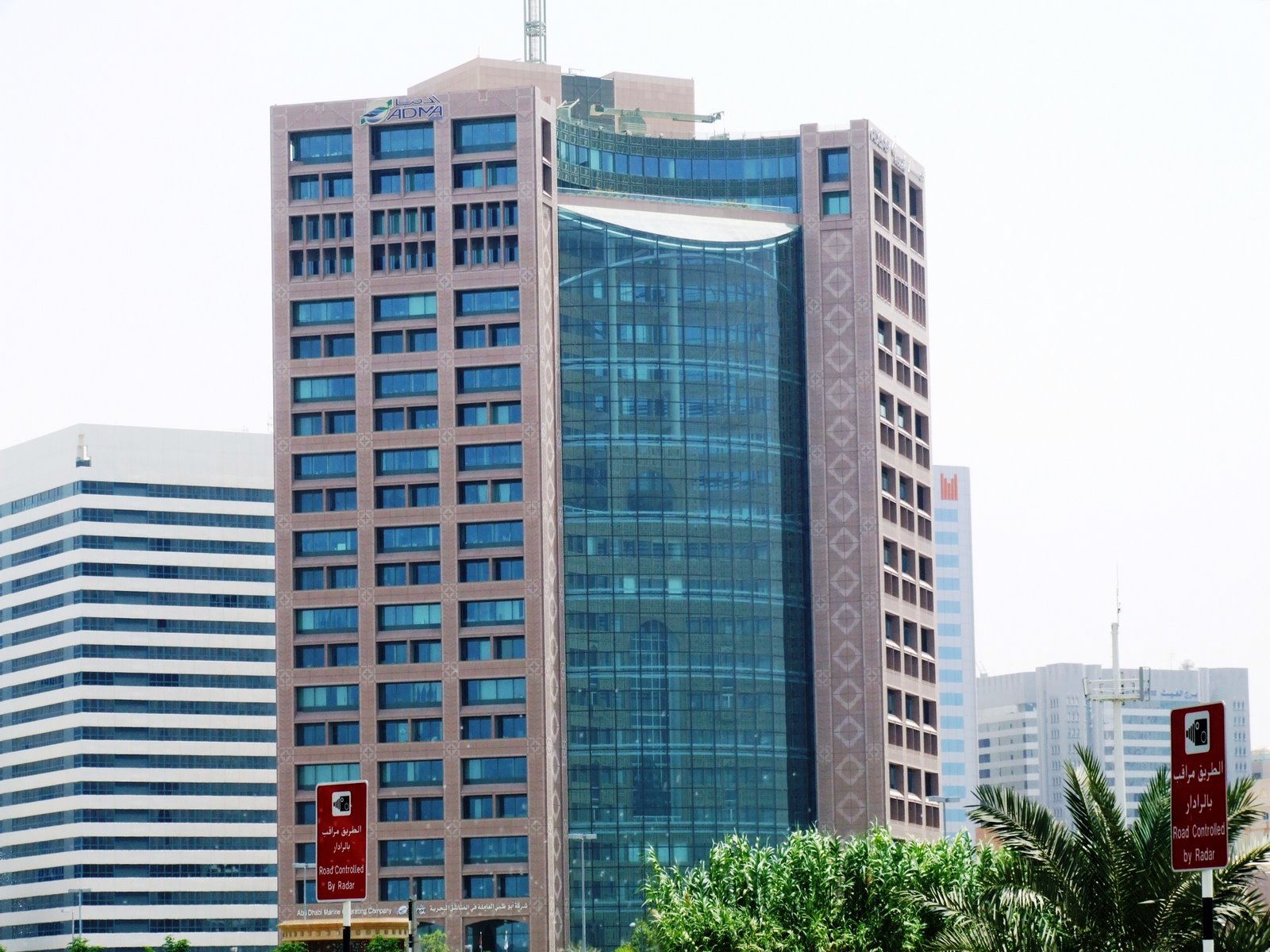
ADMA-OPCO awards Dh1.4b Zakum works
BY A STAFF REPORTER Khaleej Times
26 July 2007
ABU DHABI — National Petroleum Construction Company (NPCC), jointly with Technip, won a contract valuing Dh1.4 billion from ADMA-OPCO, for the Zakum gas processing facilities in the offshore areas of Abu Dhabi.
The project consists of installing gas processing and compression facilities to increase the production capacity of the Zakum field, while maintaining the reservoir pressure.
The new gas compression platform will be connected to the existing lower Zakum platform by a bridge. It will have two gas turbine-driven centrifugal compression trains, a triefthylene glycol dehydration unit, an air cooling unit and vapor recovery system.
The facilities are scheduled to be operational January 2010.
Visit: http://www.adma-opco.com to know more about ADMA-OPCO.
Fertil Abu Dhabi launches $240m expansion programme

Fertil launches $240m expansion programme
BY HASEEB HAIDER – Khaleej Times
20 July 2007
ABU DHABI — Ruwais Fertilizer Industries (Fertil), a subsidiary of Adnoc Group, has launched an expansion programme valuing $240 million to add 50 per cent capacity to its Urea manufacturing facilities.
At a ceremony held at its headquarters in Abu Dhabi, Fertil signed two contracts for the Urea Plant Debottlenecking Project with Descon Engineering of Pakistan worth $177 million, while a contract was signed with M/s Urea Casale of Switzerland for providing the technology and licence for the Urea Plant modifications.
Mohammed Rashid Al Rashid, General Manager Fertil, speaking on the occasion said:” We have taken a strategic decision to convert our surplus liquid Ammonia into Urea, which is more convenient to store, handle and export.”
He said the Carbon dioxide required for this process will be recovered from the presently vented Reformer Flue Gases, resulting in annual reduction in Green House Gases emissions of approximately 100,000 tonnes of CO2, resulting in 20 per cent reductions. This is very much in line with the International Co2 sequestrations process, clean development mechanism and Kyoto protocol objective.
In addition, the conversion of 90,000 metric tonne per year (MTPD) of ammonia into urea will be supplie to the new Melamine plant and process off gases and carbamate return from the Melamine Plant as well.
Fertil’s plant currently produces 1000 metric tonnes per day (MTPD) Topsoe designed Ammonia and 1500 metric per day (MTPD) Stamicarbon Urea plant. Since, Fertil’s establishment in 1983, the Urea production capacity was increased by 20 per cent. Of 2700 metric tonnes per day manufacturing capacity of urea, about 800 metric tonnes per day will be supplied to the Melamine plant and remaining 1900 metric tonnes per day of Urea production will be Granulated and exported.
The Granulation unit Technology Licence is provided by M/s Uhde Fertilizer Technology of Netherlands and the unit is designed for 2500 metric tonnes per day. The Carbon Dioxide Recovery technology and licence is provided by Mitsubishi Heavy Industries of Japan and the unit will have a capacity of 400 metric tonnes per day of Co2.
Speaking on the occasion, Shaikh Azhar Ali CEO and Managing Director of Descon Engineering said that the company has vast experience in the setting up Urea plants, after establishing the group’s own mega unit in Pakistan.
Visit : http://www.fertil.com to know more about FERTIL.
$100 Oil May Be Months Away, Not Years, Say CIBC, Goldman
July 23 (Bloomberg) — The $100-a-barrel oil that Goldman Sachs Group Inc. said would prevail by 2009 may be only a few months away.
Jeffrey Currie, a London-based commodity analyst at the world’s biggest securities firm, says $95 crude is likely this year unless OPEC unexpectedly increases production, and declining inventories are raising the chances for $100 oil. Jeff Rubin at CIBC World Markets predicts $100 a barrel as soon as next year.
“We’re only a headline of significance away from $100 oil,” said John Kilduff, an analyst in the New York office of futures broker Man Financial Inc. “The unrelenting pressure of increased demand has left the market a coiled spring.” New disruptions of Nigerian or Iraqi supplies, or any military strike against Iran, might trigger the rise, Kilduff said in a July 20 interview.
Higher prices will increase revenue for energy producers from Exxon Mobil Corp. to PetroChina Co., while eroding profit at airlines including EasyJet Plc and railroads such as Union Pacific Corp. The U.S. and other oil-importing nations risk accelerating inflation, while higher energy costs threaten to restrain growth.
Benchmark crude oil futures ended last week at $75.57 a barrel on the New York Mercantile Exchange, up 51 percent since mid-January and twice the level of early 2003. A record number of options have been sold that give the buyer the right to buy crude oil at $100. The contracts, covering 50 million barrels, only pay off should oil go above the target price.
Goldman’s View
Arjun Murti, a New York-based Goldman Sachs analyst who covers oil producers and refiners, roiled markets in March 2005 with a report saying prices could touch $105 a barrel during a “super spike” period because demand was stronger than anticipated. Price swings might also go as low as $50, Murti said at the time.
Currie, Goldman’s global head of commodities research in London, is predicting that oil prices will probably touch a record and stay at unprecedented levels for months or years. The all-time high for Nymex crude futures is $78.40 a barrel on July 14, 2006.
“Ultimately, the key to the outlook going forward is when Saudi Arabia will ramp up production,” he said in an interview. “If you have a situation in which inventories globally get drawn to critically low levels, the volatility in this market is likely to explode, which significantly increases the probability of $100 oil.” Oil might slip to $73.50 if OPEC were to start producing more now, he said.
The Organization of Petroleum Exporting Countries is scheduled to next meet in September. No members have called for a gathering before then. A decision to raise output at that time would lead to greater supplies toward the end of the year.
Accelerating Demand
The failure of near-record fuel prices to restrain global oil demand growth is what concerns Rubin, chief strategist at the brokerage unit of Canadian Imperial Bank of Commerce in Toronto.
“Prices have doubled, and demand is alive and well and accelerating,” he said in a July 18 interview. “The argument that rising prices would choke demand and bring increased output is falling to the wayside.”
A National Petroleum Council study led by former Exxon Mobil chairman Lee Raymond, released last week, predicted a growing gap between production and demand for oil and gas during the next two decades. As recently as 2005, Raymond said oil prices had probably peaked and dismissed the possibility that supply and demand could not be brought back into balance.
“There are questions about whether the oil industry can keep up with demand,” U.S. Energy Secretary Samuel Bodman said last week, commenting on the Petroleum Council report.
Gasoline Sales Rise
Gasoline pump prices averaging more than $3 a gallon across the U.S., the consumer of 25 percent of the world’s oil, haven’t dented sales. Deliveries of gasoline were a record 9.23 million barrels a day in the first half of this year, according to a July 18 report from the American Petroleum Institute in Washington.
“It appears that high prices are acceptable to the American consumer,” said Robert Ebel, chairman of the energy program at the Center for Strategic and International Studies in Washington. “People want the house with a yard and white-picket fence so they are moving further and further out of the cities. They have to just get up earlier and drive further.”
Outside the U.S., demand increases are being led by India and China, where growing economies mean more cars and trucks and more factories that burn oil and gas.
Consumption between now and the end of the year will increase by 3.6 million barrels a day because of seasonal shifts. The rise is equal to the daily production of Kuwait and Oman combined, and it comes after OPEC twice in the past year cut production to support prices.
Rising Costs
The cost of finding and pumping oil is rising steadily, convincing analysts such as Rubin and Deutsche Bank AG chief energy economist Adam Sieminski that higher prices will last. Shortages of deepwater drilling ships and rigs has pushed daily rents to records, and the skilled workers needed to run rigs, weld pipes, pilot vessels, fix refineries and build oil-sands projects command ever-higher wages.
“Three years ago we were calling for $30 oil, then $35 and then $40 oil,” said New York-based Sieminski, who last week raised his forecast for the average price of oil in 2010 to $60 a barrel from $45.
“I’ve gotten tired of increasing these forecasts in $5 increments,” Sieminski said in an interview. “Something has happened. Costs have continued to escalate, and the geopolitical situation has gotten worse.”
The $60-a-barrel forecast for 2010 is 15 percent higher than the average analyst forecast, Sieminski said. The projection probably will turn out to be too low, he said.
Oil prices could triple in three months to more than $200 a barrel, given the right circumstances, according to Matthew Simmons, chairman of Simmons & Co., a Houston investment bank.
`Still Cheap’
“Oil is still cheap,” Simmons said. “In the 20th century, with a few exceptions, oil was almost free. The only exceptions were during 1973, 1979 and when Iraq invaded Kuwait.”
Prices rose in 1974 after an oil embargo that followed the Arab-Israeli war and from 1979 through 1981 after Iran cut oil exports. The average cost of oil used by U.S. refiners was $35.24 a barrel in 1981, according to the Energy Department, or $79.67 in today’s dollars.
While crude oil prices are approaching the records they set at this time last year, not everyone is convinced $100 crude will happen. From their peak, oil futures began a six-month slide. They got below $50 on Jan. 18 before rebounding.
“The risk parameters are somewhat different than a year ago, however the overall situation is similar,” said Tim Evans, an energy analyst at Citigroup Inc. in New York who correctly predicted a year ago that oil prices were at a peak. “We’ve priced in a shortage that is not evident yet.”
Pickens
A pullout from Iraq may be the event that pushes oil to $100 a barrel, according to Boone Pickens, the Dallas hedge fund manager who has joined Forbes Magazine’s list of billionaires because of his bullish bets on energy prices. Pickens predicted a year ago that $100 oil would probably occur by now. Today he is looking for $80 within six months, and he says growing chaos in Iraq would be a bad sign. “That could run prices pretty high,” he said.
Goldman Sachs’s Currie also notes similarities to a year ago, with global inventories at about the same level and U.S. government data showing an increasing bet on higher prices.
“At face value this market is strikingly similar to a year ago,” Currie said. “What is different? Supply is down a million barrels a day, demand is up a million barrels a day. The market is in a deficit.”
To contact the reporter on this story: Mark Shenk in New York at mshenk1@bloomberg.net .
Last Updated: July 22, 2007 19:10 EDT
Thanks to Nagesh Sreenivasan, Dubai for this info.
- ← Previous
- 1
- …
- 12
- 13
 ClicksandWrites