Information – News

Painting Competition on Children’s Day – November 14, 2010 – organised by Indian Embassy

Posted on

Painting Competition on Children’s Day – November 14, 2010 – organised by Indian Embassy

Dear all,
Please find below a call for participation in a Painting Competition held by Cultural Wing of Indian Embassy in connection with Children’s Day.  The competition is held on Sunday, 14th November 2010.
  • Students have to approach their respective school management, who in turn have to submit a consolidated list for participation to the Indian Embassy before 8th November.
  • There is no limit on the number of participants from each school.
It is an excellent opportunity and do participate and have a great time of creativity.
Ramesh Menon, Abu Dhabi
From: cul <cul@indembassyuae.org>
Date: Tue, Nov 2, 2010 at 12:46 PM
Subject: Painting Competition on Children’s Day – November 14, 2010
To: team1dubai@gmail.com


Dear Mr. Ramesh Menon,


The Cultural Wing of Indian Embassy in collaboration with Abu Dhabi Indian School is organizing a painting competition on the occasion of Children’s Day on 14th November 2010.

The competition will be open to four groups: Classes 1 to 4, 5 to 7, 8 – 10 and classes 11 & 12.

The venue of the competition is Abu Dhabi Indian School and the competition will start from 10.00 a.m. for 2 hours on Sunday, 14th November 2010

You are requested to kindly circulate this information amongst your members and ask their children to approach the head mistress or principals of their respective schools and participate in this competition.

The participating children need to bring the painting material.

The acceptable painting materials would be water colour/poster colour/acrylic colour, felt tip pens, sketch pens and crayons/colour pencils.

The last date of receiving names from the schools is 12.00 noon on 8th November, 2010.

The results of the competition will be conveyed to the principals of the respective schools.

With Warm Regards       
(Anuja Chakravarty)
Second Secretary (Cul)
November 2, 2010

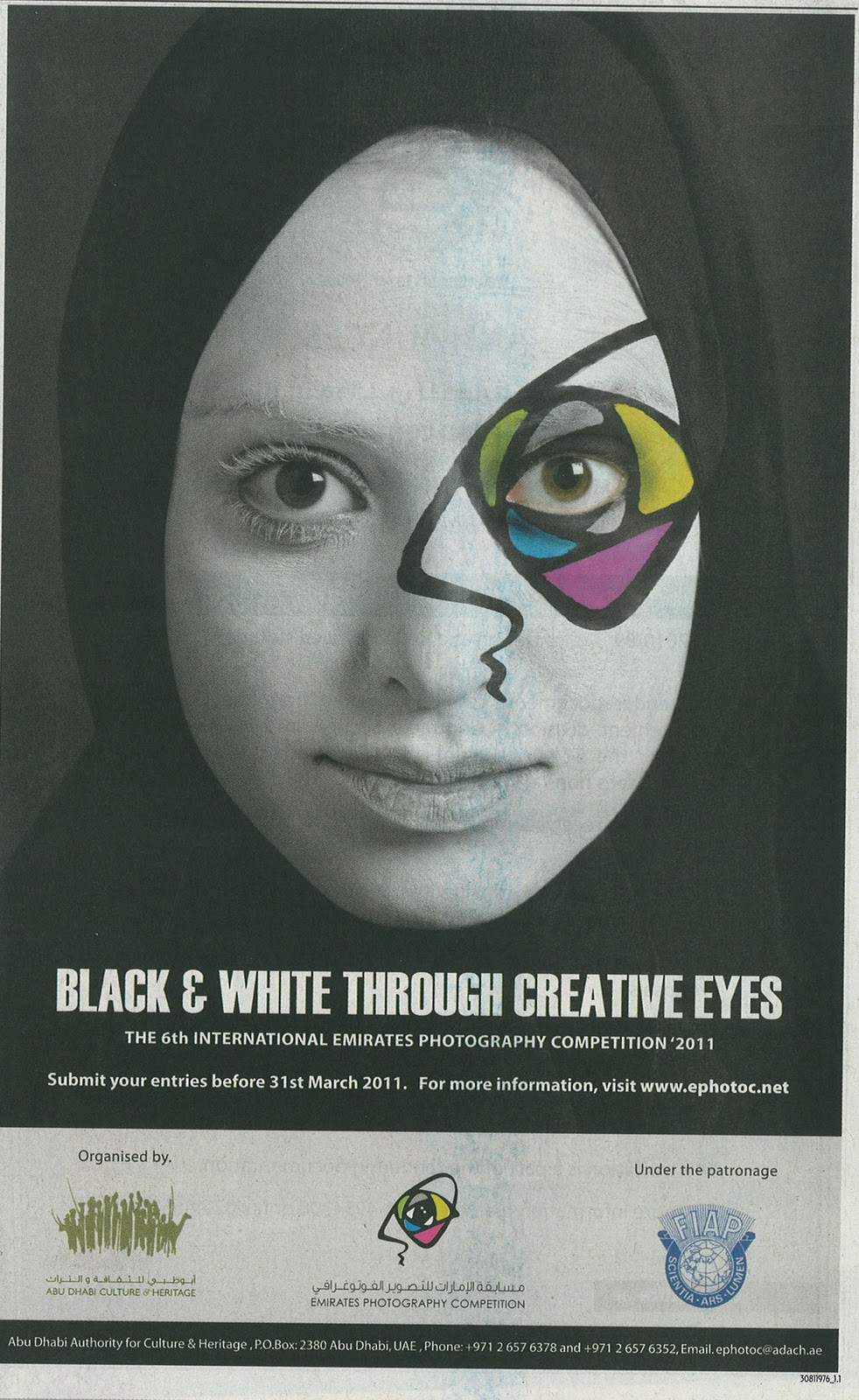
6th International Emirates Photography Competition 2011 – Blak & White through creative eyes
Posted on Updated on

6th International Emirates Photography Competition 2011 – Blak & White through creative eyes

Visit http://www.ephotoc.net/ for details.
Participate with interest.


Clicks and Writes – now listed as Featured United Arab Emirates Blog on GO! Overseas

Posted on Updated on

Clicks and Writes – now listed as Featured United Arab Emirates Blog on GO! Overseas

I am delighted to inform you that all Clicks and Writes has been included in the list of top blogs in the UAE. I hope you will enjoy reading the content as much as I enjoy posting them each day and learn a little more about life in the UAE each time you visit!.

You’re my view the listing at:

http://www.gooverseas.com/united-arab-emirates-blogs

Poly Varghese – An innate artistic brilliance decant through strings of Mohana Veena

Posted on Updated on

Poly Varghese – An innate artistic brilliance decant through strings of Mohana Veena


On a recent personal visit to UAE, Poly Varghese, one of the four exponents of Mohana Veena performed at different venues in UAE.

Although, I could not watch live any of them, I could hear the vibrations through audience comments and news reports.

With interest in music and the instrument, I went ahead and searched for his journey thus far. It was indeed a fruitful journey, to know the musician and the innate talent he has for his musical and artistic brilliance.
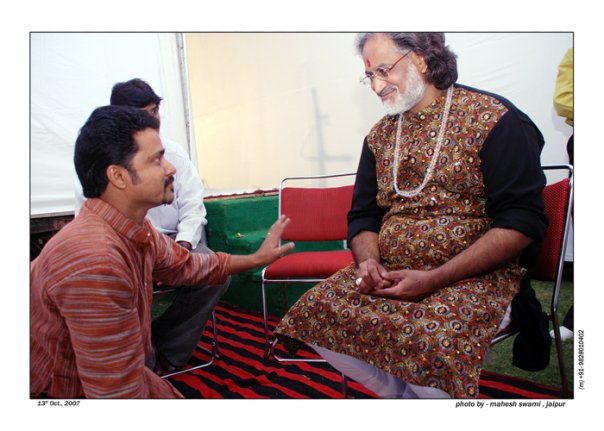
Poly Varghese had his initial training in music and other art forms from, the Kerala Kalamandalam, a renowned centre for art and music, an institute which Poly entered as a teenager and later emerged from as a leading Mridangam player . Thereafter, he pursued his quest for music at the Viswa Bharati University, Santiniketan. Here, he had the unique opportunity and access to learn various instruments both percussion and stringed out of which he specialised in playing Hindustani music on the Electric guitar.

A chance meeting with Pandit Viswa Mohan Bhatt gave him an opportunity for intimate access to the Mohan Veena which incidentally happened to be an instrument designed and developed by Pandit viswa Mohan Bhatt himself , who is India’ s first Grammy award winner and also the recipient of the Padma Bhushan.

Poly Varghese has played for the programme “sugamana ragangal” that was telecast on the Chennai Doordarshan channel.

Today, Poly Varghese under the guidance and tutelage of Pandit Bhatt has emerged as a noted Mohan Veena player and has a number of concerts to his credit both in India and now, in the Middle East.

His notable performances in UAE include the one at the Arab cultural centre Sharjah which is part of Arab India Cultural Exchange organized by the Government of Sharjah and at the Adishakthi Ashram (headed by Veenapani Chawla a renowned theatre exponent), in Pondicherry and also at the Centre for Experiencing Socio-Cultural Interaction at Madurai.
//www.youtube.com/get_player

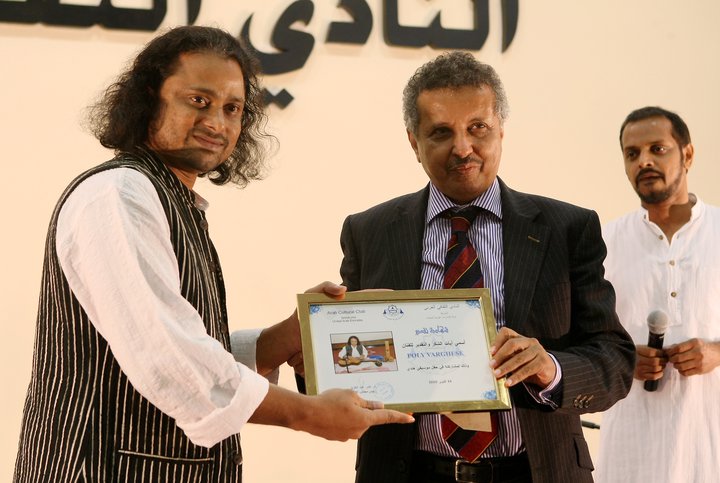
After this historic performance, which was held on 16th October, 2010, Dr Omar Abdul Aziz (Head of SharjaH Arab Cultural Center Dept. of Culture and Information U A E ) presented him with a certificate of appreciation from the Department.

His concerts in Dubai was appreciated by HE Sanjay Verma, Consular General of Indian Embassy in Dubai.
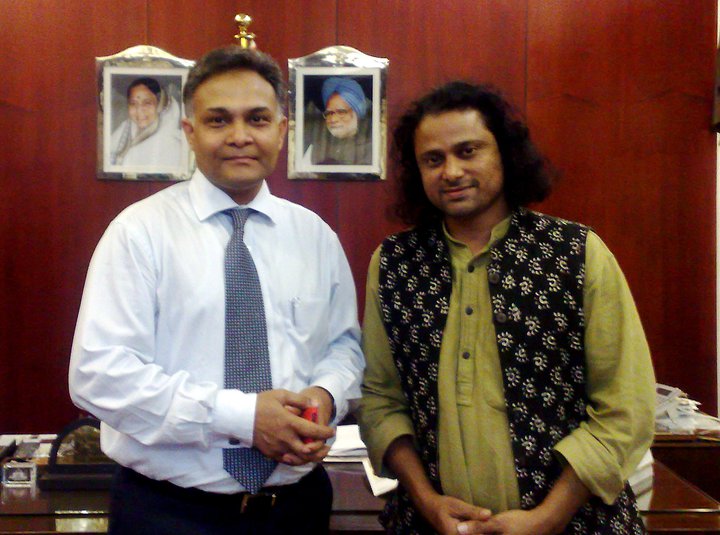
During his visit, he had two memorable performances at Indian Social and Cultural Centre Abu Dhabi.

and one at Kerala Social Centre Abu Dhabi.

It may not be out of place to mention that he is at ease while playing not only the Mohan Veena but also the electric Guitar.

Poly has also been creative enough to develop the 40 stringed three-neck guitar which he has named as the “Poly String Guitar” (bahu thantri veena).

This guitar is designed as a three neck guitar and it is unique because all the tones of indian classical music can be expressed at the same time in this instrument. morevover there has not been any indian string instrument having 12 octaves..these 12 octaves demonstrate the 3 characters of indian classical music. The three necks (finger board) are the bass neck, lead neck and the high neck.

Poly Strings Guitar can be called as the conglomeration of 4 musical instruments namely the tarab and the three finger boards. this guitar is equipped with four electric pick ups which are unique and distinct in its own way. the pick up used for the bass neck is designed to give an acoustic feel the tarab pick up is entirely different to the three pick ups because tarab expresses the natural tone of all acoustic instruments and for this purpose alone was the pick up created . when listening to the tones of the tarab one can listen to the tones of the sitar and the Mohana Veena. The connection of these four pick ups are embedded in an electronic mixer which is part of the guitar and this mixer helps in complementing and enhancing the tones.

It may be noted that guitars available in the market are mono guitars meaning it doesn’t have a stereo unlike the Poly Strings Guitar which uses the technology of an audio surround system and has a 4.1 surround.

As a continuous learner, he is always in the process of perfecting and pursuing deeper the nuances Mohana Veena. In this pursuit, he has developed his own inimitable style of playing and many times improvises and plays his own compositions too. He puts in about more than 10 hours to practise his music every day, which is a point to note for the new generation of musicians.

The musical background and base he has travelled thus far may also explains for his excellence. He has studied Mridangam for several years under eminent vidwans including late Korambu Subramanyam Nampoothiri. In addition, he was also a student of Kathakali under Kalamandalam Gopi and leading Kathakali artists. He is also an excellent Tabala player. Well versed in South, North and Eastern style and ragas of Indian music, he automatically enter himself into any musical stage with his awareness, creativity and on stage improvisation. The knowledge of accompanying instruments add extra dimension to his performance. This make him blend more with his accompanying artists and also take them at their own skill level as he transcend himself into a musical journey on stage.

Having travelled with the Baul singers of West Bengal, he is familiar with their music and can render high-pitched Baul songs with ease. He is also trained in Rabindra Sangeet.

To add more dimensions to his creativity, Poly Varghese, has proved his talent in acting and has been in experimental theatre for several years. He has worked with great theater personalities in India like Krishnammoorthy, Badal Sircar, Nasser etc and has acted in plays of different languages. He has also appeared on the silver screen as well.

Poly is also a music composer and has composed music for films and theatre. In 2005 he won the Jeevan Atlas Award for the Best Music Director of the year for the Malayalam film “Kootilekku”. He had the privilege of having closely worked with the famous music director the late Devarajan master.

//www.youtube.com/get_player

He conveys his emotions through his music. This is well explained when one gets to listen to him. It also may explain the reason why many conventional musicians do not really understand his brilliance. Like a bird flying through the sky, or like a river silently flowing with it’s designated course, or the same river, flooded and violently flowing through wherever it is taken during the momentary current, his music has no boundaries. No rules and regulations. No wonder, he is being recognized by more and more senior musicians within India and abroad.

Born in Kerala, Poly Varghese has sufficiently good working knowledge of 9 languages including English, Tamil, Hindi, Bengali and Oriya.

Poly Varghese and his wife Sabeena Varghese (a lecturer in Library Science at Union Christian College, Madras) and their infant daughter Mithra Poly Varghese live at Madras.

He can be contacted on:

E-mail: polyvarghese@gmail.com

Face Book: http://www.facebook.com/home.php?#!/profile.php?id=1283735713

Phone: 00 91 99 40 27 39 31

This interview was done through interactions with him during his visit and knowledge shared by him through email exchanges
Ramesh Menon, Abu Dhabi

24.10.2010

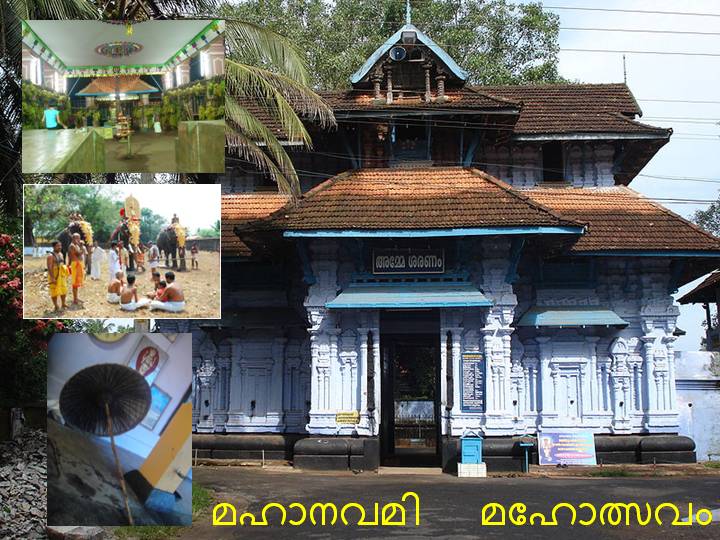
Mind Speaks – Mahanavami Maholsavam at Urakam Ammathiruvadi Temple, Thrissur.
Posted on Updated on

Mind Speaks – Mahanavami Maholsavam at Urakam Ammathiruvadi Temple, Thrissur.

During my recent summer holidays in Kerala, I made it a point to visit my ancestral home and the devi temple located there.

It was a big change from the scorching sun and hot weather climate of UAE to be there in Kerala during the monsoon period. It was drizzling, or rather getting to rain heavily when I visited the temple. As I walked on the granite pathway the sight of the long compound wall, filled with green algaes due to the rain, and carrying reminiscence of a series of beautifully pasted earthen lamps in the formation “Mahanavami Maholsavam” instantaneously brought memories of my childhood days there during the navarathri festival.
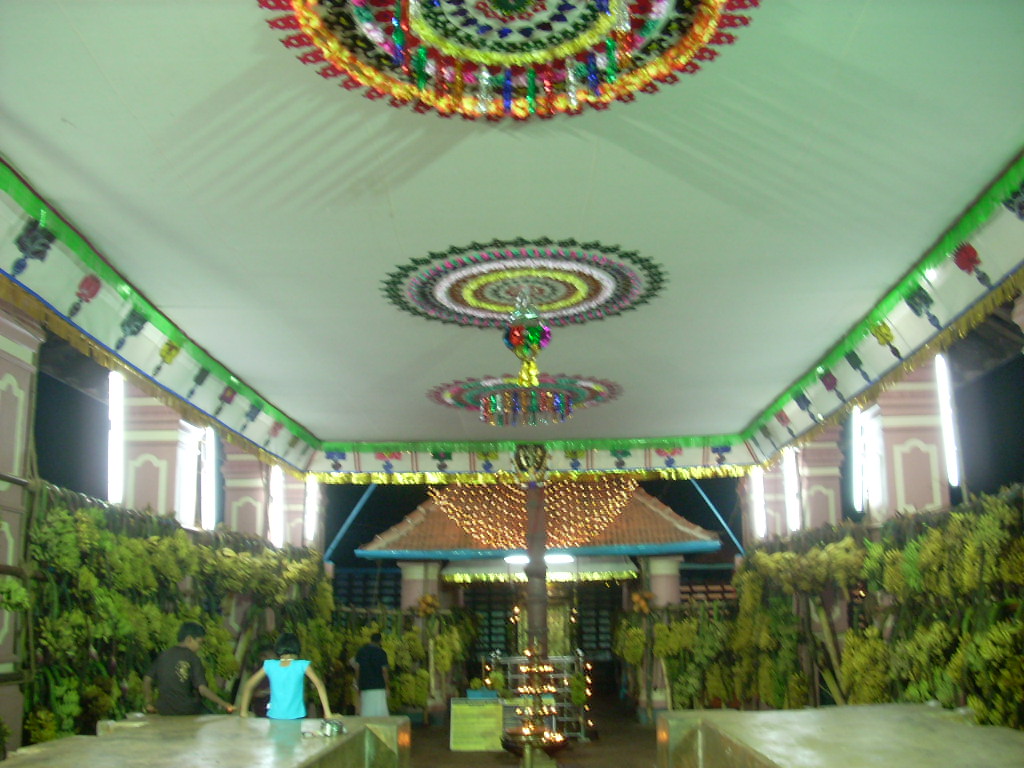
In those days, the 9 days of navarathri festival was celebrated in an elaborate way. As preparation for the festival starts, both children and adults gather inside the temple compound and then bring clay from adjacent paddy fields and then mix it well and then make small earthen lamps which is then pasted beautiful on the long compound wall, creating a formation “Mahanavami Maholsavam” written in Malayalam. Then, we all sit together and then prepare threads for the lakhs of lamps neatly placed on the walls surrounding the sanctum sanctorum. Then, it is the turn to segregate the bunches of plantain offered by devotees. First they are segregated and separated according to size, type and then they are kept inside special cells made inside the eastern gopuram. Once it is sufficiently ripened, i.e by the Durga dashami day, they are taken out and neatly displayed at the western entrance of the temple. This arrangement along with thousands of lamps lighted using sesame oil, brings out a divine feelings and presence which devotees never get in any other temples.

Those days, children volunteered themselves without hesitation to bring the naivedyam materials from there home to offer to devi once they keep their books for pooja.

It was pooja holidays and our books have been kept for devi’s blessings, as children, we utilised every opportunity to play football, which were bought using the dakshinas we received from kumatti festivals conducted during onam. After an hour or two of hard fought match between teams formed within ourselves or guest teams from outside, it is time for us to go and take an elaborate bath at the mampilly pond, across the road. With full all the time, and cold as ever, a swim, and a bath follows and we are back to the temple once again. By then, it is time for lighting the lamps. Together, we all gather and take small torches made of clothes and then light one lamp and from it one by one the lakhs of lamps on the walls inside the temple. Along with it the neatly decorated earthen lamp formation “Mahanavami Maholsavam” will also glow.
It is a beauty to watch these lamps shining in the midst of bunches of banans and floral and leafy decorations made neatly in between. The gentle evening wind that flows that time, will make the lamps move around to either sides as if they too are enjoying the divine scene and talking to us of their joy.

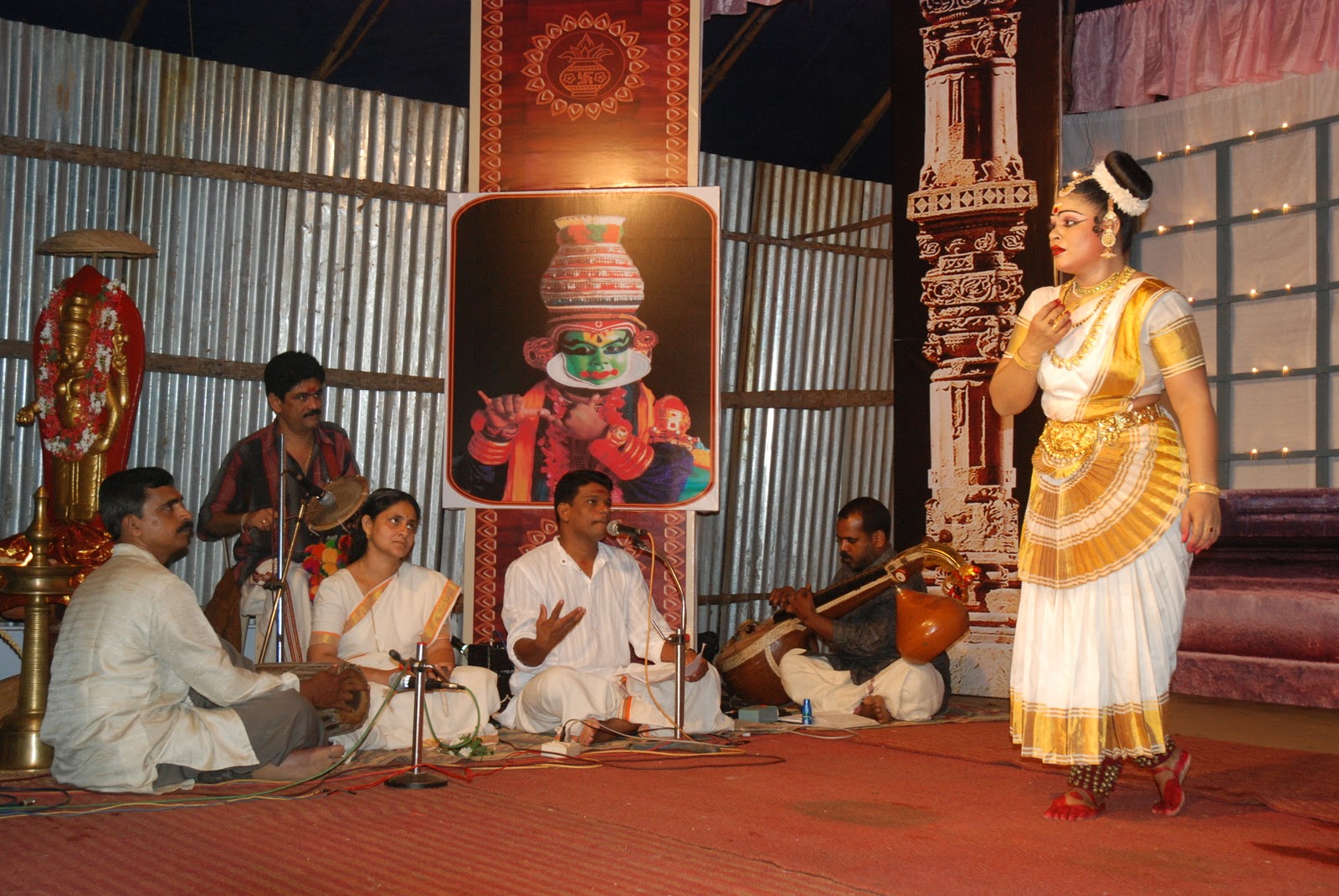
To extend our mischievous side of childhood and bring them to the festivities happening there, we used to take out one or two bananas from the neatly displayed bunches, carefully selecting the best ones, leaving the elders and caretakers in fury and letting them chase us down with the catch. They will never get us, and usually, all the anger and fury will all die down instantaneously once it’s time to watch the katcheri, or kathaprasangam or dance programmes happening at the festival panthal specially made for navarathri.
All these memories are from those joyous moments happened several years ago still remain within as bright and clear as ever, denotes the importance of this place, in particularly this devi temple. Why not then explore it further?

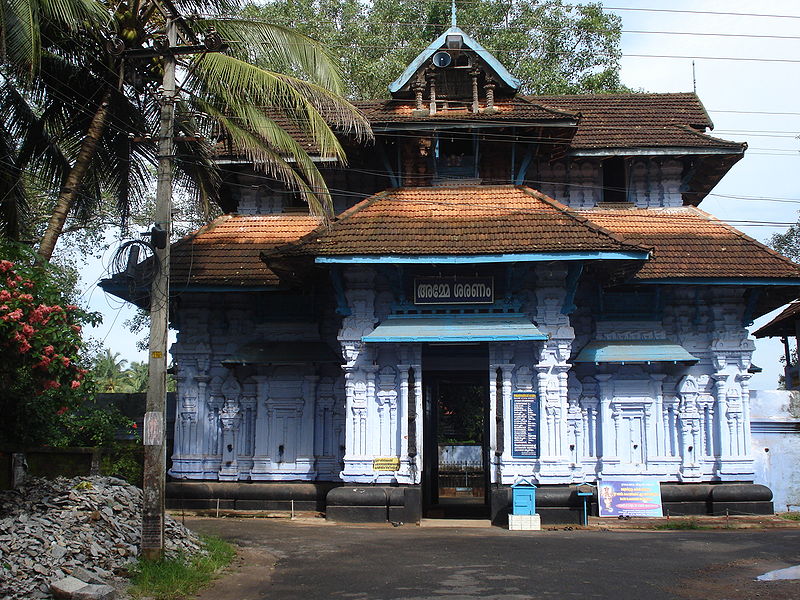
Urakam Ammathiruvadi Temple

Urakam, A small village on the way from Thrissur to Kodungallore via Irinjalakuda. It is a serene village, located approximately about 12 kms from Thrissur town and almost the same distance from Irinjalakuda town when one travel towards Thrissur.
The devi temple situated there, is one amongst the major 108 Durga temples, popularly called as “Ammathiruvadi Temple”.
Urakam Ammathiruvadi Temple is an architectural marvel with its majestic Rajagopuram (ornamental gateways), Mathilkettu (compound walls), ootupura (feeding hall), nalambalam (building immediately surrounding the sanctum sanctorum), the double storied Shrikovil (sanctum sanctorum) and the serene atmosphere maintained at the inner temple. The calmness and pious aura you get inside this temple could never be experienced in any other you may get to visit.
History of Urakam Ammathiruvadi Temple

According to the Kerala folklore, Poomulli Namboothiri (also sometimes referred to as Thiruvalayannur Bhattathiri) founded Ammathiruvadi temple about 700–1000 years ago. The temple site was once the location of the Namboothiri’s household. Ūrakam was then a part of the Peruvanam village (one of the 64 villages of ancient Kerala).
Legend has it that during then, due to the atrocities and calamities happening within the Desham, elders suggested three prominent members from the community, viz, Valaya Bhattathiri, Kadalayil namboothiri and then Komarathu Menon to travel to Kancheepuram and pray to goddess Kanchi Kamakshi and then please her and bring favourable solutions to ward off the evil effects happening that time.
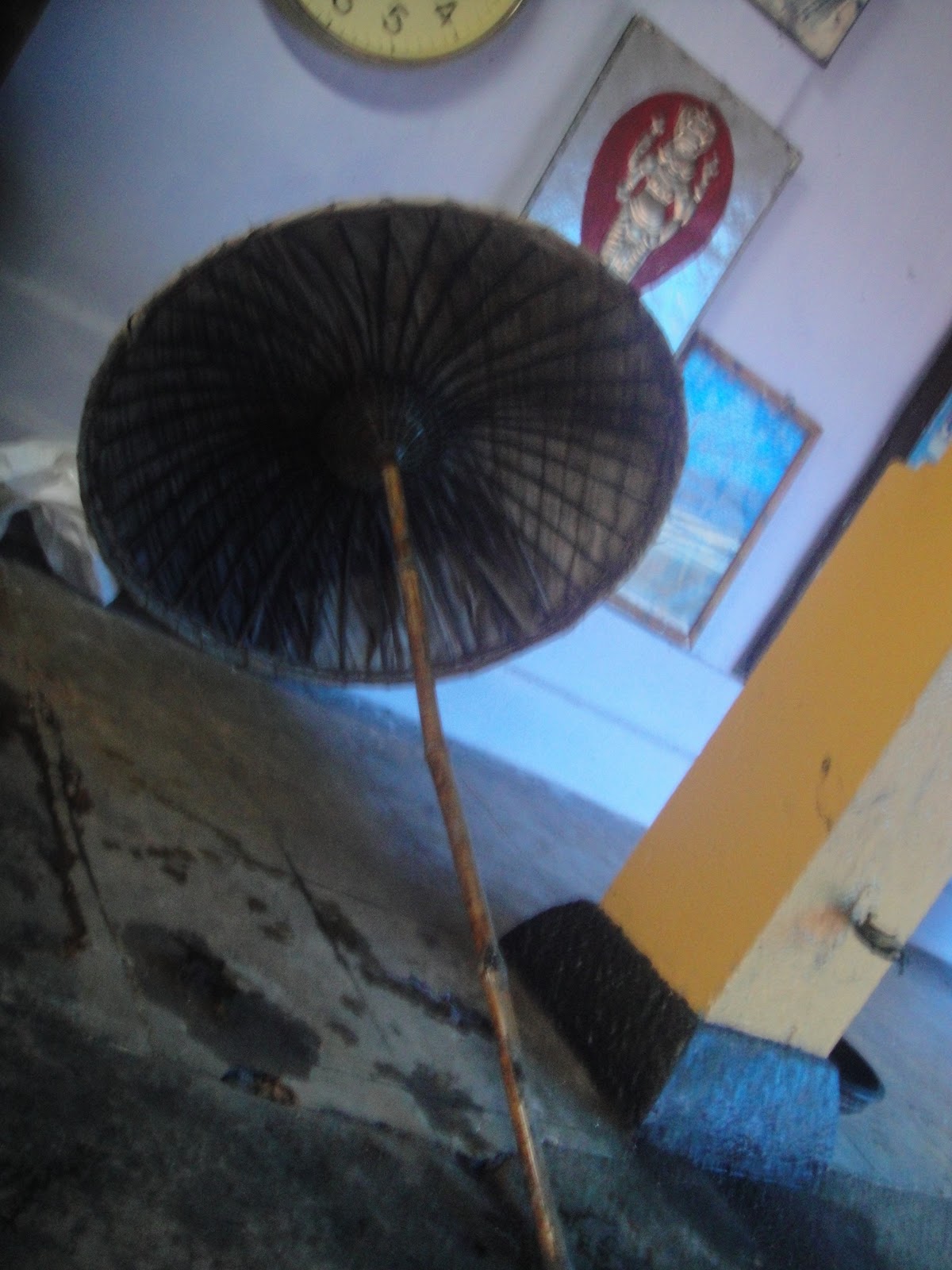
They all went and pleased with their prayers, happy with the devotion, devi agreed to come with them to Urakam. Accordingly, Kanchi Kamakshi decided to come to Kerala on the palm leaf umbrella of Poomulli (Valayannur) namboothiri. He reached home and placed the umbrella on the floor of his house. After a short nap, he came back and found that he was unable to take back the umbrella from the place where he kept. It was heavily grounded to the floor. Later upon further investigation it was confirmed that Kanchi Kamakshi was residing on that umbrella. The goddess came in Namboothiri’s dreams that night and let him know that he was supposed to build a temple for the goddess, and leave Ūrakam towards Nouth. She also let him know that he was to find an idol in a well far away and reinstate the goddess from the umbrella onto that idol. Namboothiri did as the goddess wished. He built the temple, after a short period of administration of the temple matters by the Poomulli family, he left all that he owned to the temple, and gave the administration to the Maharaja of Cochin. From then on the goddess was known as the Ammathiruvadi.
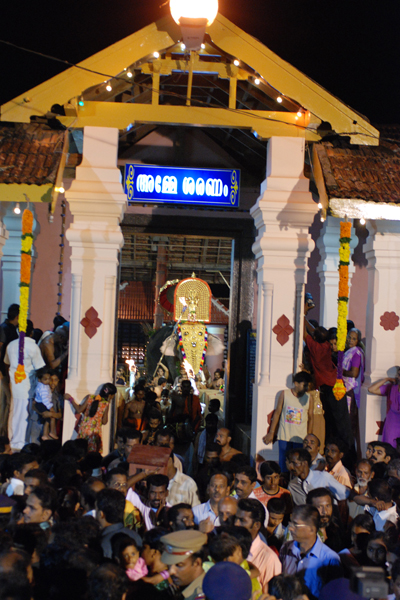
Later on the temple administration was transferred to Cochin Devaswam Board, who takes care of it even now. Urakam Ammathiruvadi temple is an integral part of the 1400 year old Arattuppuzha pooram festival. Arrattuppuzha pooram is called as Deva Mela, where all the gods and godesses assemble together in the presence of Thriprayar Thevar (Sri Rama). According to the old customs continued by the family of Cochi Raja and then subsequently by the Kerala State, whenever, Ammathiruvadi travel outside the temple, i.e for pooram or other festivals, she is supposed to be greeted with official “Guard of Honour” by the police. All festivities of this temple are taken care of a local committee with the guidance of Cochin Devaswom board.
Stories passed on from elders tell also that in those days, the idol installed by Poomulli Namboothiri was originally the devi idol worshiped by Sri Rama before he went to war with Ravana. There are several historic connections one get to see in places nearer to Oorakam, supporting the claim that the village was part of ancient hindu history. Due to the same connectoins, this village and all the adjacent villages carry a divine and prosperous aura throughout. Agricultural and other activities always flourish here.
It is also said that one family close to the temple became so devoted to the devi that she was pleased with their bhakthi and from then on, the eldest member of this family – Vazhappilly – became the guard of Ammathiruvadi and wherever she goes, she will be accompanied by this member. This continues even now.
Since she came to Urakam on an umbrella made of palm leaf, whenever Ammathiruvadi’s idol is carried out, it will be accompanied by a person carrying an umbrella made of palm leaf.
Special days and major festivals of Ammathiruvadi Temple

The famous festivals of this temple are Mahanavmi, Thrikarthika, Rohini Villakku, Makayiram Purappadu, Peruvanam Pooram and Arattupuzha Pooram.
They are celebrated in the following months:
Navarathri (in September / October)
Thrikkaarthika (in November / December)
Pooram (in March / April)
Illam Nira (in August / September)
Vavaarattu ( In October / November)
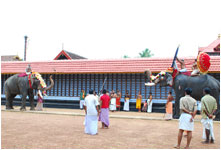
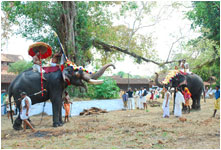
As I wrote earlier, Urakam Ammathiruvadi is an integral part of Arattuppuzha and Peruvanam Pooram and other small poorams (festivals) associated. One special ceremony that happens along with these festivities at the end of it is the Upacharam ceremony between Ammathiruvadi and other deities who comes to attend them. It is a delight to watch the two elephants carrying the idol greeting each other three times standing face to face and then taking leave.
It symbolises the co-ordial relationship between the villages and gods these deities represent and also a silent acknowledgement to confirm that they will meet again next year same time. This special ritual is prevalent only in temples around these region.
Poojas conducted at Ammathiruvadi temple are according to the kerala temples rituals and procedures. Accordingly the temple will open every day at 3:00 am with palli unarthal and 5 major poojas and 3 shivelis are conducted during the day it closes at 08:00 pm. Apart from the major deity, i.e. Ammathiruvadi, prathishtas of Shastha (ayyappa), ganesha and presence of lakshmi, durga, saraswathi and maheswari are also believed to be seen here. A very important nagaraja prathishta is here. It is also said that a presence of Kodungallur Bhagavthi is seen at the eastern gopuram of Ammathiruvadi temple. Due to all these divine conclave, devotees on their way to Shabarimala and specially those who go to Kodungallur Bharani make it a point to visit Urakam temple on their way and see blessings from Ammathiruvadi before they travel further.

During the time the sanctum sanctorum is closed for main poojas, ashtapadi songs are sung praising devi. You may visit the link or see below to listen to Urakam Padinjaare Marath Krishnamaarar singing one of the songs praising devi in the video link below:

//www.youtube.com/get_player

As Ammathiruvadi is also Kanchi Kaamakshi, many devotees from Kancheepuram in particular and Tamilnadu overall make it a point to visit Urakam Ammathiruvadi temple, whenever they visit temples in Kerala. In fact several astrologers based there often finds this link and connection and guide devotees to visit and offer pranams to Ammathiruvadi for blessings and prosperity of all kind.

Navarathri 2010 at Urakam Ammathiruvadi Temple
Navarathri, one of the major festivals of Urakam Ammathiruvadi temple is celebrated normally during September / October month ( i.e. in the malayalam month of Kanni). The celebrations starts from the pratham thidhi of Kanni month to the nine days reaching the navami day. Vijaya dashami day is celebrated in an elaborate manner with many children getting initiated to the world of knowledge on that particular day. From the first day, in particular from the Durgashtami day, the temple premises will be decorated richly with flowers, tender leaves from coconut trees and other light arrangements followed with it. In addition, on all these days, there will be extensive lighting of the lamps (deepalankaram / chuttuvilakku).
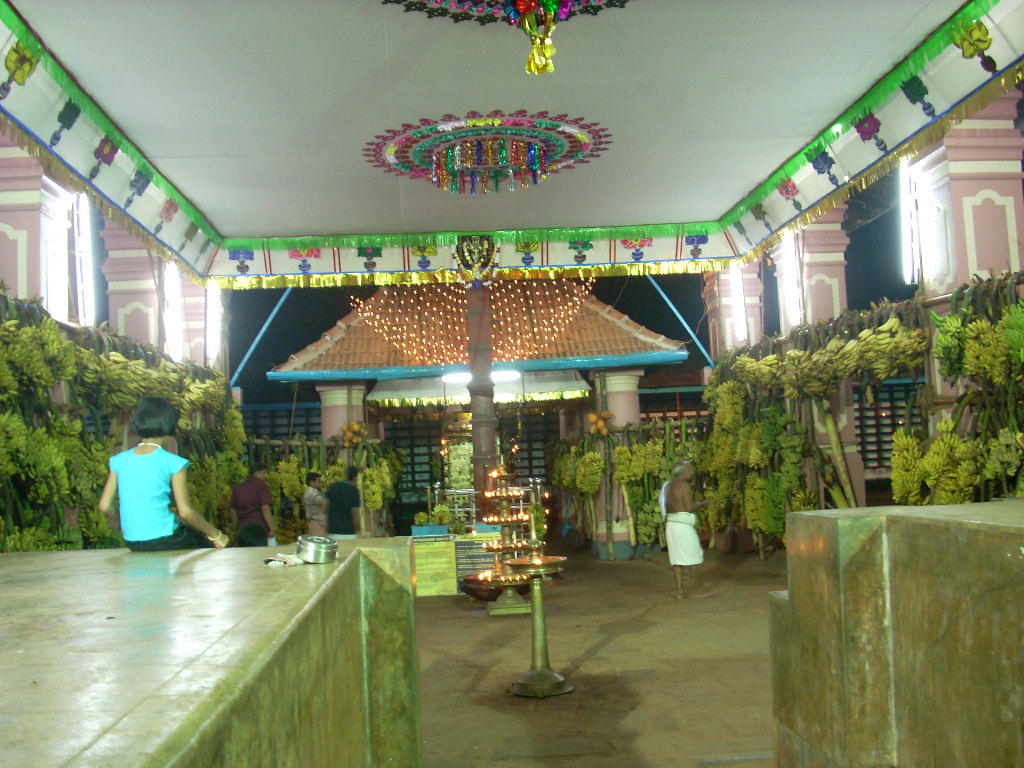
Exclusive to Urakam Ammathiruvadi is the special decoration of the temple premises within with bunches of banana. Devoteees from near and far, and in particular the families who live near to the temple will donate bunches of different varieties of banana 3 days before. These are then segregated by the temple committee according to size and type and then kept inside special cells within the eastern gopuram of the temple and uttuppura. On durgashtami day, it is taken out and then decorated neatly, starting from the western entrance (main entrance facing to which the deity faces) and then all throughout the temple. Approximately more than 1000 bunches of bananas of different varieties will get offered by devotees for this ritual.
Urakam and villages associated are rich and famous for agriculture of all types, in particularly banana plantations and it is believed that several years ago, there was a drought and calamities. Following it, harvest was not possible and the devotees prayed to Ammathiruvadi to rescue them from their difficult situation and promised to offer the best produce to devi, if everything turns alright. It happened that from then on, they never had problems with it, and they brought in abundance their produce and offered to devi as offering.
This decoration is very special for Urakam Ammathiruvadi temple. The huge wall adjacent to the Western side entrance of the temple, will be also decorated with earthen lamps a formation is created on the wall with writings “Mahanavami Maholsavam” written in malayalam.

The banana bunches with the stem are set and kept in an extremely beautiful way at this entrance and the yellow color of the ripened plantain along with the light emanating from the numerous lamps set in series along with it makes an extremely beautiful and exclusive site, which devotees could watch only here at Urakam Ammathiruvadi temple.

The elaborate lighting arrangement (chuttu vilakku or deepalankaram) on all the nine days are also very special to this temple.
The view towards the sanctum sanctorum from this entrance is very special. Children, on all the three days of the Mahanavami festival, will bring in special offerings for naivedyam to goddess Saraswathi, at whose lotus feet, they all had kept their books and tools for pooja.
Thousands of devotees from all over Kerala and nearby state will visit the temple during the final three days of Navarathri.
Tiny tots will be initiated into the world of letters at ‘Vidyarabham’ ceremonies to be held at different temples on the Vidhyarambham day. Thousands of devotees bring in their children to conduct the first orientation ritual on Vidhyarambham day.
Urakam Desham and life around
Any write up about Urakam will be incomplete if no mention is made about some of the equally beautiful and prestigious villages and the temples and festivities surrounding them. So, let us now travel a bit around and see the life and happenings there.

Urakam Desham, is a small village. Urakam and Oorakam are the two spellings used interchangeably for this place. Urakam is surrounded by several small villages. There are several devi temples in these small villages associated with. They all have historic significance.
The place is also surrounded by many natural pools and ponds which are full throughout the year. The nearest Parakkovil temple is situated 2 kms away from Oorakam and one can see ancient writings on rock, with foot prints set to be of Bhima.
Arattupuzha is one such village nearby to Oorakam and is very famous for the Arattupuzha Pooram, which is the one and only “Devamela” on the earth usually celebrated in March/April.
Arattuppuzha temple is about 3000 year old and this festival is the oldest and most extravagant of all the poorams celebrated in Kerala. The temple is dedicated to Lord Ayyappa called as Sasthavu. It is believed that on this day hundred and one gods and goddesses of the neighbouring villages visited lord Ayyappa, the deity of the Arattupuzha Temple.

On the fifth day of the festival, a procession is held in which drummers, and 108 caparisoned elephants accompany the beautiful elephant carrying idols (‘thidambu’) of 23 deities, including Thripayar Thevar, Oorakathamma Thiruvadi, Cherppil Bhagavathy, Chathakudam Sastha, Anthikad Bhagavathy, Thottipal Bhagavathy, Pisharikkal Bhagavathy, Edakkunni Bhagavathy, Ayyunnil Bhagavathy,Thaikkattussery Bhagavathy, Kaduppassery Bhagavathy, Choorakkottu Bhagavathy, Poonilarkkavil Bhagavathy, Kattupisharikkal Bhagavathy, Chakkamkulangara Sastha, Kodannur Sastha, Nankulam Sastha, Sreemattil Sastha, Nettissery Sastha, Kalloli Sastha, Chittichathakkudam Sastha and Medamkulam Sastha.
The gathering is lead by Thriprayar Thevar (Sri Rama) and all the other devas and devis are assembling there at Arattupuzha to offer pranams to him during the early morning hours of this festival day. It is a feast for eyes to watch the impressive line up of several gods at one place, accompanied by beautiful elephants and eminent melam artists and hug crowd in front on the ground set right after harvesting the paddy season just finished.

Between Arattupuzha and Kadalassery, another small village, is Neruvissery, which is yet another small village consisting of about 40 houses. There is a Krishna Temple, called “Nerukkavu Thevar” and “Nerukkavu Bhagavati”. Most of these temples are governed by Devaswam Board. There is another small temple of “Swamy Ayyappa” too in this village. There is an ancient Shiva Temple, the deity known as “Kandeswarath Appan” less than 1 km west.

Oorakam and nearby villages have had many famous people associated with the ancient history of Kerala. Vaidikan Kaplingadu is a famous brahmin priest, whose Illam (residence) is located in this Village. Similarly Late N.V. Krishna Warrier’s birth place and his variam called “Nerukkav Variyam” is also this village. It is believed that the Kaplingadu Mana (not existing now) was built on the order of Shakthan Thampuran. Music director Vidhyadharan Master, Director Priyanandanan, Artist Komu, are some amongst them. There are many silent and unsung heroes from Urakam and nearby villages who have marked their presence in the scientific and medical field.
Vallachira is another small village closer to Oorakam. Mahanavami festival of the Urakam Bhagavathi Temple, which is being celebrated in October every year; and the Bharani Festival of the Vallachira Bhagavathi Temple are the important festivals though there are other small festivals.
Most of the people of these villages were agriculturists and now a number of people are engaged in various jobs. Vallachira is famous for it’s craftsman who make gold jewelleries. A number of new generation are engaged in gold Jewellery making which changed the overall development of the people. The villages adjacent to each other also have several imitation gold jewellery units which is doing very well these days.
Cherpu is another village which is adjacent to Oorakam. Elephants made here on various types of wood are very famous world-wide. Furniture industry is also another source business interest to the locals.
The temple Thiruvullakkavu Sree Dharmasastha Kshethram is situated nearer to Oorakam and cherpu, is very famous for it’s Ezhuthinurthu festival during Mahanavami and Vidhyarambham days.
Oorakam, Cherpu and other adjacent villages are very famous from the olden days for the number of eminent percussionists, especially in the field of Chenda Melam. Peruvanam Kuttam, Peruvanam Satheeshan, Oorakam Appu, Kombathu Kuttan panicker, Kelath Aravindakshan, Pazhuvil Raghunath, Peruvanam Satheesan, Peruvanam Sivan and Peruvanam Prakasan are some among them.
The other major temples in the district that conducts elaborate ‘Vidyarambham’ rites is the Thiruvullakkavu Dharma Sastha temple at Cherpu. Members of the Thiruvullakkavu Warriam lead the ceremonies.
Approximately about 10000 children will be initiated into the world of letters at this temple on this auspicious day. The rituals will begin as early as 4:00 and will extend to the whole morning.
Hindu, Christian and Muslim family members live amicably with unity. The population of all these villages are heterogeneous and social solidarity and unity of the people is significant.

Special rituals and offerings for Mahanavami and Ammathiruvadi

This year Mahanavami is on 16th October and Vijaya Dashami on 17th October.

Devotees present Aval, kadhalipazham and jaggery mixed together are offered to lord saraswathi on Mahanavami days for Naivedyam. It is also very auspicious to offer Bhadradeepam for Devi during these days. In addition, performing Navagraha pooja will be auspicious for prosperity, overall well being of the family. Special poojas are performed for nagadevas on Navarathri days to bring progeny, prosperity and to ward off any evil effects in the horoscopes.
Urakam Ammathiruvadi temple is said to have a conclave presence of Lakshmi, Durga and Maheswari. Therefore it is very important for children and artists and educationists to come and worship Ammathiruvadi during Mahanavami.
Saraswatha pushpanjali performed here is very special for educational prospects of school going children.
It is extremely auspicious for children and artists to visit the temple during early morning hours and pray to her and then take the specially made thirumaduram (prasadam) from the chief priest.

Special neyppaayassam, vella nivedhyam are also important offerings. For the nagaraja deity present, devotees offer paalppayassam and turmeric powder. All these offerings brings in peace and prosperity to the devotees. Parents offer Thaali and Pattu along with Chandanam Chaarthu and Ayillya pooja to Ammathiruvadi in the names of their children who are in the marriageable age.
Ammathiruvadi temple is filled with the presence and blessings of goddess lakshmi. It is auspicious for devotees, in particular businesmen and industrialist to perform para (different types of para – including the one with coins) and conduct udayaasthamana pooja for prosperity in their respective business field.
It is also very auspicious for devotees to visit Ammathiruvadi and pray during their birth day and conduct poojas.

As the temple is filled with goddess Saraswathi’s presence in abundance, many famous artists and performers visit Urakam Ammathiruvadi temple during navarathri days and offer and perform their vidhya in front of the devi in the special panthal. It is an age old tradition and all the legends like Chembai Vaidyanatha bhagavathar.(Kacheri), Chithali Rama Marar (Thayambaka) etc have performed regularly here.
Website for Urakatm Ammathiruvadi temple
How to reach Oorakam:
Urakam Ammathiruvadi Temple can be reached by bus from Thrissur Bus Station. All buses going towards Irinjalakuda will pass by Oorakam. Thrissur Railway Station is the nearest railhead. Cochin is the nearest Airport.

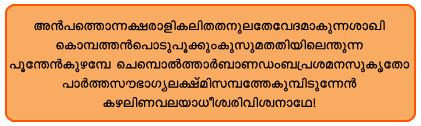
Let me conclude this write up by presenting the dhyana slokam of Ammathiruvadi.
This Navarathri season, especially on Mahanavami and Vijayadashami day, if possible, do make it a point to visit Urakam Amma Thiruvadi temple. Enjoy the beautiful and auspicious presence and vibrations of the temple and write to me your feelings with photos.
Ramesh Menon, Abu Dhabi

Passionate Photographers 2000 members and 7795 photos…Our journey continues
Posted on Updated on

Passionate Photographers 2000 members and 7795 photos…Our journey continues

Dear Passionate Photographers,

2000 members and 7795 photos…

I am very happy to write to you today that we have reached 2000 members. As the name denotes, it is a small community passionate about photography. Thus, as a member, you may not get to see many communication to cheer or responses each time when you contribute out of Passion from fellow members. They may be keeping their comments within, out of sheer enjoyment or as pride possession of the value of their words.

Therefore, be inspired by yourself, be proud of your creativity and continue to click confidently and exhibit at Passionate Photographers group without inhibition. The moment it is displayed here, it will get noticed and will be enjoyed by one and all.

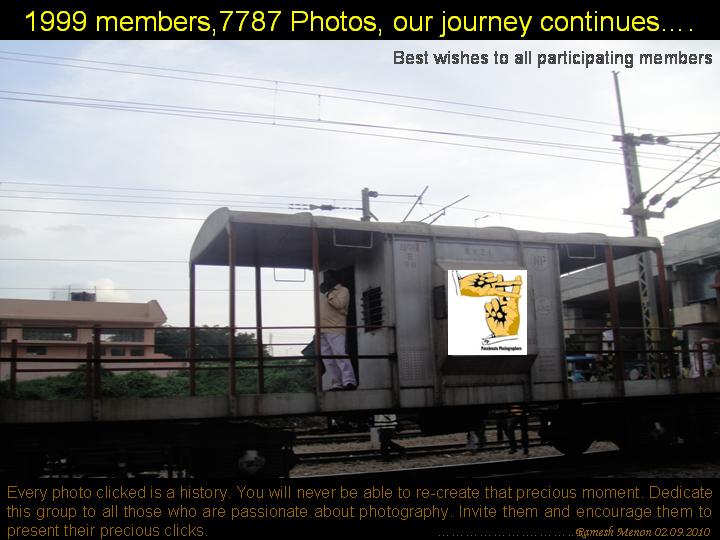
Like the goods train in this picture, let us all continue our journey here slow and steady. I repeat the golden words that came to my mind when I created this group. “Every photo clicked is a history. You will never be able to re-create that precious moment.”

Dedicate this group to all those who are passionate about photography. Invite them and encourage them to present their precious clicks.

Best wishes to all of you on behalf of all the Admin team members,

Ramesh Menon
04.09.2010

Invite your friends by clicking the link below:

http://groups.to/passionatephotographers/

Passionate Photographers – 1999 members

Posted on Updated on

Passionate Photographers – 1999 members

1999 members,7787 Photos, our journey continues.

Every photo clicked is a history. You will never be able to re-create that precious moment. Dedicate this group to all those who are passionate about photography. Invite them and encourage them to present their precious clicks.

http://groups.to/passionatephotographers/

Ramesh Menon
02 Sep 2010

Become a Fan of Team 1 Talent Share and show it on your profile

Posted on

Become a Fan of Team 1 Talent Share and show it on your profile

Team1Talentshare

Promote your Page too

Become a Fan of Team 1 Talent Share and show it on your profile

Posted on

Become a Fan of Team 1 Talent Share and show it on your profile

Team1Talentshare

Promote your Page too

Become a Fan of Team 1 Talent Share and show it on your profile

Posted on

Become a Fan of Team 1 Talent Share and show it on your profile

Team1Talentshare

Promote your Page too