Information – Health +
Visa medical centres witness big rush
Visa medical centres witness big rush
By Dina El Shammaa, Staff Reporter GULF NEWS Published: January 07, 2009
Abu Dhabi: Disease Prevention and Screening Centres in Abu Dhabi and Musafah under the Abu Dhabi Health Services (SEHA) are experiencing long queues of applicants after announcing that medical checkups for visas will be done by them only.
They will offer extra services to keep up with an average of 3,000 people a day since they opened on January 5, Gulf News was told.
The first day witnessed a long queue of approximately 3,000 visa seekers and the number increased the next day to 3,200.
Dr Zainab Khazaal, the centres’ manager, said that new and important steps are underway to ensure a smooth and fast experience for applicants.
One step is an express line for an extra Dh100 which will enable applicants to move rapidly through the process and this is due to begin in a few weeks.
Mobile clinics
“The procedure of taking the blood test, an X-ray and a general examination shouldn’t take more than half an hour in the express line,” she said.
Mobile clinics will also be introduced between June and September which will perform medical tests at a person’s doorstep.
The long queues in the last few days were due to the time of the year, said Zainab. “It’s the beginning of January, the beginning of the week and after a long vacation when both private and public companies were off, the large volume numbers were expected.”
Hours
Before introducing medical checkup options for visa applicants, the centre operated from 7am to 3pm five days a week.
The timings increased from 7am to 6pm by November and again an extra hour was introduced in January (from 7am to 7pm six days a week, and on Saturdays by appointment only).
Ramesh Menon, who works in his company’s paperwork legalisation process, said one of his co-workers arrived at the centre at 9am on Monday and waited in line without success.
“The next day she made it a point to reach the centre at 6.30am…she managed to finish everything by 11am, which given the pressure the centre is undergoing, is perfectly understandable,” Menon said.
Availability
List of personnel
Staff members in the Abu Dhabi and Musafah Disease Prevention and Screening Centres:
– 15 screening physicians
– 13 X-ray technicians
-32 blood collection and laboratory staff
-30 clerks
Asanas for reconditioning the nervous system
Asanas for reconditioning the nervous system
Express Features : 20 Dec 2008
The brain & the spinal cord along with the nerves emanating constitute the nervous system of the body.
The nervous system is divided into two main systems; the central nervous system (CNS) and the peripheral nervous system (PNS). Central nervous system consists of the brain and spinal cord.
The brain keeps the body in order. Its main job is to get the information from the body and send out instructions.
Peripheral nervous system consists of all other neural elements. Cranial nerves, spinal nerves & many other micro nerves start in the rear of the backbone & spread through a nerves net work & terminate in the brain.
A healthy central nervous system (brain and spine), healthy glands and healthy internal organs are the secret of vitality and rejuvenation & enable one to remain level headed in stressful situations.
The power & activeness of the body depends on the power & activeness of the brain.
Yogasanasa, Pranayama & Meditation contribute a lot for maintaining a healthy, active & powerful brain.
The following sets of four Asanas are very helpful to pump in blood to the brain & the spinal cord in extra quantity & add energy for all round development of the body & the mind.
UTTANPADASANA 30 DEGREES Lie flat on your back on the mat with legs straight. Place the arms close to the body with the palms facing downwards. Make sure the whole body is relaxed.
Inhale & raise your legs off the floor to 30 degrees, just two feet above the floor.
Hold it there for minimum ten counts or according to your body capacity. Then while exhaling, bring the legs back to the floor.
NAUKASANA (Same lying down position) Now extend your arms over the head. Take deep breath & lift your arms, shoulders and head from one side and lift both the legs right from thighs from the other side just few inches above the floor. Raising the body from both sides should look like the shape of a boat. Hold it there for some time.
URDHVANAUKASANA Now from second Asana (Naukasana), you are coming into Urdhvanaukasana.
Without any jerk or sudden force, inhale; gently sit up on your hips with arms up in the front. In this position, you are extending the arms in the front & legs are upward. Hold it there for some time.
DRONASANA From the third Asana you are coming into Dronasana. Just hold the legs & try to touch the knees with the forehead. Hold it there for some time. Then relax. Repeat the set of these four Asanas 3-5 times.
NOTE If you feel shakiness in the legs or your nervous system is weak, you can take support of the wall for all these Asanas. Those suffering from hypertension, heart disease, spondilitis & people who have been operated on abdomen should consult an expert before practicing it. In case of any query, contact: Dr Rita Khanna Mobile: 09849772485 Ph:-040-65173344 Email: ritukhanna57@hotmail.com
Awareness campaign on unsafe injections
Awareness campaign on unsafe injections
Express News Service First Published : 19 Nov 2008 03:15:00 AM IST KOCHI:
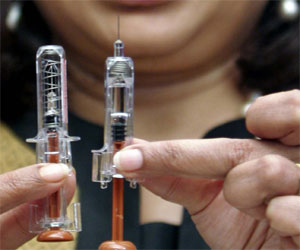
SafePoint Trust, a UK-based charity organisation, has launched an intensive campaign to inform the next generation by raising awareness on the dangers of unsafe injections.
The unique multi-pronged media-blitz will have a gamut of communication tools like public awareness messages, films on television and in cinema halls, radio spots and leaflets. The campaign in Kerala which started on Sunday will conclude on Thursday.
Paul Mallins, an independent consultant in Injection Safety and Emergency Response, told reporters here that the campaign in India was unique in many ways as it was comprehensive, tactical and highly visible. The total amount spend for the campaign in India was 7 lakh Euros.
The organisation will be airing a 3-minute film three to four times a day in over 300 cinema halls across the country.
A television commercial of one minute and 30 seconds will also be broadcast on the leading channels and 160 primary radio stations have been booked to broadcast the awareness spots.
The aim of this campaign is to give the next generation a chance, empower them, give them a voice and ensure that all injections are administered safely.
A report of the World Health Organisation (WHO) reveal that 50 percent of all the injections in the developed world are unsafe which would mean that they are performed with reused or non-sterile equipment.
It is unfortunate that at the all-India level, three fourths of the total number of injections delivered are administered with plastic syringes.
Honey can help heal burns faster
Honey can help heal burns faster
ANI First Published : 11 Oct 2008 WASHINGTON:
Honey can help heal burn wounds more quickly than some standard dressing treatments, a new study has found.
The systematic review by Cochrane Researchers concluded that honey can help speed up healing in some burns.
“We’re treating these results with caution, but it looks like honey can help speed up healing in some burns,” says lead researcher Dr Andrew Jull, of the Clinical Trials Research Unit at the University of Auckland, New Zealand.
Honey has been used in wound treatment since ancient times. The mechanism of action is unclear. While honey may help the body remove dead tissue and provide a favorable environment for the growth of new, healthy tissue, current interest in medicinal honey focuses largely on its antibacterial effects.
The review brings together data from 19 clinical trials involving 2554 patients with a range of different wounds. Honey was more effective in reducing healing time compared to some gauze and film dressings that are often used to treat moderate burns.
However, the researchers were unable to show any clear benefits for the healing of grazes, lacerations, surgical wounds and leg ulcers.
The researchers don’t advise using honey to treat other types of wounds.
“Health services should invest in treatments that have been shown to work,” says Dr Jull.
“But, we will keep monitoring new research to try and establish the effect of honey,” the expert added.
Thousands join Pink Walkathon in Dubai

Thousands join Pink Walkathon in Dubai
By Sunita Menon, Staff Reporter GULF NEWS published: October 17, 2008
Dubai: Over 5,000 people from all walks of life were up at dawn on Friday to take part in the 5th BurJuman Pink 3.6km Walkathon to raise funds and awareness of the fight against breast cancer
BurJuman and its surroundings were dressed in pink, with happy people dancing to the rhythmic beat of Dubai drums.
The mood was upbeat as participants posed for photographs and rushed inside the mall to get registered for the walk. Some of them even brought along their pet dogs. Almost everyone sported pink ribbons. Thousands of pink balloons went up the air as the walk began at 8am.
Some of the participants said they lost friends and family members to breast cancer. “I am taking part for the first time in this walkathon. Last year I lost my beautiful wife Laura. She had breast cancer. We were together for 17 years. By taking part I wanted to do something for her. I am sure she will be very happy,” said Jim Collins, a Dubai resident.
Sabina Khandwani, Head of PR and Marketing of BurJuman, said the walkathon also serves to keep people updated on how to protect women from breast cancer.
“Breast cancer has evolved from a family-centric issue to one which affects businesses and the larger economy,” Khandwani said.
This year’s Pink Walkathon was supported by Dubai Chamber of Commerce and Industry, Dubai Healthcare City, Barclays Bank, , MD Anderson Cancer Center, Johnson & Johnson, and Microsoft.
OPEN THE WINDOWS AFTER YOU ENTER YOUR CAR.
OPEN THE WINDOWS AFTER YOU ENTER YOUR CAR.
According to research done by a University of California , the car
dashboard, seats, air freshener will emit Benzene, a cancer-causing
toxin (carcinogen). In addition to causing cancer, it poisons your
bones, causes, anemia, and reduces white blood cells.
Prolonged exposure will cause Leukemia, increasing the risk of cancer.
It may also cause miscarriage. Acceptable Benzene level indoors is
50 mg per sq. ft. A car parked indoors with the windows closed will
contain 400-800 mg of Benzene. If parked outdoors under the sun at a
temperature above 60 degrees F, the Benzene level goes up to
2,000-4,000 mg, 40 times the acceptable level. The people inside the
car will inevitably inhale an excessive amount of toxins.
It is recommended that you open the windows and doors to give time for
the interior to air out before you enter. Benzene is a toxin that
affects your kidney and liver, and is difficult for your body to
expel.
Change in mindset key to diabetes treatment
Change in mindset key to diabetes treatment
By Nina Muslim, Staff Reporter GULF NEWS
Published: October 15, 2008
Dubai: Doctors and diabetics in the UAE need to introduce insulin early on in the treatment and also need to change their mindset to ensure an effective solution to the problem, a specialist said.
Conventional treatment of diabetes involves changing lifestyle first, such as more exercising and adopting a healthy diet, before taking oral medicine, such as metformin. Insulin is prescribed when other options have not been able to lower blood sugar levels enough.
Professor Julio Rosenstock, director of the Dallas Diabetes and Endocrine Centre, told the press that insulin should be considered early on.
“Doctors use insulin as a threat – ‘If you don’t exercise, I’ll put you on insulin’ – as the last resort. But they get put on insulin after 10 years, after all the complications and that is the wrong approach,” he said. “They should be considering insulin as the first line of treatment,” he added.
Previous studies on diabetes treatment, which have included insulin along with other forms of medicine, have found that early aggressive treatment after diagnosis were better at lowering blood sugar levels, to the American Diabetes Association-recommended ideal of seven per cent A1C. A1C is the average blood sugar level for the past three months.
A study of 12,000 subjects is currently on to determine whether introducing insulin soon after diagnosis and changing dosage according to daily blood glucose levels would control their diabetes better, compared to the standard protocol.
The findings are expected to be released next year.
After the press conference, Rosenstock told Gulf News that patient education was also an important part of the mindset change so they could monitor their condition and administer insulin themselves.
The UAE has the highest rate of diabetes in the world after the South-Pacific Island of Nauru. Diabetes, mostly Type 2 diabetes, affects approximately one in five people, according to the International Diabetes Federation.
The Emirates Diabetes Foundation estimates the diabetes prevalence among Emiratis can be as high as one in five, according to 1998 statistics.
World Health Organisation warns diabetes could affect 70 per cent of UAE residents.
The event also saw the launch of Solo Star, a disposable insulin pen by Sanofi-Aventis, that promises to administer insulin with minimal discomfort.
Walkathon
Abu Dhabi is preparing to mark this year’s World Diabetes Day on November 14 with the staging of the second Diabetes walkathon.
More than 10,000 people are expected to join the annual event, dubbed WALK UAE 2008 and held in partnership with the Emirates Foundation, according to organisers at the Imperial College London Diabetes Centre (ICLDC). ICLDC’s Medical & Research Director and Consultant Endocrinologist, Dr Maha Taysir Barakat said walking has proved effective in the management and the prevention of diabetes.
“Thirty minutes of moderate physical activity daily helps the body improve the use of its own insulin and wards off Diabetes,” she said.
No exotic pets for young kids: Doctors
No exotic pets for young kids: Doctors
6 Oct 2008,AP
CHICAGO: Warning: young children should not keep hedgehogs as pets – or hamsters, baby chicks, lizards and turtles, for that matter – because of risk
s for disease.
That’s according to the nation’s leading pediatricians’ group in a new report about dangers from exotic animals.
Besides evidence that they can carry dangerous and sometimes potentially deadly germs, exotic pets may be more prone than cats and dogs to bite, scratch or claw – putting children younger than 5 particularly at risk, the report says.
Young children are vulnerable because of developing immune systems plus they often put their hands in their mouths.
That means families with children younger than 5 should avoid owning “nontraditional” pets. Also, kids that young should avoid contact with these animals in petting zoos or other public places, according to the report from the American Academy of Pediatrics. The report appears in the October edition of the group’s medical journal, Pediatrics.
“Many parents clearly don’t understand the risks from various infections” these animals often carry, said Dr. Larry Pickering, the report’s lead author and an infectious disease specialist at the federal Centers for Disease Control and Prevention.
For example, about 11 per cent of salmonella illnesses in children are thought to stem from contact with lizards, turtles and other reptiles, Pickering said. Hamsters also can carry this germ, which can cause severe diarrhea, fever and stomach cramps.
Salmonella also has been found in baby chicks, and young children can get it by kissing or touching the animals and then putting their hands in their mouths, he said.
Study co-author Dr. Joseph Bocchini said he recently treated an infant who got salmonella from the family’s pet iguana, which was allowed to roam freely in the home. The child was hospitalized for four weeks but has recovered, said Bocchini, head of the academy’s infectious diseases committee and pediatrics chairman at Louisiana State University in Shreveport.
Hedgehogs can be dangerous because their quills can penetrate skin and have been known to spread a bacteria germ that can cause fever, stomach pain and a rash, the report said.
With supervision and precautions like hand-washing, contact between children and animals “is a good thing,” Bocchini said. But families should wait until children are older before bringing home an exotic pet, he said.
Those who already have these pets should contact their veterinarians about specific risks and possible new homes for the animals, he said.
Data cited in the study indicate that about 4 million US households have pet reptiles. According to the American Veterinary Medical Association, all kinds of exotic pets are on the rise, although generally fewer than 2 percent of households own them.
The veterinarian group’s Mike Dutton, a Weare, N.H., exotic animal specialist, said the recommendations send an important message to parents who sometimes buy exotic pets on an impulse, “then they ask questions, sometimes many months later.”
But a spokesman for the International Hedgehog Association said there’s no reason to single out hedgehogs or other exotic pets.
“Our recommendation is that no animal should be a pet for kids 5 and under,” said Z.G. Standing Bear. He runs a rescue operation near Pikes Peak, Colo., for abandoned hedgehogs, which became fad pets about 10 years ago.
‘Prostate cancer test in 10 minutes’
‘Prostate cancer test in 10 minutes’
7 Oct 2008, PTI
LONDON: Imagine walking into a lab in the lunch hour to undergo a clinical test for prostate cancer and coming out in just ten minutes with the resul
t.
Cut to reality. Scientists in Britain have developed a blood test which they claim can assess the level of a cancer marker, called Prostate Specific Antigen, in ten minutes, the Daily Mail reported.
Prostate Specific Antigen (PSA) is a protein which leaks out of the prostate gland when it is damaged. A raised
PSA level does not necessarily mean the patient has prostate cancer, but could suggest the need for further investigation.
Previously, men had to wait several days for results. Now, the test, called PSAWatch, will make it easier to screen men for prostate cancer — it needs a drop of blood from a finger-prick which is analysed using a portable machine.
“We have come to rely heavily on the PSA test for prostate cancer screening in UK, and it forms an important part of the criteria used by GPs”, said Dr Tim Larner, a urologist at Brighton and Sussex University Hospitals.
Talcum powder ‘can raise cancer risk’
Talcum powder ‘can raise cancer risk’
28 Sep 2008, PTI
LONDON: Ladies, please note — the next time you use talcum powder to keep fresh, make sure you don’t sprinkle it in your lower body.
A new study has revealed that women who use talcum powder around their private parts everyday are actually 40 per cent more likely to develop ovarian cancer — the risk is only restricted to the lower body.
Talc is made from a mineral called hydrous magnesium silicate which is crushed, dried and milled to produce powder used in cosmetic products.
And, according to researchers, powder applied to the private parts in the lower body may travel to the ovaries and trigger a process of inflammation that allows cancer cells to flourish.
Lead researcher Dr Maggie Gates said that until the outcome of further researches, women should avoid using talc in the genital area, the ‘Daily Mail’ reported.
Dr Gates and colleagues at Harvard Medical School have based their findings on an analysis of over 3,000 women — the study found using talcum powder once a week raised the risk of ovarian cancer by 36 per cent.
The risk increased to 41 per cent for those applying the powder every day, the researchers found.
The study also revealed that the risks were greater still for those with a certain genetic profile. Women carrying a gene called glutathione S-transferase M1, but lacking a gene called glutathione S-transferase T1, were three times likely to develop tumours.
The study has been published in the latest issue of the ‘Cancer Epidemiology, Biomarkers and Prevention’ journal.
 ClicksandWrites
You must be logged in to post a comment.