HSE
Turning waste to good use
Turning waste to good use
KHALEEJ TIMES 19 January 2008
USING body heat to power water heaters to heat buildings; trucks that run on chocolate and floors coated with cheese to say nothing of recycling human excrement. Bibi van der Zee looks at new ways of turning our waste to good use.
Body Heat
In Stockholm, they are going to capture the body heat generated by all the passengers at the central train station to heat water, which will be piped to the next-door office and used to heat the building.
It is an inspiration in terms of lateral thinking, but it was also done with such ease and lack of discussion and argument that it feels as if it should be contravening some obscure unitary development agreement, or some other typical obstacle to common sense. Karl Sundholm, of building managers Jernhusen AB, explains: “We were just sitting in a meeting, chatting and drinking coffee, and the idea popped up. Someone pointed out of the window to the railway station and said, ‘What about all that heat over there?’ We did a couple of drawings and that was it.”
They have finished the design stage, and are now finalising the details. Work is due to start in the autumn. The predicted cost is about GBP23,000, and they expect that it will reduce their heating bills by about 15%. “It’s not so complicated,” says Sundholm. “Just a couple of pipes and water pumps. Actually, I’m surprised no one thought of it before.”
Chocolate
Chocolate, of course, has always been one of the major forces for good in this world, so news that waste chocolate is being turned into a carbon-neutral fuel, thereby solving all our problems, should be no surprise to anyone.
Chocolate factories produce a lot of waste, equivalent to 5-10% of their total output, which usually goes into animal feed or straight to landfill. But now Ecotec, a UK bio-diesel firm, has worked out how to turn it into fuel. Biofuels from purpose-grown crops are looking increasingly problematic for the environment, whereas biofuels made from waste products are, quite simply, a good thing.
A little chocolate goes a long way, too, as Ecotec discovered when it recently powered a truck all the way across the Sahara. Alhough it took four tonnes of refined chocolate waste to power the trip, that is just a small percentage of annual chocolate waste.
Ecotec is also looking into other forms of food waste. As far as carbon neutral transport goes, nothing will ever beat your own feet, or a bicycle. But chocolate power has got to be better than any fossil fuel.
Human excrement
Fecophobia, an irrational fear of human excrement, is incredibly common in the modern world. In his cult 1995 book The Humanure Handbook, Joseph Jenkins (who gave the phobia its name) tried to get us to face up to this absurdity, pointing out that in the west we take for granted the idea that “you take your dump into a large bowl of drinking water, then flush it”. Why do we believe this to be the civilised thing to do, he asked. And what a waste. He went on. “Where does the flushed material go? What would happen if everyone in the world crapped in their drinking water supplies? Why doesn’t any other land mammal defecate deliberately in water? Why do we?”
Human excreta, or “night soil” as it is known is some cultures, is actually a potential goldmine, he said, calculating that if the entire world’s excreta had been turned into fertiliser for our crops in 2000, it would have been worth (using 1975 prices) $18.67bn. (It was reported this week that some farmers in Zimbabwe have started to use human excrement as fertiliser because of shortages of ammonium nitrate.) Moreover, when it is collected and sealed up so that it undergoes anaerobic digestion, it also produces biogas as a side product. Biogas can be used to fuel cooking stoves and heating systems. It can even be used to power cars.
The world is slowly coming round to Jenkins’ way of thinking. By 2010, China aims to have 50m households operating biogas systems, which harvest excreta and turn it into biogas and fertiliser. In Uganda, farmers are being taught how to make biogas using human excreta along with other organic waste, and in Sweden they already make an extra strong version, which includes biogas from rotting animal carcasses, and they even run trains on the stuff. There is no place for squeamishness in the brave new world.
Whey
You wouldn’t imagine that cheesemakers and floor contractors would have much in common, but some thoughtful food scientists have changed all that. A team at the University of Burlington in Vermont has developed a method of using whey, a waste product from cheese, as a floor covering. The whey protein is apparently a perfect binding agent, which means that it can replace the highly toxic solvents usually used in wood floor coverings.
Andrew Meyer, who runs Vermont Natural Coatings, the company that has been selling this floor covering for just under a year, has had good feedback from his customers. “I’ve had floor contractors, who have been using one particular product for many years, try this out, and they’ve said that when they finish the day now they don’t have the usual headache, or the usual agitation. There’s much less off- gassing with this product, you don’t have to move out if you want to varnish your floors.”
The farmers are happy, the environmental officers are happy, and the floors are gleaming. What more could you ask?
Road power
It is kind of a vicious circle, but at least Dutch company Road Energy Systems is deriving some benefit from heavy traffic. It has developed a road that has an asphalt layer (which is very effective at conducting heat) on top of a system of water-bearing pipes. The water absorbs heat generated by vehicles on the road surface and from the sun. It is then piped away and stored thermally until needed. It is then piped to buildings, where it is used to heat the air. There is already one system in operation that powers four office blocks in Scharwoude in the Netherlands, but whether it will be used more widely remains to be seen. –Guardian News Service
Jaywalkers to be fined in Abu Dhabi
Jaywalkers to be fined in Abu Dhabi
By Rayeesa Absal, Staff Reporter GULF NEWS Published: January 18, 2008, 23:12
Abu Dhabi: People caught jaywalking will soon be fined Dh50 after Abu Dhabi recorded 91 pedestrian deaths last year, mostly involving people running across busy streets, police said.
Police will start a campaign against jaywalking in the capital on Monday to try to stop deaths on the roads. Last year, 647 pedestrians were involved in traffic accidents, said the police.
“Fatalities have increased by 20 per cent,” said Colonel Adel Hamad Al Shamsi, Director of the Traffic Department. He urged people to cross streets only at zebra crossings. “Lack of attention while driving is also a major cause of accidents,” he said.
The safety campaign’s motto is, “Pedestrian safety is everyone’s responsibility.”
According to statistics, 584 accidents involving pedestrians occurred last year. Besides the 91 pedestrians who died, 91 others were seriously injured.
The figures show that 140 pedestrians involved in accidents were younger than 18. Eight teenagers died and 36 others were seriously injured.
There have been a number of deaths due to jaywalking in Dubai and the Roads and Transport Authority (RTA) is planning to spend more than Dh70 million to construct pedestrian crossings.
In Dubai alone, 56 pedestrian deaths were recorded in the first six months of 2007.
An RTA executive said that 17 pedestrian crossings will be constructed. The main reason pedestrians were killed is because they crossed dangerous roads, he said.
Fence
A number of deaths have been recorded on Emirates Road near a labour accommodation.
Shaikh Zayed Road was also a major site of pedestrian deaths until the RTA constructed a fence along it. But there are no pedestrian bridges except one near Emirates Towers.
The other dangerous spot where a number of pedestrian deaths have occurred is in front of Ansar Mall at the entrance to Sharjah.
Residents have been complaining of a lack of a pedestrian bridges being constructed.
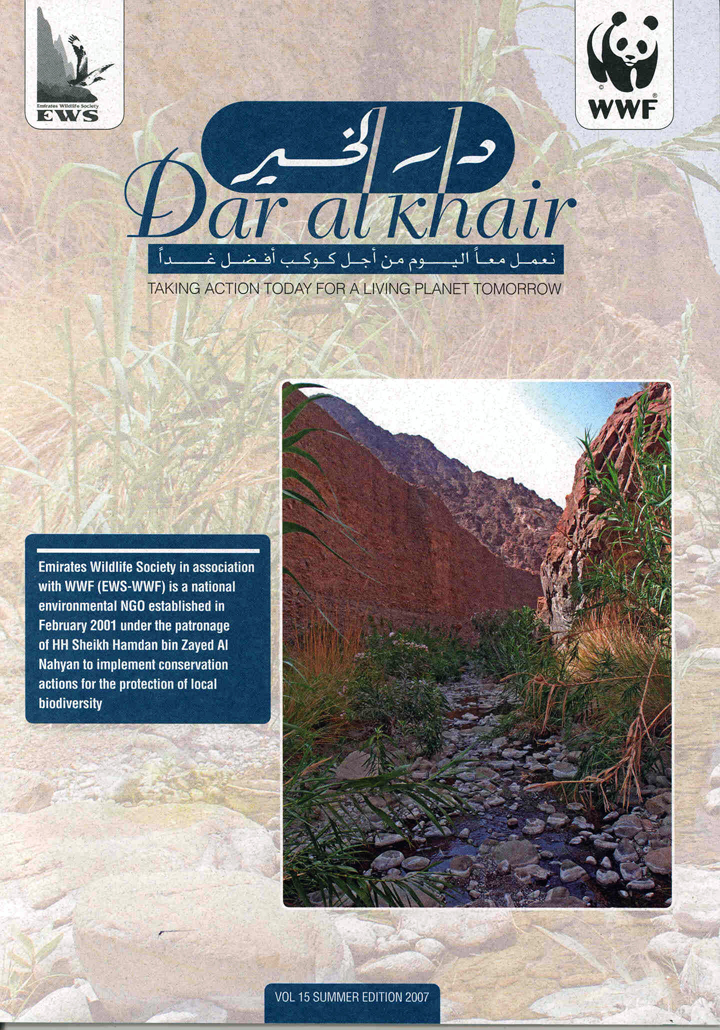
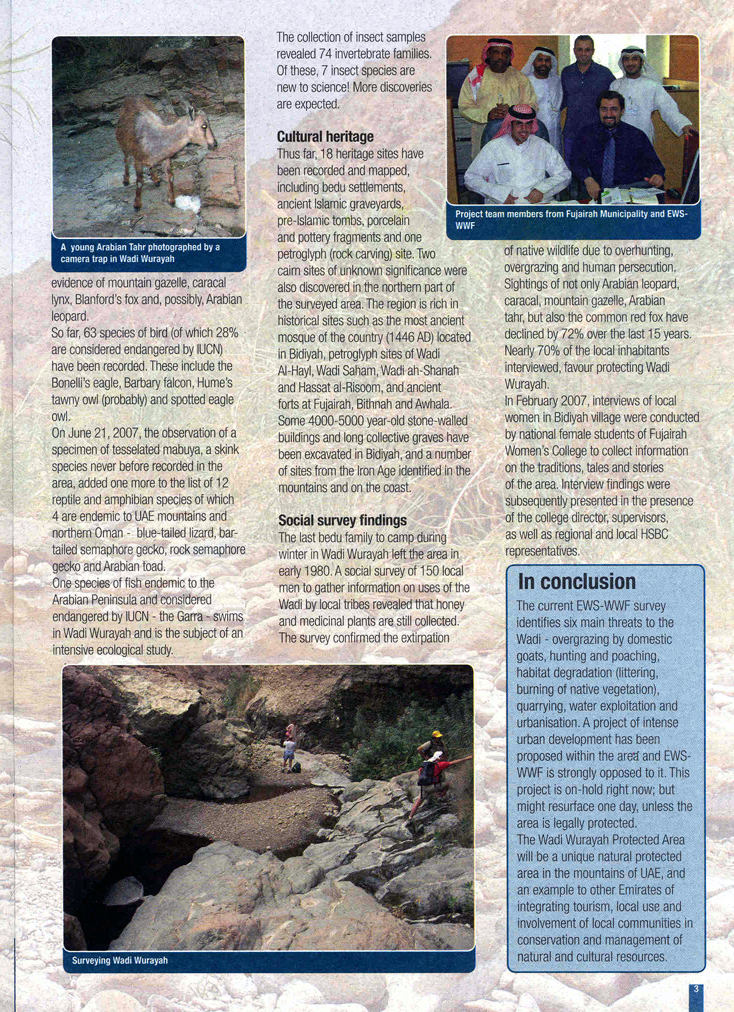
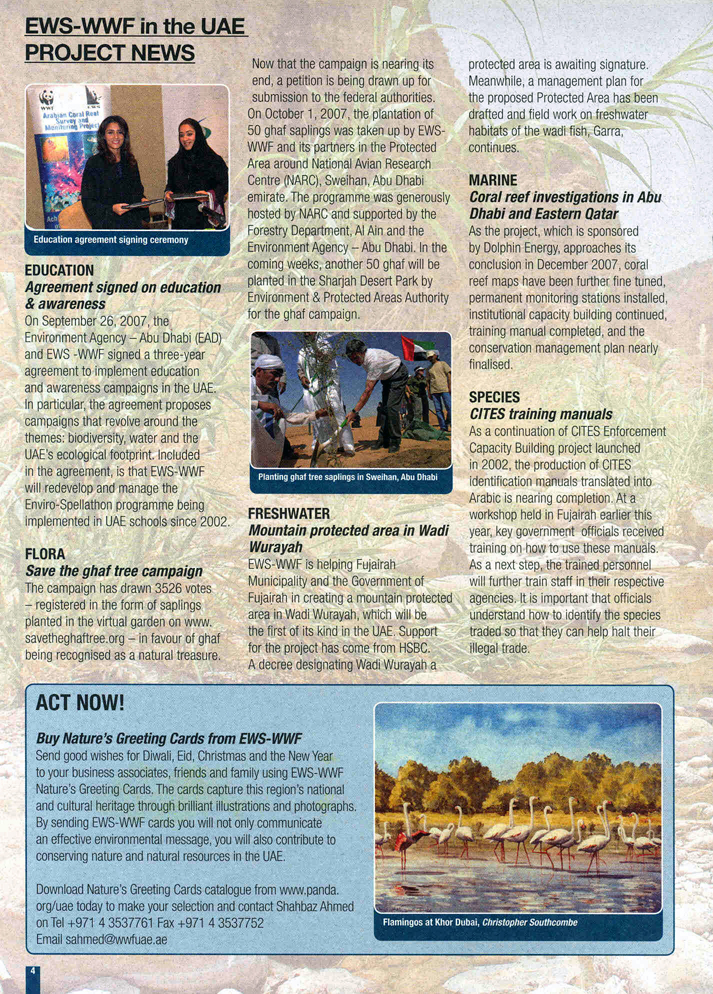
EMS-WWF – Taking Action Today For a Living Planet Tomorrow
WWF Project Office UAE
Overview of WWF UAE Project Office
Left, Prof Dillon Ripley presented with the Getty Prize for his protection of wildlife and natural areas and his rescue of the last three Arabian oryx, by Ms Ann Gettyon 28.10.1977. Middle Major Ian Grimwood, UK, Washington, USA
© WWF-Canon / WWF Intl
His Highness Sheikh Hamdan bin Zayed Al Nahyan
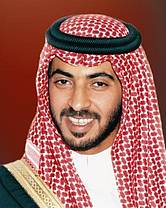
His Highness Sheikh Hamdan bin Zayed Al Nahyan
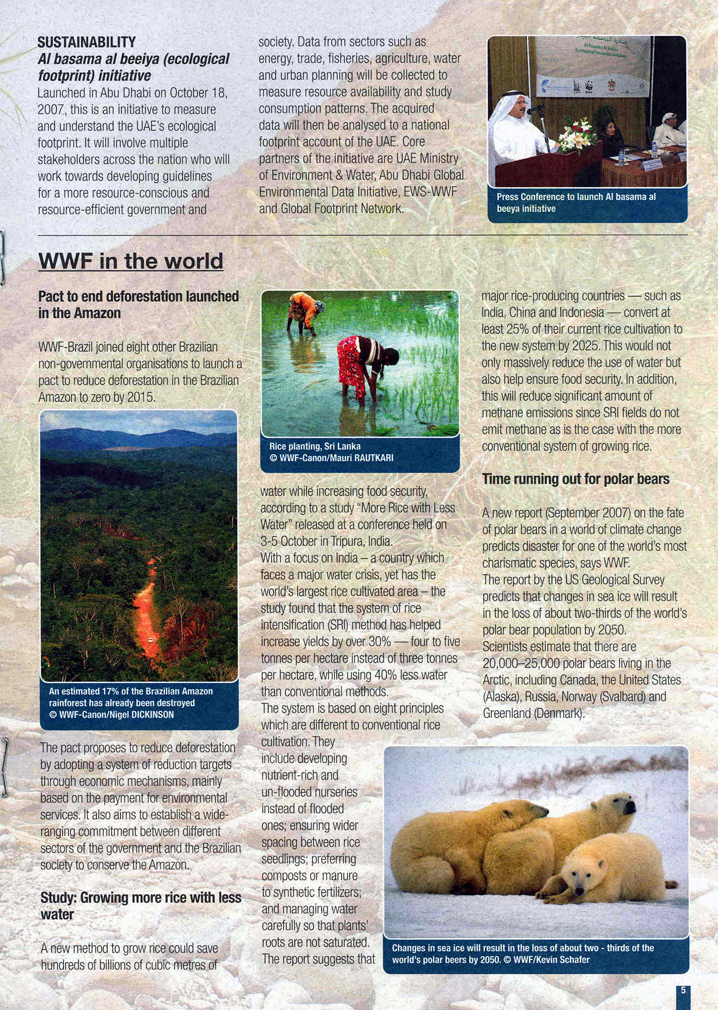
The WWF UAE Project Office was established in February 2001. Although it was the first WWF office to be set up in the Middle East, WWF’s association with the region can be traced back to the early 1960s where WWF helped establish the ‘Arabian Oryx World Herd,’ which succeeded in breeding the Oryx in captivity and returning them to reserves in Jordan, Saudi Arabia and Oman. Thanks to ‘Operation Oryx’ the Arabian Oryx was saved from extinction.
Emirates Wildlife Society (EWS)
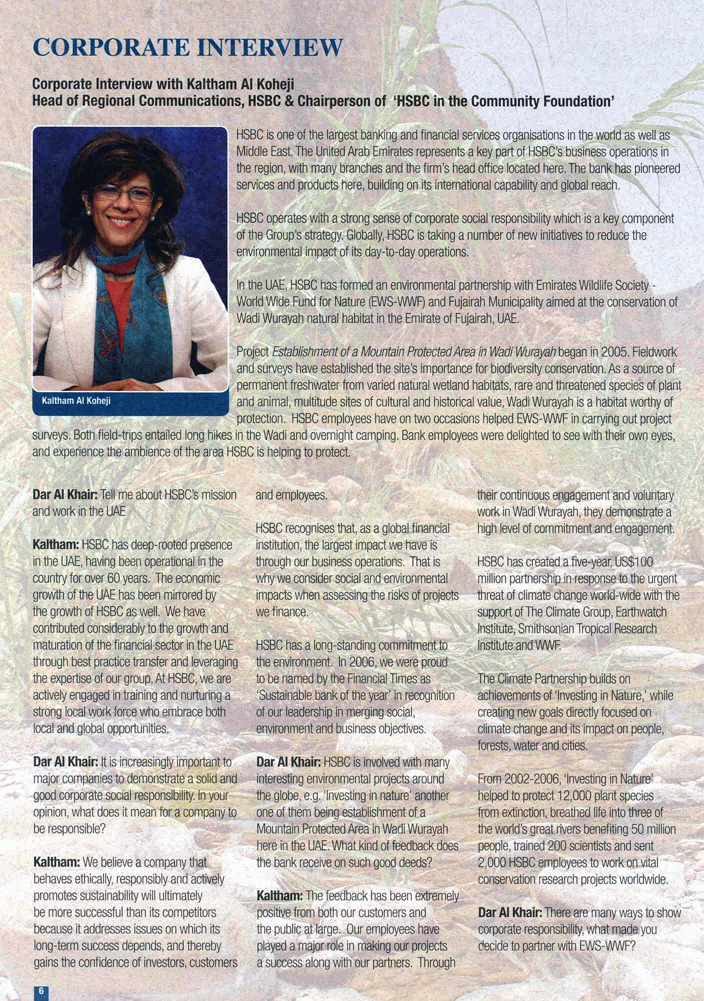
EWS is a national (UAE) environmental NGO. EWS is established under the patronage of HH Sheikh Hamdan bin Zayed Al Nahyan, Deputy Prime Minister and Minister of State for Foreign Affairs, to implement conservation actions for the protection of local biodiversity. In the UAE, EWS works in association with WWF. The EWS is governed by a Board of Directors that also serves as the WWF UAE Project Office Board. EWS-WWF has been active in the UAE since the beginning of 2001 and has initiated several conservation projects in the region.
Role of the WWF UAE Project Office
The WWF UAE Project Office in Abu Dhabi established the first presence of WWF in a Gulf state. Today WWF also have offices in Dubai and in Fujairah.
The mandate of EWS-WWF covers:
• Species
• Habitats
• Climate Change
• Ecological Footprint
• Natural Resources
Our work in the region is implemented through conservation, education, awareness and policy recommendation
EWS-WWF has a valuable role to play in:
• Protection of biodiversity in key sites, species of special concern and ecological processes critical for the region
• Raising awareness and advocating actions to reduce the Ecological Footprint of the UAE (this is among the highest in the world per capita)
• Promoting a sustainable lifestyle in the UAE
• contribution to the shaping of a still evolving, institutional framework in the UAE, so that local, regional and global environmental issues are addressed together
• highlight the responsibility of the UAE on the international conservation scene.
Protection is Vital
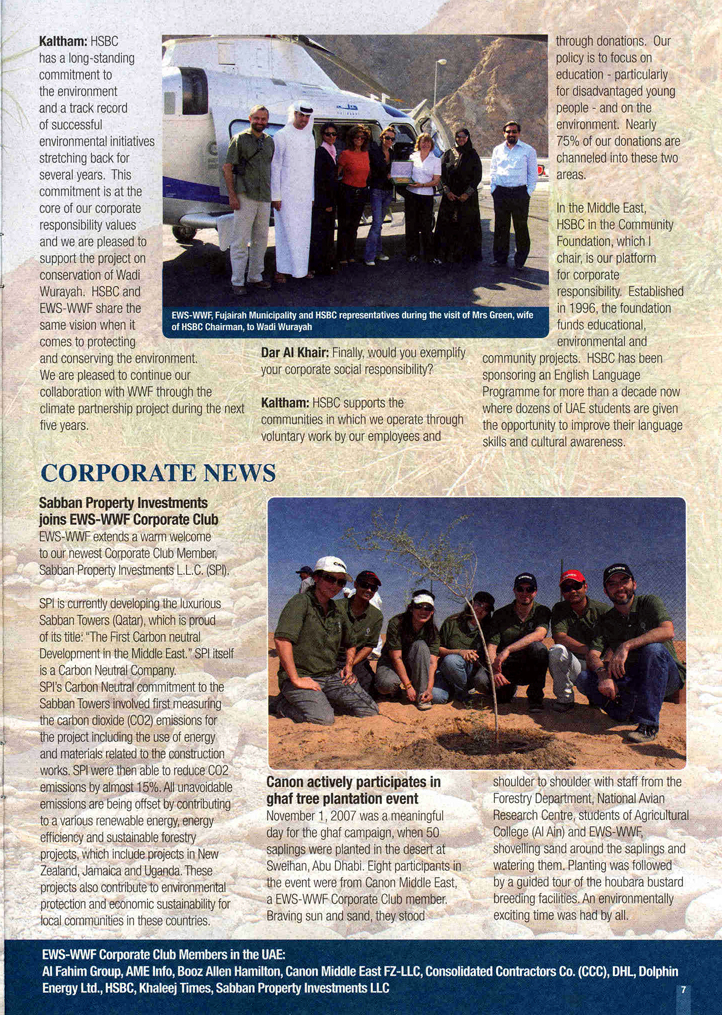
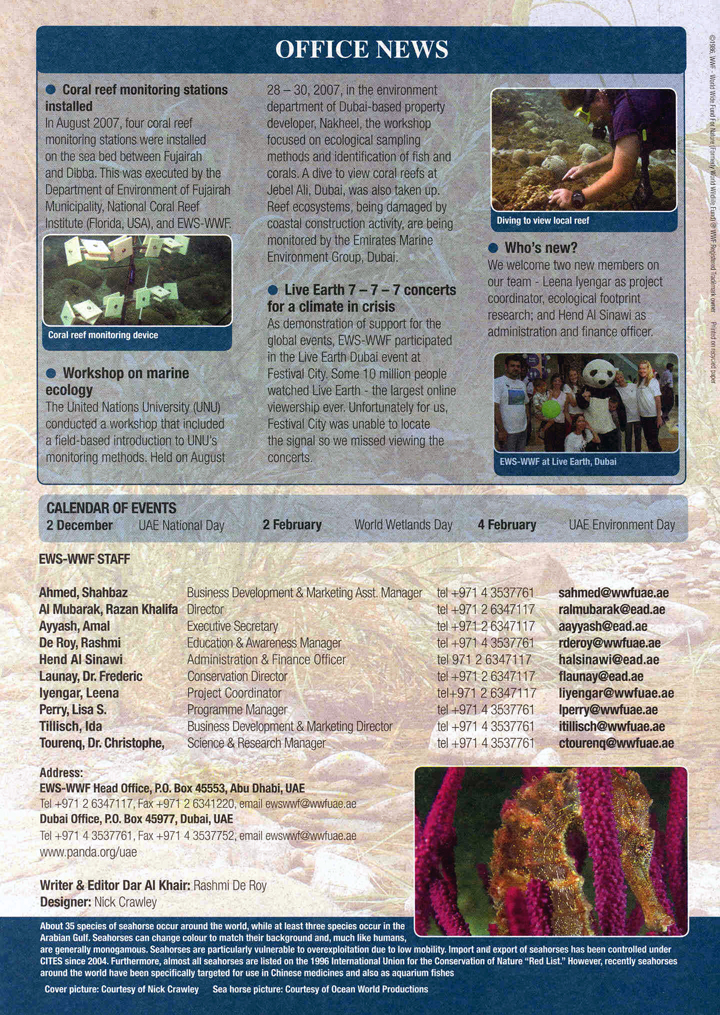
The UAE and the region support a rich biodiversity, particularly in marine and coastal ecosystems. At the same time, developmental pressures are enormous. Habitats are destroyed and species are disappearing. The WWF UAE is making sincere efforts to assist in creating protected areas so that biodiversity may be preserved before it is subjected to irretrievable stress and damage.

More details can be obtained by visiting: http://www.panda.org
STROKE IDENTIFICATION
STROKE IDENTIFICATION:
During a BBQ, a friend stumbled and took a little fall – she assured everyone that she was fine (they offered to call paramedics) …..she said she had just tripped over a brick because of her new shoes.
They got her cleaned up and got her a new plate of food. While she appeared a bit shaken up, Ingrid went about enjoying herself the rest of the evening.
Ingrid’s husband called later telling everyone that his wife had been taken to the hospital – (at 6:00 pm Ingrid passed away.) She had suffered a stroke at the BBQ. Had they known how to identify the signs of a stroke, perhaps Ingrid would be with us today. Some don’t die…. they end up in a helpless, hopeless condition instead.
It only takes a minute to read this…
A neurologist says that if he can get to a stroke victim within 3 hours he can totally reverse the effects of a stroke…totally . He said the trick was getting a stroke recognized, diagnosed, and then getting the patient medically cared for within 3 hours, which is tough.
RECOGNIZING A STROKE
Thank God for the sense to remember the ‘3’ steps, STR . Read and Learn!
Sometimes symptoms of a stroke are difficult to identify. Unfortunately, the lack of awareness spells disaster. The stroke victim may suffer severe brain damage when people nearby fail to recognize the symptoms of a stroke .
Now doctors say a bystander can recognize a stroke by asking three simple questions:
S * Ask the individual to SMILE.
T * Ask the person to TALK and SPEAK A SIMPLE SENTENCE (Coherently)
(i.e. It is sunny out today)
R * Ask him or her to RAISE BOTH ARMS.I
f he or she has trouble with ANY ONE of these tasks, call 911 immediately and describe the symptoms to the dispatcher.
New Sign of a Stroke ——– Stick out Your Tongue
NOTE: Ask the person to ‘stick’ out his tongue.. If the tongue is ‘crooked’, if it goes to one side or the other ,that is also an indication of a stroke.
A cardiologist says if everyone who gets this e-mail sends it to 10 people; you can bet that at least one life will be saved.
New law aims to cut soaring road deaths
New law aims to cut soaring road deaths
By Rayeesa Absal, Staff Reporter GULF NEWS Published: January 12, 2008, 23:29
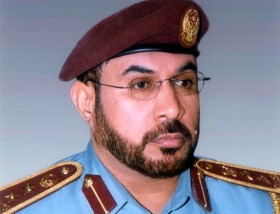
Abu Dhabi: The traffic department has come up with tougher regulations that will come into effect from March, with the aim of bringing down the death toll related to traffic accidents.
Gulf News spoke to Colonel Gaith Al Za’abi, Director of Traffic Department at Ministry of Interior, to find out more.
Gulf News: Could you tell us about the upcoming changes in the traffic law?
Colonel Gaith Al Za’abi: Fourteen changes have been made to the existing Traffic Law, which will come to effect from March 1. We are looking at cutting down the number of traffic accidents by 5 per cent. As per the instructions of Lieutenant General Shaikh Saif Bin Zayed Al Nahyan, Minister of Interior, a committee was formed with members of the traffic department of each emirate, and we after much discussion decided upon these amendments.
The traffic death toll in the country hit 852 last year. This is not a small number. We need effective measures to bring down this figure.
How would the amended laws help in cutting down accidents?
The committee identified four targets. Reducing the number of accidents, reducing traffic jams, increasing awareness and developing a traffic culture and reducing the number of accidents involving pedestrians. To achieve each target, a detailed action plan has been drafted.
Dh20,000 will be the minimum fine for serious offences and the penalty may also include a jail term, as per the court ruling. In addition to the heftier fines and jail terms, we will also implement a black points system.
What are the main challenges ahead for your department?
Increasing the awareness of people is one of the challenges. Pedestrians who do not cross at designated areas is a major cause of concern. Some motorists also do not respect the rights of the pedestrians. Making people aware will help reduce many accidents.
According to the new law, if a person crosses a road which has a speed limit over 80kmh then he/she would be held responsible for an accident. The growing number of pedestrian-related accidents and deaths has led the authorities to reach this decision.
But there are many areas that do not have proper pedestrian crossings?
The necessary infrastructure developments to support this law would be carried out simultaneously.
Those who talk on mobile phones while driving is another issue. These people slow down sometimes on highways which can be dangerous for them as well as others.
What measures will be taken to improve the public’s awareness?
Four programmes are being finalised for this. Our aim is to make the roads safer for all road users and for this we will reach out to all residents in the country. Lat year, approximately 25 per cent of accidents involved UAE nationals, 49 per cent involved Asians and 19 per cent involved Arab nationals.
These programmes will be relayed using visual, audio and print media, later this year. And this will play a significant role in developing a traffic culture.
Some of the emirates have local bodies that deal with traffic rules. How will this be tackled?
Cooperation between the emirates is part of our agenda. This is a federal law and all the emirates will implement it. The agenda discusses the use of latest technology, development of new methodologies to positively affect road users, bringing about changes in road engineering and helping other emirates develop their infrastructure.
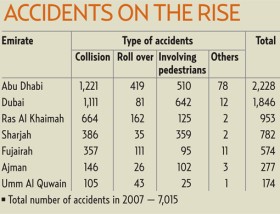
What are the main causes of accidents?
According to our statistics, speeding is a major cause. Not maintaining adequate distance from other vehicles and entering roads without verifying if the road is clear also cause many accidents.
Organisational Stress Tips
Organisational Stress Tips
The effects of Organisational Stress:
Stress reduces morale, performance and productivity of the workforce.
Stress increases poor timekeeping.
Stress increases workplace absenteeism which has a knock domino effect on colleagues who have to cover.
Stress is a major contributor to staff turnover resulting in additional recruitment and retraining costs.
Insurance premiums increase with increased stress claims.
Litigation costs for stress claims are increasing.
Absence
20% (approx 5 million) workers feel very or extremely stressed at work (Bristol survey 1998-1999)
563,000 people are actually suffering from work related stress anxiety and depression. Second only to musculoskeletal disorders. (Household survey 2001/2)
Length of time taken off 29 days per case. (Household survey 2001/2)
Cost
Ill health from work – cost to Britain is £2.5 billion. Cost of stress to British industry is £350 – 370 million (1995 review)
Cost of stress to British society as a whole £3.7 – 3.8 billion.(1995 review)
Legal Implications
Under the Health and Safety at Work Act etc (1974) employees now have a legal duty to ensure health and safety is not at risk due to excessive and sustained levels of stress.
Under the Management of Health and Safety at Work Regulations 1999 employees are required to carry out regular risk assessments. This now includes risk assessments for work related stress.
Guidance from the HSE (June 2001) explains how stress should be tackled in the workplace following the HSE 5 step to risk assessment process.
To help organisations implement this the HSE have produced Management Standards and accompanying guidance. These Standards are not new legislation but are intended to help organisations fulfil their legal obligation.
So what can you do?
Following are 10 tips for managers to help reduce organisational stress:
1. Adopt the attitude that stress is not a weakness and try to develop this culture in your own department.
Nobody is perfect we all have too much pressure from time to time. Stress can affect anyone given an accumulation of circumstances. Foster the mind set that it is not a weakness to seek help if we are not coping- it is a strength to admit it and do something about it. Promote it as a developmental issue. Handling stress is a proactive intervention to prevent ill health of the employee and the organisation.
2. Ensure that you yourself are not suffering from stress.
A stressed manager has a “knock on effect throughout the organisation.” Dealing with your own stress will prevent your staff from suffering and results in a more relaxed and productive atmosphere.
3. Analyse your own management style and behaviour (honestly); ask is your management style causing any stress?
* Good management is the best proactive way of reducing organisational stress
* A good manager
* Ensures a realistic knowledge of the workload and the time it should take
* Sets individual work objectives and targets, consults and discusses before setting
* Gives clear effective instructions
* Makes sure he/she define roles and tasks adequately – discusses priorities
* In times of high workload prepares workforce for this
* Varies work where possible and provides opportunities for individuals to influence the way they do there jobs
* Delegates effectively (and not just the boring bits!!)
* Ensures staff have adequate training to do a good job. Coaches where training is not possible
* Gives fast feedback. Both positive and negative. Praises when appropriate. Does not shy from giving negative feedback. Gives constructive criticism when criticism is necessary
* Be approachable – really. Admits to own weaknesses and takes responsibility for own mistakes
* Be honest which of these could you improve upon?
4. Regularly do an informal risk assessment of your staff to check nobody is subjected to work related stress.
Think of yourself in your employees shoes. What causes your staff stress may be healthy pressure to you, but do not belittle it. Just because it is not a problem for you does not mean it is not a problem for them. Remember They may cope easily with issues that cause you stress.
5. Provide information to staff telling them where to go for help and what to do if they are suffering from stress.
6. Encourage staff to attend a personal stress management course or provide staff with tips to help themselves.
7. Carry out a risk assessment process to reduce stress in your department.
Familiarise yourself with the HSE guidelines for tackling work related stress.
* Determine the causes of stress in your organisation
* Communicate these to staff and involve staff in finding solutions
* Put an action plan into place and regularly review your progress making amendments where necessary.
8. Improve communication.
* Where possible keep workforce informed of all changes and major decisions
* Listen to your staff. Hear what they are saying
* Observe your staff, you learn a lot from watching
* Talk to your staff informally and regularly. It will be easier for them to come to you or for you to approach them if there is a problem.
9. Help your staff to cope with change no matter how big or how small.
* Before introducing change listen to views and opinions of staff. How will it be for them?
* Where possible update workforce on any changes taking place
* Explain the reasons for the changes
* Identify those who resist change and help them accept, listen to doubts and fears, explain, coach, boost self esteem
Check how things are progressing during and after change.
10. All in all create an environment that promotes well being.
Remember relaxed and happy employee will work more effectively thus increasing performance and productivity. This will inevitably result in increase the organisational performance.
10 tips to reduce your stress
10 TIPS TO REDUCE YOUR STRESS
Introduction
According to the Health and Safety Executive stress is :
“The reaction people have to excessive pressures or other types of demands placed upon them. It arises when they worry the cannot cope.”
The HSE distinguish between stress and pressure. Pressure is seen as positive and improves our performance. However, when pressure becomes too much or too prolonged it turns to stress. It is important therefore that we try to achieve a balance. We need to feel stimulated and involved but need to act to ensure that our pressures do not get too great or accumulate.
The HSE definition does not however take the concept of perception into the equation. As different people perceive the same event in different ways this is extremely important. For example, some people will see an event such as public speaking as extremely stressful while others will see it as a challenge. We therefore can cause our own stress by the way we perceive a situation. – The way we see life, our perceptions may affect our receptivity to stress.
Exposure to prolonged or extreme pressure whether real or perceived can lead to behavioural changes and to physical and psychological problems.
Causes of stress may be short term, longer term or ongoing. Short term pressures are pressures which are short lived and from which we can easily recover e.g. a traffic jam or a disagreement with a teenage daughter. Longer term and on going pressures are more of a problem as we have less opportunity to recover. For example caring for an elderly or sick relative can have a great effect on our health and well being as the stressor is there continuously and we perceive we have no respite.
So what can we do ?
Try to manage your balance between pressure and stress by adapting your behaviour and thinking. Also make sure you take time out to recover from the pressures you find yourself under. Exercise and relaxation are paramount.
Tips for preventing pressure turning to stress
1. Adopt a healthy lifestyle – If we eat a healthy diet, exercise regularly and ensure we get adequate rest our body is better able to cope with stress should it occur.
2. Know your limitations and do not take on too much. We cause ourselves a great deal of stress because we do not like to say no to people. We like people to like us and do not want to let people down. We then end up doing more than we should. Learn to be assertive and how to say no without upsetting or offending people.
3. Determine what causes you stress and try to change your behaviour to reduce it
4. Avoid unnecessary conflict. Don’t be too argumentative. Is it really worth the stress? Look for win – win situations. Look for a solution to a dispute where both parties can achieve a positive outcome.
5. Learn to manage your time more effectively – We waste a lot of time doing unimportant tasks. Prioritise your day and do the important jobs first. The unimportant ones can wait, and often they will disappear completely leaving you time to do other things. Also do not put off the unpleasant tasks. Every time we think about them we cause ourselves stress. Give an unpleasant task a high priority and do it first.
6. Practice saying No without feeling guilty
7. Take time out to relax and recharge your batteries – You will perform much better after a break and easily make up the time you used relaxing.
8. Try to see things differently – If something is bothering you try to see it differently. Talk over your problem with somebody before it gets out of proportion. Often, talking to somebody else will help you see things from a different and less stressful perspective. Try to see the funny side of a situation. Laughter is a great stress reducer.
Accept the things you cannot change. – When things cause us stress, try to change the situation. Sometimes however, this is not possible. If this proves to be the case recognise this and accept things as they are.
9. Find time to meet friends. Friends help us see things in a different way. The activities we engage in with friends usually help us relax and we will often have a good laugh. Laughter is a great stress reducer. It boosts the immune system which is often depleted during stress. If you do become stressed engage in some form of physical activity and relaxation technique. Physical activity will work off the biochemical and physical changes that occur within your body due to stress. Relaxation helps your body return to its normal healthy state. Good relaxation techniques include breathing exercises, massage and a variety of complimentary therapies.
10. Avoid alcohol, nicotine and caffeine as coping mechanisms. – Long term, these faulty coping mechanisms will just add to the problem. For example, caffeine is a stimulant and our body reacts to this with the stress response.
Green is healthy and friendly, admits winner
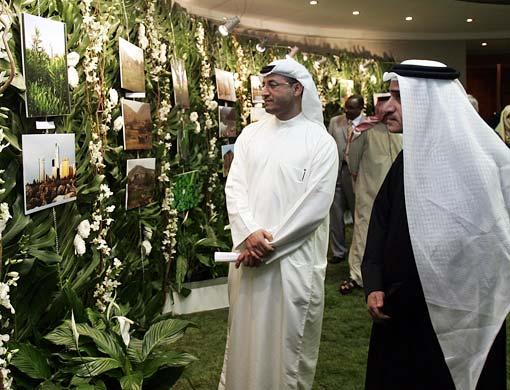
Dr Sulaiman Al Jassem (right), Vice-President of Zayed University, and Majid Al Mansoori, Secretary General of Environment Agency-Abu Dhabi, takes a tour after inaugurating the exhibition in Abu Dhabi.
Green is healthy and friendly, admits winner
By Dina El Shammaa, Staff Reporter GULF NEWS Published: January 08, 2008, 00:25
Abu Dhabi: A student who won a photo competition to highlight the importance of conserving the environment says staying green is staying healthy.
Thirty-eight students from different universities and higher education institutes participated in a three-day Environment Photography Competition known as “Environment & Development Integration Not Collision.”
Various artworks related to environmental problems in the UAE were on show. It was part of a college communication capstone project.
“We were impressed with the photograph entries submitted by the youth. They reflected a sense of environment and the need to safeguard it from rapid development in a very creative way. The photos bring to light an important reminder that our lifestyle affects the UAE environment on a daily basis. Nothing captures the imagination like a good photograph. It is one of the best ways to promote environmental awareness,” said Majid Al Mansouri, Secretary General, Environment Agency-Abu Dhabi (EAD).
Theme selection
The theme for the competition was selected by students from the College of Communication & Media Sciences to focus on the impact of adopting a new lifestyle and its effect on the UAE environment – such as daily construction and pollution.
The competition was in two categories; single photographs which allowed participants to submit one single photograph expressing the theme. This photo had to embody an important message describing the relationship between the environment and humans.
The second category involved a series of photographs which allowed participants to submit up to three photos to communicate a story. The series of conceptual and related photos should offer the viewer insight into the world where he/she should be able to better understand their environment.
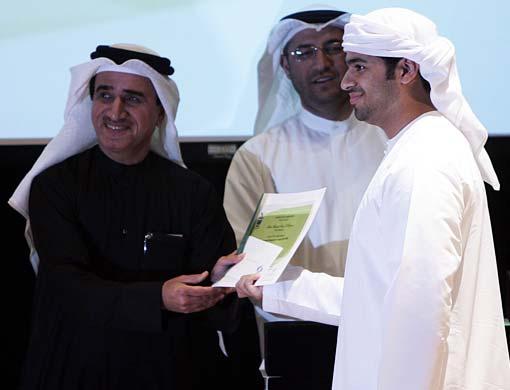
The winners werehonoured at a ceremony jointly organised by Zayed University and the EAD on Sunday handing over
Prizes for the two categories were as follows: the single photo first prize of Dh12,000, second prize Dh6,000 and third prize Dh4,000. The series photos first prize of Dh12,000, second prize Dh6,000 and third prize Dh4,000.
Ahmad Al Marzouqi, UAE University, won first prize for the Single Category for his ‘We are friends -Palms and buildings’ photo.
“The whole idea of taking that picture was to encourage the country to stay green while developing new projects and buildings. Green is healthy and friendly,” said Al Marzouqi.
The student told Gulf News he plans to buy new components to enhance his photography hobby with the award. He presently uses a Canon 350D. His other hobbies are football and internet surfing.
Full time, part time, undergraduates and graduate students of all nationalities from different universities were encouraged to participate in the competition by submitting their artworks on line to http://www.ephoto.award.com and a team of five judges selected the winners.
Adnoc vows to protect environment
Adnoc vows to protect environment
posted on 31/12/2007
The Abu Dhabi National Oil Company (Adnoc) has pledged to protect the environment by putting in place internal standards that push the company to decrease its impact on the earth. The government-controlled company, one of the largest oil producers in the world, made the commitment at the Arab Corporate Environmental Responsibility Summit organised by the Abu Dhabi Environment Agency and other local and international organisations.
“Adnoc and its group of companies are fully committed to environmental protection through a set of laws, corporate policies and codes of conduct,” said Ali Rashid Al Jarwan, general manager, ADMA-OPCO. He said leadership, commitment, policies, laws, management systems and corporate social responsibility form a strong bond that helps the group to shoulder its environmental responsibility. “We use the latest environmental management systems to ensure continuous improvement,” he said, adding that one of the major achievements of the group is the success made towards achieving a zero-flaring goal through upgrading facilities.
Meanwhile, the Abu Dhabi Environment Agency has urged all businesses in the emirate to live up to their promises concerning the environment and to take preventative measures to protect the earth. The agency said the Arab Environment Ministers Council has approved last month’s Abu Dhabi Declaration on Corporate Responsibility and Cleaner Production, which called for the private sector to support environmental protection efforts.
More than 120 chief executives, representing major business sectors from the Arab world, attended the summit and made commitments to take responsibility for the environmental costs associated with their businesses and to work towards green alternatives. “The protection of the environment is the responsibility of all business sectors. They have to contribute to environmental protection efforts and need to invest towards this,” Majid Al Mansouri, secretary-general of the Environment Agency, told Emirates Business.
In order to achieve this goal, he said, the agency is working with different sectors to implement an Environment, Health and Safety policy and the Environment, Health and Safety Management System at the emirate level so that sustainable development is integrated into every step of corporate strategies. “Financial achievement should not be the only goal of companies. Their corporate responsibilities should include environmental protection and social development. The environment, health and safety management must be considered in any new project,” Al Mansouri said. (Emirates Business 24|7)
- ← Previous
- 1
- …
- 39
- 40
- 41
- Next →
 ClicksandWrites
You must be logged in to post a comment.