General
School buses do not meet international standards
School buses do not meet international standards
By Ahmed Abdul Aziz KHALEEJ TIMES 1 May 2008
ABU DHABI — School buses in the country do not meet the international standards of safety, a top official has said.
In an exclusive interview with Khaleej Times, Mohammad Ahmed Al Shabibi, Head of Transport Office of the Administration Department at Abu Dhabi Education Zone (ADEZ), said this lack of the best safety standards puts the lives of students at risk.
The official was commenting on the spate of accidents involving school buses, and of the recent incident, in which a four-year-old boy died after being left alone in a school bus in Abu Dhabi.
Currently, there are 620 school buses in the emirate of Abu Dhabi and some 5 per cent of them have completed their service life but are still in use, Al Shabibi said.
“In fact, all of these buses fail to meet the international safety standards, as there are no seatbelts, back doors, and emergency exits,” said Al Shabibi.
“We can make the comparison with any school vehicle imported from the US or Japan and we can see the difference,” pointed out Al Shabibi.
As for the bus conductors, he stressed that the schools — both public and private — must ensure that they are qualified and well-trained.
Minibus for kids
The 61-seater school buses are for students aged above 8, he said. “However, these 61-seater buses shouldn’t be used for small kids aged 3-7. The schools must use minibuses with air-conditioning as in without the ACs, the temperature inside the closed buses may even reach 60 degrees. In such high temperatures, even an adult can die in 15 minutes. The kids wouldn’t be able to survive even 10 minutes,” Al Shabibi explained.
KHALEEJ TIMES – 30 years of excellence
30 years of excellence – KHALEEJ TIMES
30 April 2008
AT THIS moment in time and on this momentous occasion, the 31st year of our publication (1978-2008), we would especially like to thank our readers, our advertisers, our contributors and well-wishers… and also our critics, for the leading role they have played in the making of a leading newspaper. It is always a discerning readership that provides the vital impetus for a discerning newspaper.
And the fact that we have so well matched the aspirations of our readers is also a tribute to our editors, reporters, writers, photographers, commentators and many others in many other departments of the Khaleej Times who have contributed so much over the years.
As we look back with pride we can say with some professional justification that our achievements are also their achievements. Of course, we have changed and transformed rather dramatically over the past three decades as we encountered and absorbed the best of modern technology in print and mass media. But equally, there are certain core elements and characteristics that have remained the same: For instance, our belief and our commitment to quality journalism. And it is the pursuit of this belief in excellence in news coverage that has best tested and tempered us. Of course, our finest achievements must lie in the future… as we constantly try to innovate and adapt ourselves to changing times and their challenges and requirements. And we continue to react and respond to new technology and new thresholds of professional excellence, as always we must. However, it would be fallacious to assume that merely numbers can ever quantify excellence, especially in journalism, which is why our professional integrity is anchored in the substance we chose to offer in our coverage, rather than mere superficiality of style. And that this is of much value is borne out by the consistently rising graph of our readership.
We are also convinced that, even as we further improve and improvise on our print edition, we will also be adding a lot more value to our online edition and make it more interactive and more responsive. So do log on and tell us what more you expect of us. We value your suggestions and your promptings. Lastly, we would like to believe that even a newspaper, like any living organism, evolves best in a dynamic environment. And the dynamism and the vibrancy of a modern nation like the United Arab Emirates and its unique multi-cultural ethos have constantly spurred us to ensure we excel at what we do best — produce a newspaper of substance.
Can Dubai sustain more mega malls?
Can Dubai sustain more mega malls?
Last Updated: April 24. 2008
Since Singapore was labelled the world’s leading retail destination in 2005, Dubai has set out to outpace, outdo and out-shop the Asian city and any other competition in its bid to build the emirate as a shopper’s paradise and attract more tourists to the “shopping hub” of the Middle East.
In fact, Dubai has already achieved this goal, as it was recently ranked eighth among the top 15 international retail markets, while Singapore fell to 13th place, according to the global emerging markets survey released two weeks ago by CB Richard Ellis.
Retailing has changed dramatically in the past five years, with high-profile developments bringing in high-end labels to Dubai. Today, 40 per cent of retail sales are generated by tourists, so continued success depends heavily on an increase in travelling shoppers.
Dubai already has the region’s largest shopping centre, Mall of the Emirates, complete with its own ski slope. Dubai Mall, near the world’s tallest building, Burj Dubai, will become the world’s largest mall, according to the developer, when it opens at the end of August, while the giant Mall of Arabia is in the making and is due to open in 2010. Three of the world’s five biggest malls will be in Dubai – but can Dubai really sustain more mega malls?
Currently, the emirate has 4.2 billion square metres of retail space and, with Nakheel’s recent announcement that it plans to develop five new mega malls, a few hundred million more square metres will be added by 2012.
However, if you look at the numbers, Dubai is already heading towards overcapacity by 2010. Based on current shopper numbers, per capita retail spending would have to increase by 280 per cent to support the planned retail space growth – without taking Nakheel’s expansion into consideration.
Newly developed communities will need retail space to reach a wider consumer base and offer shopping in the direct vicinity of residents, and this is the niche that Nakheel intends to cover. Although faced with no other choice than to offer more retail space, will Nakheel compete in a sector where market share can only be gained by taking it from others?
The success of a mega mall does not solely depend on community traffic; it also relies heavily on shoppers from further afield. In an environment where size is not the only differentiator, success is also dependent on the entertainment factor and attractions produced to lure shoppers away from the competition.
Size has been known to hinder sales, as is the case with Ibn Battuta Mall on the outskirts of Dubai, which is widely known as having suffered from its complex layout. The same happens when malls become too large. Customer traffic density declines and “dead corners” develop, leading the mall to opt for more expensive entertainment and attractions to tempt consumers back.
For Nakheel to succeed, it needs to diversify in terms of licensed brands. Currently, all malls carry, more or less, the same labels and product offerings. If malls do not differentiate through brands and clear market segmentation, they become a commodity, no matter how high-class the interior may be. Malls run the risk of becoming “out of fashion” quickly, once the next mega mall becomes operational. These factors, paired with declining occupancy rates, quickly cause a mall’s demise, requiring another circus to revive it.
Robert Ziegler is the vice president of AT Kearney Middle East
Residents of Sharjah flock to Adnoc for low-price petrol
Residents of Sharjah flock to Adnoc for low-price petrol By Sunita Menon, Staff Reporter GULF NEWS Published: April 28, 2008, 00:05
Dubai: Residents of Sharjah and the northern emirates are making a beeline for Adnoc fuel stations because they can still pay by credit card, and their petrol is cheaper as well.
Adnoc has over 180 fuel stations in Abu Dhabi and the northern emirates.
It is the only company to sell E+ (octane 91) petrol, at Dh5.75 per gallon, a dirham less than Super petrol.
“Work at the fuel station has doubled with Sharjah residents coming to fill up their cars at Adnoc stations. They can pay by credit card and the petrol is cheaper,” said an Adnoc attendant at the fuel station on Al Ittihad Road in Sharjah.
“Motorists who own ordinary cars choose E+, but those who have luxury cars choose Super quality,” he said.
Emarat, Eppco and Enoc petrol stations stopped accepting credit cards last October, citing high bank charges. Since then motorists have to pay either in cash or with smart cards.
Adnoc said motorists can look forward to more savings once self service is introduced at their fuel stations.
Motorists in the northern emirates, especially those who own saloon cars, said they saved money by using E+ petrol.
Majid Abdullah, an Indian resident, said he has not visited a fuel station in Dubai since Adnoc opened their outlets in Sharjah.
“The best thing is paying by credit card and the E+ petrol. I hope they do not stop accepting credit cards.”
Mahmoud Ali, an Iraqi from Sharjah, said: “I used to fill my car with Special [octane 95], but with prices going up all the time I switched to E+. Now I pay much less.”
Ashraf Siddique, a Pakistani resident from Ajman, said he shifted to E+ only a couple of weeks ago when fuel stations in the emirate ran out of Special.
“It was an Eppco gas station attendant who told me to go to Adnoc and get E+ because they only had Super on that particular day. Now I plan to use this type of petrol regularly as it suits my wallet,” he said.
E+ petrol is sold only at Adnoc fuel stations. It costs Dh5.75 per gallon. Diesel costs Dh8.50 per gallon at Adnoc. Diesel costs Dh15.30 per gallon at other stations.
The price of other types of petrol is the same at Adnoc, Emarat and Eppco stations. Special (octane 95) costs Dh6.25 per gallon, and Super (octane 98) Dh6.75 per gallon.
Laws proposed to limit debt
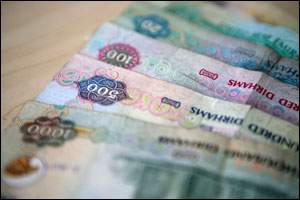
Laws proposed to limit debt
Mahmoud Habboush The National Last Updated: April 23. 2008 3:41AM UAE / April 22. 2008 11:41PM GMT
People using credit cards are getting trapped into a cycle of high-interest payments they had very little hope of escaping. Sammy Dallal / The National
ABU DHABI // The Federal National Council has proposed stringent rules for personal loans to prevent more people falling deep into debt. At a meeting yesterday, officials urged the speedy creation of an independent credit bureau to regulate the multi-billion dirham lending industry.During the session, attended by Obeid al Tayer, the State Minister for Financial Affairs, and Sultan al Suwaidi, the Central Bank Governor, members also recommended a credit reporting system to stop people borrowing more than they can afford to repay.
UAE courts have to settle thousands of debt-related cases despite the overall amount of personal debt in the UAE being a relatively low Dh43 billion (US$16bn). There is also no system to track credit history and assess people’s borrowing capacity. A special FNC committee reported that while banks were required to limit personal loans to Dh250,000, some were lending customers with low salaries more than 55 times their monthly wage.
The institutions also offered them several credit cards with spending limits above Dh50,000, which trapped them in a cycle of high-interest payments they had very little hope of escaping. About 560,000 people borrowed nearly Dh700bn last year, according to the committee. The lawmakers approved a recommendation that banks provide personal loans in proportion to a customer’s salary, and that the amount not exceed 25 times their total income.
Banks were also urged to stop a practice whereby customers were required to sign cheques guaranteeing the amount of their loan. Several lawmakers complained this was a common practice and said many people had been jailed for dishonoured cheques.One of the lawmakers, Yousef al Noaimi, who represents Ras al Khaimah, noted that some banks offered “marriage loans” that were repaid over 14 years.“Is fair to do that to the citizens?” he asked.
The proposals will be forwarded to the Cabinet for approval.Some lawmakers further suggested that the Central Bank was failing to protect ordinary lenders.“The Central Bank hasn’t fulfilled its role as a monitor. I hope the Central Bank will wake up and realise the gravity of the situation,” said Mohammed al Zaabi, a lawmaker from Sharjah. “We need transparency. Personal loans have become a rolling snowball.”
Another member, Dr Abdullah Shaheen, from Ras al Khaimah, said the Central Bank had been “inactive” and was being too lax on banks that helped customers to circumvent the rules to borrow amounts exceeding their means.“The Government needs to decree a political decision to control loaning policies. People have become portable banks with salaries not exceeding Dh3,000,” he said.Mr Suwaidi responded that the Central Bank was working with banks to limit extravagant personal loans. He said car loans should not exceed Dh150,000 dirhams and not be more than 80 per cent of the value of the vehicle.
The Central Bank chief added that the institution was working on new regulations for property loans. “We’ve been improving our control apparatus along with the increasing population and international developments in the field,” he said, noting that the Central Bank last month launched a programme to train some 80 Emiratis in auditing standards to be part of loan monitoring teams. Mr Suwaidi added that about three-quarters of 33,000 debt-related cases handled by the courts last year were disputes between landlords and tenants. A significant amount involved disputes between businessmen or bounced checks, while only seven per cent cases related to banks.
“Bank disputes only constitute 5,710 [of the cases] and they barely end by jailing people,” he said.Mr Tayer also said the Government was drafting a law to regulate real estate loans. He rejected suggestions that the Government pass a law prohibiting lenders from guaranteeing loans with salaries. The minister said that would prevent too many people whose only guarantees were their salaries from obtaining small business loans. “We shouldn’t prevent this layer of society from benefiting from loans,” he said.
The FNC committee also recommended the establishment of specialised courts to examine cases of Emiratis unable to pay their bank loans, as well as the establishment of a government fund in co-operation with charities to help people with heavy debts.
Abu Dhabi Police unveil ambitious proposal to cut crime
Abu Dhabi Police unveil ambitious proposal to cut crime
By Rayeesa Absal, Staff Reporter GULF NEWS Published: April 23, 2008, 00:17
Abu Dhabi: Abu Dhabi Police is aiming to cut the crime rate in the city by five per cent over the next five years.
Plans and a course of action have also been laid out to cut by 20 per cent road accidents causing serious or fatal injuries. The ambitious plans were unveiled as part of the police’s five-year strategy for 2008 to 2012.
“Our strategy is focused on the control of crime by prevention, control of its rates and eradication of its impact, to maintain general safety and security, make the roads safer and establish mutual trust between the public and police force as well as ensuring optimised use of human resources by adopting the best international practices without ignoring the provision of all operational support to the police operations”, said Lieutenant General Shaikh Saif Bin Zayed Al Nahyan, the Minister of Interior.
He was addressing the media and officials in video footage presented at the unveiling ceremony held at the Police Officers Club on Tuesday morning.
Named the Abu Dhabi Police Strategic Plan 2008 to 2012 new progressive development plans have been put forth under the theme Progressive Police for a Modern City.
The plan identifies six priorities which have five year targets to achieve. Concrete courses of actions have been mapped, alongside stages of execution, by police officers with the cooperation of international experts.
“We are looking forward to achieving our priorities with extreme determination and faith in a close partnership with all parties and strategic partners. Through this we are endeavouring to satisfy the needs of all community segments be they Emirati, residents, visitors, service or security agencies, in full integration with Abu Dhabi government’s strategy and political agenda and in harmony with the general strategy of the UAE Federal government,” the minister said.
The strategy establishes the vision, mission and values of the police department, apart from the strategic steps they will be implementing towards achieving the objective of becoming “the most operationally effective police force in one of the safest countries in the world.”
Announcing the plan, Brigadier Nasser Al Nuaimi, Director-General of the office of the Minister of Interior, said it focuses on modernising the department and improving its function and role in society to be on a par with the best police services in the world.
“The continuous process of modernisation and developing of Abu Dhabi Police, motivated by the wisdom and insight of the leadership of the UAE, is aimed at transforming the capital into an important economical regional power. The role of the police has been of great significance during the past decades in promoting this ambition,” Al Nuaimi said.
Faisal Sultan Al Shuaibi, Head of the Strategy department at Abu Dhabi Police, said: “We have kept the crime rate and traffic statistics of 2007 as a baseline. Our focus will be to achieve the targets we have set.”
Although the UAE and Abu Dhabi are considered to be safe, Al Shuaibi said the need is to anticipate new threats which may raise their heads as the city is growing by the day.
“Our priority is also to keep track of high profile crimes and curb them. Reaching out to all communities within our society is another important aspect.”
Surveys conducted by the police showed very high satisfaction levels amongst the public of up to 90 per cent.
Blueprint: Important areas
* Controlling crime
* Making the most of staff through the implementation of the best international practices, qualified staff will be recruited and the focus will be on increasing efficiency
* Increasing community confidence
* Maintaining the security of Abu Dhabi
* Making the roads safer. Various structural bodies and an action plan for casualty reduction will be developed
* Providing all policing operations with functional support
* Financial and administrative powers will be delegated to speed up decisions. To ensure technical efficiency of the plan, it will be assessed from time to time.
Stages
1957-1966 – Foundation stage
1966-1979 – Building stage
1979-1995- Progress stage with the merging of Abu Dhabi Police with the interior ministry
1995-2007-Qualitative and strategic development with Lt. Gen Shaikh Saif Bin Zayed Al Nahyan taking over as General Commander of Abu Dhabi Police
Emirates Palace wins international recognition
Emirates Palace wins international recognition(Wam)
23 April 2008
ABU DHABI — Emirates Palace was named the world’s leading conference hotel at the 14th annual world travel awards (WTA) ceremony this week.
Its grand suites were also named the world’s leading suites over elite collection of renowned hotels and resorts.
“Since its launch two years ago, Emirates Palace has consistently been recognised as the leading hotel and resort in Abu Dhabi with the most lavish suites and the best conference and convention facilities,” said Noel Massoud, General Manager of Emirates Palace.
He added that “we have now taken this to the worldwide hospitality arena and are extremely proud to receive such prestigious awards.
At a glittering ceremony held at the island of providenciales, Turks Caicos in the Caribbean, the WTA celebrated some of the people and companies behind the year’s best travel products. Over 330 representatives from the travel trade, VIPs and local and international media from 30 countries across the globe converged for the event.
Director of sales and marketing for Emirates Palace, Janet Abrahams attended the ceremony to receive the awards on behalf of Emirates Palace.
With over 7,000 square metres of space available, Emirates Palace is the largest meeting and conference venue in the Middle East and North Africa. The luxury resort hotel boasts a state-of-the-art auditorium with a seating capacity of 1, 100.
Earlier this year, Emirates Palace affirmed its position as the leading hotel in the region when it received nine of the most important coveted awards, including leading conference hotel and leading suite at the Middle East and Africa leg of the awards.
Nine Dubai schools to scrap bus service
Nine Dubai schools to scrap bus service
By Preeti Kannan (Our staff reporter) KHALEEJ TIMES
23 April 2008
DUBAI — Nine schools under the Gems group in the emirate will stop running their own school buses and instead outsource the service from June 1. The announcement comes in the wake of the recent decision by education authorities in the emirate to turn down requests to increase tuition fee above the set fee cap of 16 per cent.
However, the circular has sparked concern among parents who now anticipate rising transportation fees, tuition fees and fear disruption of services. They say that this would mean the school is now free to hike transport costs. HC, a parent said, “This is definitely an arm-twisting tactic on the part of the school. Since their request for a 16 per cent fee hike has been turned down, they are resorting to smarter ways to increase costs.”
Another parent, NM, said, “If they had informed us earlier, we would have probably changed school as I do not want my child to travel with a new conductor and driver everyday. The safety of my children is of high priority and we cannot afford to risk it, especially in the light of the numerous molestation charges against bus conductors.”
Students from the group’s Dubai schools, including Our Own Indian School, Our Own English High School, Our Own High School, Al Warqa’a, Dubai Modern High School, The Kindergarten Starters, The Millennium School, The Westminster School, The Winchester School and Cambridge International School have received the circulars or are in the process of receiving them this week.
It states, “Fuel costs have alone risen by 300 per cent. Rising cost of buses together with over 50 per cent remuneration increase for our bus drivers and conductors have contributed to this astronomical rise in the cost of operating the school bus.”
Adding further, the Dubai Modern High circular elaborates, “In the absence of approval from regulatory authorities, we have been unable to increase transport fees. We wish to remind the parents that the transport service has been an optional service. We are no longer in a position to subsidise this service, regrettably, as of June 1. Modern High School will no longer operate a school provided transport service but will outsource this provision to an external provider.”
According to the school, its transportation costs are as low as Dh1,500 per annum in comparison to external providers ranging from Dh5,000 to Dh8,000 and cites that there has been no increase in transport charges since April 2006. Families, who have paid transportation costs for the full term will, however, be refunded in full.
Confirming the decision, Monica Harter, head of Corporate Communications at Gems, said, “We cannot continue to sustain the losses anymore and have been providing transportation to our students at subsidised costs. However, there will be no disruption of services.”
She added that since the service was being outsourced there will be a definite increase in transportation costs, though she did not state the figure since they were still on the lookout for a provider.
Knowledge and Human Development Authority (KHDA), which supervises private and public schools in the emirate, maintained that schools which provide transport as an optional service have the choice of increasing costs to suit market rates, irrespective of the fee cap.
Mohammed Darwish, Chief of Licensing and Customer Relations, said, “In the case of optional services provided in addition to the basic tuition, and not imposed on the parents, the school or service provider is free to set costs in line with market forces. Logically, no school which provides a truly optional service need suddenly outsource this service as they may charge a fair, market rate for it if the parent has a choice.”
He added, “The Authority is not responsible for a school’s decision to outsource optional services nor for the regrettable and undesirable disruption that such a decision is likely to cause. Schools which do so may have other motives as fee regulation is not at issue.”
School heads, who didn’t want to be named, said that KHDA should have clarified the stand earlier as many would then prefer to run their own buses instead of outsourcing, if this was the case.
“It could mean that Gems could do a volte face and run its own buses, probably after an astronomical rise in transport costs, since they are under no obligation to include school bus cost in the fee ceiling,” said a parent.
Lack of petrol hits Fujairah motorists
Lack of petrol hits Fujairah motorists
By Fuad Ali, Staff Reporter GULF NEWS Published: April 21, 2008, 23:40
Fujairah: Motorists in Fujairah have been turned away from most Enoc and Eppco petrol stations for lack of petrol on Monday, Gulf News has learnt.
According to station staff, petrol tanks have failed to make their usual delivery, for the second day running. Most stations were able to serve customers Sunday but by Monday afternoon had run out of petrol.
Gulf News contacted an Enoc representative but the company declined to comment.
Abu Dhabi labour ministry scraps degree verification system
Abu Dhabi labour ministry scraps degree verification system
By Rayeesa Absal, Staff Reporter GULF NEWS Published: April 21, 2008, 23:40
Abu Dhabi: The Ministry of Labour has scrapped the degree verification system introduced in 2005.
Effective on Tuesday, certificates can no longer be verified by applying to Emirates Post, which used to verify the certificates via Integra Screen, a private company offering document verification services to applicants as part of their tie-up with the labour ministry.
Saqr Gobash Saeed Gobash, Minister of Labour, yesterday issued law No 240 of 2008 that replaces and nullifies the effects of law No 851 of 2005. And the procedures have returned to what they used to be prior to 2005’s law.
Fake degrees
Expatriate job applicants will have to go through the attestation process in their own countries and produce the documents before their country’s embassy in the UAE and get the attestation from the Foreign Ministry before their visa application can be completed.
If the certificates prove to be fake, then the visa application process will be stopped.
The decree also annuls any punishments or penalties stipulated by the previous law.
If a person whose certificate cannot be attested for a job is already in the country, then as per the new decree, it will be the responsibility of the company to send the person back to his/her country.
A special committee has been formed to review the law.
 ClicksandWrites
You must be logged in to post a comment.