General
Plan to issue probational driving licences
Plan to issue probational driving licences
By Ashfaq Ahmed and Alia Al Theeb, Staff Reporters Published: June 05, 2008, 00:09
Dubai: Driving licences for new drivers could soon become valid for one year only instead of the current 10 years according to a new study.
Dubai Police’s Traffic Department and the Licensing Agency at the Roads and Transport Authority (RTA) are studying the possibility of implementing the system of “probation driving licence” for new drivers.
Ahmad Bahrouzian, CEO of the agency, said the licensing agency has prepared this proposal. The aim is to qualify safe drivers, change the driving culture and reduce the number of accidents, as many of them are caused by new drivers.
He said the proposal has been sent to Dubai Police and the Interior Ministry for review and feedback.
According to the proposal, new drivers will receive driving licences valid for one year. The licence will be renewed every year for three years during which the behaviour and driving attitudes of the drivers will be monitored. After three years, the drivers will be given the driving licences valid for 10 years.
Vehicles older than 20 years may go off-road
Vehicles older than 20 years may go off-road
By Joy Sengupta (Our staff reporter) 5 June 2008
DUBAI — The registration of vehicles that have exceeded 20 years on the roads may not be renewed, according to an official of the Roads and Transport Authority (RTA).
In a Press release yesterday, Mattar Al Tayer, Chairman of the Board and Executive Director of the RTA, stated that the Services Ministerial Council has approved of a motion of two decisions submitted by the RTA to the National Transport Authority.
“The first decision provided for reducing the maximum permissible gas emissions from vehicle exhausts. The policy calls for reducing carbon monoxide gases from 4.5 per cent to 2.5 per cent and hydrocarbon from 800ppm to 300ppm (parts per million). The second decision is related to banning registration and renewing registration of old light vehicles the life of which exceeds 20 years, provided the said period is further cut to 15 years by January 2010. It is also provided for banning the import of used light vehicles the life of which exceeds five years and used heavy vehicles the life of which exceeds seven years,” Al Tayer said.
However, the date of implementation of the new rule is yet to be decided as it is currently being discussed, sources say.
Earlier this year, the Dubai Municipality had conducted an ‘On Road Vehicle Emission Measurement Study’ where a US-based company which conducted the study suggested that a 10-year retirement for vehicles on Dubai roads was one of several feasible steps to reduce pollution.
The study had also revealed that the vehicle pollution in Dubai compared to American standards is around 13 per cent (for vehicles using petrol) whereas the pollution rate is 2.5 per cent in Virginia, US, and two per cent in Michigan.
The study by the Dubai Municipality revealed that six to 12 per cent of the vehicles registered in Dubai were harmful to the environment as they exceeded the permissible levels of emissions.
Slow drivers ‘not being fined’
Slow drivers ‘not being fined’
By Ashfaq Ahmed, Chief Reporter and Alia Al Theeb, Staff Reporter GULF NEWS May 21, 2008
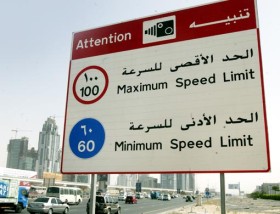
Dubai: Plans to implement a minimum speed limit on Dubai’s roads have gone down the drain because of friction between the authorities responsible for implementing the decision, Gulf News has learnt.
Early last year the Dubai Roads and Transport Authority (RTA) introduced a minimum speed limit of 60 km/h on roads, which have a maximum speed limit of 100km/h and above but this has not yet been implemented.
The RTA also spent a huge amount on advertisements and sign boards warning motorists about the minimum speed limit but motorists driving below the speed limit have never been fined.
Plans for the minimum speed limit triggered debate when introduced by the RTA. A top traffic police official objected saying that it should be 70km/h but the RTA stuck to its guns saying that it had taken the decision after comprehensive studies.
However, the friction continued between the Traffic and Roads Agency at the RTA and the Traffic Police and no measures were taken to implement the decision.
Advertisements
“We announced the decision and also educated motorists through advertisements and sign boards but the police were responsible for implementing this and it never happened,” said a senior RTA official.
He said the disagreement between the RTA and the police on the issue regarding the minimum speed limit was not resolved.
A top traffic police official told Gulf News the police were never convinced on the issue. He said that there was a need for better coordination between the RTA and the Traffic Police on this important issue.
An RTA official said the aim was to encourage motorists to maintain an average speed and to avoid driving too slowly on highways.
Slow drivers cannot be caught on automatic speed cameras installed on roads because these only capture speeding motorists. Slow drivers were supposed to be tracked by cameras manned by the police but it has not been done so far.
Dangerous: Risk to road users
A study conducted by the Roads and Transport Authority (RTA) reveals that introducing a minimum speed limit does not mean that a motorist has to drive at 60 km/h; rather it says a motorist should drive at a speed (above 60km/h) to keep up with the traffic flow within the given minimum and maximum speed limits depending on the traffic situation.
The decision is aimed at motorists who drive too slowly.
The RTA study also says if the minimum speed is set at 30 per cent less than the maximum speed of 120km/h, it would be 84 km/h and it would not be workable because it would be more than the maximum speed of 80km/h fixed for trucks on highways.
The RTA’s decision to have a minimum speed limit of 60 km/h on roads calculates at 50 per cent less than the maximum speed on roads with a 120km/h upper limit and some 40 per cent on roads with a maximum speed limit of 100km/h.
COMPARISON
Limits on major roads
Country Max Speed Min Speed % of Min spd < Max speed
UK 112 km/h 64 km/h 42%
USA 105 km/h 64 km/h 39%
Germany 130 km/h 60 km/h 54%
Spain 120 km/h 60 km/h 50%
Belgium 120 km/h 70 km/h 40%
Dubai 100 to 120 km/h 60 km/h 40% to 50%
Some of the main roads in Dubai which will have minimum speed limit of 60 km/h
Shaikh Zayed Road
Emirates Road
Al Khail Road
Al Ittihad Road
Dubai Outer Bypass Road
Dubai-Hatta Road
Dubai-Al Ain Road

Test run of the Dubai Metro begins

Test run of the Dubai Metro begins
Staff Report Published: May 12, 2008, 10:18
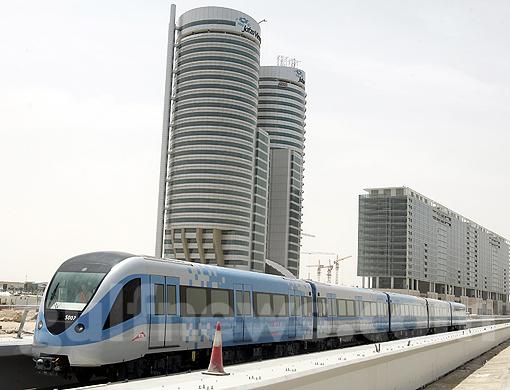
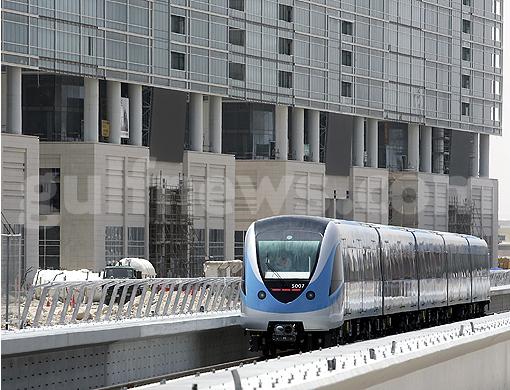
Dubai: Officials from the Dubai Road and Transport Authority (RTA) have tested a five-car Metro train on a stretch of completed track near Jebel Ali on Monday.
Witnesses said the train, which can reach speeds of up to 40km per hour, passed through an uncompleted station a number of times.
The first line of Dubai’s Dh15.5 billion Metro system is expected to be complete by September next year. The second will be ready by March 2010.
The RTA said more Metro trains will be seen travelling up and down the test stretch in the coming months as testing continues.
Temperatures soar in the UAE
Temperatures soar in the UAE
By Mahmood Saberi, Senior Reporter Published: May 12, 2008, 13:51
Dubai: It was extremely hot and dry throughout the emirates on Monday, with the mercury going past 44 degrees Celsius in Abu Dhabi and 45 degrees Celsius in Jebel Ali and Minhad Air Base in the desert.
“Summer is here officially,” said the duty forecaster at National Centre for Metereology and Seismology in Abu Dhabi.
In Dubai and Sharjah the temperature was hovering around 44 degrees Celsius and dropped slightly as a north-westerly wind developed.
“The temperature has reached a high this month.” said the duty forecaster in Sharjah. The wind blew up dust reducing visibility to 3000 meters, but not dusty enough to affect flights.
When cool sea breezes mix with the high surface temperatures usually it throws up dust, according to the forecaster.
The sea breeze blowing inland will drop temperatures to 38 degrees Celsius over the weekend making it pleasant in the evenings, said Dr S.K. Gupta, duty forecaster at the Dubai Met Office. The Comfort Index is at 2 as humidity is low between 24 to 30 percent.
It was cloudy over Qatar on Monday with a few spots of rain but the cloud cover was unlikely to head for the UAE.
World learns from Abu Dhabi
World learns from Abu Dhabi
James Bennett
Abu Dhabi has been identified as the ultimate “power city” of the next millennium in a survey of 130 global cities drawn up by one of the world’s largest property advisory firms.
In its fourth biennial World Winning Cities study, Jones Lang LaSalle unveiled Abu Dhabi as the “power city” that would become one of the world’s fastest growing “urban stars” and be on the “radar screen of the real estate industry” for the next decade.
The company also predicted that Abu Dhabi would be a “city of substance” by 2010, a “regional hub” by 2015 and a “world winning city” by 2020, a decade ahead of its proposed Plan 2030.
“In our first study in 2002, we highlighted Dubai, Dublin and Las Vegas as being among a new wave of city winners. However, this year’s winner is Abu Dhabi, [which] in the past used to learn from other cities, but now other cities are learning from Abu Dhabi and its approach and impressive vision for the future,” said Blair Hagkull, the managing director for the Middle East and North Africa at Jones Lang LaSalle.
“It now has a lot to teach the world and in a decade, it has gone from being a student to being a teacher,” Mr Hagkull said.
The company chose Abu Dhabi after extensive research assessing more than 130 countries and cities. It assessed 10 principles of city competitiveness: performance, population, planning, power, place making (events, culture, meeting places), purity (sustainability, quality of life, environment), people, physical and property.
The report stated that Abu Dhabi offered one of the most favourable combinations of ingredients to become an emerging world-winning city, as well as having a chance to learn from the successes and challenges of Dubai.
“The predominant factor is its ambition to become a truly sustainable world-class city based on massive infrastructure investment, large real estate development, world-leading cultural facilities and major events, underpinned by significant population and employment growth,” said Mr Hagkull.
The report said the city was fully embracing urban master-planning with the launch of Plan Abu Dhabi 2030. This, it said, was unique to the region and created a “structured and clearly articulated framework for the city’s long-term growth”.
It added that the city epitomised a fresh spirit of city building, which is almost “unmatched anywhere else in the world”.
“We believe that Abu Dhabi is a city to watch over the next decade with an importance and influence that is expected to extend well beyond its immediate geography,” Mr Hagkull said.
“It is not often you get a city of fewer than one million people that has so much global influence. How many countries with such a small population have as much power as Abu Dhabi? Virtually none. It is one of the most influential cities in the world in the fact that it is a city that is not only building itself, but also helping to build others around the world.
“Historically, it learnt lessons from other places around the world, but now people are coming to Abu Dhabi, international firms like ours, to learn from what it is doing. Its influence is now being applied to other cities around the world. It is not only the capital city that is growing, but it is emerging as a global investor.”
The report said Abu Dhabi was chosen as this year’s winning city despite Dubai’s growth and proximity.
“Abu Dhabi’s city planners have clearly watched Dubai’s less controlled growth and, arguably, an erosion of its local heritage to formulate their own expansion agenda,” the report said. “One that puts culture and community ahead of pure commercialisation.”
Mr Hagkull said: “Abu Dhabi is complementing Dubai. It is not often you get two very different cities 150km apart growing at such a rate. Both have different focuses. Abu Dhabi is in a unique position that it can learn from what Dubai has done well and the mistakes it has made and build on them.”
The research also identified the challenges ahead for the city and emirate.
The main challenges, said Mr Hagkull, would be for the city planners to carefully manage its ambitious expansion plans and, from a property perspective, to ensure the market was transparent.
The city would also have to cultivate indigenous growth and ensure sufficient differentiation in its offer from neighbouring Dubai, he said.
“Not only does a transparent market attract global property investors, but crucially it is a key constituent of an open and globally connected city,” the report said, adding that it was imperative the city attracted top quality multinational corporations to “feed” it with intellectual capital.
“The challenges for Abu Dhabi are that it is a very young and very fast growing city. There is a lot of pressure being put on some very young institutions and some that are only just being formed,” said Mr Hagkull.
“Infrastructure could hamper its progress. The challenge for any city is infrastructure.
“There are many things under one vision, but the key will be for that to be effectively distributed to the right people. It will need organisations like the Urban Planning Council to take the pressure off the leadership.
“Usually, the biggest risk is that ambition and capital don’t meet. Abu Dhabi has laid out a very clear and defined vision and the risk is not being able to achieve that. Abu Dhabi has the chance to be the epitome of a 21st century city, but you won’t have to wait until 2030 to see the city being completed. The majority of its ambitions will be achieved well before that date.”
jbennett@thenational.ae
Plans for tax on goods ready by end of 2008
Plans for tax on goods ready by end of 2008
Robert Ditcham, THE NATIONAL
Last Updated: May 07. 2008 1:56AM UAE / May 6. 2008 9:56PM GMT
The introduction of VAT is likely to be unpopular with Emiratis, residents and businesses, who have enjoyed years of tax-free conditions. Jeffrey E Biteng / The National
The UAE will be ready to introduce a system of value added tax (VAT) by the end of the year.
Abdul Rahman al Saleh, the executive director of Dubai Customs, said the “infrastructure” for an Emirates-wide taxation system would be put in place between October and December.
Dubai Customs was commissioned by the Government two years ago to look into a potential VAT and is finalising the strategy. If implemented, it would be the first time VAT, which is applied to the sale of goods and services and not income, has been imposed in a GCC nation.
However, a government source said although the mechanics would be in place, it was “very unlikely” that VAT would be introduced this year because Federal approval and GCC co-operation, on several related issues, would be required.
VAT would be introduced to replace customs duties, which the UAE must phase out as part of the free trade agreements (FTAs) it is signing with a number of major trading partners, Mr Saleh said.
The government source, who declined to be identified, said a GCC-wide agreement on these FTAs is still some way off.
Mr Saleh told a seminar at the Arabian Travel Market in Dubai that VAT was likely to be set at a flat rate of between three and five per cent. It would be applied to all goods and services.
The introduction of VAT is likely to be unpopular with Emiratis, residents and businesses, who have enjoyed years of tax-free conditions.
If the UAE were to introduce it before other members of the GCC, analysts warned the tax could drive business away from the UAE.
Although the proposed three to five per cent rate is lower than in many other countries – the rate in the UK, for instance, is 17.5 per cent – residents are likely to oppose any measure that could increase already rising food and accommodation costs.
But Mr Saleh said prices were unlikely to climb because of the removal of customs duties.
“I don’t expect a negative reaction from the public because the providers of the services and the goods will take care of this [VAT expense],” he said.
“They would not be paying customs duty so they should not need to increase their prices.” Mr Saleh said if Federal authorities decided to press ahead with VAT, there would be a provision for tourists to claim back the tax they paid on purchases over a set amount. Small businesses with revenue of less than a specific annual figure – expected to be about Dh3.67 million (US$1m) – would also be exempt, he added.
Customs officials have said the VAT would be necessary to replace the “lost revenue” from the removal of customs duties. The funds would be required for investment in health, education and public infrastructure, they said.
The International Monetary Fund is backing the initiative.
Mr Saleh said Dubai Customs had been working for the past two years to develop a VAT system that could be applied across the Emirates.
He said research was conducted in countries such as the UK and New Zealand, many of which use different forms of the taxation system. While some countries apply a low flat rate to all goods and services, others tax certain goods heavily but exempt others.
“We will put in a low rate and have direct aids to the right people, rather than having exemptions. Products and services in certain areas, such as education and health, can be looked at by the Government.”
rditcham@thenational.ae
Brief rainstorm hits UAE

Brief rainstorm hits UAE
By Mahmood Saberi, Senior Reporter GULF NEWS Published: May 06, 2008, 08:53
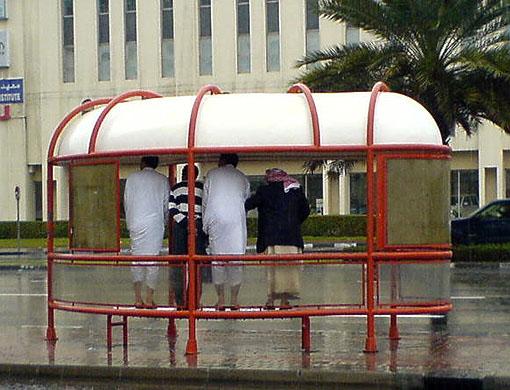
Dubai: The skies grew dark and gave a brief display of thunder and lightning but there were only a few spots of rain as commuters headed to work early morning on Tuesday.
The Dubai Met office sent out a brief warning to sailors and those working offshore but everything cleared up quickly, said Dr S K Gupta, duty forecaster. “There was no significant rain,” he said.
But the spots of rain and gusty winds left dirt marks on vehicles and dirtied overnight washing hanging out on the clotheslines.
Late Monday night many people woke up in surprise as heavy thunder and isolated rain showers hit Ruwais and some areas of Abu Dhabi.
The thunder activity was because of the rising high temperatures and a band of cloud coming in from the West, where Bahrain and Doha earlier experienced thunder, said the forecaster.
For the first time the mercury rose past 40 degrees Celsius, according to Gupta. Dubai on Monday recorded 43C, Jebel Ali, 42C, Sharjah, 44C and Abu Dhabi, 43C.
A Shammal will hit the UAE on Wednesday bringing dusty conditions and haze. The gusty winds will whip up waves of 15 to 25 feet offshore. But temperatures will go down significantly to around 36C.
Hiring friend’s maid easy
Hiring friend’s maid easyBy Ahmed Abdul Aziz (Our staff reporter)/KHALEEJ TIMES1 May 2008
ABU DHABI — Ever wondered, and wished, how you could’ve hired the maid of your friend/acquaintance going home, for a short period? May be till only the time they flew back! Well, it’s now in the realm of possibility.
According to Colonel Nassir Al Awadi Al Minhali, Director of the Abu Dhabi Naturalisation and Residency Department (ADNRD), domestic helps can be hired on a temporary sponsorship transfer basis from one sponsor to another, for a maximum of three months. There is a catch though. This transfer can be effected only once during the residency period of the domestic helps, who include housemaids, drivers, cookers, nannies, and farm workers. Al Minhali told a Press conference held at the ADNRD office here that the temporary sponsorship transfer would be done after the endorsement of the NRDs, and after the concerned officials have studied the applications received from sponsors.
The original sponsor must submit the passport of the domestic help to the NRDs officers after the endorsement to issue a temporary sponsorship permit.
Shaikh Saif bin Zayed, Minister of Interior, has recently signed a decision to this effect, which aims at weeding out the illegals. The decision also aims at facilitating the procedures to find domestic helps.
“As the peak summer approaches, it’ll soon be time for families to travel abroad. They can let their maids work temporarily with another sponsor. The decision applies for all emirates,” Al Minhali pointed out.
Responsibility
The temporary sponsors would be responsible to pay all the dues and other financial entitlements to the maids, as well to provide them with suitable accommodation, food and medical treatment during the three months.
Al Minhali also explained that the temporary sponsors would be held responsible in case the maids abscond.
To avoid the punishments, the sponsors must file absconding reports to the NRDs.
AT A GLANCE
· 90-day temporarily permits
· Cannot be renewed
· Costs Dh500
· Original sponsor can give permission only once for each maid during the residency period
· Temporary sponsors face responsibility in case maids abscond
· No-Objection Certificate (NoC) from the original sponsor is a must
· Companies’ workers are not allowed
WHO CAN ISSUE IT?
· Nationals and expatriates whose salaries are above Dh6,000 a month
· Professionals only (doctors, engineers, accountants, bankers, officers, journalists)
· Government departments’ staff
 ClicksandWrites
You must be logged in to post a comment.