Education +
Intel® Education Initiative
Dear All
Please check the details in the link and its associated sheets for details
Recently a group of school students from Chedda Nagar, Chembur Mumbay lead by their teacher/guide Mrs Sitalakshmy Parameswaran have been sponsored fully by M/s Intel to demonstrate their projects at Atlanta.
This is another opportunity available for our children to exhibit their talents
PGDCA
PGDCA
Friday June 20 2008 13:21 IST Express News Service
T’PURAM: The Thiruvananthapuram centre of C-DAC under the IT Department of the Central Government will conduct a Post-Graduate Diploma in Computer Applications course. The duration of the course is one year. Classes will commence on July 2. Classes on month-long Multi media basics will commence on June 25. For more details contact Manager, STDC, C-DAC, Chennankara buildings, Vellayambalam, Thiruvananthapuram (Phone: 2726531).
Journalism courses
Journalism courses
Friday June 20 2008 13:22 IST
T’PURAM: The Institute of Journalism, Thiruvananthapuram Press Club, has invited applications for post-graduate diploma courses – Diploma in Journalism and Diploma in Electronic Journalism.
The basic qualification for the courses is degree from any recognised university. Those who are awaiting final year results can also apply. Admission will be based on entrance and interview.
The age-limit for Diploma in Journalism course is 30 while the age limit for Diploma in Electronic Journalism is 25. Application forms and prospectus can be obtained from the Press Club. The last date for submitting applications is July 5. For more details contact over phone nos: 0471-2331642, 2338950.
Professional expertise in special education
Professional expertise in special education
AMUTHA KANNAN for THE HINDU
These courses are aimed at imparting skills in teaching and rehabilitating children who have special needs.
The Faculty of Disability Management and Special Education of Ramakrishna Mission Vivekananda University (RKMVU) at Perianaickenpalayam, Coimbatore, offers courses in special education for candidates who aspire to acquire skills in teaching and rehabilitating children with visual impairment, hearing impairment and mental disability.
The faculty offers courses from the diploma level to the doctorate level. Candidates who have completed the higher secondary course or graduate and postgraduate degrees can join the courses.
According to a release from Honorary Dean M. Chandramani, children with disability should be included in the purview of education.
“One of the problems our country faces now is the dearth of trained teachers to teach children with special needs. It has been estimated that nearly 5 – 10 per cent of the Indian population is suffering from some type of disability and need the services of special teachers and rehabilitation professionals. The country has only 180 teacher-training institutions that prepare teachers for children with special needs. The report of the X Planning Commission says that the number of trained teachers required by the country is 7, 24,600. It may take another 10 – 20 years to fulfil the target.”
To train teachers to take up the work of educating children with special needs, the Faculty offers the following courses in Special Education: Ph.D., B.Ed. and M.Ed. (Visual Impairment), B.Ed. and M.Ed. (Hearing Impairment), B.Ed. and M.Ed. (Mental Retardation).
Two-year diploma courses are also available in the three subjects. There is a one-year diploma course in sign language.
In addition, some service-oriented departments are available that serve as laboratories for teacher-trainees for hands-on experience. They are Braille-book production unit, Braille appliances unit, talking-books recording unit, rehabilitation unit, Department of Prosthetics, Department of Physiotherapy and Occupational Therapy, play therapy unit for mentally retarded children, sign language unit, audiology and speech therapy unit and Sarva Shiksha Abhiyan.
Spoken English, spoken Hindi, Yoga, adapted physical education, arts and crafts are offered as add-on courses.
Candidates who successfully complete the course can register their names in the Central Rehabilitation Register as Rehabilitation Professionals.
Their services are needed in special schools, integrated schools, inclusive set-ups, hospitals and non-governmental organisations. Campus interviews are also arranged.
Issue of applications has begun. Last date for receipt of completed application is June 30. Applications can be obtained in person or by post.
An enriching experience for participants – The Hindu Education Plus Programme Kozhikode
An enriching experience for participants – The Hindu Education Plus Programme Kozhikode
J.S. BABLU
Experts provided some tips which will come handy while selecting the courses of study.
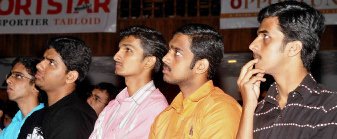
Photo: S. Ramesh Kurup
Eager audience: At The Hindu-EducationPlus Pre-admission Guidance Programme in Kozhikode.
The talks by experts at the Pre-admission Guidance Programme organised by The Hindu-EducationPlus in Kozhikode on June 9 was an enriching experience for the participants. The programme was conducted in association with the State Bank of Travancore. The Triumphant Institute of Management Education (T.I.M.E.) was the co-sponsor. A total of 320 participants attended the programme.
Lulu Mathews, Professor and Head, Department of Paediatrics, Government Medical College, Kozhikode spoke about the various things students should keep in mind while selecting the colleges and during the course of study.
•Opt for medical colleges which have well-established hospitals attached to them.
•Find out the last rank admitted to the college last year to know more about the students’ preference for colleges last year.
•During examinations, write the answers in legible handwriting and provide sufficient charts, pictures and so on.
•Do not buy all the books immediately after joining the MBBS course. Wait for sometime and then decide on which books to buy.
•The advantage of government colleges is that the hospitals attached to them attract a large number of patients.
•One should think of specialisation only during the last years of the MBBS course.
•Parents should give all support to their children studying the course.
B.S.Warrier, former joint director, Directorate of Technical Education (DTE), spoke about the various courses available in the engineering stream and other streams in medicine.
•While opting for engineering, choose the options well.
•One should have a vision where one should be after a particular period of time, say five or 10 years.
•Develop communication skills. There is a general complaint that students of Kerala lack communication skills.
•The word ‘electronics’ in the name of courses confuses many students. The main stream and the ‘in-thing’ now is electronics and communication. There is also applied electronics and instrumentation, where the focus is on instruments, electrical and electronics engineering, a conventional branch, and electronics and instrumentation engineering.
•Civil engineering has emerged as an important stream of late.
•Biotechnology is research oriented not suitable for those who want a 10 to 5 job.
•B.Sc. nursing has got plenty of opportunities. Ajay Antony, director, T.I.M.E. on soft skills and leadership:
•Communication skills are important for any professional.
•Leadership skills are to be developed. You have to motivate all the members of your team to excel by setting an example.
S.N.Kumar, Joint Commissioner of Entrance Examinations, Thiruvanantha- puram, elaborated on the Centralised Allotment Process (CAP) and online submission of options.
•Online submission of options is a simple process.
•The students should remit the fee, when they get the first allotment. This will ensure the seat for them.
•The list of last rank admitted to various colleges and courses last year is available on the web site, http://www.cee-kerala.org.
•If the candidates lose the admit card, they have to approach either the contact person in the Information Guidance and Option Facilitation Centre at the districts or go to the Commissionerate of Entrance Examinations in Thiruvananthapuram, with a demand draft of Rs.100 drawn in favour of the Commissioner for Entrance Examinations. The list of the contact persons is given on the web site of the commissionerate.
•It is good to take a print out of the option work sheet and practice how to exercise the options.
•The candidates should not wait for registering of options till the last day.
• The candidates can mix options from different streams while making their selection. It is not compulsory that candidates exercise all the options available.
•No allotment letter will be issued from the Commissionerate of Entrance Examination to the candidates. (The allotment is done online.)
•No equivalency certificate needed for Indian School Certificate (ISC), Central Board of Secondary Education (CBSE) and Vocational Higher Secondary Education (VHSE) students.
•Migration certificate is not needed during the time of admission.
Students get the right idea – The Hindu – Education Plu Programme – Thiruvananthapuram
Students get the right idea – The Hindu – Education Plu Programme – Thiruvananthapuram
SANGEETH KURIAN
The Hindu-EducationPlus programme was a demystifying experience for many aspirants in Thiruvananthapuram.
— Photo: S. Mahinsha
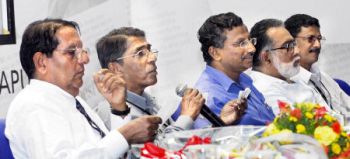
CLEARING DOUBTS: The panel of experts at the Pre-admission Guidance Programme organised in Thiruvananthapuram by The Hindu- EducationPlus. From left are B.S. Warrier, C.R. Soman, S.N. Kumar, Raghunath Krishnan and M.J. James.
It was demystifying time for hundreds of aspirants of engineering and medical courses at the annual Pre-admission Guidance Programme organised by the The Hindu-EducationPlus at the Tagore Centenary Hall in Thiruvananthapuram on Sunday.
With most aspirants appearing confused about which stream to opt for, leading experts provided an overview of the various courses on offer.
As G.J. Gayatri, former student of St. Thomas school, Mukkolakkal, and medical aspirant, said at the end of the programme: “The sessions were quite beneficial. I hope it will help me make an informed choice while deciding on the courses and colleges.”
The hall, packed to the brim, had a turnout of 800, including friends, relatives and family members.
Education Minister M.A. Baby advised the students to keep in mind three ‘P’s while choosing the career options. They are ‘philosophy,’ ‘personal assessment’ and ‘what is possible in the given circumstances.’ Among the various skills, a candidate should be able to identify his talent that can contribute to the development of society; this requires a philosophical analysis before taking a decision. The physical, intellectual and mental capability for a programme can be gauged through personal assessment. And finally, everything depends on the rank and merit list, Mr. Baby explained.
The highlight of this year’s programme was the introduction of a special session on soft skills, such as communication, business etiquettes, interpersonal skills and conflict, handled by Raghunath Krishnan from T.I.M.E.
“Soft skills become extremely important, the higher you move up in hierarchy,” he said.
“Soft skill is something which you cannot acquire through classroom sessions. But only through regular practice.”
B.S. Maoji, Commissioner for Entrance Examinations, advised students to do their “home work” before filing the options. He touched upon some common mistakes committed by them while filing the options.
“Ensure the secrecy of the key number and the password allotted to you. Lack of confidentiality can lead to the tampering of your homepage,” Mr. Maoji warned, citing such incidents in the previous year.
S.N. Kumar, Joint Commissioner for Entrance Examinations, reminded students to log out after filing their options online. “If not, there is a veritable danger of your options being tampered with by someone else,” he said.
Mr. Kumar said a sample option entry facility would be provided on the web site for the benefit of the candidates.
C.R. Soman, health activist, enlightened the students on the various opportunities available under the medical stream.
Starting with modern medicine, Mr. Soman said there were fewer medical practitioners in the State than required. “To reach the ideal figure, it will take another 50 years; so, there is no room for concern,” he said. Moreover we also require hundreds of doctors in the realm of academics and research. “Academic research is no longer materially unrewarding,” he told the participants.
B.S. Warrier, career guidance expert, touched upon the various job opportunities available on choosing the engineering stream.
S. Hari Shankar of the SBT made a presentation on various educational loans offered by the bank.
A question-and-answer session followed.
The programme was organised in association with the State Bank of Travancore (SBT) and the Triumphant Institute of Management Education (T.I.M.E).
Since participants could also write down their queries and send these across to the panellists instead of shooting them over a microphone, a majority of them preferred to put it down on paper.
Answers to selected questions are to be featured in the next issue of EducationPlus.
The panel comprised Mr. Kumar, Mr. Warrier, Mr. Soman, Mr. Krishnan and M.J. James, Chief Manager, Personal Banking, SBT.
The advantages of taking the biology stream at the higher secondary level
The advantages of taking the biology stream at the higher secondary level
B.S. WARRIER for THE HINDU
We explore the range of higher study options available for those opting for the biology-physics-chemistry combination at the higher secondary level.
Successful: Graduate doctors during a convocation function of AIIMS, New Delhi.; studying there could be an option for those who have chosen biology, physics and chemistry.
Those who have studied biology, physics and chemistry as optional subjects in the higher secondary classes can go for medical and allied degree programmes. Several States conduct joint entrance examinations that lead the candidates to a wide variety of medical and agricultural courses. For example, the medical-agricultural entrance examination in Kerala opens the door to 15 Bachelor’s degree courses — MBBS, BDS (dental surgery), nursing, pharmacy, medical labor atory technology, Ayurveda, homoeopathy, Siddha, nursing (Ayurveda), pharmacy (Ayurveda), physiotherapy, agriculture, fisheries science, forestry and veterinary science.
In some States, marks in the higher secondary examination are the basis of selection. There are instances when the ranking is made based on the aggregate of the marks in the higher secondary examination and in an entrance examination.
Let us now look into the possibilities for selection at the national level.
•All-India Pre-Medical and Dental Entrance Examination: Participation in this examination gives the candidates access to 15 per cent seats in the MBBS and BDS programmes in all public sector medical and dental colleges in India. However, Andhra Pradesh and Jammu and Kashmir are not in the scheme.
The total seats available are much more than the total number of seats in all the government and aided medical and dental colleges in any one State.
Usually, students prepare well for the entrance tests in their respective States, and appear in the all-India test based on the strength of this preparation. It should be borne in mind that one should make special preparation in tune with the demands of the particular competitive test in which one intends to appear.
Special preparation has, therefore, to be made for appearing in the All-India Pre-Medical and Dental Examination, although the syllabi are more or less the same for all the medical entrance tests in the country.
•The All India Institute of Medical Sciences, Ansari Nagar, New Delhi – 110 608
•Christian Medical College, Vellore and Ludhiana: The candidates can apply for admission to a variety of degrees courses in medicine, physiotherapy, occupational therapy, nursing and medical laboratory technology. The majority of seats are reserved for students belong to the Christian community. Certain supporting bodies and churches have been authorised to certify candidates under the sponsored category. Christians who have applied under the sponsored category will be given a test of Bible knowledge.
•Jawaharlal Institute of Postgraduate Medical Education and Research (JIPMER ), Puducherry.
•The Armed Forces Medical College (AFMC), Wanowrie, Pune. A total of 130 seats (105 for boys and 25 for girls) are available. No fee has to be paid. Accommodation is provided free of cost. Rations, book allowance, uniform allowance, AC 3-Tier railway warrant for journey during vacation from college to home and back, and other facilities are provided to the selected candidates. The candidate must be in good physical and mental health, and free from any disability which is likely to bar them from serving in the Armed Forces. On completion of the course, the candidates will be commissioned as officers in the Armed Forces Medical Services.
•The Institute of Medical Sciences, Banaras Hindu University, Varanasi, selects candidates for admission to MBBS and BAMS (Ayurveda) degree courses.
•The Mahatma Gandhi Institute of Medical Sciences, Sevagram, Wardha, conducts an entrance test that comprises a descriptive paper on Gandhian thought, in addition to the usual objective paper in biology, physics and chemistry. The test is usually held at Hyderabad, Nagpur, Mumbai and Delhi.
•Bharati Vidyapeeth University, Pune: Any Indian national who satisfies the conditions of eligibility with regard to educational qualification and age can seek admission to the MBBS programme in the medical colleges at Pune and Sangli.
•Manipal University: Kasturba Medical Colleges at Manipal and Mangalore
•Sri Ramachandra Medical College and Research Institute, Porur, Chennai, 600 116: MBBS, BDS, BPT, B.Sc. (nursing), B.Pharm. and B.Sc. (speech and hearing)
•Annamalai University, Annamalainagar, Tamil Nadu: MBBS, BDS, BPT and B.Sc. (nursing)
•All-India Agricultural Entrance: The ICAR (Indian Council of Agricultural Research) holds an entrance examination every year at the national level for selection of candidates to 15 per cent seats in all public sector institutions running Bachelor’s degree courses in agriculture, horticulture, forestry, fisheries, sericulture and so on. The institutions include 39 State agricultural universities, the Central Agricultural University, Imphal, and Central universities having Agriculture faculty — namely Banaras Hindu University, Visva-Bharati and Nagaland University. All the seats in the degree course in dairy science at the National Dairy Research Institute, Karnal, are filled based on the ranks in this test. Further, these ranks decide the selection of candidates for the National Talent Scholarship (NTS). A scholarship of Rs. 1,000 a month will be awarded to all those selected in this examination and join any university in ICAR-SAU (State Agricultural University) system, located outside their State of domicile.
•All-India Veterinary Entrance Examination: The Veterinary Council of India conducts a common entrance examination at the national level for selection of candidates for admission to 15 per cent seats in the B.V.Sc.&A.H. (Bachelor of Veterinary Science and Animal Husbandry) course in all public sector institutions in the country. Jammu and Kashmir, however, does not come under the scheme. Job prospects are bright for veterinary graduates.
One may not scale great heights in the field of medicine on the strength of an MBBS degree.
Even for normal practice, patients will look for doctors with postgraduate or super-specialty qualifications.
But in the veterinary field, normal practice can flourish with a Bachelor’s degree. If, however, a candidate seeks admission to a postgraduate degree programme, it would not be difficult to achieve, since most of the veterinarians carry on with their practice on the strength of the first degree.
Opportunities are there in animal husbandry departments of State governments, cattle, dairy and poultry farms, piggeries, zoos, private veterinary hospitals, remount veterinary corps in the armed forces, pharmaceutical industry, wildlife preserves, sanctuaries, racecourses, cattle breeding units, research laboratories and so on. There is good scope for private practice as well.
Visva-Bharati invites applications
Visva-Bharati invites applications
K. VIJAYA BHASKARA REDDY for THE HINDU
Visva-Bharati University, Santiniketan, is inviting applications for the academic year 2008-09. The university established by the Nobel laureate Rabindranath Tagore stands out for its academic excellence and the diversity of the courses that it offers. The university institutes are offering the following courses.
The Institute of Humanities and Social Sciences (Vidya-Bhavana) offers BA courses in Sanskrit, Bengali, English, Chinese, Hindi, Japanese, Oriya, Indo-Tibetan studies, philosophy, economics, history, Persian, ancient Indian history, culture and archaeology, comparative religion, geography, journalism and mass communication, functional Hindi and mathematics. For Persian, Tibetan, Chinese and Japanese, the course is of four years, including a year’s preparatory work. The institute also offers MA programmes in all these subjects.
The Institute of Science (Siksha-Bhavana) is offering Master’s programmes in physics, chemistry, mathematics, zoology, botany, statistics, environmental science and computers. The Bachelor’s degree is offered in all these subjects, except environmental science. The Institute of Music, Dance and Drama is offering B.Mus. and M.Mus. courses in Rabindra Sangit, Hindustani classical in both vocal and instrumental (Sitar/Esraj/Tabla/Pakhawaj), Kathakali and Manipuri dance.
The Institute of Fine Arts (Kala-Bhavana) offers BFA, MFA, Casual Course, Diploma and Advanced Diploma in Painting, Sculpture, Mural, Graphic Art (Print Making), Design (Textile/Ceramic) and History of Art (only for BFA and MFA students), two-year certificate course in Design and three-year bridge course in History of Art (leading to MFA).
The Institute of Agriculture (Palli Siksha Bhavana) offers four-year B.Sc in Agriculture (Honours) and M.Sc. in Agronomy, Plant Protection, Agricultural Extension, Soil Science & Agricultural Chemistry and Horticulture.
The Institute of Rural Reconstruction (Palli Smagathana Vibhaga) offers M.A. and M.Sc. in Anthropology, M.A. Rural Development, MSW, BSW (Honours), three-year diploma in Textile Technology (Handloom), Furniture Technology & Interior Design, Pottery and Ceramic Technology. The Institute of Education (Vinaya-Bhavana) offers M.A. Education, B.A. and B.Sc. (Honours) in Physical Education and one-year B.P.Ed.
Interested students can obtain application from the office of the Deputy Registrar (Academic & Research) against a crossed demand draft (Rs. 200 – general category, Rs. 70 for the Scheduled Caste and Scheduled Tribe category and Other Backward Caste students) in favour of ‘Visva-Bharati, Santiniketan’ and payable at ‘State Bank of India, Santiniketan Branch (code: 2121)’ along with a self-addressed envelope affixed with postage stamps of Rs. 40. Applications are also available at select branches of the Union Bank of India in major cities from June 4 to 30. The last date for receipt of applications is June 30. For further details, log on to http://www.visva-bharati.ac.in
Merging classroom and distance learning
Merging classroom and distance learning
IGNOU has been promoting a convergence between the conventional university and ODL systems. G. KRISHNAKUMAR makes an appraisal.
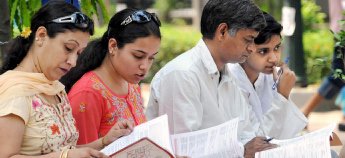
No barriers: The IGNOU plan for a synergy between conventional and distance learning systems will enhance educational access.
The Indira Gandhi National Open University (IGNOU) is actively promoting convergence between the conventional university system and the open- and distance-learning (ODL) system.
It is being done through enhanced and optimal utilisation of the physical facilities and intellectual and knowledge resources available in various colleges.
IGNOU’s ambitious plan is to have a flexible convergence system by clustering institutions and encouraging maximum use of existing resources.
Credit transfer and mutual recognition of programmes both in the ODL and conventional systems are some of the steps being initiated to achieve the target.
Vice-Chancellor V.N. Rajasekharan Pillai elaborates: “Latest technological aids and support through satellite-based education are also being used to address the areas of convergence of educational systems and enhance flexible and blended learning. Internationally, ODL and technology-enabled distance education is gaining acceptance for mass higher education in the areas of liberal arts, humanities, social sciences, languages, literature, mathematics, statistics, teacher education, commerce, computer and information sciences, management sciences and, to a considerable extent, even in basic experimental sciences.”
Prof. Pillai said that enhancing access through conventional expansion required doubling of the physical facilities and human resources in higher education institutions and that was rather difficult to realise. “To partially overcome these constraints, a synergy of ODL and conventional systems is the proposed viable alternative. The objective of the scheme is to achieve the projected targets related to access and equity in higher education during the 11th Plan. A convergence between the conventional university system and the ODL system in colleges is an integral part of this scheme,” he said.
Collaboration
IGNOU will collaborate with all universities coming under the purview of sections 2f or 3 of the University Grants Commission (UGC) Act. It will initiate joint programmes with colleges having potential for excellence. The university will collaborate with autonomous colleges and affiliated colleges. Professional colleges that are recognised by their respective statutory councils will be included.
Collaborating institutions will have the opportunity to offer enhanced access programmes.
Prof. Pillai said that institutions could offer undergraduate and postgraduate programmes of IGNOU. “The scheme provides for a combination of use of printed self-learning course material and face-to-face academic counselling enabled by technology. Institutions will be provided all the printed course materials, multimedia materials and technological support,” he said.
An additional two to four hours daily (between 4.30 p.m. and 8.30 p.m. or an hour in the morning and two to three hours in the evening) and six to eight hours during the weekends suiting the convenience of the colleges will be a viable proposition for holding contact sessions. Teachers from the college can be involved in the teaching and coordination of the activities when such sessions are held in the colleges.
Value-added programmes will be offered under the convergence scheme. Undergraduate and postgraduate students of the colleges concerned and adjoining institutions can enrol for certificate and diploma programmes of IGNOU as a value-added programme. The mode of programme transaction may be either face-to-face or ODL.
If an institution opts for face-to-face mode, the entire course material (print and audio-video) will be provided by IGNOU. The college will transact the curriculum and examinations will be conducted as per the university schedule. If an institution opts to host the programmes through ODL, then, IGNOU will provide the course material and the faculty will be oriented to offer the curriculum.
Dual courses
Regular students enrolled in colleges through the conventional system may simultaneously enrol for a degree of the same level in IGNOU. In such cases, credit transfer will be given due consideration through a memorandum of understanding (MoU) between IGNOU and the university concerned. Institutions that wish to enter initially into this MoU will offer IGNOU syllabus through ODL/face-to-face teaching. Faculty will be trained to conduct contact sessions, conduct assignments and tests.
Some new programmes leading to a joint degree between two universities will be mutually identified by IGNOU. The programmes will be jointly formulated and IGNOU will supplement the face-to-face instruction of the conventional university with ODL component. Technology and multimedia support will be provided by IGNOU. Evaluation and examination will be handled as per the IGNOU pattern.
The university will provide the expenditure towards transacting the programmes. It will also provide capacity-building training programmes to teachers in the use of information and communication technology as a pedagogical tool. The college will provide adequate furniture, classrooms, library facilities and computers to supplement IGNOU’s assistance.
For colleges opting to conduct certificate/diploma programmes of IGNOU through the face-to-face mode, students will be enrolled from the respective college and adjoining institutions.
The college will be required to maintain an attendance register for all candidates enrolled. For all certificate and diploma programmes, a walk-in policy of admissions will be adopted for enrolling students round the year .
One of the senior faculty members with high motivation and dedication will be appointed coordinator for all the programmes offered by the college through the convergence scheme. He or she will be responsible for maintaining coordination between the various programmes in-charge/faculties to ensure effective implementation of the scheme.
Dr. Pillai said the faculty for various modules could be drawn from within the college.
The service of retired faculty members from university or postgraduate departments of colleges could also be taken for the implementation of the scheme. For programmes offered through the face-to-face mode, classes will be organised at different times. The timetable of the classes should be announced in the beginning of the session, he said.
Students will be encouraged to form study groups wherever possible.
Audiovisual and multimedia materials of IGNOU will be used to supplement the process of teaching and learning.
Pointing out that the university has one of the largest repositories of educational materials in multimedia format, Prof. Pillai said that teleconferencing, videoconferencing and other technological facilities would be provided or arranged through the regional centres of IGNOU across the country.
According to IGNOU, the targeted gross enrolment ratio (GER) of the 16-21 age group in higher education during the 11th Plan is 20, about double that of today.
“We believe that open and distance learning is a tool for education — it does not have to be utilised only by the open university system,” Prof. Pillai said.
IGNOU is also looking at a mixed model that links face-to-face learning and distance-learning systems. This is the state-of-the-art open system of education in the world now. It is also looking at how virtual laboratories can be created for a practical mode of teaching. This is when convergence will occur and form the background of the joint activity of the AICTE, the UGC and the ODL. The university will continue to hold discussions on the nature of convergence of conventional and distance modes of education; areas in which convergence is needed; strategies to be adopted towards desirable, effective, viable and cost-effective convergence; and possible outcomes of convergence and utilisation by various stakeholders.
7% in maths can get you through IIT-JEE
7% in maths can get you through IIT-JEE
17 Jun 2008, 0421 hrs IST, Manoj Mitta,TNN
NEW DELHI: If you score 7% in your Class XII mathematics paper, you fail. But if you score 7% in your IIT-JEE mathematics paper, you can still make it. That’s exactly what happened in the 2007 entrance exam, an RTI query has revealed.
The top 7,202 general category candidates who qualified in the 2007 joint entrance examination, with an aggregate cutoff of 206 marks, included those whose score in one of the subjects was as low as 12 (mathematics), 22 (physics) and 18 (chemistry).
Given that the maximum marks in each subject were 162, the scores of some of the qualified candidates in JEE 2007 work out to 7%, 14% and 11% in the three subjects.
These details have come to light from the fresh data supplied last month under RTI by IIT-Bombay on JEE 2007, which had been organized by it. If such poor performance in individual subjects could not stop candidates from making it to the all-India rank (AIR) list, it was thanks to a radical change in the 2007 examination in the procedure for calculating subject-wise cutoffs.
As TOI first reported on March 17, the change resulted in single-digit cutoffs: 1 in mathematics, 4 in physics and 3 in chemistry, making a mockery of the purpose of ensuring that the selected candidates displayed a certain minimum level of knowledge in every subject.
Under the procedure introduced in 2007, the cutoffs are pegged to the best marks obtained by the bottom 20% of the candidates in each subject.
The change was prompted by the embarrassment IIT-Kharagpur faced over its inability to explain before the Central Information Commission how it had arrived at the much higher cutoffs in the previous examination organized by it in 2006.
The latest disclosure made by IIT-Bombay belies the general expectation that, because of sheer competition, the relaxation in subject-wise cutoffs, which constitute the first screening of the candidates, would not compromise the quality of the intake.
Consider the case of the candidate who scored just 12 in mathematics, a subject crucial to all engineering branches, and yet managed to get rank 3,989 on the strength of his aggregate of 239 marks.
Another candidate who got merely 12 more in mathematics and 6 more in the aggregate, however, jumped 590 rungs higher in the AIR list: his rank 3,399 was, according to the latest counselling browser published by IITs, good enough to secure admission in 2007 in IIT-Kanpur and IIT-Kharagpur.
Despite the negative marking that is done for wrong answers, how can IITs justify the presence of such poor performers in the coveted AIR list?
N Venkataramani of IIT-Bombay, who was the vice-chairman of JEE 2007, told TOI: “Don’t let these aberrations make you lose sight of the fact that an overwhelming majority of the selected candidates are the best in the country. Having changed the cutoff procedure on account of the problems that arose with the 2006 examination, we are closely reviewing the new system and will refine it as we go along.”
 ClicksandWrites
You must be logged in to post a comment.