Digging for gold in waste bins — what’s our role to change this?
Community Reports
Community report – Gulf News Dt. 23.07.2010 – Three-wheelers add to traffic woes
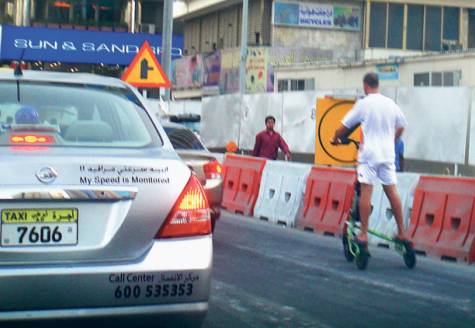
Three-wheelers add to traffic – They pose great danger to the rider and other motorists
By Ramesh Menon, Gulf News Reader
Currently, the inspectors of Mawaqif use the ‘Trikke’, or three-wheeled scooter, to inspect and report parking violations within the city of Abu Dhabi.
They are in uniform and remain on the pavements. However, I have been witnessing common folk using the same type of vehicles on the road, through the busy city streets of Abu Dhabi.
They are not uniformed, and do not wear luminous jackets so that they are not clearly visible at night to fellow road users. These vehicles do not have a rearview mirror or brake lights.
Those who use the Trikke do not wear helmets either. Hence, having such vehicles on busy streets without the necessary safety gear poses grave danger to the person riding it as well as other people around him or her. It raises serious safety concerns regarding the rider as well as fellow road users. The authorities should therefore restrict such vehicles from being used [by people] on the road and these vehicles should be made available for use in private areas only.
— The reader is a technical officer, based in Abu Dhabi
To read it in original, please visit GULF NEWS online.
Community Report – GULF NEWS Dt. 09.07.2010 – Spilt fuel can have dire consequences
Community Report – GULF NEWS Dt. 09.07.2010 – Spilt fuel can have dire consequences
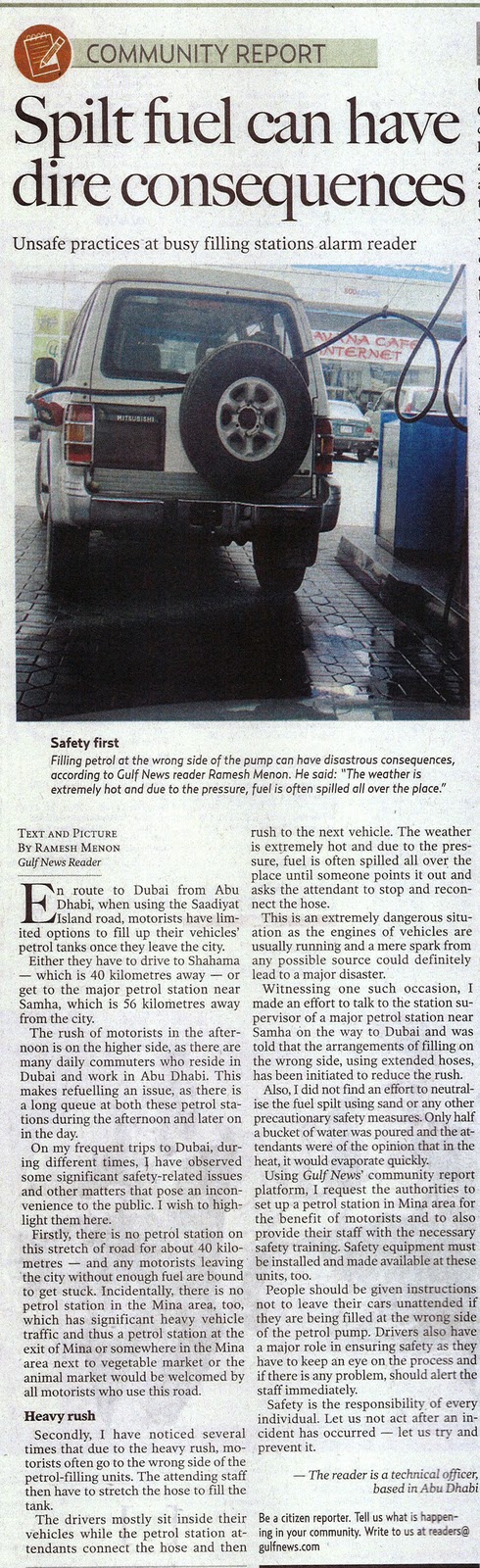
Community Report – GULF NEWS Dt. 09.07.2010 – Spilt fuel can have dire consequences

Unsafe practices at busy filling stations alarm reader
En route to Dubai from Abu Dhabi, when using the Saadiyat Island road, motorists have limited options to fill up their vehicles’ petrol tanks once they leave the city.
Either they have to drive to Shahama — which is 40 kilometres away — or get to the major petrol station near Samha, which is 56 kilometres away from the city.
The rush of motorists in the afternoon is on the higher side, as there are many daily commuters who reside in Dubai and work in Abu Dhabi. This makes refuelling an issue, as there is a long queue at both these petrol stations during the afternoon and later on in the day.
On my frequent trips to Dubai, during different times, I have observed some significant safety-related issues and other matters that pose an inconvenience to the public. I wish to highlight them here.
Firstly, there is no petrol station on this stretch of road for about 40 kilometres — and any motorists leaving the city without enough fuel are bound to get stuck. Incidentally, there is no petrol station in the Mina area, too, which has significant heavy vehicle traffic and thus a petrol station at the exit of Mina or somewhere in the Mina area next to vegetable market or the animal market would be welcomed by all motorists who use this road.
Heavy rush
Secondly, I have noticed several times that due to the heavy rush, motorists often go to the wrong side of the petrol-filling units. The attending staff then have to stretch the hose to fill the tank.
The drivers mostly sit inside their vehicles while the petrol station attendants connect the hose and then rush to the next vehicle. The weather is extremely hot and due to the pressure, fuel is often spilled all over the place until someone points it out and asks the attendant to stop and reconnect the hose.
This is an extremely dangerous situation as the engines of vehicles are usually running and a mere spark from any possible source could definitely lead to a major disaster.
Witnessing one such occasion, I made an effort to talk to the station supervisor of a major petrol station near Samha on the way to Dubai and was told that the arrangements of filling on the wrong side, using extended hoses, has been initiated to reduce the rush.
Also, I did not find an effort to neutralise the fuel spilt using sand or any other precautionary safety measures. Only half a bucket of water was poured and the attendants were of the opinion that in the heat, it would evaporate quickly.
Using Gulf News’ community report platform, I request the authorities to set up a petrol station in Mina area for the benefit of motorists and to also provide their staff with the necessary safety training. Safety equipment must be installed and made available at these units, too.
People should be given instructions not to leave their cars unattended if they are being filled at the wrong side of the petrol pump. Drivers also have a major role in ensuring safety as they have to keep an eye on the process and if there is any problem, should alert the staff immediately.
Safety is the responsibility of every individual. Let us not act after an incident has occurred — let us try and prevent it.
— The reader is a technical officer, based in Abu Dhabi
To read it in original, please visit GULF NEWS Online.
Speak your mind – GULF NEWS – Be Heard – Dt. 14.05.2010 – Fixing the problems in schools
Speak your mind – GULF NEWS – Be Heard – Dt. 14.05.2010 – Fixing the problems in schools
country’s future lies with the youth and their development
By Ramesh Menon, Gulf News reader Published: 19:38 May 13, 2010
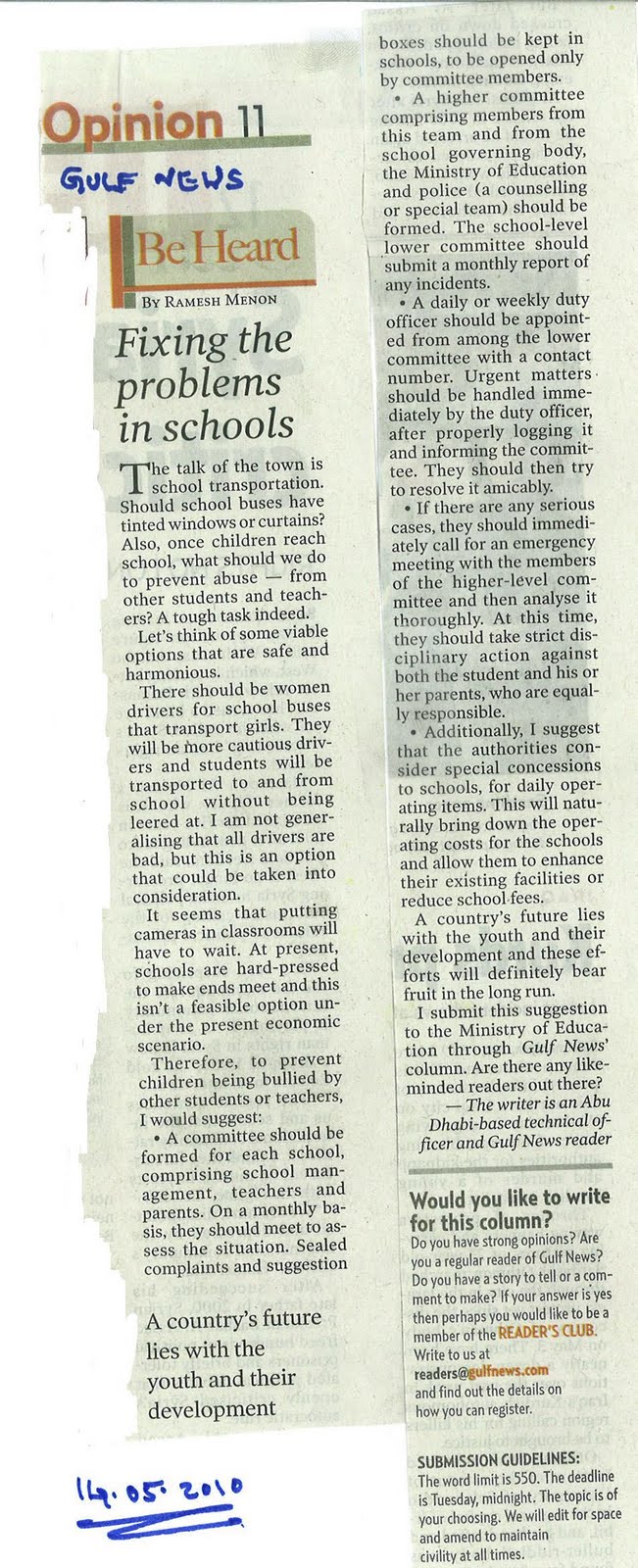
The talk of the town is school transportation. Should school buses have tinted windows or curtains? Also, once children reach school, what should we do to prevent abuse — from other students and teachers? A tough task indeed.
Let’s think of some viable options that are safe and harmonious.
There should be women drivers for school buses that transport girls. They will be more cautious drivers and students will be transported to and from school without being leered at. I am not generalising that all drivers are bad, but this is an option that could be taken into consideration.
It seems that putting cameras in classrooms will have to wait. At present, schools are hard-pressed to make ends meet and this isn’t a feasible option under the present economic scenario.
Therefore, to prevent children being bullied by other students or teachers, I would suggest:
• A committee should be formed for each school, comprising school management, teachers and parents. On a monthly basis, they should meet to assess the situation. Sealed complaints and suggestion boxes should be kept in schools, to be opened only by committee members.
• A higher committee comprising members from this team and from the school governing body, the Ministry of Education and police (a counselling or special team) should be formed. The school-level lower committee should submit a monthly report of any incidents.
• A daily or weekly duty officer should be appointed from among the lower committee with a contact number. Urgent matters should be handled immediately by the duty officer, after properly logging it and informing the committee. They should then try to resolve it amicably.
• If there are any serious cases, they should immediately call for an emergency meeting with the members of the higher-level committee and then analyse it thoroughly. At this time, they should take strict disciplinary action against both the student and his or her parents, who are equally responsible.
• Additionally, I suggest that the authorities consider special concessions to schools, for daily operating items. This will naturally bring down the operating costs for the schools and allow them to enhance their existing facilities or reduce school fees.
A country’s future lies with the youth and their development and these efforts will definitely bear fruit in the long run.
I submit this suggestion to the Ministry of Education through Gulf News’ column. Are there any like-minded readers out there?
— The writer is an Abu Dhabi-based technical officer and Gulf News reader
To read it in original, please visit GULF NEWS online.
My Opinion : Gulf News – Dt 25.04.2010 – Recycling should replace scavenging
My Opinion : Gulf News – Dt 25.04.2010 – Recycling should replace scavenging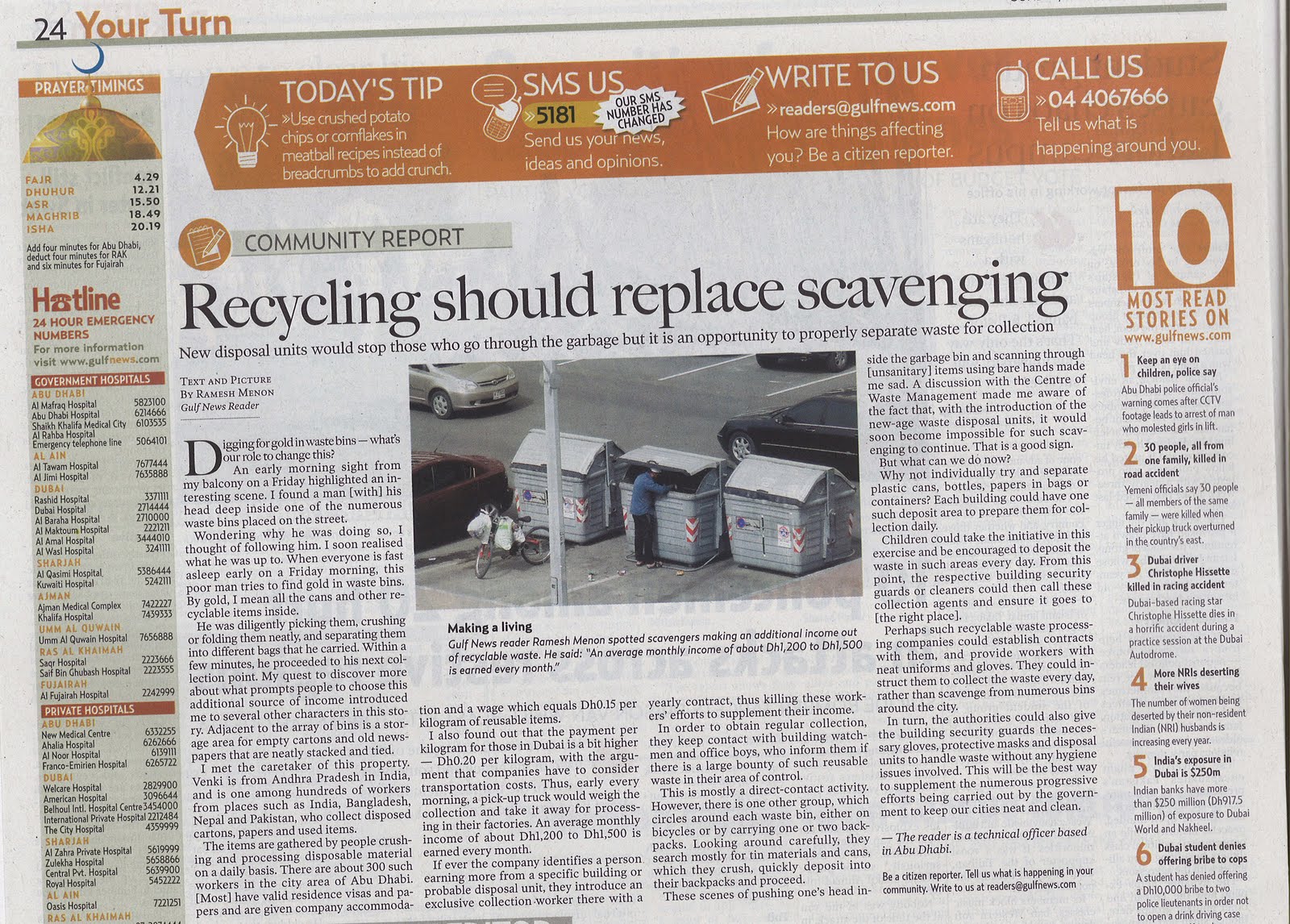
To read my letters to the news, please bookmark and visit Letters to the Editor
An early morning sight from my balcony on a Friday highlighted an interesting scene. I found a man [with] his head deep inside one of the numerous waste bins placed on the street.
Wondering why he was doing so, I thought of following him. I soon realised what he was up to. When everyone is fast asleep early on a Friday morning, this poor man tries to find gold in waste bins. By gold, I mean all the cans and other recyclable items inside.
He was diligently picking them, crushing or folding them neatly, and separating them into different bags that he carried. Within a few minutes, he proceeded to his next collection point. My quest to discover more about what prompts people to choose this additional source of income introduced me to several other characters in this story. Adjacent to the array of bins is a storage area for empty cartons and old newspapers that are neatly stacked and tied.
I met the caretaker of this property. Venki is from Andhra Pradesh in India, and is one among hundreds of workers from places such as India, Bangladesh, Nepal and Pakistan, who collect disposed cartons, papers and used items.
The items are gathered by people crushing and processing disposable material on a daily basis. There are about 300 such workers in the city area of Abu Dhabi. [Most] have valid residence visas and papers and are given company accommodation and a wage which equals Dh0.15 per kilogram of reusable items.
I also found out that the payment per kilogram for those in Dubai is a bit higher — Dh0.20 per kilogram, with the argument that companies have to consider transportation costs. Thus, early every morning, a pick-up truck would weigh the collection and take it away for processing in their factories. An average monthly income of about Dh1,200 to Dh1,500 is earned every month.
If ever the company identifies a person earning more from a specific building or probable disposal unit, they introduce an exclusive collection worker there with a yearly contract, thus killing these workers’ efforts to supplement their income.
In order to obtain regular collection, they keep contact with building watchmen and office boys, who inform them if there is a large bounty of such reusable waste in their area of control.
This is mostly a direct-contact activity. However, there is one other group, which circles around each waste bin, either on bicycles or by carrying one or two backpacks. Looking around carefully, they search mostly for tin materials and cans, which they crush, quickly deposit into their backpacks and proceed.
These scenes of pushing one’s head inside the garbage bin and scanning through [unsanitary] items using bare hands made me sad. A discussion with the Centre of Waste Management made me aware of the fact that, with the introduction of the new-age waste disposal units, it would soon become impossible for such scavenging to continue. That is a good sign.
But what can we do now?
Why not individually try and separate plastic cans, bottles, papers in bags or containers? Each building could have one such deposit area to prepare them for collection daily.
Children could take the initiative in this exercise and be encouraged to deposit the waste in such areas every day. From this point, the respective building security guards or cleaners could then call these collection agents and ensure it goes to [the right place].
Perhaps such recyclable waste processing companies could establish contracts with them, and provide workers with neat uniforms and gloves. They could instruct them to collect the waste every day, rather than scavenge from numerous bins around the city.
In turn, the authorities could also give the building security guards the necessary gloves, protective masks and disposal units to handle waste without any hygiene issues involved. This will be the best way to supplement the numerous progressive efforts being carried out by the government to keep our cities neat and clean.
— The reader is a technical officer based in Abu Dhabi.
Be a citizen reporter. Tell us what is happening in your community. Write to us at :readers@gulfnews.com
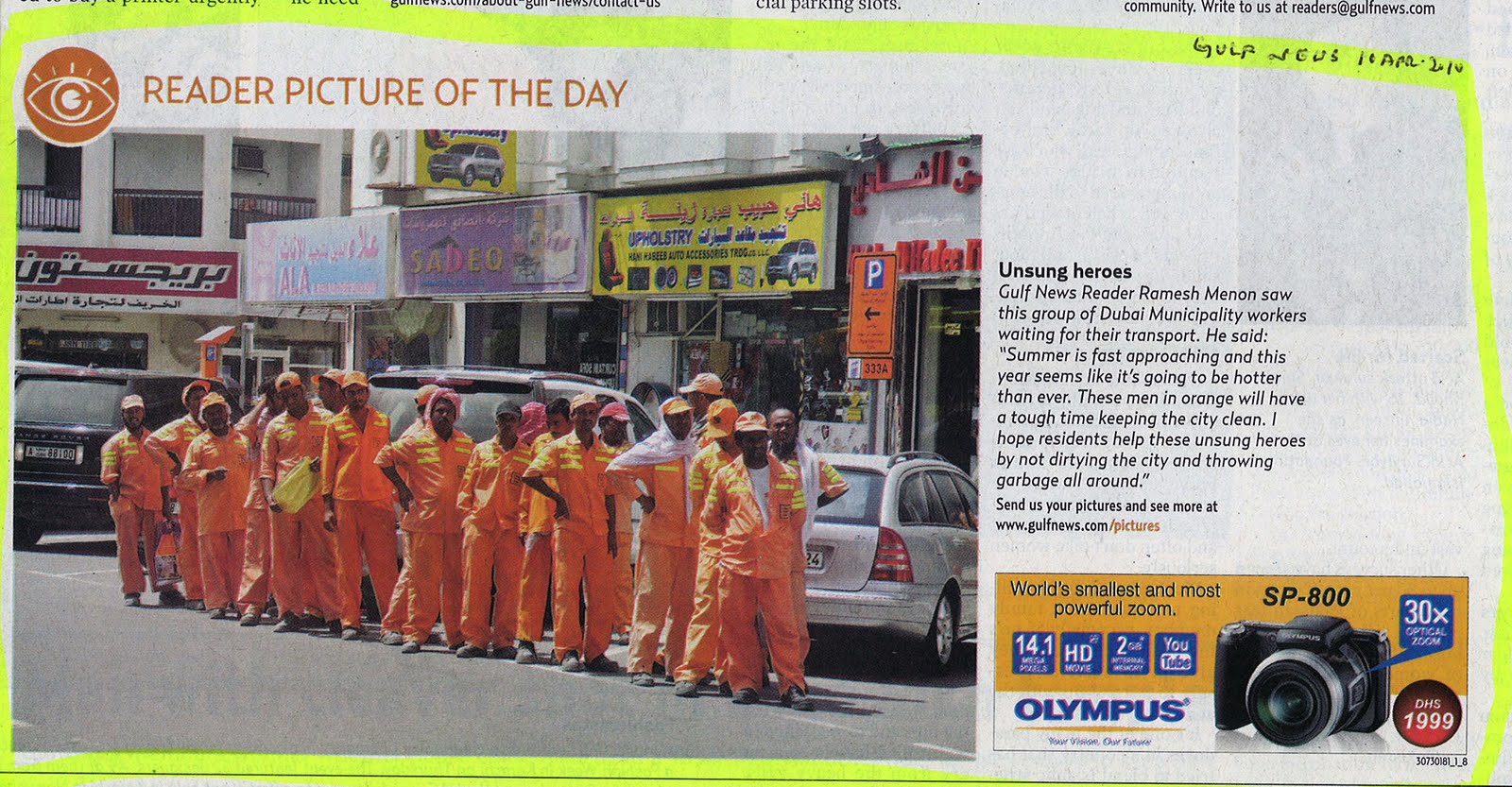
My Letters & Photo Speaks – Gulf News – Dt. 10.04.2010 – Unsung heroes
My Letters & Photo Speaks – Gulf News – Dt. 10.04.2010 – Unsung heroes
 To read my letters to the news, please bookmark and visit Letters to the Editor
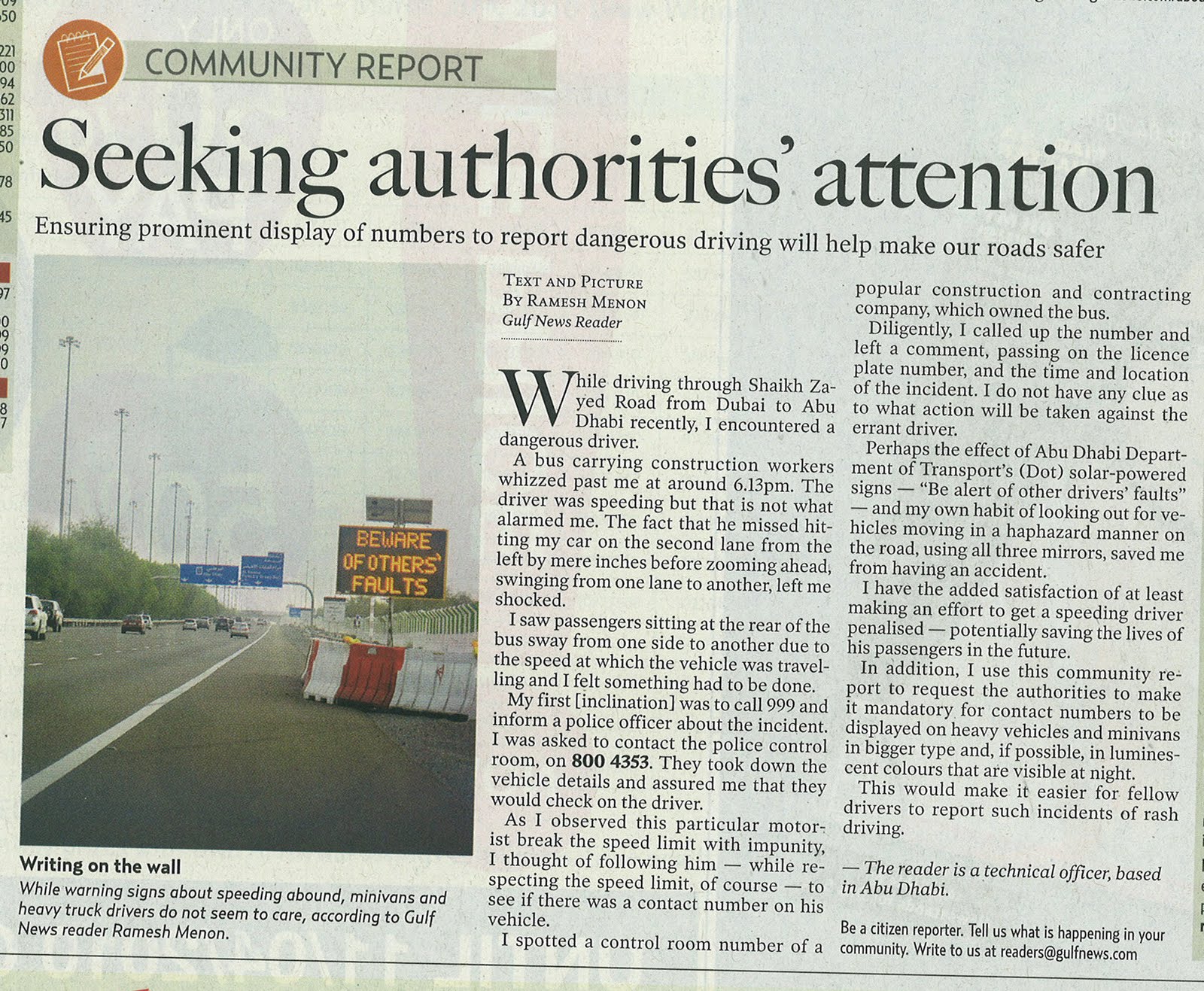
My Lettes – GULF NEWS – Dt. 08.04.2010 – Seeking authorities’ attention
My Lettes – GULF NEWS – Dt. 08.04.2010 – Seeking authorities’ attention
 To read my letters to the news, please bookmark and visit Letters to the Editor
My Letters – Gulf News – Dt. 07.04.2010 – Move smokers away from UAE mall entrances
My Letters – Gulf News – Dt. 07.04.2010 – Move smokers away from UAE mall entrances
Shoppers are being forced to inhale second-hand smoke at malls and near designated smoking areas causing health fears
By Bashir Mohammad Hijas, Gulf News Reader
I have been noticing a problem which I think should be highlighted in a community report.
My issue is with the “designated smoking area” in shopping malls. The entrance from the parking lots to the malls is often dotted with smokers, who fill up the air with exhaled smoke and endanger passers-by.
The designated area is in a place where [it affects everyone], including women and children. Often, this location is either not adequately ventilated or not ventilated at all, and the low roofs of the parking areas prevent the exhaled smoke from rising up in the air.
Passive smoking
Thus, the exhaled smoke and its smell lingers in the area for a long period of time.
Most importantly, this smoke endangers the health of passers-by due to the passive smoking effect.
There are several suggested remedial actions:
• Relocate the designated smoking area to a secluded place, away from the exit and entrance gates, so that it does not affect non-smokers.
• Build a glass wall around the smoking area to contain the smoke.
• Install heavy-duty smoke suckers, to trap the exhaled smoke. This would prevent others from inhaling exhaled smoke.
— The reader is a business analyst, in Dubai.
Be a citizen reporter. Tell us what is happening in your community. Write to us at readers@gulfnews.com
My Comments as follows:
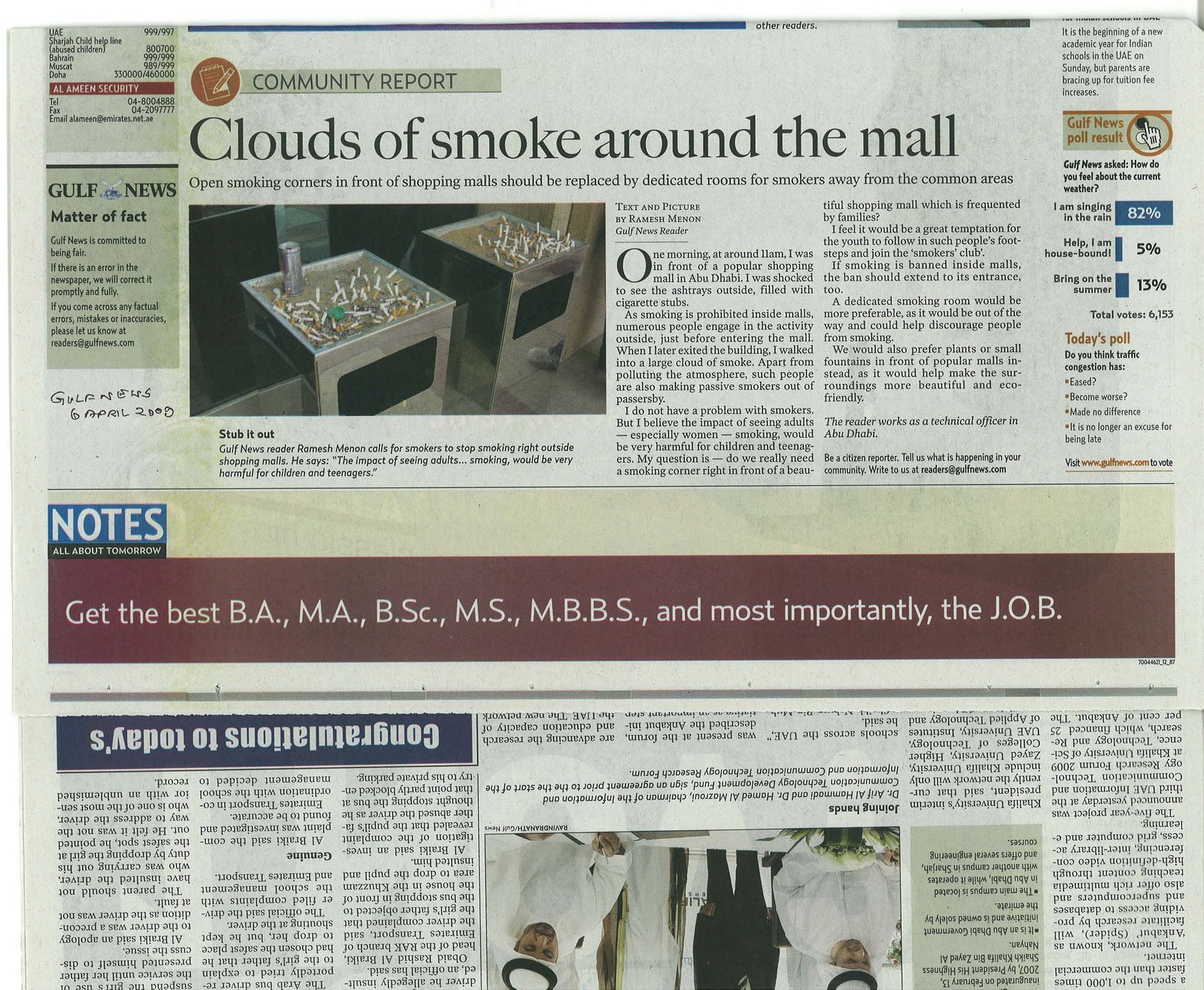
I thank Mr. Bashi Mohammed Hijas for highlighting this issue of smokers crowding the entrance of the malls. It is a common scene, not only for malls, but other office buildings, whether you are in Dubai or Abu Dhabi. I had highlighted a similar situation happening in Abu Dhabi through one of Community report dated 06 April 2009 (strange!!). I followed it up vigorously with the authorities including mall managements and replies received were not promising as they had to find solution for a separate smoking area, rooms etc, which are costly. Rather than the amount of smoke inhaled while one pass by, I was concerned about the temptation, the younger generation gets by watching grown up men and women smoking away fumes waiting in front of the malls. It is a dangerous precedence and it will create an instinctive attraction to try for a cigarette in young minds. Authorities have to find solutions to these exhibitionism outside the premises as and when they introduce control measures to stop smoking inside malls and building.
Ramesh Menon, Abu Dhabi, United Arab Emirates
To read this letter in original, please visit GULF NEWS online
My Letters – GULF NEWS – Dt 09 March 2010 – Energy efficiency for a better tomorrow
My Letters – GULF NEWS – Dt 09 March 2010 – Energy efficiency for a better tomorrow
 To read my letters to the news, please bookmark and visit Letters to the Editor
My Letters – GULF NEWS – Dt 22 Jan 2010 – Exemplary case of Safety Measures
My Letters – GULF NEWS – Dt 22 Jan 2010 – Exemplary case of Safety Measures

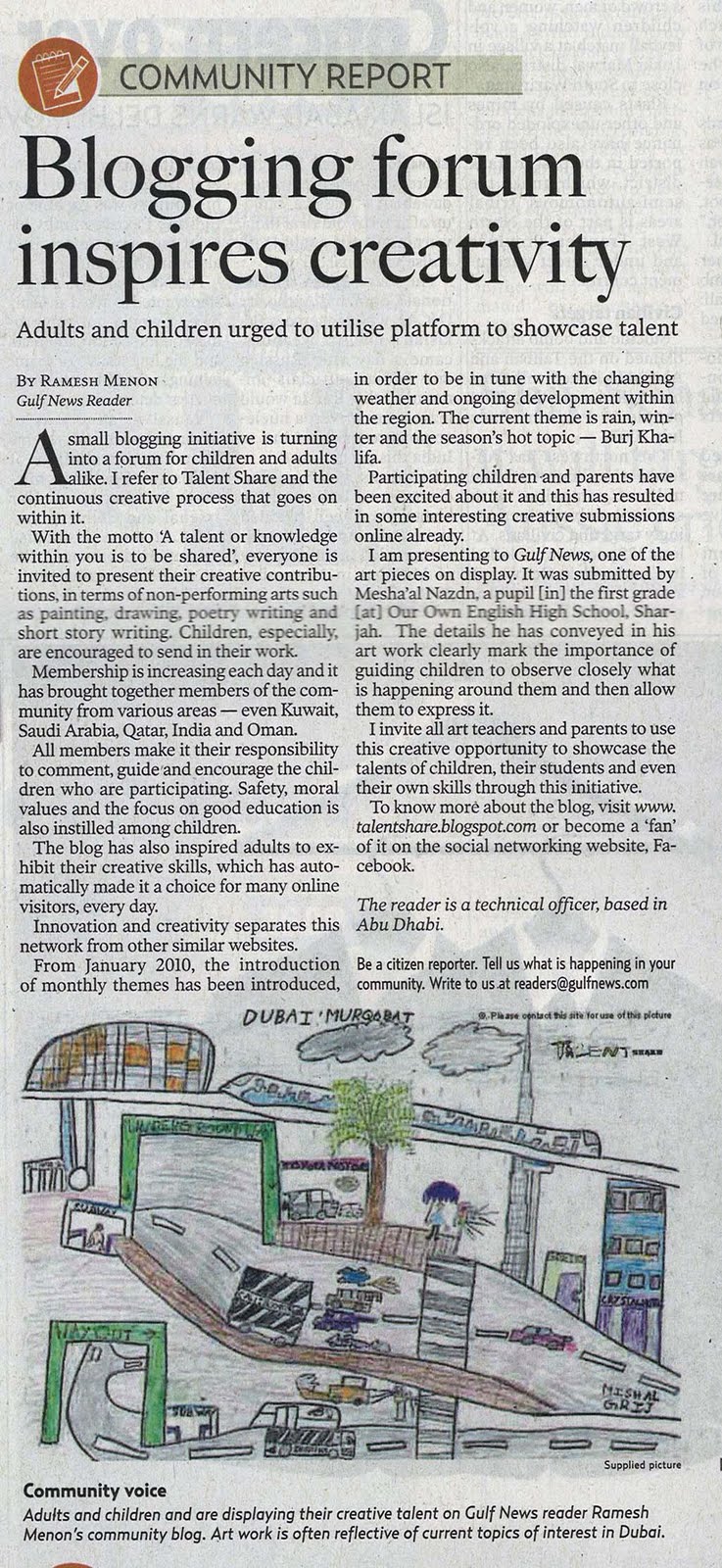
My Letters – GULF NEWS – 14 Jan 2010 – Blogging forum inspires creativity
My Letters – GULF NEWS – 14 Jan 2010 – Blogging forum inspires creativity
To read my letters to the news, please bookmark and visit Letters to the Editor
 ClicksandWrites
You must be logged in to post a comment.