Month: March 2008
Driving tips for foggy weather
Driving tips for foggy weather
By Alia Al Theeb, Staff Reporter, GULF NEWS Published: March 11, 2008, 16:35
Here are a few driving tips that everyone should follow to avoid accidents in this foggy weather:
* Ask yourself if your journey is really necessary before driving in thick fog.
* Avoid travelling in a car if you can.
* Make sure the headlights and the front windows of the car are clean before starting the journey.
* Reduce speed, leave enough space between vehicles and avoid overtaking.
* Do not change lanes unless necessary.
* Turn on headlights (but low beams only).
* Avoid turning on hazard lights, except in emergency cases. Using hazard lights all the time prevents a motorist from alerting other motorists to an emergency.
* Turn on the appropriate fog lights when driving.
* Make sure the window wipers work properly to constantly clean the window and have clear visibility.
* Be aware at all times for danger such as a vehicle suddenly braking in the front or another vehicle entering from a side entrance. This means not using mobile phones when driving, for example.
* Allow more time to complete a journey, especially during low visibility.
Story of fight between Sree Rama and Varuna
Story of fight between Sree Rama and Varuna
This is a story from Ramayana and a weekend challenge to attempt.
Faced with the dilemma of how to cross the ocean to Lanka, where his kidnapped wife Sita is held captive by the demon king Ravana, Rama (an Avatar of Vishnu) performs a penance (tapasya) to Varuna, the Lord of Oceans, fasting and meditating in perfect dhyana for three days and three nights. Varuna does not respond, and Rama arises on the fourth morning, enraged by the God’s arrogance. With his bow and arrow, he angrily begins attacking the oceans with celestial weapons – burning up the waters and killing its life and creatures. The Vanaras (Monkeys) are dazzled and fearful at witnessing the enraged Rama demolish the oceans, and his brother, Lakshmana, prays to calm Rama’s mind. Just as Rama invokes the brahmastra, considered the most powerful weapon capable of destroying all creation, Varuna arises out of the oceans. He bows to Rama, explaining that he himself was at a loss to answer Rama’s question. Begging him not to destroy the oceans with the missile, he suggests that Rama re-direct the weapon at a demonic race that lives in the heart of the ocean. Rama’s arrows destroys the demons, and establishes a purer, liberated environment there. Varuna promises that he would keep the oceans still for all of Rama’s army to pass, and Nala constructs a bridge (Rama’s Bridge) across to Lanka. Rama justifies his angry assault on the oceans as he followed the correct process of petitioning and worshipping Varuna, but obtaining the result by force for the greater good.
It is thus believed that when someone writes Sree Ramajayam on the sand at the seashore, the sea (i.e. Varuna) get intimidated and tries to clean it as soon as possible.
Try it wherever you are – write Sree Rama Jayam in any language, a little further than where you expect the waves normally come, and watch the fun of it being cleansed by the waves.
Al Wathba – Camel Market
Al Wathba – Camel Market
On the Abu Dhabi – Al Ain road, Al Wathba is famous for the Camel Racing track. It has also a famous Camel market adjacent to it. And not to forget about the Al Wathba Prison.
Jebel Hafeet – Al Ain
Jebel Hafeet – Al Ain
Jebel Hafeet (Arabic: جبل حفيت) (variously translated Jabal, Jabel and Jebal) is a mountain primarily in the United Arab Emirates on the outskirts of Al Ain. The mountain actually straddles part of the border with Oman. The mountain rises 1240 meters and offers an impressive view over the city, with what has been described as “the greatest driving road in the world”[1] extending to the summit. Jebel Hafeet was a well-known landmark through out the area’s history and is a contemporary tourist attraction. An extensive natural cave system winds through Jebel Hafeet.
At the foothills of Jabal Hafeet lies the Green Mubazarrah, a well developed tourist attraction. At the Green Mubazarrah, hot-water springs gush forth in little streams and form a lake. Swimming pools and jacuzzis are scattered all over the Green Mubazarrah. Jebel Hafeet is also home to a wide range of animals including bats, foxes, snakes, etc.
It is often incorrectly labelled U.A.E’s highest mountain (as it is certainly the most well-known); this honor actually belongs to Jabal Yibir.
The Jebel Hafeet Mountain Road extends for 7.3 mi (11.7 km) up the mountain, rising 4000 ft (1219 m). With 21 corners and three lanes (two climbing and one descending), the immaculate road was called the greatest driving road in the world by Edmunds.com. The road scales the mountain and ends at a parking lot with only a hotel and a palace belonging to the country’s rulers.
Build by Strabag International Cologne,Germany
Jebel Hafeet Road is the challenge for cyclists who frequently come over to train. The Jebel Hafeet Mercure Challenge is a yearly road cycling competition taking place somewhere in January. National & international riders take part in climbing the 8% average ascent of the mighty mountain.
Maha Shivarathri – the universal Pati-patni day
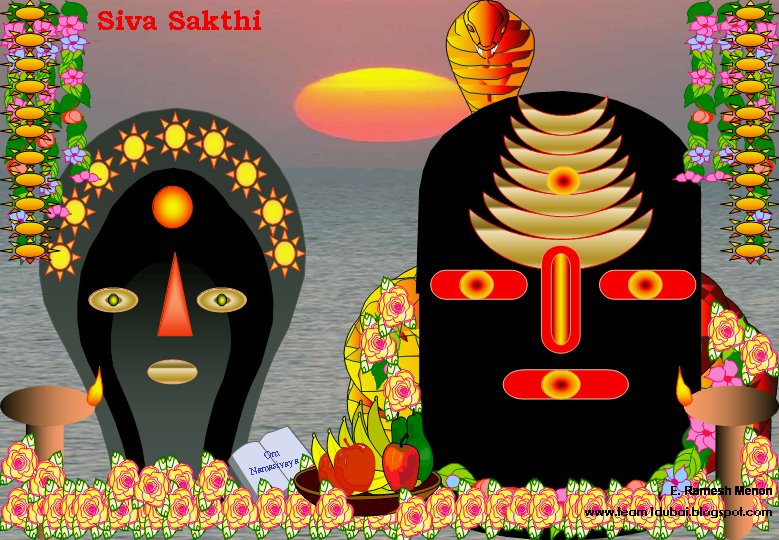
Today is Maha Shivratri.
These days, we blindly follow several different types of days, for eg: Valentines day, mothers day, fathers day, friendship day, no-smoking day and the list goes on and on. When we look at it Shivarathri is the truly traditional family day or pati-patni day, as I term it. Because, from the ancient times, devoted wife’s pray and observe fast on this day for the well being of their husband and children and vice-versa, husband’s observe religious rituals and prayers like chanting Rudram and chamakam to give grace and prosperity to the well being of own family and the society.
There are many stories associated with Shivaratri and its origins.
One is about lord shiva drinking a poison and he held it in his throat by binding it with a snake. The throat became blue due to the poison (Thus Lord Shiva is also known as Neelakantha) and Shiva remained unharmed. In another story, it is said that the whole world was once facing destruction and the Goddess Parvati worshiped her husband Shiva to save it. Parvati named the night for the worship of Iswara by mortals Maha-Sivaratri, or the great night of Siva. After creation was complete, Parvati asked Shiva of which rituals pleased him the most. The Lord replied that the 14th night of the new moon, during the month of Maagha, is my most favourite day. It is known as Shivaratri. Parvati repeated these words to her friends, from whom the word spread over all creation. Another story is about a hunter. Lubdhaka, a poor tribal man and a devotee of Shiva, once went into the deep forests to collect firewood. At nightfall, he became lost and could not find his way home. In the darkness, Lubdhaka climbed a bel tree, and sought safety and shelter in its branches until dawn. All night, he could hear the growls of tigers and wild animals, and was too frightened to leave the tree. In order to keep himself awake, he plucked one leaf at a time from the tree and then dropped it, while chanting the name of Shiva. By sunrise, he had dropped thousands of leaves on to a Shiva lingam, which he had not seen in the darkness. Lubdhaka’s all-night worship pleased Shiva. By the grace of Shiva the tigers and wild animals went away, and Lubdhaka not only survived but was rewarded with ‘divine bliss’.
While most Hindu festivals are celebrated during the day, Mahashivratri is celebrated during the night and day that come just before the new moon. Each new moon is dedicated to Shiva, but Mahashivratri is especially important because it is the night when he danced the ‘Tandav’, his cosmic dance. It also celebrates the wedding of Shiva and Sati, the mother divine. Night represents evil, injustice, ignorance, sin, violence, and misfortune. Tradition says that Shiva, like his symbol the new moon, appeared in order to save the world from darkness and ignorance, before the world entered complete darkness. Those who observe the Mahashivratri fast only break their fast the next morning, and eat the prasad offered to Shiva. Young girls observe the fast and worship Shiva so that he may bless them with good husbands. They sing devotional songs in praise of the lord, and holy texts are chanted throughout the night. The pandits in the temples perform the puja according to the scriptures. This is done four times during the night.
Dedication:
On this auspicious day, I would like to dedicate to AMMA and to our global forum a painting named Shivasakthi. It is also a dedication to all the loving mother’s, wife’s and sisters and also to all our fellow brothers for keeping our tradition and values always high, wherever we are.
I would like to also add a few words about this painting. This is created purely using powerpoint tools and it was done as a result of a few minutes of quite time at a small temple near REC Chathamangalam, Calicut. On that particular monsoon evening (somewhere in 1995), it happened to be that there was no power in that area, and the darshan of the deity at the time during deeparadhana created an everlasting memory in my mind. The decoration of the Devi idol, simple and small, by the melshanti (priest) was simply superb. I added to it a similar devotion at another temple, which is Avittathur Mahadeva temple. And the result is this creation – Shivasakthi.
At both these places, the time available by the melshanthis to decorate the idols during the time the sanctum sanctorum closed for pooja, is barely 10 minutes or so. And imagine yourself the result when the doors are opened. It is the epitomisation of the ultimate sraddha, the dedication and devotion to provide us a blissful presence. Can you imagine them practising this art somewhere else? Or re-doing it, if a little more of water has been added to the chandan and kunkum or bhasmam they mix in order to create these decorations.!!
There are many unsung heroes and these are a few among them. And it is also my way of tribute to the many who remain within the four walls of our own religious boundaries, who do not get to watch or listen to any of the niceties which we are blessed with.
No one has the patience these days, and to add ease to it, we have a wonderful creation called remote control. It makes things easy for our wandering minds to switch from one programme to another and to refrain from keeping focussed on one. We undergo severe rituals and follow procedures for many days and ultimately visit our favourite temples and the moment we are in front of the deity, we close our eyes and fall into deep prayers. At this moment, we go back to the old thoughts, photos etc, forgetting about the opportunity to meet the real lord who is in front of us in full – paadadi kesham. And we are pushed away for someone else to do his minutes or seconds of closed eye prayers. The moment you close your eyes, you forget your objectives. So, open your eyes, look at the realities, and react to it. As the prayer song “Geet nahi, Sur nahi, phir bhi mem gavoom”, in this spiritual sphere of mental peace and inner joy, the responsibility for success or failure is entirely one’s own.
Offering two special namams to AMMA, who has reached Lalitha Sahasra namam to all and every one, irrespective of caste, creed, religion, nationality:
Om sree sadacharapravarthikayai nama (She who makes things happen through good conduct)
Om Sree Shivasakthyaikya roopinyai nama (She who is unification of Shiva and Shakthi)
God bless and have a great time blogging.
Drinking may boost blood pressure
Drinking may boost blood pressure
REUTERS
LONDON: Drinking alcohol, even moderate amounts, may boost blood pressure more than previously thought, British researchers said on Tuesday. People with a genetic mutation that makes it difficult to consume alcohol had significantly lower blood pressure than regular or heavy drinkers, the researchers found.
People without the mutation who had about 3 drinks per day had “strikingly” higher blood pressure than people with the genetic change who tended to drink only small amounts or nothing at all. “This study shows that alcohol intake may increase blood pressure to a much greater extent, even among moderate drinkers, than previously thought,” Sarah Lewis, a researcher at the University of Bristol’s Department of Social Medicine, and colleagues wrote in their report published in the Public Library of Science journal PLoS Medicine.
The researchers said there was more than a two-fold risk for high blood pressure among drinkers and a 70 per cent increased risk for “quite modest” drinkers compared to people with the genetic mutation. High blood pressure, which affects more than a billion adults worldwide, can lead to stroke, heart failure, heart attack and kidney failure.
Previous studies have linked heavy drinking with high blood pressure while others have suggested that moderate alcohol intake provides health benefits such as lower cholesterol. The genetic mutation is common in some Asian populations and discourages drinking because alcohol triggers facial flushing, nausea, drowsiness, headache and other unpleasant symptoms. Comparing people with the mutation and volunteers without the genetic variation helped the researchers better gauge long-term effects of drinking, they said. “Reporting of alcohol (in other studies) is likely to be subject to considerable error, and this error may be differential — for example, people who have been advised to reduce alcohol intake for medical reasons may under-report alcohol intake,” the researchers wrote.
Eat breakfast, avoid obesity
Eat breakfast, avoid obesity
IANS
WASHINGTON: Those who eat breakfast every morning are more physically active than those who skip the first meal of the day, especially during adolescence.
That’s the conclusion of a study in which researchers examined the link between breakfast frequency and five-year body weight change in more than 2,200 adolescents.
The results of the study indicate that breakfast eaters consumed a healthier diet and were more robust than those who skipped the meal.
Five years later, daily breakfast eaters also tended to gain less weight and had lower body mass index levels, an indicator of obesity risk, compared with skippers.
Mark Pereira, co-author of the University of Minnesota project EAT, points out that this study extends the literature on the topic of breakfast habits and obesity risk because of its size and duration.
“The dose-response findings between breakfast frequency and obesity risk, even after taking into account physical activity and other dietary factors, suggests that eating breakfast may have important effects on overall diet and obesity risk, but experimental studies are needed to confirm these observations,” he added.
Over the past two decades, rates of obesity have doubled in children and nearly tripled in adolescents.
It is estimated that between 12 and 24 percent of children and adolescents regularly skip breakfast. This percentage of skippers, while alarming, has been found to increase with age.
Dianne Neumark-Sztainer of project EAT said researchers have found further evidence to support the importance of encouraging youth to eat breakfast regularly.
“Although adolescents may think that skipping breakfast seems like a good way to save on calories, findings suggest the opposite,” she said.


Bring fine arts to front pages
‘Bring fine arts to front pages’
Ridiculing the importance accorded to page-three items in newspapers, a group of famous musicians today appealed to the print medium to bring fine arts to the front page.
“Bring the news of fine arts and artistes to the front page and take unpleasant things to the subsequent pages. We don’t want to read unpleasant things in the morning,” remarked eminent carnatic singer M Balamurali Krishna at a joint press conference here, addressed by the who’s who of the Indian music world.
The musicians, representing both Hindustani and carnatic music styles, have come together under the umbrella of the All India Musicians Group (AIMG) to preserve the art and support up-and-coming artistes and indigent (poor) musicians.
“I think the front page is reserved only for cricket,” commented renowned tabla player Zakir Hussain. Coming down heavily on the page-three culture, he said “now-a-days people first look only at page three where they get to read about persons whom they don’t know”.
But those persons were in the news just because they went to a party.”
Stressing on the importance of media’s role in taking any art form to the masses, the musicians appealed to newspapers to give more space for arts.
The AIMG, formed two years ago, held its third meeting here to “take stock of the current scenario in the music world and to identify issues which are prejudicial to its moving in the right direction.”
Eminent classical vocalists Ajoy Chakrabarty, Rajan Mishra, Sajan Mishra, santoor player Shivkumar Sharma, sitarist Arvind Parikh, carnatic singer Sudha Raghunathan and Mandolin artiste U Shrinivas were also present.
The musicians noted that the wave of globalisation that was sweeping across the world had moved the Indian music to the masses — away from the patronage of the elite.
Expressing concern over the “meagre” financial and related support extended by the Governments — both at the Central and state levels — to the cause of music, the musicians said Prasar Bharathi had increased the allocation for culture from Rs 33 crore to Rs 49 crore, consequent to their meeting with officials concerned.
Stating that there could be around 25,000 artistes, including those who were not graded, in the country, Parikh said slots had been obtained from All India Radio in cities like Mumbai, Chennai and Kolkata for up-and-coming artistes with the sponsorship of corporate houses.
“Our most important agenda will be to collect money from corporate houses and promote young talents,” he said. He said the AIMG had also held talks with insurance companies like Oriental and New India Insurance to evolve special policies for aged and indigent musicians at a subsidised premium. The musicians also stressed the need for music education in schools and colleges in order to create a next generation of musicians as well as audience.
“In a nutshell, our appeal is to adopt an artiste and nurture her/his career. In this world of globalisation, let the roots of our culture remain strong and intact,” Zakir said.
- ← Previous
- 1
- …
- 9
- 10
- 11
- Next →
 ClicksandWrites
You must be logged in to post a comment.