Month: January 2008
Want bulging muscles? You need cholesterol
Want bulging muscles? You need cholesterol
New York: Cholesterol may play a role in increasing muscle mass and help in muscle repair, show the results of a new study.
Cholesterol is a waxy, fat-like substance that occurs naturally in all parts of the body. The liver manufactures it from the fat consumed by us.
High cholesterol level in the body is known to cause several illnesses, including heart disease. However, researchers at the Texas A&M University have found that it may also be beneficial.
The researchers studied 55 men and women, aged between 60 and 69, who were healthy non-smokers and were able to perform exercise tests.
Three days a week for 12 weeks, participants performed several exercises, including stretching, stationary bike riding and vigorous weight lifting, according to a report posted on the website of the university.
At the conclusion of the study, the researchers found that there was a significant association of dietary cholesterol and change in strength. In general, those with higher cholesterol intake also had the highest muscle strength gain.
“Lower cholesterol levels can actually reduce muscle gain with exercising. More cholesterol may result in a more robust inflammatory response. We know that inflammation in some areas, such as near the heart, is not good, but for building muscles it may be beneficial, and cholesterol appears to aid in this process,” lead researcher Steven Riechman said.
New law aims to cut soaring road deaths
New law aims to cut soaring road deaths
By Rayeesa Absal, Staff Reporter GULF NEWS Published: January 12, 2008, 23:29
Abu Dhabi: The traffic department has come up with tougher regulations that will come into effect from March, with the aim of bringing down the death toll related to traffic accidents.
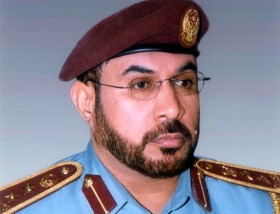
Gulf News spoke to Colonel Gaith Al Za’abi, Director of Traffic Department at Ministry of Interior, to find out more.
Gulf News: Could you tell us about the upcoming changes in the traffic law?
Colonel Gaith Al Za’abi: Fourteen changes have been made to the existing Traffic Law, which will come to effect from March 1. We are looking at cutting down the number of traffic accidents by 5 per cent. As per the instructions of Lieutenant General Shaikh Saif Bin Zayed Al Nahyan, Minister of Interior, a committee was formed with members of the traffic department of each emirate, and we after much discussion decided upon these amendments.
The traffic death toll in the country hit 852 last year. This is not a small number. We need effective measures to bring down this figure.
How would the amended laws help in cutting down accidents?
The committee identified four targets. Reducing the number of accidents, reducing traffic jams, increasing awareness and developing a traffic culture and reducing the number of accidents involving pedestrians. To achieve each target, a detailed action plan has been drafted.
Dh20,000 will be the minimum fine for serious offences and the penalty may also include a jail term, as per the court ruling. In addition to the heftier fines and jail terms, we will also implement a black points system.
What are the main challenges ahead for your department?
Increasing the awareness of people is one of the challenges. Pedestrians who do not cross at designated areas is a major cause of concern. Some motorists also do not respect the rights of the pedestrians. Making people aware will help reduce many accidents.
According to the new law, if a person crosses a road which has a speed limit over 80kmh then he/she would be held responsible for an accident. The growing number of pedestrian-related accidents and deaths has led the authorities to reach this decision.
But there are many areas that do not have proper pedestrian crossings?
The necessary infrastructure developments to support this law would be carried out simultaneously.
Those who talk on mobile phones while driving is another issue. These people slow down sometimes on highways which can be dangerous for them as well as others.
What measures will be taken to improve the public’s awareness?
Four programmes are being finalised for this. Our aim is to make the roads safer for all road users and for this we will reach out to all residents in the country. Lat year, approximately 25 per cent of accidents involved UAE nationals, 49 per cent involved Asians and 19 per cent involved Arab nationals.
These programmes will be relayed using visual, audio and print media, later this year. And this will play a significant role in developing a traffic culture.
Some of the emirates have local bodies that deal with traffic rules. How will this be tackled?
Cooperation between the emirates is part of our agenda. This is a federal law and all the emirates will implement it. The agenda discusses the use of latest technology, development of new methodologies to positively affect road users, bringing about changes in road engineering and helping other emirates develop their infrastructure.
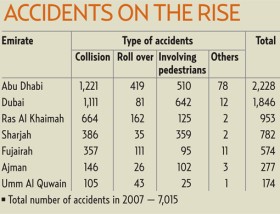
What are the main causes of accidents?
According to our statistics, speeding is a major cause. Not maintaining adequate distance from other vehicles and entering roads without verifying if the road is clear also cause many accidents.
Wind turbine for homes to reduce costs naturally
Wind turbine for homes to reduce costs naturally By Emmanuelle Landais, Staff Reporter GULF NEWS Published: January 12, 2008, 20:30
Dubai: Miniature wind turbines or solar powered water heaters now available in the market could reduce your home energy bill by 20 per cent and reduce carbon emissions to combat global warming.
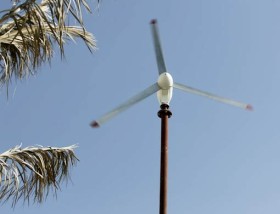
For around Dh6,000 a mini wind turbine can be connected to the circuit breaker of a house and with an extra electricity inverter can power your home’s electrical needs. This does not power air conditioning.
Turning your home into an energy saving unit with the flick of a switch is the future, said Dilip Rahulan, chief executive director of Pacific Controls, who is shortly going to put on the market a Ubiquitous Box, or U-Box, which can monitor all sensors in your home and optimise their use.
Pacific Controls, which recently opened their headquarters in Dubai’s Techno Park as the Middle East’s first Platinum rated green building because of its energy saving facilities, has developed the small wind turbine for homes.
Combining the wind turbine with a U-Box will reduce energy consumption by using motion, temperature and timer sensors that can calculate when air conditioning, lights and taps should be switched on and for how long.
“This will help us find out where energy is being used. People go on a holiday and leave the air conditioning on, or the lights and with this system we will know if something is working that could be switched off,” said Rahulan.
“Savings of 20 per cent in energy use can be achieved in all properties. We started this with Emaar 20 months ago. We manage all pumps and streetlights to reduce energy consumption,” he added.
Homes and businesses will now be able to do the same with the Green Home and Green Building Systems which monitor use and waste of energy through a central command centre that can tell how full a water tank is, or what the temperature of a hotel lobby is.
Showers can even be set to switch off every three minutes.
“Through measurement and verification we will be able to monitor carbon footprint in homes. We are hoping to get LEED certification so residents can earn carbon credits. We will be able to tell how buildings are performing or [locate] any leaks,” said Rahulan.
Dubai budget surplus to hit Dh11.4b in ’08
Dubai budget surplus to hit Dh11.4b in ’08(Wam)
13 January 2008
DUBAI — His Highness Shaikh Mohammed bin Rashid Al Maktoum, Vice-President and Prime Minister of the UAE and Ruler of Dubai, has issued in his capacity as Ruler of Dubai, Decree no. 8 for 2008, announcing the budget of the emirate, which is expected to touch a surplus of Dh11.4 billion compared to Dh5.1 billion in 2007.
Dubai’s revenues for fiscal year 2008 are expected to touch Dh135 billion, while planned spending is estimated at Dh123.6 billion.
Dubai’s non-oil sector has scored success in regard to production rate through the emirate’s endeavours to expand and diversify revenue sources and base of income.
According to the financial report, the contribution of oil sector to the projected gross domestic product (GDP) in 2008 will be four per cent. The share of Dubai’s public sector in the balance sheet was 21 per cent, while the contribution of the economic sector was 79 per cent.
Shaikh Mohammed has also issued Law no. 29 for 2007 on budgets of the Departments of Dubai Government in the year 2008. The budgets are put at Dh26.5 billion, in which expenditure was distributed as per the strategic plan. Salaries and wages totalled 28 per cent, while the administrative and general expenditure were 32 per cent. The developmental and projects accounted for 40 per cent of the budget of the government departments.
“The endorsement of the Dubai emirate’s balance sheet by Shaikh Mohammed reflects the keenness of Dubai government on its major role in the achievement of targeted economic and social aspirations’, said Secretary-General of the Dubai Executive Council Ahmed bin Bayat. He noted the attention paid by Shaikh Mohammed to members of the community through his emphasis on making economic development go hand in hand with social development.
Director-General of Dubai Finance Department Sami Dhaen Al Qamzi said the 2008 budget reflects new dimensions and shows a growing attention is being paid to infrastructure projects as per international standards.
Mercury dips to zero in Al Ain
Mercury dips to zero in Al Ain
By a staff reporter KHALEEJ TIMES 13 January 2008
DUBAI — Mercury dipped to zero degree Celsius in Al Ain as the the UAE experienced light to heavy showers in the past 24 hours since Thursday evening, triggering accidents that killed two people and injured scores of others.
Abu Dhabi’s Abu Al Bukhoosh Island received the highest rainfall of 14.4mm, according to a senior duty forecaster at the National Centre of Meteorology and Seismology in the capital.
The forecaster said the sky would remain cloudy with showers across the UAE and heavy rains predicted particularly in the northern parts of the UAE.
Achieve calmness with meditation
Achieve calmness with meditation
By Bharat Thakur, Special to Unwind / GULF NEWS / Published: January 11, 2008, 23:40
All over the world, people are turning to meditation — some seeking answers and the meaning of life while others practise it for its stress-relieving benefits.
With so many different techniques being taught, the question is — what really is meditation?
Let’s start with what we know. It is a scientifically proven fact that meditating regularly has immense health benefits.
In fact, the significant difference in health parameters between those who practise meditation and non-meditators is sufficient for anybody to start a simple practice.
Ask any doctor and he or she will gladly tell you how people who meditate are less prone to heart attacks and other diseases.
For a healthy mind
We must understand that all diseases are rooted in the mind — being psychosomatic in nature.
So, while we devote a lot of time and attention to the body and how we look, we must also spend time relaxing the mind and delving into the more subtle areas of our being.
Research also shows that people who meditate display lower stress levels than those who do not.
So, where does yoga fit into all this? Yoga begins with the physical body and goes deeper within, to the core of the being.
Most of you must be familiar with the different postures of yoga — asanas, the often crazy-looking movements that contort the body.
In fact, there are 8.4 million asanas. They are there just to make the body flexible and strong to master one meditation asana, that in which the practitioner can sit comfortably meditating for a long time.
Similarly, pranayama (breathing) practices train the mind and the body’s energy system for dhyaan (meditation).
Yoga has always been a spiritual science in India. It is only in the last 100 years that modern science and medicine have studied and understood the health benefits of yogic practices.
Therefore, today we see people taking up yoga to reduce high blood pressure or control diabetes.
Deeper understanding
This is good for all, but one must not forget that, ultimately, all yoga practices will direct the person to a calmer state of mind and an infinitely deeper understanding of oneself.
This deep understanding of who you really are is the scope and final goal of meditation.
So begin a yoga practice and slowly delve deeper into life’s eternal question — “Who am I?”
Wishing you all the best in your search.
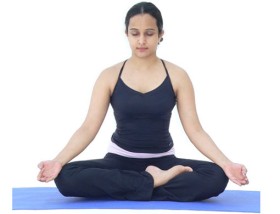
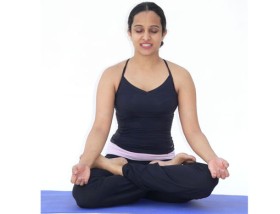
Meditation asanas
The main purpose of meditation asanas are to allow the practitioner to sit for extended periods of time without moving the body and without experiencing discomfort.
Only when the body has been steadied for some time will the benefits of meditation be felt. Deep meditation requires the spinal column to be straight and very few asanas can satisfy this condition.
Sukhasana
(Easy pose)
Sit with the legs stretched out in front.
Bend the right leg and place the foot under the left thigh.
Bend the other leg and place the foot under the other thigh.
Place the hands on the knees.
Keep the head, neck and back upright, but without straining.
Close the eyes.
Relax the whole body — the arm should be relaxed and not held straight.
Ardh padmasana
(Half-lotus pose)
Sit with the leg stretched out in front of the body.
Bend one leg and place the sole of the foot on the inside of the opposite thigh.
Bend the other leg and place the foot on top of the opposite thigh.
Without straining, try to place the upper heel as near as possible to the abdomen.
Adjust the position so that it is comfortable.
Keep the back, neck and head straight.
Close the eyes and relax the whole body.
Padmasana
(Lotus pose)
Sit with the legs stretched out in front.
Slowly and carefully, bend one leg and place the foot on top of the opposite thigh.
The sole should face upwards and the heel should be close to the pubic bone.
When this feels comfortable, bend the other leg and place its foot on top of the opposite thigh.
Ideally, the knees should touch the ground in the final position.
The head and spine should be straight and shoulders relaxed.
Place hands on the knees.
Close the eyes and relax the whole body.
Vajrasana
(Thunderbolt pose)
Kneel on the floor.
Bring the big toes together and keep the heels separate.
Lower the buttocks onto the inside surface of the feet with the heels touching the sides of the hips.
Place the hands on the knees, palms down.
The back and head should be straight but not tense.
Avoid excessive backward arching of the spine.
Close the eyes and relax the arm and the whole body.
Bharat Thakur is the founder of Bharat Thakur’s Artistic Yoga. For questions on yoga, write to dubai.artisticyoga@gmail.com. For information, log on to http://www.bharatthakur.com
It’s a Rainy rainy day
Hai friends,
So, the rain has come to Abu Dhabi, Dubai and all over UAE. Passing shots passing by you to comment. More rain and more photos as and when it happens.
Ramesh Menon
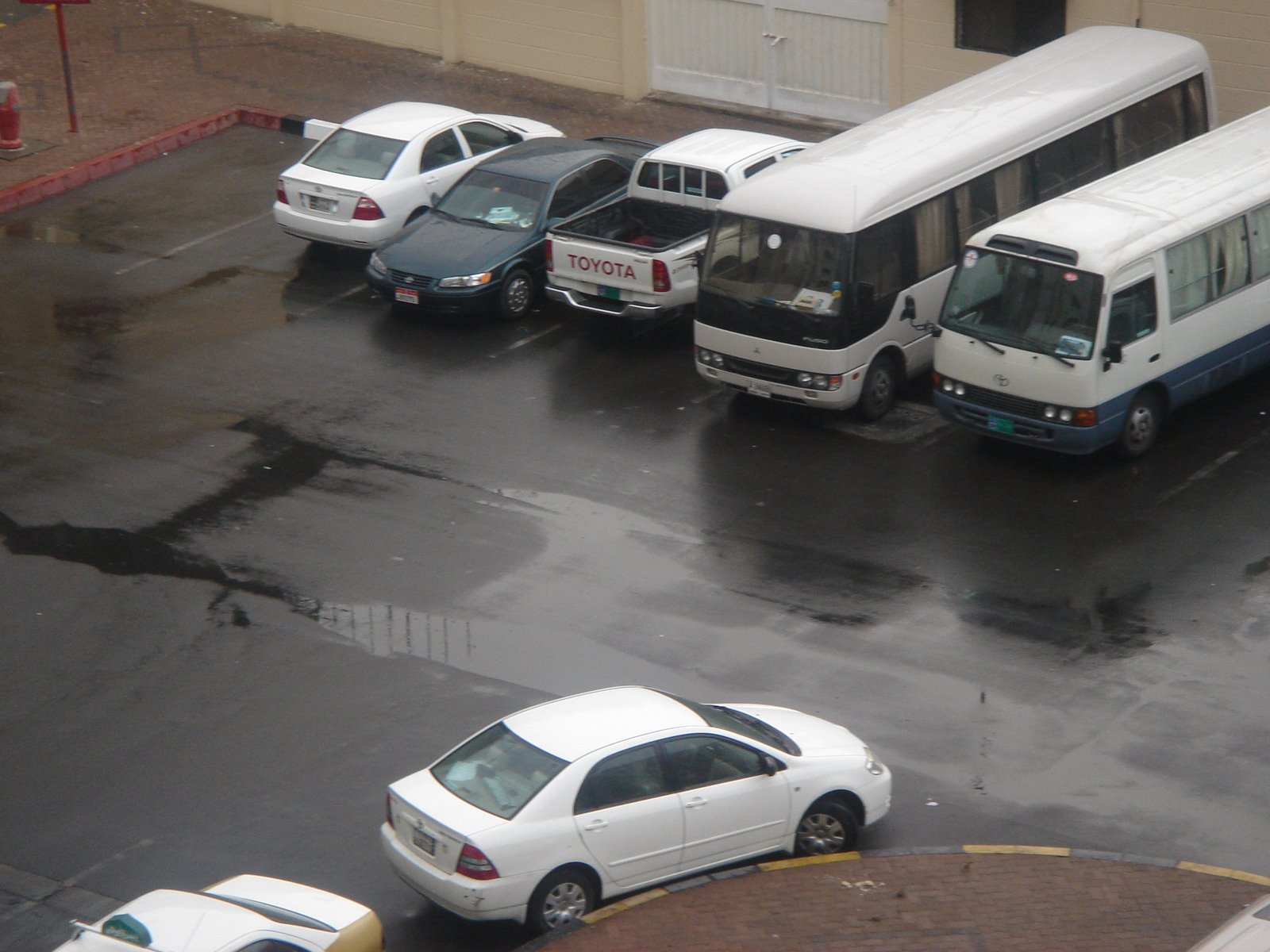
Reflections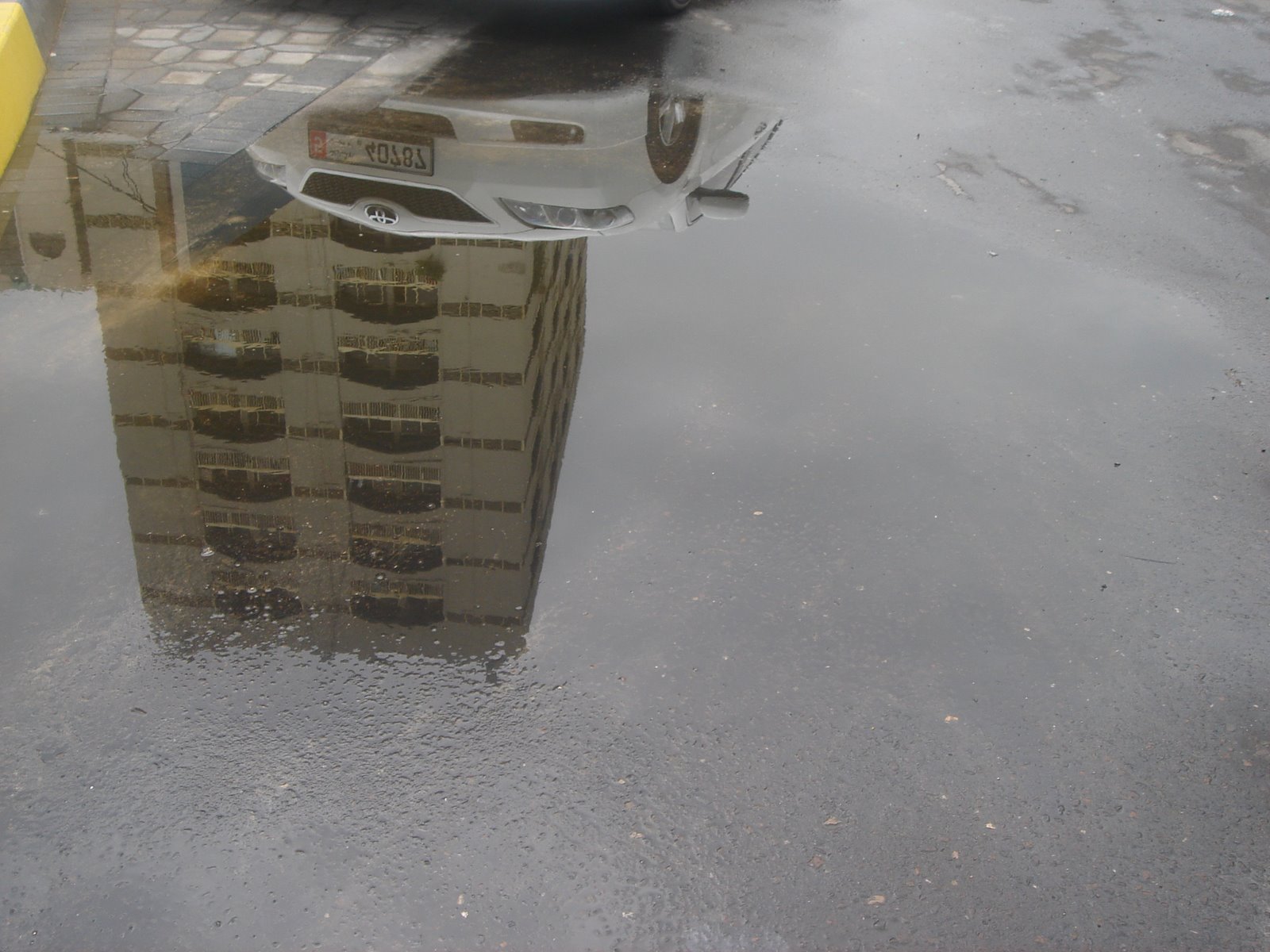
Organisational Stress Tips
Organisational Stress Tips
The effects of Organisational Stress:
Stress reduces morale, performance and productivity of the workforce.
Stress increases poor timekeeping.
Stress increases workplace absenteeism which has a knock domino effect on colleagues who have to cover.
Stress is a major contributor to staff turnover resulting in additional recruitment and retraining costs.
Insurance premiums increase with increased stress claims.
Litigation costs for stress claims are increasing.
Absence
20% (approx 5 million) workers feel very or extremely stressed at work (Bristol survey 1998-1999)
563,000 people are actually suffering from work related stress anxiety and depression. Second only to musculoskeletal disorders. (Household survey 2001/2)
Length of time taken off 29 days per case. (Household survey 2001/2)
Cost
Ill health from work – cost to Britain is £2.5 billion. Cost of stress to British industry is £350 – 370 million (1995 review)
Cost of stress to British society as a whole £3.7 – 3.8 billion.(1995 review)
Legal Implications
Under the Health and Safety at Work Act etc (1974) employees now have a legal duty to ensure health and safety is not at risk due to excessive and sustained levels of stress.
Under the Management of Health and Safety at Work Regulations 1999 employees are required to carry out regular risk assessments. This now includes risk assessments for work related stress.
Guidance from the HSE (June 2001) explains how stress should be tackled in the workplace following the HSE 5 step to risk assessment process.
To help organisations implement this the HSE have produced Management Standards and accompanying guidance. These Standards are not new legislation but are intended to help organisations fulfil their legal obligation.
So what can you do?
Following are 10 tips for managers to help reduce organisational stress:
1. Adopt the attitude that stress is not a weakness and try to develop this culture in your own department.
Nobody is perfect we all have too much pressure from time to time. Stress can affect anyone given an accumulation of circumstances. Foster the mind set that it is not a weakness to seek help if we are not coping- it is a strength to admit it and do something about it. Promote it as a developmental issue. Handling stress is a proactive intervention to prevent ill health of the employee and the organisation.
2. Ensure that you yourself are not suffering from stress.
A stressed manager has a “knock on effect throughout the organisation.” Dealing with your own stress will prevent your staff from suffering and results in a more relaxed and productive atmosphere.
3. Analyse your own management style and behaviour (honestly); ask is your management style causing any stress?
* Good management is the best proactive way of reducing organisational stress
* A good manager
* Ensures a realistic knowledge of the workload and the time it should take
* Sets individual work objectives and targets, consults and discusses before setting
* Gives clear effective instructions
* Makes sure he/she define roles and tasks adequately – discusses priorities
* In times of high workload prepares workforce for this
* Varies work where possible and provides opportunities for individuals to influence the way they do there jobs
* Delegates effectively (and not just the boring bits!!)
* Ensures staff have adequate training to do a good job. Coaches where training is not possible
* Gives fast feedback. Both positive and negative. Praises when appropriate. Does not shy from giving negative feedback. Gives constructive criticism when criticism is necessary
* Be approachable – really. Admits to own weaknesses and takes responsibility for own mistakes
* Be honest which of these could you improve upon?
4. Regularly do an informal risk assessment of your staff to check nobody is subjected to work related stress.
Think of yourself in your employees shoes. What causes your staff stress may be healthy pressure to you, but do not belittle it. Just because it is not a problem for you does not mean it is not a problem for them. Remember They may cope easily with issues that cause you stress.
5. Provide information to staff telling them where to go for help and what to do if they are suffering from stress.
6. Encourage staff to attend a personal stress management course or provide staff with tips to help themselves.
7. Carry out a risk assessment process to reduce stress in your department.
Familiarise yourself with the HSE guidelines for tackling work related stress.
* Determine the causes of stress in your organisation
* Communicate these to staff and involve staff in finding solutions
* Put an action plan into place and regularly review your progress making amendments where necessary.
8. Improve communication.
* Where possible keep workforce informed of all changes and major decisions
* Listen to your staff. Hear what they are saying
* Observe your staff, you learn a lot from watching
* Talk to your staff informally and regularly. It will be easier for them to come to you or for you to approach them if there is a problem.
9. Help your staff to cope with change no matter how big or how small.
* Before introducing change listen to views and opinions of staff. How will it be for them?
* Where possible update workforce on any changes taking place
* Explain the reasons for the changes
* Identify those who resist change and help them accept, listen to doubts and fears, explain, coach, boost self esteem
Check how things are progressing during and after change.
10. All in all create an environment that promotes well being.
Remember relaxed and happy employee will work more effectively thus increasing performance and productivity. This will inevitably result in increase the organisational performance.
10 tips to reduce your stress
10 TIPS TO REDUCE YOUR STRESS
Introduction
According to the Health and Safety Executive stress is :
“The reaction people have to excessive pressures or other types of demands placed upon them. It arises when they worry the cannot cope.”
The HSE distinguish between stress and pressure. Pressure is seen as positive and improves our performance. However, when pressure becomes too much or too prolonged it turns to stress. It is important therefore that we try to achieve a balance. We need to feel stimulated and involved but need to act to ensure that our pressures do not get too great or accumulate.
The HSE definition does not however take the concept of perception into the equation. As different people perceive the same event in different ways this is extremely important. For example, some people will see an event such as public speaking as extremely stressful while others will see it as a challenge. We therefore can cause our own stress by the way we perceive a situation. – The way we see life, our perceptions may affect our receptivity to stress.
Exposure to prolonged or extreme pressure whether real or perceived can lead to behavioural changes and to physical and psychological problems.
Causes of stress may be short term, longer term or ongoing. Short term pressures are pressures which are short lived and from which we can easily recover e.g. a traffic jam or a disagreement with a teenage daughter. Longer term and on going pressures are more of a problem as we have less opportunity to recover. For example caring for an elderly or sick relative can have a great effect on our health and well being as the stressor is there continuously and we perceive we have no respite.
So what can we do ?
Try to manage your balance between pressure and stress by adapting your behaviour and thinking. Also make sure you take time out to recover from the pressures you find yourself under. Exercise and relaxation are paramount.
Tips for preventing pressure turning to stress
1. Adopt a healthy lifestyle – If we eat a healthy diet, exercise regularly and ensure we get adequate rest our body is better able to cope with stress should it occur.
2. Know your limitations and do not take on too much. We cause ourselves a great deal of stress because we do not like to say no to people. We like people to like us and do not want to let people down. We then end up doing more than we should. Learn to be assertive and how to say no without upsetting or offending people.
3. Determine what causes you stress and try to change your behaviour to reduce it
4. Avoid unnecessary conflict. Don’t be too argumentative. Is it really worth the stress? Look for win – win situations. Look for a solution to a dispute where both parties can achieve a positive outcome.
5. Learn to manage your time more effectively – We waste a lot of time doing unimportant tasks. Prioritise your day and do the important jobs first. The unimportant ones can wait, and often they will disappear completely leaving you time to do other things. Also do not put off the unpleasant tasks. Every time we think about them we cause ourselves stress. Give an unpleasant task a high priority and do it first.
6. Practice saying No without feeling guilty
7. Take time out to relax and recharge your batteries – You will perform much better after a break and easily make up the time you used relaxing.
8. Try to see things differently – If something is bothering you try to see it differently. Talk over your problem with somebody before it gets out of proportion. Often, talking to somebody else will help you see things from a different and less stressful perspective. Try to see the funny side of a situation. Laughter is a great stress reducer.
Accept the things you cannot change. – When things cause us stress, try to change the situation. Sometimes however, this is not possible. If this proves to be the case recognise this and accept things as they are.
9. Find time to meet friends. Friends help us see things in a different way. The activities we engage in with friends usually help us relax and we will often have a good laugh. Laughter is a great stress reducer. It boosts the immune system which is often depleted during stress. If you do become stressed engage in some form of physical activity and relaxation technique. Physical activity will work off the biochemical and physical changes that occur within your body due to stress. Relaxation helps your body return to its normal healthy state. Good relaxation techniques include breathing exercises, massage and a variety of complimentary therapies.
10. Avoid alcohol, nicotine and caffeine as coping mechanisms. – Long term, these faulty coping mechanisms will just add to the problem. For example, caffeine is a stimulant and our body reacts to this with the stress response.
Ministry to collect statistics on those with special needs

I don’t know where to direct parents when they ask me for a private school suitable for their special needs child, says Noura Al Moutawa, Director of Special Education section at Administrative Services Unit.
Ministry to collect statistics on those with special needs
By Siham Al Najami, Staff Reporter GULF NEWS Published: January 10, 2008, 23:32
Dubai: The Department of Special Needs Education in the Ministry of Education (MOE) is willing to integrate various cases and increase the capacity of special needs pupils only if they have the equipment, facilities and sufficient training programmes.
However the MOE still does not have reliable statistics on the number of pupils with special needs that are partially and fully integrated into schools.
Dr Aisha Al Jalahma, Director of the department said they are working on compiling this data to create a report on the list of materials, human resources and programmes needed to develop special education.
“Special certificates” for special needs pupils integrated into public schools will be issued upon their completion of an academic year and upon their graduation from their schools, she said. The department has also developed an Individual Education Plan (IEP) for these students, which is in line with the integration of pupils with Down’s Syndrome and with the recent initiative of including pupils with autism.
Modified curriculum
Special needs pupils included in mainstream schools will study with peers in their age group but will have a modified curriculum.
Noura Al Moutawa, dir-ector of the Special Education section at the Administrative Services Unit in Dubai said much is needed to improve special needs education in private schools.
“I don’t know where to direct parents when they ask me for a private school suitable for their special needs child. We hardly have any private schools catering for these children,” she said.
There are also negative consequences in taking in children with special needs without the approval of the MOE as many of the schools are inaccessible for children with special needs. At the same time, teachers and the administration are not trained to deal with these special cases.
Before enrolling a student with special needs, the Special Education Unit looks into the applicant’s forms and documents. The child is then interviewed by the speech therapist; special needs specialist and psychiatrist followed by a comprehensive report sent to the MOE for approval.
 ClicksandWrites
You must be logged in to post a comment.