Month: January 2008
www.saferindia.com

There is an important information about a web site called as http://www.saferindia.com.
This is a site of an NGO started by Ms Kiran Bedi you can go to this site an log your complaint regarding any crime if the police at your place is not accepting your complaint. Then this NGO will mail your complaint to the DGP of your area. You can also use this mail as the legal document in case of filing a case in the court of judgment. This is to be noted that this site is directly administered by Ms Kiran Bedi so all your mails directly goes to her.
Friends pls spread this information in your network so that any one in such need can go to this site and launch his/her complaint.
STROKE IDENTIFICATION
STROKE IDENTIFICATION:
During a BBQ, a friend stumbled and took a little fall – she assured everyone that she was fine (they offered to call paramedics) …..she said she had just tripped over a brick because of her new shoes.
They got her cleaned up and got her a new plate of food. While she appeared a bit shaken up, Ingrid went about enjoying herself the rest of the evening.
Ingrid’s husband called later telling everyone that his wife had been taken to the hospital – (at 6:00 pm Ingrid passed away.) She had suffered a stroke at the BBQ. Had they known how to identify the signs of a stroke, perhaps Ingrid would be with us today. Some don’t die…. they end up in a helpless, hopeless condition instead.
It only takes a minute to read this…
A neurologist says that if he can get to a stroke victim within 3 hours he can totally reverse the effects of a stroke…totally . He said the trick was getting a stroke recognized, diagnosed, and then getting the patient medically cared for within 3 hours, which is tough.
RECOGNIZING A STROKE
Thank God for the sense to remember the ‘3’ steps, STR . Read and Learn!
Sometimes symptoms of a stroke are difficult to identify. Unfortunately, the lack of awareness spells disaster. The stroke victim may suffer severe brain damage when people nearby fail to recognize the symptoms of a stroke .
Now doctors say a bystander can recognize a stroke by asking three simple questions:
S * Ask the individual to SMILE.
T * Ask the person to TALK and SPEAK A SIMPLE SENTENCE (Coherently)
(i.e. It is sunny out today)
R * Ask him or her to RAISE BOTH ARMS.I
f he or she has trouble with ANY ONE of these tasks, call 911 immediately and describe the symptoms to the dispatcher.
New Sign of a Stroke ——– Stick out Your Tongue
NOTE: Ask the person to ‘stick’ out his tongue.. If the tongue is ‘crooked’, if it goes to one side or the other ,that is also an indication of a stroke.
A cardiologist says if everyone who gets this e-mail sends it to 10 people; you can bet that at least one life will be saved.
Company is family
Company is family
By Suchitra Bajpai Chaudhary, Staff Writer GULF NEWS Published: January 10, 2008, 23:32
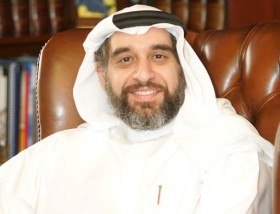
Change is inevitable, says Mishal Hamed Kanoo, But people should be prepared for and adapt to it. While he rues the loss of old-world charm, this scion of a highly respected business family believes that finding the balance between tradition and modernity is the best way forward.
“It is lovely to have a dream … you must have a dream. Anyone who doesn’t dream is dead.”
Eloquent words from a man who has dreams for himself and his country, and strives hard to make those dreams come true.
Meet Mishal Hamed Kanoo, a bold new face of the bold new UAE.
Enlightened, educated, deeply humane and sensitive to maintaining the balance between the traditional and the modern, Kanoo combines the positive qualities of the new generation of Emiratis who are determined to take the nation forward.
Belonging to a family that has a century-old business tradition in the Gulf, Kanoo, who is deputy chairman of the Kanoo Group in UAE and Oman, exudes grace and wisdom that is far beyond his 38 years.
Although he is euphoric about the great business opportunities the economic boom in Dubai has ushered in, he is upset that the old-world charm of the little fishing hamlet that he grew up in is fast changing.
“In a brief span of time, Dubai has exploded in population ten-fold. From a village, it has grown to a metropolitan city.”
While he admits that change is inevitable, he is unhappy about losing the “close-knit neighbourhood” that he grew up in.
He also feels that the modern steel-and-glass buildings “lack the charm of regional design and architecture.
“Probably the closest we have come to recreating our (style of) architecture is in building Madinat Jumeirah,”
he says.
But that said, Kanoo is not entirely nostalgic. He appreciates some of the benefits the society has derived with change.
“Earlier, the only major road (in Dubai) was the one leading to the airport. Now we have so many flyovers and cloverleaves in the city.
“Culturally too, it was very limited. Now with the amalgamation of so many nationalities, we have such great cultural dialogue that it has made the UAE, particularly Dubai, a very attractive place, culturally.
“In terms of work, it has become a bit more formal now,” he says. “Earlier, (business was conducted in) a more relaxed atmosphere but (then) productivity was low.”
Work culture
When it comes to his work, Kanoo is a humanist, deeply aware of the consequences every decision of his can have on his employees’ life. He holds hardworking employees in high esteem and feels greatly responsible for the safety and security of their future.
“Having a company (like the Kanoo group) is a huge responsibility. I do think about the 700 people working in our company.
“The thought that I am directly or indirectly liable for their livelihood through my decisions is a great responsibility and I do not take that lightly. The decisions I take affect their lives and this is not (a trivial issue).
“If a division does badly, I might have to (let) people go. I am less worried about people who make Dh15,000-Dh20,000 per month in my office, as I believe they will most likely find alternative work.
“The people I am more worried about are those who make just Dh2,000 or Dh3,000.” The challenge in managing a company like this is realising that you can do something that you enjoy while affecting people’s life positively, he says.
“One can use this office as a pulpit to propagate ideas on art and culture and add value to the company and to people’s life. Doing good things does affect life positively,” believes Kanoo. However, he has no respect for those who fail to adapt to change and allow their skills to rust.
“People sometimes don’t take the trouble to upgrade their skills and move ahead in their jobs. People love to complain about (almost everything) because everyone thinks (solving problems) is somebody else’s responsibility. Usually, a company will treat you as an adult, if you treat yourself as an adult,” he says.
Tradition vs. modernity
“I think every age has its share of tradition and modernity. It is the issue of looking at culture and society as a whole.
“In the world of art, we had the old masters in 1400-1600; we also had modern art in the 1960s … now we have contemporary art. These are just labels. I am sure that in Botticelli’s time, traditionalists condemned his art as ‘modern’.
“I take a holistic perspective towards it. A person who is living and adding something new is ‘modern’. If I take something from the past to interpret the present, then I am reviving tradition in a positive manner. That’s the difference.”
Kanoo’s thinking has been shaped by core cultural values of the Arab world. He grew up in Dubai and attended a local school before moving to the US to complete his graduation and post-graduation.
During his time in the West, he assimilated the best of American values and used them to broaden his perspective. Today he talks with a fondness for both – the Western and Arab value systems.
“Within the Arab family life, tradition plays a significant role. For tradition to succeed, one has to teach it to the next generation and allow them to adapt to it. When we talk of tradition, people think of it as something that can never change.”
Sometimes people follow certain practices blindly without questioning the rationale or meaning behind them, he says, and quotes an example of just such a practice which he saw on TV recently.
“A woman blindly follows the family tradition of trimming the end of roast beef before serving it to the family. Why does she do it? Because she had seen her mother doing it.
“She eventually gathers courage to ask her mother why the end of the roast was being trimmed. The mother tells her that she did it because her mother had done it.
“The woman then goes to her grandmother and puts the question to her who eventually solves the mystery. The elderly lady tells her that she used to trim the tail end of the roast simply because it never used to fit into the pan!”
Kanoo feels that tradition should not be eradicated, but neither should it be followed blindly.
People should set traditions that positively impact the society such as establishing a tradition of sending children to school and colleges for education; allowing youngsters to work for their living; telling children to be generous and to give to charity.
He feels there is a certain resistance to change in the present society.
Meritocracy should be the basis of a society, he says. “Evaluate the merit of the person and not his social status,” he says, highlighting an aspect of culture he imbibed from the US.
“In the US … they (rely) meritocracy. It is okay to challenge a parent respectfully,” he says, adding that
a child’s thoughts should be accorded respect.
“In the US, children are taught to challenge what is the accepted norm. Challenge is not an aggression against authority but an effort to learn and create something new.
“It is the same in business. Companies cannot be successful if no one challenges them. If there is no one to challenge me and if I always want to be surrounded by ‘yes-men’, I will soon become irrelevant.
“When we teach our children not to challenge, think or be creative, it affects their contribution to society. More particularly, the children of the rich have to be challenged to be humane and modest. They need to know that they can’t get away with anything because they can buy their way out of any situation.”
Kanoo thinks it is important to encourage the new generation to be innovative and creative in their approach to life. This will benefit organisations and businesses in the long run, he says.
“Art is a great way to teach our children to be creative. This allows them to start the creative process that the mind needs to expand.”
His strong views on education and building a sound work culture have inspired him to teach what he has learned through experience to the younger generation.
“That is why I teach family business at the American University in Sharjah (AUS). My friends often ask me why I am wasting my time (teaching). But I think part of completing the education cycle is to give back what you learned to a newer generation of students.
“If I can’t do that, then I have done nothing with my life. I hope they will challenge my ideas and create something better.”
Kanoo believes that legacies created by the previous generation in the family are to be valued and improvised upon with the passage of time. He has great respect for the principles his father, Hamed Ali Kanoo, believed in and established for the family.
He thinks it is now the prerogative of the present generation and the successive generations to imbibe the lessons of his father, who passed away in 1994.
“My father was never comfortable being a bureaucrat. It bothered him and it bothers me too. There is a saying: ‘The operation was a success but the patient died’. The surgeon may have followed all the procedures but as far as the patient was concerned it was useless … because he did not survive. This is something I learnt from my father.
“If I am put in a position where I need to make a decision and if I behave like a paper pusher and don’t make a meaningful decision, then what is the use of being in that position? Bureaucracy is supposed to set guidelines to help; not to rule.
“I learnt a lot of things from my father and of them were lessons in humility and candour. He was open to new thoughts and ideas, and never discriminated between people based on their class or social standing. Wherever he was invited, he would go – be it the home of a low-paid worker or of a very wealthy person.
“I am open to (ideas) and allow people to correct me. I don’t have a problem in people telling me I am wrong as long as they can explain to me how or why I am wrong.
“To be humble does not mean that you cannot enjoy the luxuries of life. You can, but you should not allow these luxuries to control your life. You can be humble and still drive a Rolls Royce, if you can afford it.”
A tradition of excellence
The foundation of the Kanoo business group rests on two important features – Family and Quality. The business may be based on family traditions but they are moulded to fit into the total quality management approach to business he believes in.
The organisation has received several TQM awards including the Shaikh Khalifa Excellence Award in 2002.
“We take pride in the quality of our work,” says Kanoo. “We ensure a good product, good quality and good service because that is the only way to guarantee return customers.
“Quality starts from the family. People who work for our company are also family. You have some well-organised and well-run organisations out there and then you have some reckless cowboys who tarnish what these quality companies have built up for years. This is the price you pay for progress.
“As a company we want to conserve the legacy created by my father. The customer is the lifeline; he has allowed us to prosper. If we do not fulfil his expectations, then we are not going to have a company.
“Essentially, we must deal with professional managers who will run our company in a professional manner. Even within the family, you must follow this rule and allow the present generation to decide for themselves as responsible adults.”
Kanoo accepts and acknowledges the great changes have taken place in business practices in the UAE and thinks it is important for the new generation – who plan to take over – to be ready to take on the challenges in the future. “We cannot dictate legacies to generations.
“On an average, every 20 years there is a generation shift. Rules change, sensibilities and perceptions change. So how can we apply today the rules that were laid down during the Second World War?
“Today we have outsourcing, globalisation, taxation, WTO, interests, commissions. Things have shifted. How do I reach out and sell some stuff to a farmer in Madurai (in South India)?
“The paradigm shift has already happened. I am not sure if the 20-somethings of today are up to the challenge because the impression I get is that they rely on others to do the work for them.
“That said, I do know of some excellent 20-somethings who are capable of running with the best out there. I am hoping the generation younger to them will challenge (their ideas).
“Those who are willing to put in extra hours and sacrifice certain things to get to their goal will (succeed).
The wheel of fortune
Like life, Kanoo believes success and failure in business depends a lot on destiny. Sometimes the best of things do not work because they were not meant to.
“A love or an arranged marriage has equal chances of success. People perceive an arranged marriage as cold, calculated, focused on social advantages to be derived out of the alliance, etc. Love marriage is perceived as emotional and spontaneous. But no one knows which one has a greater chance to succeed.
“The same can be said about business collaborations. You can calculate on paper how something will succeed and what ingredients would be required for its success, but that doesn’t guarantee that the business will be a success.
“Many factors play a pivotal role in that success and luck is definitely a major factor. Take the instance of Daimler Chrysler.
“On paper, it was a perfect business merger but it failed miserably and had to be sold at one-tenth of its value later. Even the best calculating minds cannot predict success or failure. Sometimes, gut is the way to go.
“I think luck plays a very strong factor in anything we do. We can calculate, assume and plan a lot before we jump into something hoping for the right thing to happen. But will it? That depends on pure luck.
“Luck is an important factor but not the only factor required for success. When you meet a person you (may have some preconceived) notions about him. But if you allow a person to talk to you, he might win you over.
“Even meeting the right person at the right time depends on luck. A person may have been around for a long time, but only at a certain stage will he or she enter your life in a way that changes life forever. For me, that person was my mother – Lulwa Kanoo.
“There was a time when everything looked black; she helped me by shining a light (in my life) when I felt there was no light. I think all of us have peaks and troughs, happiness and sadness in life. The world is not as bleak as it sometimes seems to be but it needs someone to help you see the light,” he says.
Kanoo thinks it is the duty of every one to give back when they receive so much from society and feels charity is a tradition intrinsic to all cultures and religions of the world.
“Our religious convictions tell us that we have to give alms and charity, and I think charity is the springboard of all cultures and religion. We feel it is our religious obligation and religion has been the greatest influence on me.
“Personally, I do philanthropy for art not because it’s a Corporate Social Responsibility but because I love it. Philanthropy should find expression in human needs rather than human aspirations.
“You must do things because of a personal sense of responsibility, not because of a governmental watchdog.”
Kanoo believes passionately in the power of education and feels the biggest act of philanthropy should be done in the field of education, which is the propelling force for lasting progress in any society.
“There has to be an emphasis on education, education and education. What one has learnt, one must learn to give back to society.
“If you want a good life for your children, give and give generously – because it comes back.”
Losses could be more than Dh432m
Losses could be more than Dh432m
Gulf News Report Published: January 15, 2008, 01:23
Dubai: Dubai’s economy may have suffered a loss of more than Dh432 million as a result of the shutdown caused by US President George W. Bush’s visit, according to estimates based on the emirate’s gross domestic product.
Dubai’s GDP in 2006 reached Dh157 billion (nearly $43 billion). If trade comes to a standstill, then the emirate, the Gulf’s largest trading hub and the major supply line, might have just lost Dh1 billion in export, import and re-export business for the day.
Dubai’s first-quarter trade crossed Dh91.71 billion last year, translating to a total annual trade volume of Dh366.85 billion.
While the financial loss due to suspension in business activities may be quantifiable, it is difficult to put a value on lost opportunities, business analysts said, speaking on condition of anonymity.
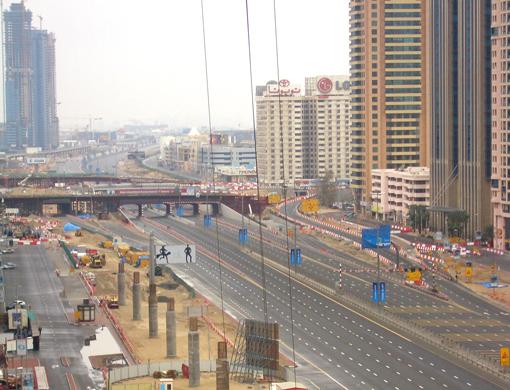
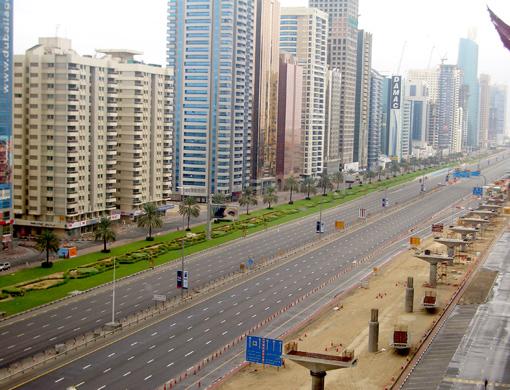
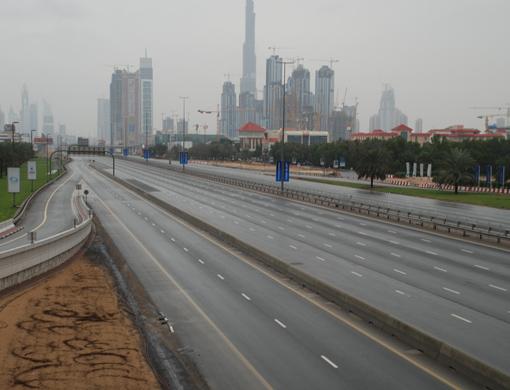
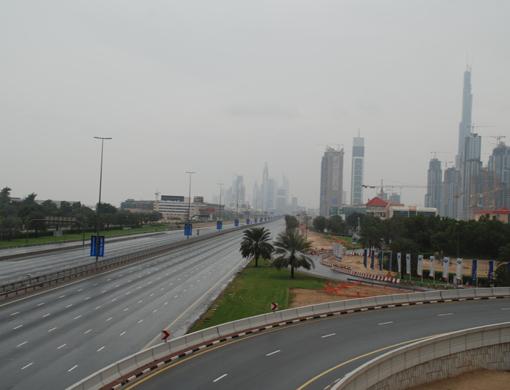
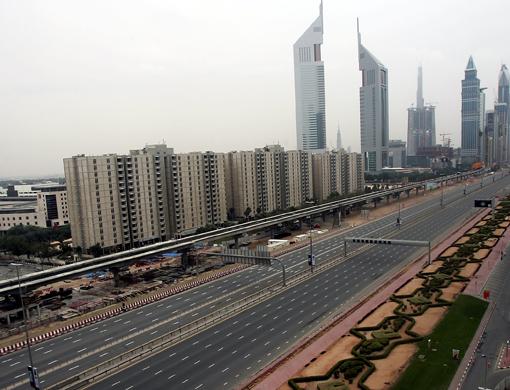
Public and private sector activity in the region’s business and tourism hub was severely curtailed as the city’s major roads were blocked to allow unhindered movement for the US leader and his entourage.
“Today being Monday, we had so many conference calls and meetings. We could not do anything,” said a senior official of an international accounting firm.
“Because it was an emergency shutdown, there was not enough time for companies to reorganise their schedules. It must have been planned in advance and opportunity losses could have been avoided had the announcement come earlier,” he added.
Offices at the Dubai International Financial Centre (DIFC) were closed and the Dubai International Financial Exchange did not trade. Although people working there were not barred from being in their offices, it was hard to get to work because of the blocked roads.
There are about 500 companies operating at the DIFC who employ 7,000 to 10,000 “knowledge workers” or professionals.
More than 5,000 companies are currently under operation in Jebel Ali Free Zone, that was shut down.
According to the Dubai Chamber of Commerce and Industry, the number of companies registered with it, crossed 100,000 last year – almost all were partially shut down, except for some neighbourhood stores and shops.
One chartered accountant said the shutdown could also be looked at in a “positive” way as any untoward incident during Bush’s visit could have a long-term impact on the country’s economy.
“Everybody is losing money, factories have lost production and services are shut. But let’s look at the positive side also. We could not afford anything going wrong with this visit. In the coming days some of the losses can be recouped from increased business activity,” he said.
Hotel guests had a difficult time trying to figure out what was going and were not sure whether taxis were running.
Paradoxically, when other businesses suffered, food and beverage outlets at Dubai’s expensive beach hotels made more money.
With cloudy skies not even allowing them to get a suntan, guests at these hotels were busy eating and drinking indoors.
Abu Dhabi / ConocoPhillips / Shah project
Abu Dhabi / ConocoPhillips / Shah project
ConocoPhillips is in advanced negotiations with state-owned Abu Dhabi National Oil Co (ADNOC) on the project to develop the sulfurated natural gas from Shah, estimated at USD 10 billion. The news, which was announced by sources close to the talks, is surprising since it was believed that the American group had been eliminated from the talks, like fellow US group ExxonMobil. At the end of 2007, the announcement was made that only Royal Dutch-Shell and Occidental Petroleum were still in the running to participate in the largest non-associated gas development project ever conducted in the emirate.
The reasons why ADNOC has changed its opinion about ConocoPhillips remain uncertain, according to observers. (BIP, The Wall Street Journal Europe)
Stocks to pick: Reliance capital,Axis Bank, Moser Baer, Shree Cement
Stocks to pick: Reliance capital,Axis Bank, Moser Baer, Shree Cement
14 Jan, 2008,
Reliance Capital
Research: Macquarie
Rating: Outperform
CMP: Rs 2,768
Macquarie has initiated coverage on Reliance Capital with an ‘outperform’ rating and a target price of Rs 3,392, with a 23% potential upside. The company looks set to make a serious breakthrough into multiple segments of retail financial services. Macquarie believes the domestic financial services sector is in a period of high structural growth. The retail side of this is being driven by chronic under-penetration, which is being unlocked by changing demographics and greater availability and reach of products. The wholesale segment is being driven by significant acceleration in investment activity in the economy. Reliance Capital is entering a critical phase in most of its businesses, where it will start to grow aggressively and give a massive push to break into the top three.
It has already established its credentials by surging to the top spot in the mutual fund league tables, and is now starting to make an impact in insurance and broking/wealth management as well. Its core strengths remain its strong brand name, aggression in the market, deep pockets and execution capabilities. The stock looks expensive at >11x P/BV, even on a consolidated basis, but its holding-company-like structure makes it difficult to view it on traditional valuation parameters. Also, the market is factoring in its large unrealised gains on the equity portfolio, some of which include strategic holdings in other group companies.
Moser Baer
Research: JP Morgan
Rating: Underweight
CMP: Rs 289
JP Morgan retains its negative view on Moser Baer with a sum-of-the-parts based June ’08 price target of Rs 250. Risks to the target price include a sharp price increase in optical media. Monthly sales of Taiwanese optical media manufactures fell 15% month-on-month. December monthly sales also fell 36% year-on-year (YoY), indicating continued original equipment manufacturer (OEM) pricing pressure. Optical media sales fell 14% quarter-on-quarter (QoQ) and 30% YoY during the second quarter. JP Morgan expects subdued pricing to continue, especially in DVD-R, leading to weak margins. On January 4, ’08, Warner Brothers (WB) announced that it will exclusively support the Blu-ray format. This is a major positive for the Blu-ray format as WB has the largest market share (18-20%) in the US and earlier supported both formats. As greater clarity emerges on the next-generation DVD format, JP Morgan believes that adoption will accelerate, but expects significant volumes only in late ’09. The photo voltaic business may face significant margin pressure going forward, led by higher poly-silicon prices in the near term and rising competition in the long term once the supply tightness eases.
Axis Bank
Research: CLSA
Rating: Buy
CMP: Rs 1,167
Axis Bank can trade up to 25x 12-month forward P/E based on its strong growth trajectory, and reiterates ‘buy’ rating on the stock with a price target of Rs 1,300. Axis Bank’s Q3 FY08 profit grew 66% YoY to Rs 310 crore, ahead of estimates, led by strong growth in core operations and higher treasury gains. Despite moderation in sector loan growth, Axis Bank’s loan book grew 50% YoY led by corporate and agricultural credit. Retail loans as a percentage of total loans fell to 25% (29% in December ’06). Despite strong loan growth, asset quality improved, gross non-performing loans (NPLs) fell 5% YoY, while net NPLs declined 12% YoY. Gross NPLs are now at 0.8% of advances and coverage has improved to 50%. Net interest margins (NIMs) expanded 90 bps to 3.9%, of which, 30 bps was due to the bank’s recent capital-raising.
Cost of funds declined by 45 bps QoQ due to capital-raising and aggressive growth in low-cost demand deposits. Cost pressures for Axis Bank continue; while employee costs have increased 51% YoY, other operating costs have risen 75% YoY (partly due to rising rentals for new branches). Treasury gains also increased sharply due to a buoyant equity market and some reversal of mark-to-market hit on the bank’s bond portfolio. Axis Bank, with Tier-1 capital of 12.6%, is well-capitalised to leverage on rising credit demand.
Shree Cement
Research: Merrill Lynch
Rating: Neutral
CMP: Rs 1,325
Shree Cement’s operating performance in Q3 FY08 was a tad better than expectations due to lower-than-expected rise in costs. Q3 EBITDA/tonne was up 2% QoQ versus flattish forecast. Contrary to expectations, Shree’s power and fuel costs fell 8% QoQ in Q3 FY08. Shree stated that higher blending had offset the impact of rising pet-coke prices. Overall, operating cost per tonne was up 3% QoQ, in line with the improvement in cement prices. Reported net profit fell 66-67% YoY to Rs 35 crore, due to accelerated depreciation. For the industry, the window of opportunity to increase cement prices is short (1-2 quarters), as nearly 49 million tpa (mtpa) of new capacity is expected to be commissioned by March ’09. Merrill Lynch is also uncomfortable about the recent uptick in clinker inventory across the industry, including North India.
The upside to cement prices in the North may be capped in the near term due to recent large capacity expansions by both Binani and Shree Cement. Merrill Lynch expects Shree to post flattish earnings in FY09E. Despite likely strong volume growth of ~30% YoY, FY09-EBITDA growth may be modest at ~8% YoY due to forecast of a downturn in cement prices by end-CY08. Shree is evaluating greenfield capacity expansion in Madhya Pradesh as part of its long-term plans. This is unlikely to impact cash flows over the next year or so. In the next six months (by Q1 FY09E), Shree will commission further 1.5 mtpa expansion at Ras, thereby taking its composite capacity to 9 mtpa versus 7.5 mtpa currently.


Left side is the right side to get out of bed

Left side is the right side to get out of bed
Sydney, UNI:
Sleep scientists, feng shui experts and psychologists analysed the best way to get up in the morning and have claimed ”Left is best”.
Just don’t jump out of bed as you get up after a good night sleep but make a habit of leaving your duvet from the left side.
According to a recent study, getting out of bed on the left side is the right side.
Sleep scientists, feng shui experts and psychologists analysed the best way to get up in the morning and have claimed ”Left is best”.
Feng shui expert Jan Cisek said getting out of the bed on the left side led to progress in family, health, money and power.
The left side helped humans to think rationally about the day ahead, the Australian quoted psychologist Pete Cohen as saying.
”The right side of the brain is responsible for emotions like fear and stress which only dilute your potential for having a positive experience,” he said.
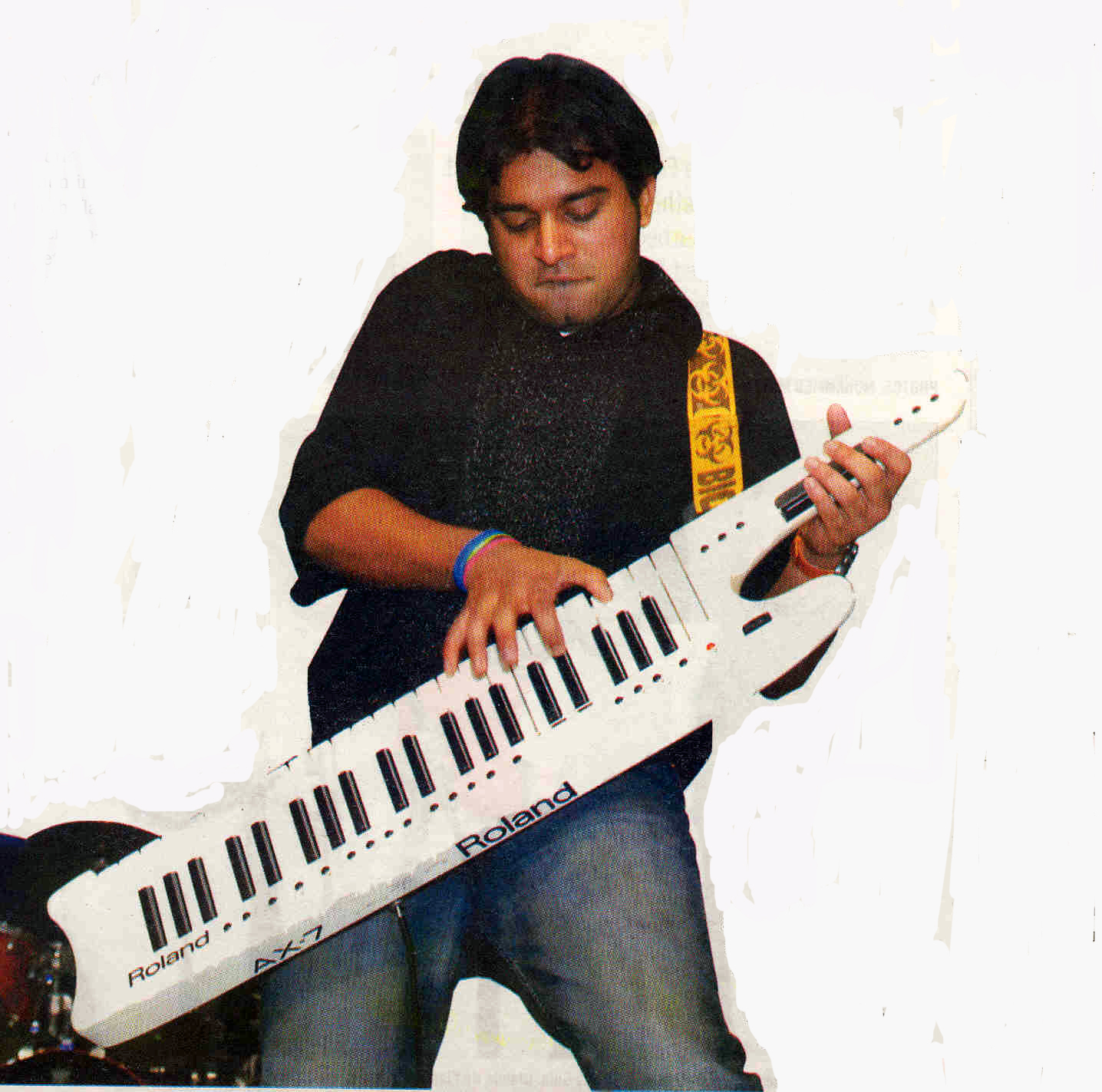
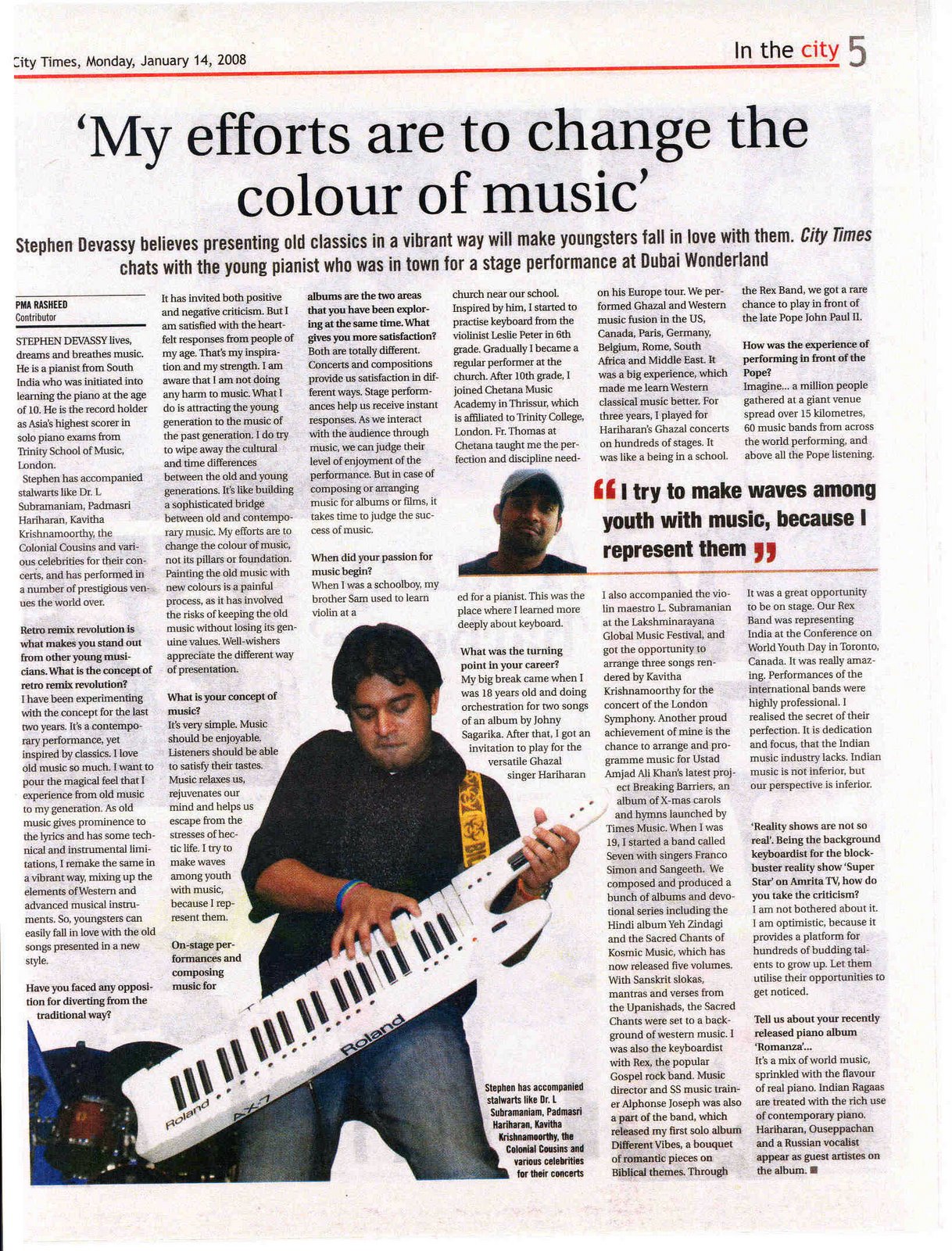
Sound of Rain
UAE welcomed US President George Bush for a two day visit to the country. I think it was a special welcome by rain god to mark the state visit of this special guest. Enjoy a few moments of this once in a year event as far as UAE is concerned. rain is very special for us. I am following lots of music these days and listening to music all around and share the sound of rain with you all. Listen/view carefully and you too can hear the sound of music in it.
Rain or sunshine, enjoy life as it comes…


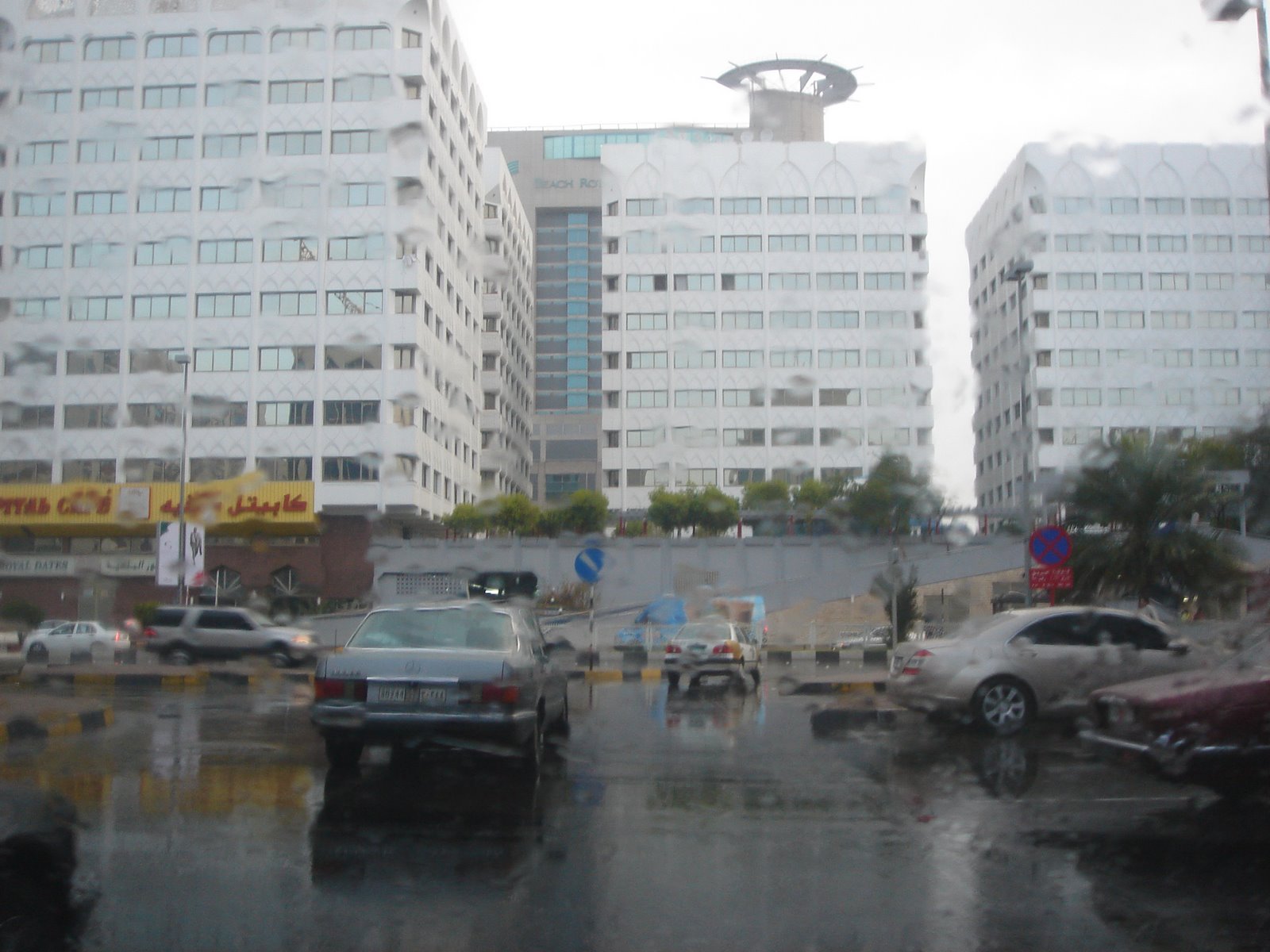


A holiday has been declared tomorrow for all instituitions private and public in Dubai. Do not venture out in your car as most of the roads are blocked. So take this opportunity, get set with your children, your camera and explore the beautiful developments that’s happening around, a view which normally you don’t see during your rush to and from office. Capture them and send them to me. I will be glad to post them. Because, we will be working when you holiday.
 ClicksandWrites
You must be logged in to post a comment.