Month: October 2007
Vastu works wonders
Vastu works wonders
Alkesh Gupta , TNN
Vastu principles are useful for all kinds of premises – any built up area, for that matter – whether it is a home, showroom, factory, godown or even an office. The basic aim of any office is to get financial growth. Offices which are made according to vastu are helpful in generating a good financial flow. Vastu principles are made keeping in mind various energy fields emanating from different directions. These diverse energy fields affect various dimensions of our life.
But, if we make an office against vastu norms, we will find ourselves standing against natural forces. One of the basic motto of vastu is to extract maximum out of natural forces so that we can get maximum energy for each and every field of life. If we are standing in opposition to nature, some of the energy fields are obstructed and we will find ourselves lagging behind in several spheres of life.
If we talk about internal part of any office – the accounts department should be in north-east or south-east zone and the accountant should face towards east, while working. If the accounts department also has public dealing then those workers can faces north. Cashier’s cabins should be located in the northern zones of the complex.
Cash box should be kept in southern wall and its shutter should be open towards north. Best direction for reception is north-east corner, and the receptionist should face north or east while sitting. He/she should sit in such a way that he/she faces each and every person coming inside the office. Waiting area can be in northeast or north-west.
Marketing and sales department can be made in north-west corner. Cabins for field staff, peons, drivers and other can be made in this zone. The best direction for conference room is north or west direction. Conference table should not be of circular or elliptical shape. It disturbs magnetic balance of that area and all meetings end without any decisions being made.
Record room can be in south, west or southwest direction. This is the zone which should have maximum load. Store for waste material can also be made in this zone. Don’t put any table except the reception desk, exactly opposite the main entrance. It can create health problems for your staff. Sitting below a beam or a loft is prohibited as per vastu rules, as it increases tension and leads to depression. If any other alternate sitting arrangement is not possible then that loft or beam can be covered with wooden cladding.
Typically, the door of any cabin should face towards north or east. Any person who occupies that cabin should also sit facing east or north. Size of table in any room should not be too big or too small. If it is too big then that person will always feel tired and if it is too small then it reduces his confidence level. Phone, fax machine, photo copiers can be placed in south-east corner and water glass can be placed in north-east corner of the table.
Computer should be kept in south-east corner of a cabin and filing cabinet should be in south-west corner of that zone. Pamphlets, product broachers, products samples can be kept in north-west of that cabin. If you like to have an entertainment room in your office then it should be located in the north-west part of your premises.
Paint walls of your office in light pastel colours. Dark colours make us short tempered. Don’t put any painting or any sculpture depicting carnivorous animals, weeping children’s , setting sun, drowning ship, still water or any sad event. Pictures of Mahabharata battles’ are also not appropriate in an office setting. These affect the mutual harmony among office members.
Arrangement of drinking water, water cooler, boring well, water filter should be done in north-east corner of the office. This is the zone of water element. Water is related to finance as per vastu and fang-shui norms. So, keeping water in this zone increases your financial status. South-east is the direction for pantry in office. Toilet should not be below, above, adjacent or in front of the pantry.
It spoils energies of food and eatables and effects the health of the whole office staff. No staff member should sit facing towards the toilet rooms. It will be very harmful for him. If toilet is attached with any cabin, then it should not be to the north-east of that cabin.
Wipe office floor with vastu salt mixed with water daily. This removes negative energy and restrengthens positive energy flow in office. Keep the toilets as much clean as possible. Office should also not be near any hospital, cremation ground or temple – this disturbs the aura’ of the office completely and leads to low concentration power in the office staff.
FOCAL POINT
The accounts department should be in north-east or south-east zone
and the accountant should face towards east, while working
Marketing and sales department can be made in north-west corner
Best direction for reception is north-east corner. Don’t put any table except the reception desk, opposite the main entrance, since it can create health issues.
Transforming idea into a product
Transforming idea into a product
Mahul Brahma, TNN
It was a bit of ‘jealousy’ towards a classmate that made Phani N Raj a businessman. School time memory of a student who had personalised clothing and stationery continued to be etched strong in his mind till much later, making him leave his PricewaterhouseCoopers job and start the branding company eYantra. “He was from the US and his cap, pencil box, T-shirt, everything had his name on it. I yearned for such personalised stuff, but there was nothing in India then to meet my demand.”
This got him thinking until he arrived at an idea to set up virtual stores where buyers can choose personalised stuff and get them delivered at their doorsteps. Mr Raj is one of the very few with the entrepreneurial spirit who have managed to be lucky enough to convert an idea into business. But most people end up thinking and discussing their bright ideas, but stop short of converting them to prototypes. Experts say there is a set of easy steps that could help any one to nurture a thought and take it forward to see if the kernel of a viable business is contained in it.
Look for it
The first thing, of course, is to remain alert to the sights and experiences one comes across, because big ideas may be lurking in the most unlikely corners. For Shalabh Sahai, who co-founded the volunteering service MITRA, it all started at the college canteen over tea.
He had been trying to understand why there was a communication gap between individuals who wanted to volunteer for social service and the groups that were organising such efforts. “It became our favourite topic of discussion at the canteen,” he says. Thus arose an idea for setting up an online exchange for volunteers.
It also helps to jot down an idea to see if it stands the test of time. A great idea may not sound all that great, when considered a day later. An idea is just of a few words long. Only when you sit down and pen it you realise the real picture. It is crucial to go into the details.
You need to ask yourself the right questions — what is the compelling need it fulfils, who will benefit from it, is there demand for it and who will fund it? Preparing a business model answering these questions is vital, says Mr Sahai. The answers will tell you whether to pursue the idea or drop it.
Read the market
An idea from a rookie entrepreneur would be worthless if the product or service doesn’t have the prospect of demand in the market. Industry associations, websites, journals and professional agencies can all help, but an innovator needs to have well-defined ideas on whether a market exists. This is but the first step to gain confidence that an idea can work.
If the demand picture is hazy or non-existent, one should have the courage to drop the idea and move on to other things. Sometimes, ideas emerge from necessities. When you have too many projects to handle and too few people and you can’t be at the office 24×7.
Emails and phone calls may not be sufficient to handle the complexity of the work. Sahil Parikh, founder and president of Synage, came up with a solution for his office — Deskaway. A software program that helps execute projects online. “The concept was new in India, but I was sure if it is a hit in my office it will be in the market,” says Mr Parikh.
Ideas can be ahead of their time
Latent demand doesn’t immediately translate into a viable business opportunity and some ideas, attractive as they seem, might simply be ahead of their time. But there are people who have stuck to their business and made it a success in due course of time. An idea who time is yet to come need not necessarily fail, but the entrepreneur must be able to envision the trend of the future that might make it succeed.
“I thought of specialising in cyber law and starting cyberlawcollege.com, when even the concept of internet was new,” Bangalore-based consultant Naa Vijayashankar (Naavi) says. “An idea ahead of times is not accepted well,” but perseverance pays. “Now, I have become a specialist in cyber law by default. So, you need to wait for the right time to come and don’t lose faith in your idea. Believe that if not today, five years down the line, it will click,” he says.
When criminal lawyer KS Kohli wanted to start a seven-day cabin crew training for airlines, everyone thought he was crazy as all other institutes offered full-year courses. But, he knew that Indian skies were going to be opened up for competition and there would be a surge in the need for flight crew. He stuck to the idea and built a successful operation, branded Frankfinn.
Customise to market needs
The aim should be to gain a general sense of the type of customer your product or service will serve. Identify your clients well enough so that you can modify your product as per their need. If the business is designed to serve the domestic market, it should have that flavour. “People work differently in different countries. So, it is very important to give Indian touch to your product,” says Mr Parikh.
eYantra’s Mr Raj says that he moved over from personalised stuff to corporate brand recall after the internet bust and it worked. MITRA’s Mr Sahai agrees: “We start as novices so we should never be too rigid. We need to learn and adjust our ideas to changes and be open to modifications.”
It is also important to hear people out. Because sometimes your business idea may come from the person you least expect it from, just casually, even over beer. M Sanjay Kanth, CEO, founder, ESS Solutions, was originally in the medical transcription business. But, the industry was losing its sheen. He knew the president of a title company based out of Baltimore. That person told Mr Kanth that there was refinance boom in the US which has resulted into a huge backlog in terms of production.
Incidentally, his brother M Sujay Kanth, who is now the COO of ESS, happened to be in US to explore business opportunities. They took up this opportunity. This was their first break. “Initially, we had no clue of what was going on and it was very hard to grasp. We took it as a challenge and Sujay got trained in their office for about 40 days after which we started the transition to my India office from 2004,” says Mr Kanth.
Sell the idea to investors
Money is often the biggest bridge that a first-time entrepreneur has to cross. It is important to sell the concept to potential investors. The startup should also detail a proper plan of how much money needs to be raised and how it would be spent. Projecting cash flow milestones will become easier if the homework to understand the demand had been done. There are also investment bankers who help you get venture capital against a ‘success fee’ i.e they will only charge you if you get funding.
But, there is another way in which entrepreneurs get going. They first start a small establishment, may be in a garage with a bit of furniture, and ramp up as the business builds itself. Frankfinn’s Mr Kohli started his business Frankfinn Medico Infoservices by borrowing Rs 40,000 from his friend. But, when the right time came, he used his own fund for starting cabin crew training business. Remember, the customer must eventually “pay” for your business. Everybody else is waiting to get paid. Loss-making as a business virtue perished with the dotcom bust.
Start now
All the risk you have taken by giving up your cosy job or turning down a big offer has finally paid back. Well, once things are in place just get started. Your idea is now a viable business proposition and has a funding. So, what are you waiting for? “It is very important when starting out is to be mentally prepared for a different journey filled with uncertainty and excitement. This entrepreneurial journey will teach you more about yourself than you would have ever known doing anything else,” says Mr Parikh.
‘It’s vital to connect with yourself’
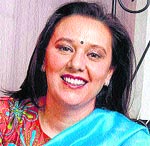
‘It’s vital to connect with yourself’
Viren Naidu, TNN
Shailja Dutt, Founder and Managing Director, Stellar Search and Selection Pvt Ltd speaks about her love for dance and the eagerness to solve crosswords!
Mantra
I think it is vital to connect with “yourself” and find the time I call ‘ME TIME’ – my time away from work, home, responsibilities, chores and duties – to do the things I enjoy and those that energise me to go back to work and my kids completely recharged. Several professionals with very hectic schedules and tenuous work-life balance will probably share the same thought. Eventually, when you have worked hard to achieve your goals, you must play hard to enjoy!
Dance
I have always loved to dance. A couple of years ago, I thought it would be fun to learn to Tango, and ended up learning Salsa, Cha Cha, etc. I attended classes with my younger brother but unfortunately, now I do not get the time. Personally, I think both business and dance are about passion and being nimble on your toes!
Art
I have been singing since I was a child and have been often complimented on having a great voice. So, after having kids and after taking my business to the next level, I thought why not train my voice? My guruji would come home to give lessons and even though I haven’t performed professionally, my friends are always being regaled by impromptu my performances.
Puzzle
Solving the crossword has become a habit. Before, I go to sleep, I have to finish the daily crossword in the newspaper. I have been doing that for years now. But in Sudoku, I am actually finding my feet and my son is better than me.
Style
To me pursuing an interest is a priority as is work and family. I also learn Spanish and do Yoga a couple of times a week. Though my days are hectic, I have never missed a single important event in the life of my children or my family.
Being successful without a degree
Being successful without a degree
Ramiya Bhas, TNN
As kids, everyone dreamt of making it big, starting with the right kind of education. One always took pride in suffixing their name with degrees like LLB, Phd, MBA, etc. But what happens when you stop studying and skip college? Does the dream of making it big in today’s corporate world, obsessed with academic qualifications, come to an end? If you are one of the many who think the answer to this question is yes, then you are wrong!
Success does not come with a degree hanging on the wall; it comes with sheer determination and hard work. And the most famous drop-out success story happens to be that of chairman of Microsoft Corporation, Bill Gates, who dropped out of college to start his own software company. Meet three individuals who dropped out of school/college and have proved with nothing but sheer dedication and persistence by their side, they too can be successful without a degree in hand.
Travelling Through
What do you expect a seventh standard dropout to do in life? If you are David Patrao, you would start a business at the age of 27. “I left school after I completed my seventh standard mainly because there was no motivation left in me to study further. Also at that time, my family was going through a crisis and the responsibility fell on us children to do something for the family,” recollects Patrao.
Once out of school, Patrao didn’t have many choices in life. So he came to Mumbai in a hope to fulfil his dreams. “I struggled a lot till I was 27. It was at that time I realised that I needed more than just a dream to make it big,” he says. He started his business with a three-wheeler tempo, which he used to transport vegetables. “In a couple of years, my business doubled because of the people I worked with,” he says.
However, right at the peak, things fell apart for Patrao. “The oil and gas industry was facing certain problems and at that time, my business got hit rather badly. There were certain government red tape issues for us and I faced certain union problems because of which I had to close down my business at that time,” he explains. But instead of losing hope, Patrao took up the challenge of doing something else. “At that time I decided to start a travel business as I had the available finance and the right kind of contacts,” he adds. Today, Patrao runs MER Travels and has a fleet of vehicles to his credit.
Does this prove that you don’t need education to be successful? “I wish I had completed my studies and got a proper degree in business or finance as I would have had better knowledge about how a business should function. I realised I had made a mistake back then by not completing my education. I hope people today aim at getting a degree in their hands,” he says.
Click ‘S’ for success
He was a run-away from Kerala, with nothing in his pocket but a few rupees and lots of hope. That’s all P Vishwanath came with when he was 16 who had just managed to pass out of tenth standard after a second attempt. “I had nothing when I came and the one thing I missed most back then was a degree behind my name. My reason for not trying harder was not that I didn’t want to but the circumstances through which we were passing were rather terrible. So I took it upon myself to do something worthwhile and I ran away from home,” he says.
When he came to Mumbai, he faced the crisis of not knowing the language and having proper education. “For four years, I had no job and I survived on nothing. Eventually, I got a small job; selling calculators, which didn’t pay enough. But I stood my ground and started working with electronic typewriters and copiers. Who knew that dealing with machines would be so profitable?” he asks.
But he didn’t stop at calculators and typewriters only, he moved to bigger things. “I realised that there were better things in manufacturing other than these two items and that’s when I started saving money to go to Germany. However, since I did not know the language, I spent a long time learning English.” Once back from Germany, he learnt about plastic cards and started a revolution. Today, his company is an “Arsenal certified contact less card manufacturing company”.
But with success, there is always wishful thinking. “I realise this now that the troubles I had faced would be nil if I had the right educational background. I still wish I could go back to school and complete what I had once left behind,” he explains.
Fastened Success Back in the ’60s, a graduate with a science background had potential. Vincent Fernandes could have been an engineer, a doctor or anything he wanted. Instead, he dropped out of college and decided to get a job. “I had completed my 11th grade in science and instead of going further with my education; I came to the city and began working at that time, as my family was going through financial and emotional crisis,” recalls Fernandes. Once here, he started his quest for employment. But initially, all in vain. “Eventually, I took up a helper’s job in a manufacturing company,” he recalls.
However, Fernandes realised that his dream was much bigger than that and he had to start looking for better options. Slowly, he started learning the tricks of the trade and bought a small company, which was going into losses. This was just the beginning for Fernandes as from there on he went to start his own company.
“For me, my hardships started when I quit my education. When I wanted to set up my own business, I faced a lot of problems from banks as they refused to give loans,” he explains. “I still regret the fact that I quit my education. But my experience has taught me what I think could not have been taught in books or management classes.” Fernandes now is the proprietor of ‘Precision Industrial Fasteners’, which has been operational for more than 15 years. As they say successful people are quick to forget about the past and the future is where ‘it’ is.
Team building strategies: You must know them all!
Team building strategies: You must know them all!
Neha Sharma, TNN
Walk the talk…
Our company founder, Mary Kay Ash, often said, “The speed of the leader is the speed of the gang.” I therefore focus on leading by example and always attempt to “walk the talk.” I make efforts to ensure that my actions are transparent, speak for themselves and that they set the pace for the rest of my team.
A leader must…
… have the ability to not only create and communicate an inspiring vision to all members of his/her organisation but also build purpose beyond the job for all of them. This should be complemented with excellent listening skills and a problem solving approach. I also believe that an effective leader must be very consistent.
My people should have…
… vision, honesty, integrity and a golden heart. I want team members who dream big, work hard and stick to their principles. I have found that when people focus on helping others achieve success, they typically achieve it themselves. The personal traits of an individual can either have an immensely positive impact in the work environment or vitiate it completely. At Mary Kay, we believe it’s impossible to separate strength of character and consistency of actions from the overall growth and success of our organisation.
Our culture is…
… built around the golden rule: “Do unto others as you would have them do unto you” . Regardless of where we operate around the world, we have found that when our people truly adopt this mantra, sky is the limit for them. A culture that is built on motivation, recognition and always doing the right thing makes for a great organisation. I firmly believe that if you will let people know that you appreciate their performance, dedication and consistency, they will respond by doing even better. Encourage them to take calculated risks in addition to this and you will have a winning organisation.
My personal space….
I am very fortunate to have a job that not only fulfils me professionally but also gives me the opportunity to meet other people who share my interest in creating opportunities for women to achieve their dreams. Apart from this, I spend a lot of time with my husband and two children. I also dabble in a number of activities, such as aerobics, yoga, playing the piano, interior decorating and reading to build new experiences.
The big picture
The big picture
Jacob Cherian, TNN
At a popular party venue just outside Delhi, about 3,000 had been asked to gather one evening four years ago. They were the employees of Daksh, a business process outsourcing firm, and they were a little perplexed.
No speeches, no presentations and none of the usual gobbledygook unleashed in motivation camps. They were just being shown short clips from a range of Hollywood films: Pretty Woman, Titanic, Gone in 60 Seconds and Mighty Joe Young.
What the then-CEO, Sanjeev Aggarwal, was trying to do was to communicate with his large team what he wanted from them to build the organisation.
From Gone in 60 Seconds, he highlighted the need to set a target (steal 50 cars) and accomplish it within the allotted time (three days).
In Pretty Woman, the clip showed Julia Roberts’ character getting ill-treated by a store keeper, but later treated with respect by the manager of a hotel. By showing this, Daksh wanted its employees to treat everyone properly, irrespective of status.
A Titanic scene in which the music troupe keeps on playing even as the giant ship is sinking, demonstrated to the employees devotion to customer service comes first.
On that one evening, Aggarwal succeeded in communicating his vision across his company, without having to resort to motivational posters around the office. The unique experience also stayed in the minds of the employees, helping them constantly remember the lessons.
Very often, a startup puts together a team and people are attracted to it because of the excitement of being part of a startup, a bigger paycheck or even a stake. They hear what the target of the company is, but they are not sure what it stands for. While a vision is set for the company, the values need to be put into place as well.
A business leader needs to articulate the corporate vision clearly so that the organisation’s progress towards its goals can be effectively monitored and employees are empowered to take decisions on the move. “Someone once said that leadership is not about leading from the front. It’s like herding cats; you have to herd them from the back. If you are at the back then the ones in front have to know where they are heading. The paradigm where leaders assign tasks is gone. Sharing the vision helps people make decisions on the fly. They can take decisions in the appropriate direction without feeling lost about it,” says Alok Mittal, managing director of Canaan Partners.
Some like Laura Parkin, executive director of National Entrepreneurship Network, believes that a team wouldn’t even be formed without sharing the vision. “The only reason anyone would join a startup is if they see the same vision as the entrepreneur,” she says.
There are entrepreneurs who hesitate to share their vision with the rest of their startup team, worrying they may share too much and lose the idea to someone else. Some may simply be unable to articulate the long-term goals for the company. “Many entrepreneurs are poor communicators. Though they see the light, they are unable to share it,” says Mr Aggarwal, who is now the managing director of Helion Ventures.
For the tongue-tied entrepreneur, help is now available from industrial psychologists, corporate trainers and motivational speakers who can help her/him voice it. One such person is Uma Arora, the founder of Idam Learning. Quoting from her experience, she cited the case of a startup firm that had been growing slow and losing people.
“After examining this company closely we realised that they all (team members) hadn’t arrived at a set of values and that their visions were purely in numeric form. They goal was to gain a certain market share, but we didn’t see any vision of what the quality of the company was. There is very often an excessive focus on numbers and not on what kind of company it should be,” she says.
“What I find among today’s entrepreneurs, and there are exceptions of course, is that when we dig deep enough, we see that their vision is simply to raise the valuation and sell it off,” she points out, continuing, “If this is the case then you have to learn to speak two languages. One for your confidantes and core team, and the other for your employees.”
For the entrepreneur with the big picture dreams, the vision and values can be etched in stone. For retail chain Subhiksha, it has remained “Be the largest player in the market we operate in and give the consumer the lowest cost.”
Subhiksha is now 920 stores-strong. “Instead of sharing the vision, co-own the vision,” says R Subramanian the founder of Subhiksha. Their vision and values was set back in 1996 when the six member core team set sail.
“If you get the core team into the formulation process, then it becomes our idea and not my idea. Here the team sets the goals, the values and works backwards from there,” says Mr Aggarwal. In 2000, Daksh asked the members of the 25-member core team to make presentations on what it the values of the organisation should be. At the end of the day the funnelled it down and handed it to the human resource department to make it into posters and cards to be distributed.
Sometimes the vision and values change and entrepreneurs must be ready to face it. They can be purists and decide to stay true to their original plan. Or they could evolve with the market for higher gains. “Our initial mission statement was ‘build exceptional customer relationships by leveraging India’s high quality, cost effective intellectual capital.’ In 2000, we thought that India would be the place from where we would deploy our services. We eventually discovered we could deploy our services from Mexico and Philippines as well. So we had to modify our mission statement,” says Mr Aggarwal.
In the case of a large organisation, hitting upon the right vision could be a day-long process that involves numerous people, a clubhouse, a buffet lunch and PowerPoint presentations. For a lone entrepreneur or small team, this could happen at the coffee shop on a paper napkin. “There are a lot of personal styles involved in communicating a vision. But first of all you (the entrepreneur) have to be clear in your head. Clarity and brevity is essential. If the entrepreneur were to write down their vision, if it is longer than even a 150 words, then it is too long,” says Ms Parkin, NEN.
The vision is a mix of numerical targets, values and big picture plan. These automatically set up a monitoring system. ‘’How you do’ and ‘what you do’ is a derivative of ‘where you want to go’,” says Mr Subramanian. Ms Parkin says: “We ask people to envision what their success looks like, and then work towards that.”
Aggarwal and Subramanian had the courage to think out of the box and disseminate their vision innovatively and effectively. As a result, the companies they founded have grown beyond their peers and broke their own targets. Great companies don’t just get the big picture right, but also hang it on the wall for everyone to see.
The joys of living in a faster world
The joys of living in a faster world
24 Oct, 2007, 0041 hrs IST, By Vithal C Nadkarni for The Economic Times
A fortuneteller in Singapore once told Vince Poscente that he would die at 40. That stuck in the business consultant’s mind. The best way to react, he thought, was to cram more living into the remaining lifespan. As a competitor in speed skiing, a demo event in the 1992 Olympics, Poscente was no stranger to speed.
By making peace with the whoosh of a 24/7 lifestyle, he discovered the joys of living in a faster world. This led him to a contrarian insight: speed leads to a more pleasant, less stressful experience. That has now been spun out in 36 essays, each no more than two pages long, contained in The Age of Speed, which has a hare leaping over the tortoise at the finishing line on its dust jacket.
Of course not everyone would agree. Many people complain of being overwhelmed by the speed and sheer pace of change in modern life. People do want things faster, but that’s for all those goods and services ‘wanted yesterday’. They do not necessarily want themselves to be rushed in their own work schedules.
Poscente argues that his book is really about choice and having the time to enjoy what’s significant in your life.
(By the way, he’s already outlived the prediction by six years!) Although technology has boosted productivity, the extra time is filled with even more productivity, he explains. What you need instead is to make tougher calls on desirable ways of spending time. He also talks about a new imbalance introduced by speed in the ‘love triangle’ of
Time, Quality and Cost: technology gives shortcuts that not only save time and money but also produce equal or better quality. If we can accept the positive potential that speed offers, we can do more, be more, live more, he writes. “We don’t have to assume that if we embrace speed, our lives will just get busier and busier. We need to adapt, evolve and shed our outdated or misguided perceptions of speed. Integrating home and leisure into work, can turn Time into a single powerful resource that we can use to accomplish our goals and dreams, regardless of where we are.”
That leaves the larger question how to spend the time. That’s where an insight given by Sunil Bharti Mittal triumphs. The Lord of the Rings whose company won an ET award, says he would like his company to represent the innate goodness of the Tatas with the speed of Reliance. He would like it to be a hybrid of the two great companies: ethics on speed; or speed with a heart.
Opec set to raise output from Nov 1
Opec set to raise output from Nov 1
(Reuters) 25 October 2007 (Khaleej Times)
BEIJING — Opec Secretary-General Abdullah Al Badri yesterday said the group was implementing a decision taken in September to increase production by 500,000 barrels per day (bpd).
The Organisation of the Petroleum Exporting Countries agreed to increase oil output from November but the Petrologistics consultancy, which tracks tanker movements, said on Tuesday it was already raising oil supply this month in response to record high prices.
Asked on a visit to Beijing if Opec had already started increasing production by half a million bpd from October, Badri would only say: “We are implementing our decision we took in September, at the last conference, that are we going to increase production by 500,000bpd from November 1.”
Opec’s 10 members subject to output limits, all except Iraq and Angola, are set to pump 27.5 million bpd in October, up from a revised 27.2 million bpd in September, said Conrad Gerber of Petrologistics.
Overall output from the 12-member Opec is set to rise 500,000bpd to 31.4 million bpd as a result of higher shipments from Iraq and Angola, Petrologistics said.
The estimate indicates that Opec may be relaxing adherence to supply curbs, as oil prices hit a record of $90.07 a barrel on Friday, fuelling fears that higher energy bills could strangle global economic growth.
Crude prices fell below $85 yesterday on signs that Opec was already boosting production and on forecasts that US oil inventories likely rose again heading into the key winter demand season.
Opec formally agreed on September 11 to lift production from November 1.
No oil shortage: Javad Yarjani, head of Opec affairs at Iran’s Oil Ministry, told reporters there was no shortage of oil in the market and that prices were being driven up by fear rather than fundamentals.
“As far as future consumption, and stocks (is concerned)… there is definitely no shortage of crude oil. You may see in some places, some shortage of products, but that is again because of lack of refining, or sometimes glitches at refineries,” he said.
“But don’t forget, according to IEA rules, member countries are required to keep 90 days of imports but now that figure is well above 110 days. That shows there is no shortage of crude oil,” said Yarjani.
Opec implementing September decision
Opec implementing September decision
Reuters Published: October 24, 2007, 23:44 (GULF NEWS)
Beijing: Opec Secretary-General Abdullah Al Badri said the group was implementing a decision taken in September to increase production by 500,000 barrels per day (bpd).
Opec countries agreed to increase oil output from November but the Petrologistics consultancy, which tracks tanker movements, said on Tuesday it was already raising oil supply this month in response to record high prices.
Asked on a visit to Beijing if Opec had already started increasing production by half a million bpd from October, Badri would only say: “We are implementing our decision we took in September, at the last conference, that are we going to increase production by 500,000 bpd from November 1.”
Opec’s 10 members subject to output limits, all except Iraq and Angola, are set to pump 27.5 million bpd in October, up from a revised 27.2 million bpd in September, said Conrad Gerber of Petrologistics.
Output from Opec is set to rise 500,000 bpd to 31.4 million bpd as a result of higher shipments from Iraq and Angola, it said.
The estimate indicates that Opec may be relaxing adherence to supply curbs, as oil prices hit a record of $90.07 a barrel on Friday, fuelling fears that higher energy bills could strangle global economic growth.
Crude prices fell below $85 yesterday on signs that Opec was boosting production and on forecasts that US oil inventories likely rose again heading into the key winter demand season.
Javad Yarjani, head of Opec affairs at Iran’s Oil Ministry, said there was no shortage of oil in the market and that prices were being driven up by fear rather than fundamentals. “As far as future consumption, and stocks [is concerned]… there is definitely no shortage of crude oil. You may see in some places, some shortage, but that is again because of lack of refining, or sometimes glitches at refineries,” he said.
OPINION
Output should rise by a further 500,000 bpd
Opec should raise oil output by a further 500,000 barrels per day to ensure sufficient supply in the fourth quarter when seasonal demand rises, an Opec delegate said yesterday.
The comments contrast with recent remarks from Opec officials that world oil markets have enough crude oil and that a surge in prices to record highs reflects factors beyond the group’s control.
“My personal view is I think we need to increase another 500,000 bpd in November,” said the source, one of the more senior delegates in Opec.
Leaders of Opec member countries gather on November 11-18 in Riyadh for their third heads of state summit. Opec oil ministers are expected to meet during the event.
7-point action plan for Successful Investing
7-point action plan for Successful Investing
2007-10-01 15:13:17 Source : Moneycontrol.com
The financial markets turmoil caused by the sub prime issues in the US mortgages market is one more reflection of a grim reality of modern times…uncertainty is here to stay and the destabilizing impact on the markets has been increasing with time. Be it geopolitical tensions, natural disasters, asset bubbles and their consequent corrections, a host of events contribute to making the modern financial system extremely volatile. The global linkages of capital and investors mean that the correlation between geographies and asset classes has become stronger. Hence investors have to be smart and vigilant to ensure that the short-term mood swings of the markets do not unhinge their long-term financial plans and welfare.
So what is the prudent method to adopt in such times?
We have a 7-point action plan for investors:
1. Understand Yourself:
This is the starting point and is especially essential in such times. Start from the beginning – Assess your risk appetite, your time horizon and your financial goals. This will help you to understand if your current portfolio allocation is in line with your particular situation. In bull runs, the assessment of risk appetite gets inflated, while in bear markets, investors underestimate their ability to take on risks. Similarly, if you are investing for your retirement in 20 years as a financial goal, stock market gyrations over the next 3 to 5 years are irrelevant. After assessing these three parameters, look at your earning, saving and hence investment potential. Based on this you will have an idea of your ideal asset allocation…how much money to put in stocks, bank deposits, gold etc. And no better time than times of turmoil to spend a few critical moments evaluating what you have, where it’s located and where the holes in your investment ship may exist.
2. Understand the Risk Reward Equation:
So called safe investment options like Bank deposits, while giving steady returns, lead to erosion of purchasing power due to inflation and taxes both. At 5 % inflation, Rs 1000 today will be worth only Rs 230 in ten-year time. Over the last 27 years, while inflation averaged 7%, 1-year bank deposits, the most popular category, gave before tax returns of 7.5 %. Similarly, what costs Rs 1000 today, at 5% inflation, will cost Rs 1629 in 10 years time.
Stock markets give superior, inflation-adjusted returns, but in the short term they give a roller coaster ride. Hence its critical to understand the nature of each asset class, the type of returns, the risks associated with it and the optimal time horizon for them. If you are asking, “Is this a good time to buy”, you are on the wrong track. The question to ask is, “Will this investment / financial plan help me meet my long term goals?”
3. Understand Markets:
In the short term, stock markets are influenced by sentiments, while in the long run fundamentals are the key determinants. What is certain is that the stock market is a volatile animal, marked by euphoric highs and depressive lows. Indian markets have historically had a decline of 10% or more about once every two years. Even in the greatest bull market we have ever seen, from 2003 to 2007, there have been sharp declines. That’s the nature of the market, even in good markets we have declines, and trying to predict its direction over the near term is an exercise in futility. Since 1979, we’ve had 18 corrections – or drops – of 10% or more. Investors who understand the fundamentals of the market don’t panic or pull out when the cyclical declines take place.
4. Understand Long Term:
Over the last 28 years, the Indian stock market has yielded a compounded annualized growth of 20% per annum as reflected in the BSE Index, which has moved from 100 in 1979 to 17,000 in September 2007. Similarly, in 1992, from a market capitalization of Rs 160,000 crore, the Indian markets have moved up multi fold to a market cap of Rs 45 lakh crore in 2007. If in 1992, we knew our money would go up 28 times roughly in the next 15 years, all Indian investors would have put their entire savings in the stock market. However, we are happy in locking our money for 15 years in PPF accounts giving 8% assured returns. What is needed is an understanding that if you invest for the long term, i.e. for 10 years or more, the chance of making a loss is nearly zero, while the upside is many times that of other “safer” investment options. This understanding of what is truly long term is critical for financial health, and will lead to investors having peaceful sleep in times of high volatility.
5. Understand Diversification:
Diversification has and always will be the most critical component to investing wisely.
Keep funds equivalent to 6 months of expenses in a liquid fund or savings account. Use insurance to cover the risk of dying young, not as an investment vehicle. And diversify your investments into a wide range of equities, bonds, gold, real estate and other asset classes.
Consider gold and other precious metals. Historically, precious metals such as gold have been considered a ‘safe haven’ in times of economic, financial and geopolitical instability.
After you have covered yourself across the standard asset classes, all you need to do is to re-balance your portfolio on a quarterly basis and hang on tight. The bottom line is to have a well spread out, responsible plan for your investments and know what you own and why you own it.
6. Understand Time and Timing:
Remember that time in the market is important – not timing. Even diversified investment portfolios can lose ground in a bear market. At that time, it’s easy to be tempted to sell all your stocks and funds, and move to cash or bank deposits to wait for better times. All you have to do then, the reasoning goes, is move back into stocks on the day the stock market begins its recovery.
The problem is, nobody knows when that day will be. And if you miss getting back in at the right time, you can lose a huge portion of the upside. If you were investing at the highest point of the Sensex every year since 1979, you would have made around 19.6% compounded annual returns till 2007. On the other hand, if you were a financial wizard and invested at the lowest point of the Sensex every year since 1979, you would have made around 20.2 % compounded annual returns till 2007.
7. Understand SIPs: Invest in Bad Times and Good
One of the best ways to invest regularly is rupee cost averaging through a systematic investment plan or SIP. This involves investing the same amount at consistent intervals, such as once a month or every quarter. With this approach, you don’t have to try to guess which way the financial markets will move – and you won’t be waiting around for the perfect time to buy while the market gallops away. Even though SIPs can’t guarantee a profit or protect against a loss, they help you to take advantage of a down market by ensuring you end up buying more shares or mutual fund units when the price is down.
Market volatility is a fact of life, market decline are natural. By astute financial planning and asset allocation, investors can position themselves to ride out the waves towards financial security and success. This is as relevant in raging bull markets as they are in times of despondency. Following the above 7 Action Plan increases the odds of success manifold for the astute investor.
– Ajay Bagga
The author is CEO of Lotus India Asset Management Company.
 ClicksandWrites
You must be logged in to post a comment.