Month: September 2007
TAX STRUCTURE IN INDIA…
TAX STRUCTURE IN INDIA…
1) Qus. : What are you doing?
Ans.: Business.
Tax: PAY PROFESSIONAL TAX!
2) Qus. : What are you doing in Business?
Ans.: Selling the Goods.
Tax: PAY SALES TAX!!
3) Qus. : From where are you getting Goods?
Ans.: From other State/Abroad
Tax: PAY CENTRAL SALES TAX, CUSTOM DUTY & OCTROI!
4) Qus. : What are you getting in Selling Goods?
Ans.: Profit.
Tax: PAY INCOME TAX!
5) Qus. : Where you Manufacturing the Goods?
Ans.: Factory.
Tax: PAY EXCISE DUTY!
6) Qus. : Do you have Office / Warehouse/ Factory?
Ans.: Yes
Tax: PAY MUNICIPAL & FIRE TAX!
7) Qus. : Do you have Staff?
Ans.: Yes
Tax: PAY STAFF PROFESSIONAL TAX!
8) Qus. : Doing business in Millions?
Ans.: Yes
Tax: PAY TURNOVER TAX!
9) Qus. : Are you taking out over 25,000 Cash from Bank?
Ans.: Yes, for Salary.
Tax: PAY CASH HANDLING TAX!
10) Qus. : Where are you taking your client for Lunch & Dinner?
Ans.: Hotel
Tax: PAY FOOD & ENTERTAINMENT TAX!
11) Qus. : Are you going Out of Station for Business?
Ans.: Yes
Tax: PAY FRINGE BENEFIT TAX!
12) Qus. : Have you taken or given any Service/s?
Ans.: Yes
Tax : PAY SERVICE TAX!
13) Qus. : How come you got such a Big Amount?
Ans.: Gift on birthday.
Tax: PAY GIFT TAX!
14) Qus. : Do you have any Wealth?
Ans.: Yes
Tax: PAY WEALTH TAX!
15) Qus. : To reduce Tension, for entertainment, where are you going?
Ans.: Cinema or Resort.
Tax: PAY ENTERTAINMENT TAX!
16) Qus. : Have you purchased House?
Ans.: Yes
Tax : PAY STAMP DUTY & REGISTRATION FEE !
17) Qus. : How you Travel?
Ans.: Bus
Tax: PAY SURCHARGE!
18) Qus. : Any Additional Tax?
Ans.: Yes
Tax: PAY EDUCATIONAL, ADDITIONAL EDUCATIONAL & SURCHARGE ON ALL THE CENTRAL GOVT.’s TAX !!!
19) Qus. : Delayed any time Paying Any Tax?
Ans.: Yes
Tax: PAY INTEREST & PENALTY!
ALTERNATIVE ENERGY – ‘Wind Stands Out As Most Competitive’
ALTERNATIVE ENERGY – ‘Wind Stands Out As Most Competitive’
Distant peak or near peak. That is one big bone energy optimists and pessimists around the world scuffle about, especially when oil prices are rising. Some say the ‘peak’ of production is not yet in sight. Others believe the terminal decline in energy resources is nearing. Daniel Yergin, one of the world’s most respected authorities on energy and its economics, dislikes the word ‘peak’ when he talks about energy.
But that does not stop the Pulitzer Prize winning author of The Prize: The Epic Quest for Oil, Money and Power from assessing the potential of renewable forms of energy. Yergin is the chairman of Cambridge Energy Research Associates (CERA), one of the world’s leading energy consulting firms. In an e-mail interview with BW’s Vatsala Kamat, Yergin talks about the gains and gambles in alternative energy. Excerpts:
How does the current state of energy technology appear to you?
I call it ‘the great bubbling’. We have never seen so much growth in research and innovation as now across the energy spectrum — covering both the conventional and the renewable forms. That is stimulating a good amount of growth in the latter area. But remember, as nations prosper, the consumption of conventional energy will shoot up.
Of the two, how big do you think has the sector of alternative energy grown?
Take a look at wind energy. You will see it has already become a big business across the world. The growth rate for renewable forms is high and will continue to be so. But let’s also consider the wider perspective. In terms of the overall energy mix, renewable forms are still small. CERA’s base long-term scenario, which we call the ‘Asian Phoenix’, shows the demand in world energy will grow about 50 per cent over the next 25 years. Much of that will be met with conventional energy or increased efficiency. But renewable forms will become more prevalent. Breakthroughs in renewable energy could significantly increase their market share.
Indeed, the interest and investments in renewable energy are going up. What could be the reasons?
One reason is the strong growth in energy demand, which the renewable forms can help meet. A strong global economic performance requires energy supplies to fuel it. Another reason is a drive for diversification as part of energy security. Of course, price too is a big factor. Concerns on climate changes and environmental damages loom larger every day. And the public wants renewable forms as part of the energy mix. All these are shaping policies intended to encourage renewable development. Renewable forms have particular importance in a country like India, where demand keeps growing, where supplies are inadequate and where millions are poorly served with commercial energy, or not at all.
How critical are government subsidies to renewable energy? What other kinds of government support will be required?
Call them subsidies or incentives, they have been crucial to the development of alternatives. No less important are mandates and regulations that you see in Europe and North America and elsewhere, which stipulate that a certain percentage of electric power or motor fuel or total energy be ‘renewable’ in nature. You also need infrastructure to support renewable forms. In short, development of renewable forms depends on government policies. Of course, in countries where power prices are high or where there is a shortage, renewable energy can be much more competitive.
Do you think this segment could some day become an economically viable option without subsidies?
A lot of efforts have been made to make renewable energy more competitive. Last year, $2 billion (Rs 8,000 crore) worth of venture capital in North America was invested in ‘clean energy’, which is four times what it was just two years earlier. Investors are looking for alternatives that are economically competitive. Standalone economic viability depends on factors such as the pace of technical advance, competitive economics and the pricing or shadow pricing of carbon. Remember, after 30 years of hard work, Brazilian ethanol has become competitive without subsidies.
Will alternative forms of energy become more viable if oil and coal prices increase?
In the analysis for ‘Crossing the Divide’, our study on clean energy, we found that for the most part, alternative energy is priced above conventional energy. In other words, its growth still depends upon supportive government policies. That will continue to be the case for a long time. However, costs are being reduced and competitive economics will be changed when the price of energy includes a price tag for carbon.
Which renewable energy segments would you say have the highest economic viability when adopted on a larger, commercial scale?
We looked at that question very closely in ‘Crossing the Divide’ and found that wind stands out as the most competitive. There has been a lot of advance in wind technology over the past two decades and in some locations, wind, along with biomass and geothermal, are competitive without subsidies.
Are biofuels carbon-neutral? Or can they too become worse than fossil fuels?
There is no single answer to that. Ethanol produced from sugarcane in Brazil can have a very positive energy balance. That is because the bagasse, the waste from the sugar plant, is used to generate the energy necessary for ethanol production and even to generate surplus electricity. On the other hand, the corn-based ethanol in the United States has only a modest positive energy balance.
What could be done to make biofuels environmentally acceptable?
As biofuel usage increases, it faces trade-off with food, water, fertiliser, land use as well as with logistical issues. Europeans were surprised when they learned that their biodiesel demand was causing in South-east Asia, the opening up of more land to cultivation, burning of forests, and consequently an increased production of CO2. Also, conventional biofuels are much leveraged to the costs of the agricultural products from which they are made.
Emerging nations such as India and China have to straddle between renewable energy and food security…
As I said, the advance of biofuels poses a trade-off between food and fuel. Biofuels can raise rural incomes, which is one reason for their political popularity. But over the past six months, the fuel-versus-food issue has come to the fore due to the impact of ethanol production on food availability and prices. That trade-off will put a definite limit on the market share of conventional ethanol, and that is why there is so much interest in what are called ‘second-generation’ biofuels such as cellulosic ethanol made from agricultural waste or specially-grown energy crop. But the debate is quite fierce as to when cellulosic ethanol could be made available on a commercial scale.
Is there any sector within renewable energy that India could leap ahead?
India has competitive strengths in wind energy, solar energy, and biofuels. It has advantage in terms of human capital and scientific and engineering capabilities. India also has an advantage because it has urgent needs. Need generates urgency, which generates demand, which, in turn, generates innovation. These factors create conditions for India to move ahead both at home and abroad.
And what are the bottlenecks?
Like in the rest of the energy sectors, renewable forms too face the bottlenecks arising from growth. Silicon is in short supply for solar photovoltaics. In many parts of the world, there is shortage of equipment for wind farms. Shortage of human capital also affects the whole energy industry worldwide. I think India can make a great contribution to the human capital needs of the energy industry globally. In our ‘Asian Phoenix’ scenario, we even posit that an Indian will become the CEO of one of the super major international oil companies in a decade or two!

Zero customs duty on digicams
Zero customs duty on digicams
New Delhi, Sept. 18 In a major relief to the industry, the Finance Ministry has clarified that flat panel monitors and digital cameras will be treated as IT products with nil customs duty, although this will not mean any change in product prices for the end consumers.
The Customs authorities were earlier assessing the two products at 10 per cent Customs duty, and the clarification assumes importance as it puts an end to several disputes on interpretation of the applicable rate on these items.
“The clarification has a far-reaching consequence as several developed countries including the EU and other Asian countries such as China have been unable to resolve the classification issue and continue to classify them as non-IT products,” Mr Vinnie Mehta, Executive Director of MAIT, said.
The Government has clarified that flat panel monitors were computer monitors (IT product) and not LCD TVs. Similarly, owing to the video clip recording facility, digital cameras were earlier being classified in the same category as ‘camcorders’ with 10 per cent customs duty.
No change in prices
However, there would not be any change in the cost of the products because leading vendors were furnishing bank guarantees and clearing the products at a nil customs duty subject to clarification from the Government.
According to Mr Alok Bhardwaj, Vice-President, Canon India, most of the leading vendors had already dropped prices for these products and hence the price tag will remain unchanged.
“Prices were already factored at the lower level. However, the clarification puts things in black and white,” Mr Ravi Swaminathan, President – Personal Systems Group, HP India, said.
Benefits of fasting
Benefits of fasting
Ali Imam Zaidi HINDUSTAN TIMES September 19, 2007
Fasting has great importance in different religions. It has been practised for centuries by Hindus, Muslims, Christians and Jews among others.
The Holy Quran ordains: “O, you who believe, fasting is prescribed to you as it was to those before you, so that you may (learn) self-restraint.” (Chapter 2, Verse 183)
Fasting is obligatory for Muslims in the month of Ramadan as well as for Hindu communities on the occasion of the Navratra. Fasting affects our life in many ways. The fast (except for diabetics, pregnant women and ill people) safeguards the body’s health by protecting it against extravagance.
As medical science has proved, fasting is medicine for many bodily ailments. It balances the nervous system. Rapid and safe weight loss if achieved without flabbiness, by fasting. Energy levels and sensory perception are increased. The longer the fast, the bigger the increase in energy and vitality.
Fasting can increase confidence in our ability to have control over our lives and our appetite, as our body’s self-regulating and self-healing organism capable or establishing balance when given the possibility to do so. The fast fosters a strong will; teaches patience and self-discipline, the ability to bear hardship and tolerate hunger and thirst.
In short, it brings about a clear victory over one’s illicit desires and selfish impulses. It regulates, systemises and energies the instincts. Fasts teach the fasting person to abandon vices, control emotions, to curb the tongue against saying what is wrong or inappropriate and the conscience against contemplating wrongdoing.
Fasting is an effective cure for these usual habits. During fasting we are able to keep ourselves away from all types of bad habits. Thus fasting teaches us that we can worship Almighty God by doing what is commended by Him both during and after breaking the fast.
What we want to be, what we really are
What we want to be, what we really are
17 Sep, 2007, 0245 hrs IST,K VIJAYARAGHAVAN, TNN
In the course of a conversation, Mr A S Vedantam, a keen observer of human nature, once remarked, “There is often a big difference between what one wants to be and what he really is”.
Of course, there are many, who accept the fact that they are far removed from what they would like to be with regard to their effectiveness and capacities. In consequence of this self-honesty, which enables them to accept their own limitations, they are enabled to approach their ideal, albeit, in the limitations of factors within and without.
However, there are also others, who, unable to accept the fact that they have much to traverse, indulge in acts of pretence and self-deceit, attempting to convince the world around that they really are what they have wanted to be.
A timid person, who had always wanted to be strong-willed and assertive, would attempt to satisfy his unfulfilled desires, through flaunting a bold exterior or tyrannising those who are helplessly dependent on him.
In a similar manner, in an attempt to fulfil a cherished dream to be righteous and self-made, a person, who has had to be dishonest, corrupt and fraudulent, would wax eloquent on his ‘integrity’ and his perceived acts of justice and fairness to one and all. It is also common to spot those who pretend to be eternally busy, irritably chiding often, “Don’t waste my precious time”, when in actual fact they are occupied with feverish, though unproductive activities, indulged in an attempt at escapism and to fill a void within.
It would indeed be obvious that the path to bridge the yawning gap between one’s envisioned ideal and the actual stark reality is not through vain pretensions or stage-managed antics. The beginning is through that self-probing honesty and clarity within, which admits to the deficiencies. Thereafter, through analysis and synthesis, based on this integrity and intelligence, one approaches this ideal of his dreams.
This ‘bridging the gap’ is verily yoga (derived from yuj, meaning ‘to join’) — ‘joining’ or uniting the imperfect self (jivatma) with the seat of all effectiveness, power and accomplishment (paramatma).
This is the practical application of the injunction of Bhagawad Gita (2,48), yogastah kuru karmani (issuing forth all one does, established in yoga). This process, bereft of pretensions or make believe, invariably brings true fulfilment — atmanyeva atmanah tustah (2,55) and also the boundless joy of delighting in oneself, termed (3,17) as atmaritih.
Motorists told to drive cautiously before iftar
Motorists told to drive cautiously before iftar
Staff Report / GULF NEWS Published: September 18, 2007, 23:50
Dubai: Reckless driving of some motorists before iftar (breaking of fast) time is the main reason for traffic accidents during Ramadan, said a top police officer.
Brigadier Mohammad Saif Al Zafein, Director of Dubai Police’s Traffic Department, said Dubai Police stations recorded 42 serious traffic accidents during last year’s Ramadan (from 4pm to 5pm, before iftar time), leaving 58 people injured.
“There are two periods when traffic accidents increase: after Al Asar prayer and till iftar, and after Taraweeh prayer,” Brigadier Al Zafein said.
He said traffic offences – mainly jumping red signals at interchanges leading to deaths or serious injuries, not leaving enough space between vehicles, motorists not abiding lane discipline and lack of attention – are behind the accidents.
Pay attention
He urged motorists to pay attention while driving to avoid accidents, especially before iftar.
He said traffic patrols are present on various roads in Dubai, and during iftar time there are more patrols due to the rise in accidents.
Brigadier Al Zafein said police patrols try their best to ensure safety on the roads. Police patrols work in three shifts: 6am to 2pm (first shift), 2pm to 10pm (second shift), 10pm to 6am (third shift). Traffic policemen on motorbikes work from: 7am to 2pm, 2pm to 5pm and 5pm to 11pm. On weekends, their work extend till 1am.
Multi-million dirham education initiative launched
Multi-million dirham education initiative launched
Staff Report / GULF NEWS Published: September 19, 2007, 15:33
Dubai: His Highness Shaikh Mohammed Bin Rashid Al Maktoum, Vice President and Prime Minister of the UAE and Ruler of Dubai has launched a multi-million dirham initiative to educate more than a million children worldwide.
“Dubai Cares,” is being launched during the holy month of Ramadan, with the aim of raising money from across Dubai’s diverse community to provide children in some of the world’s poorest countries with a primary education.
The campaign is being spearheaded by Shaikh Mohammed and his children, who will be unveiling a number of initiatives to be held over the coming six weeks.
According to organisers, in addition to the aim of raising money for those less fortunate around the world, ‘Dubai Cares’ also seeks to get Dubai’s community, including individuals and the private sector, involved in the project, instilling a sense of social cohesion.
“I expect both Emiratis and expatriates to compete in charity and to participate in any way you find suitable…In our country, we added to our Arab and Islamic tradition a diversity of values represented by the diverse mixture we have here of companies, cultures and nationalities from all over the world,” Shaikh Mohammad said at the launch.
Below is the full text of Shaikh Mohammad’s speech at the launch of a multi-million dirham initiative to educate more than 1 million children worldwide.
Ladies and Gentlemen
First, let me congratulate you on the occasion of the Holy Month of Ramadan. I pray that God will give each of us the strength to fulfill our duties during the Holy Month, the desire to absorb its values to the core of our being, and the integrity to ensure these values are reflected in our deeds.
Ramadan is a blessed month for Moslems around the world. Our hearts fill with shared joy in our religion, our souls are lifted and we are swayed by the spirit of the Holy Month to offer mercy and compassion.
Let the enduring spirit of Sadaqah (Charity) be the guiding light for our actions throughout the Holy Month. Let it shape our good intentions so they become deeds whose consequences are positive, immense and far reaching.
Education offers one of the clearest and most effective ways to turn good intentions into actions that change the lives of people immeasurably and for the better. The satisfaction to be gained from a single act that helps the needy or curbs injustice can be immense. Imagine how much stronger that satisfaction must be if that act helps – as only education can – to free generation after generation from grinding poverty.
The patrons of education leave a lasting mark on history. The opening of the first school in the UAE in 1903, for example, is a defining moment in the history of the nation and continues to be regarded as one of the greatest events in the country’s modern history. Our history books record the contributions of UAE’s education pioneers such as: Mohammed bin Ahmad Dalmouk, Khalaf bin Oteiba, Ali Mahmoud, Mohammed Zeinal and a host of others.
The names of those pioneers who put their efforts into opening schools and providing the funding to support education, will be longest remembered and are an undeniable part of our history. Those who forget their responsibilities towards their community are soon forgotten.
Brothers and Sisters,
Education holds out hope for the future, enrichment for the present, and dignity for mankind. It helps us to communicate with each other. It helps nations to hurdle the barriers to understanding. It provides a solid basis from which societies can grow and flourish.
God Almighty said: “O mankind! We have created you from a male and a female, and made you into nations and tribes, that you may know one another. Verily, the most honourable of you with Allâh is that (believer) who has At-Taqwa”. (Al Hujurat – 13)
But, could the ignorant communicate with the educated? Do societies that continue to accept widespread illiteracy have any chance to bridge the gap between themselves and the educated world?
Education, through its ability to open eyes to new possibilities and extend horizons, offers a channel for communication between humans, a necessity as the Holy Quran tells us.
The importance of education has increased tremendously in the “Knowledge Age”. Promoting education and providing the support it needs to flourish are now prerequisites for global development. Those who are deprived of education will inevitably fall behind and dwell in a shadowland. They will never know the true essence of their religion, nor learn its valuable teachings. They will always be dependent on others and face the prospect of becoming burdens on themselves, their societies and the whole world.
Brothers and Sisters. Since the era of the late Sheikh Zayed and Sheikh Rashid, may God ensure their souls rest in peace, the UAE has been committed to offering support and help to our fraternal brothers and sisters in the Arab and Moslem worlds across Africa and Asia. The country’s contributions were made in many fields, and especially in the field of education.
From early on in our history pioneering UAE businessmen have appreciated the importance of education. Mr. Juma Al Majid, for example, has been an outstanding role model. His support for education has resulted in Mr. Juma being considered an outstanding figure and a celebrated patron across the Arab and Islamic Worlds.
The UAE’s remarkable successes at various local and regional levels have increased its prominence as an economic and cultural bridge between the East and the West. By accepting this crucial role we accept at the same time the duty to promote education in its entirety.
Last May, I launched the “Mohammed Bin Rashid Al Maktoum Foundation” for human development. Knowledge and Education are key components of the vision and mission of the foundation and underpin its activities. We expect the Foundation to become a showcase for the benefits of long term education initiatives for humanity in general and for our region in particular.
Today, I seize this opportunity presented by the Holy Month of Ramadan to announce the “Dubai Cares” campaign, which focuses on supporting education for children in a number of the world’s poorest countries.
I invite you to take part and support this campaign. I strongly believe that together, we can reshape the future of underdeveloped countries in the region and globally. The campaign’s mission is to help spread education in these countries by securing necessary funds.
Building new schools and classrooms, providing books, food and medical care for unprivileged children are among the campaign’s key objectives.
Brother and sisters. Eight years ago, the international community set the millennium development goals all countries pledged to fulfill. One of the main goals was to guarantee that every child will receive a basic education by the end of 2015. The realities on the ground are not promising and it looks unlikely that this goal will be met on time.
There are 120 million school-age children across the world who do not have access to education. A third of the children in developing countries cannot complete five years of education, the minimum required to achieve basic literacy.
Unfortunately, the biggest proportion of these deprived children are in Asia and Africa, especially in the Islamic world and the neighboring countries. This is in spite of the value placed on education in our holy book, as the first Aya that was sent to the world was a call for reading: IQRA’A.
Even the holy sayings of our prophet place education on the same level as worship, and even at a better place.
Brothers and Sisters. Thanks to Allah, we, in the UAE, enjoy a high standard of living. One of the secrets of our success and progress has been our ability and readiness to create opportunities and seize them in a timely fashion.
But opportunities do not grow on trees and cannot be achieved by wishing or dreaming. They are attained by taking the one clear path – the path of knowledge.
Education is the bulldozer that makes this path navigable, guiding people along its course and towards their destination. Knowledge gives people the chance to live in pride, progress and prosperity.
Expanding education in all of our emirates, and encouraging thousands upon thousands of university and higher colleges graduates, from our boys and girls, is the solid platform on which we will achieve progress and prosperity.
Advancing education remains an unquestionable priority. We have started the race against time to achieve an Emirati education that meets the highest international standards.
This Dubai Cares campaign, that I am launching today, seeks to shine the light of knowledge and dispel the darkness of ignorance. Its aim is to give the children of poor countries hope for the future and opportunities to break the cycle of poverty that threatens to entrap them and consign their families to a life with no real future.
Through education they can become positive contributors in the prosperity of their communities and countries.
Brother and sisters. Wherever ignorance reigns so does poverty, illness, misery and despair, and people start believing in fiction and illusions. The worst disease in this world is the unbreakable partnership between ignorance and poverty.
This partnership is the source of all evil from which many countries suffer and it is the root of persecution, and the main reason for divisions in the world between a wealthy North and a poor South, between advanced countries and deprived countries, between societies that know, and societies that do not know.
The only way to break this partnership between ignorance and poverty is by relentlessly attacking ignorance and by exerting every effort to spread education. We are doing our duty, regardless of the fact that many countries have resigned from playing their role in combating illiteracy worldwide and the international community is not able to fulfill its promises.
We are doing what we see as our duty by our religion, our traditions, our humanity and our deep belief that the person who turns his back on the suffering of his brothers and sisters doesn’t deserve to be called as human.
Therefore I am confident that you will participate in Dubai Care initiative for education.
I expect you, Emiratis and expatriates, to compete in charity and to participate in every way you find suitable. And I expect from the private sector a substantial contribution, including the international corporations and their offices in the UAE.
In our country, we added to our Arab and Islamic values a bright international horizon with a diverse mixture of companies, cultures and nationalities from all over the world.
This mixture offers a successful model of coexistence and collaboration. We are all invited today to develop this model and give it a humanitarian dimension through our collaborative donation to our brothers and sisters who are less fortunate than our Emirati nationals and the expat residents who have helped our country and helped themselves to achieve what they could not in their home countries.
Today, I announce the start of Dubai Cares campaign, empowered by your will and determination.
I am pleased to announce that I, together with my sons and daughters, will participate actively to ensure the success of this campaign.
I expect everyone to participate personally and that you will motivate your family members to contribute as well, so we can all fulfill our duty in what pleases our Creator and our own conscience. We need to implant the culture of donation in our society and give our children a heritage that incorporates the noble values that we inherited from our ancestors and which have now become one of the highest universal values. These values gain more territory every day.
They have new heroes every day, competing for the welfare of their brothers and sisters in humanity.
Halliburton to expand Dubai hub
Halliburton to expand Dubai hub
By Ivan GaleStaff Reporter GULF NEWS Published: September 18, 2007, 23:50
Dubai: Halliburton said it would commit additional resources to its Dubai headquarters to target the more than $8 billion in oil services contracts expected in the eastern hemisphere over the next few years.
The US firm believes oil companies will award some 80 contracts in oil drilling services valued at $100 million or higher over the next three to four years in the Middle East, Africa, Asia-Pacific and Europe/Eurasia.
Houston-based Halliburton set up a second headquarters in Dubai last March to focus its efforts on the region. In April it also sold off its KBR subsidiary, which operated government contracts in Iraq.
“More and more and year after year, our investments are heading towards the eastern hemisphere,” said Ahmad Lofty, regional senior vice-president, who recently relocated to Dubai.
“We have an extreme focus on the Middle East. Now we want to take on a bigger scope for the eastern hemisphere,” he said during a tour of Halliburton’s Jebel Ali facility yesterday.
To capitalise on the emerging opportunities, Lofty said the company was investing in a technology centre in India as well as manufacturing facilities in Malaysia and Singapore.
High oil prices have benefitted services firms like Halliburton. The rising prices have prompted oil companies to invest in once-unviable exploration techniques to secure more reserves of oil and gas, Halliburton officials said.
“We’re always dreaming up the next biggest tool, and these tools become commercially viable when it’s time,” said Chip Miller, Middle East manager for the company’s drilling services unit. “With oil prices at this level, it’s time.”
Halliburton’s Jebel Ali facility, established in 1994, contains several repair stations that have cut down its regional response time by 35 per cent, according to the company. Earlier, damaged drilling equipment had to be sent to the UK, the US and Canada.
Now, 80 per cent of its product portfolio of drilling pulsers, sensors and other equipment can be repaired out of Dubai, and US repairs are often outsourced to Jebel Ali for completion, the company said.
Shortage of taxis leaves residents hot under the collar in Abu Dhabi
Shortage of taxis leaves residents hot under the collar in Abu Dhabi By Binsal Abdul Kader, Staff Reporter GULF NEWS Published: September 18, 2007, 23:50
Abu Dhabi: Residents in Abu Dhabi have complained they are unable to get taxis on the city’s roads. Many say they are compelled to wait for taxis for a long time in the scorching summer heat.
Residents said even if they come across taxis, the drivers refuse to take certain routes. Manzoor Talibi, 25, an Iranian national said for a 10 minute journey he had to wait 45 minutes at Hamdan Street.
“Taxis are not available and most of the taxis refuse to drive to my destination. Besides, taxis also smell. Cleanliness has to be improved.”
Other residents complained that taxis are shuttling between the city and some suburbs to make more money. Diab Mousa, 50, an Iraqi Engineer said taxis are doing a “sharing shuttle service” to Mussafah and Baniyas, hence there is a shortage of taxis in the city.
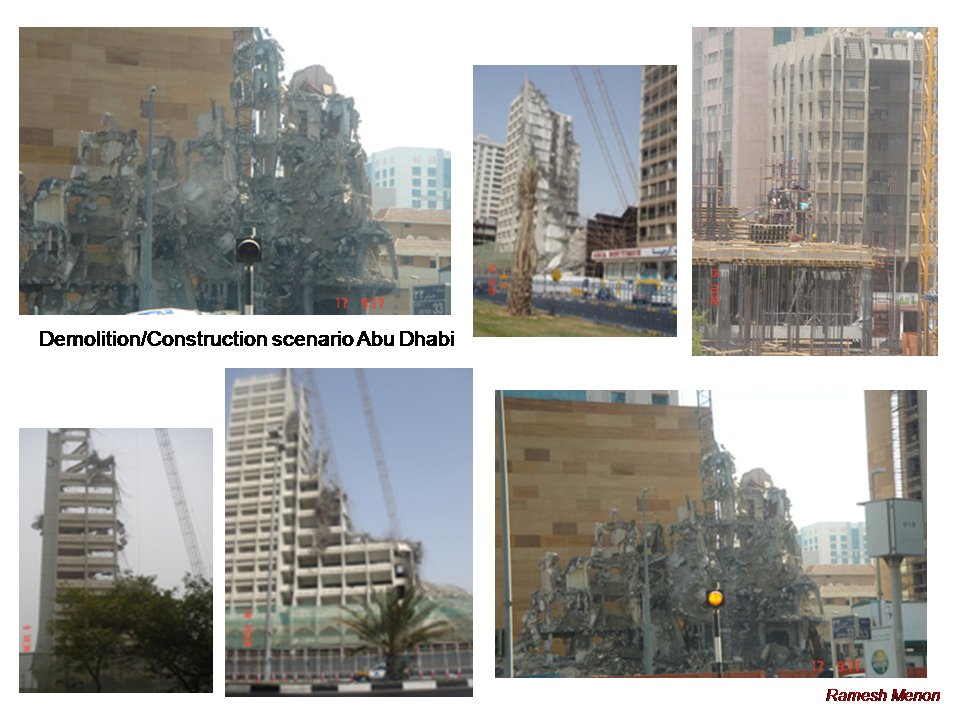
“When the old buildings in the city were demolished, hundreds of people shifted to the suburbs and small towns. Taxi drivers are cashing in on such people who have to travel to the city for work,” said Mousa.
He suggested the introduction of an effective public bus service as a permanent solution. Moidooty, 40, an Indian X-ray technician who frequently travels between the city and Mussafah echoed the same opinion. He said shared taxis demand double the fares during the weekend.
Sajeev Mangalam, 30 an Indian salesman said, “Some taxi drivers don’t stop even when people ask them to. Their careless driving is also dangerous.”
Abdul Aziz, 47, an Indian real estate firm owner explained, “There is more demand for taxis in the city because more expatriates are coming to the emirate in the wake of a development boom. That’s why there is an acute shortage of taxis and the authorities have to take remedial steps.”
Taxi drivers refuted the allegations against them. Mohammad Hussain, 35, a Pakistani taxi driver said the number of passengers in the city has been increasing but the number of taxis is static.
His compatriot Shahid Hassan, 46, said the authorities have to give a licence to more taxis to solve the problem.
Send your comments and suggestions to letter2editor@gulfnews.com
 ClicksandWrites
You must be logged in to post a comment.