Month: September 2007
UAE details Nov oil export cut due to maintenance
UAE details Nov oil export cut due to maintenance
(Reuters)26 September 2007
TOKYO/SINGAPORE – Abu Dhabi National Oil Co (ADNOC) told at least one customer on Wednesday it would halve term November exports of its three offshore crudes due to field work, blunting the impact of OPEC’s planned output rise.
ANDOC, the main oil producer in OPEC-member the United Arab Emirates (UAE), notified at least one refiner in Japan that it was reducing supplies of its Umm Shaif, Lower Zakum and Upper Zakum crudes by about half, a trading source told Reuters.
The notice was the first to confirm the extent to which planned maintenance would affect exports from the emirate, which pumped about 2.6 million barrels per day (bpd) last month. Two other Japanese refiners and one in Southeast Asia had yet to receive the note.
ADNOC had said on Sunday that oilfield maintenance would reduce oil production by 600,000 bpd in November.
Oil traders had earlier said as much as 810,000 bpd of output could be shut in for two to three weeks during the peak of the maintenance.
The three fields, in which Exxon Mobil Corp, Total and BP hold equity stakes, produce a total of just over 1 million bpd, according to recent estimates.
Production at the UAE’s biggest field, onshore Murban, will not be affected, the oil trader said. BP, Royal Dutch Shell, Total and Exxon Mobil are partners there.
The trader added that ADNOC had been selling extra supplies to help its customers build up stocks ahead of the maintenance, which comes just as refiners are bracing for peak winter demand, particularly in Japan, the world’s second-biggest importer, which relies on UAE crude for nearly a quarter of its supplies.
“ADNOC’s commitments to its term clients are all met by advancing the majority of liftings, and some deferments that have been re-scheduled by mutual agreement,” the state oil company said on Sunday in a statement.
Maintenance at the country’s Ruwais refinery from late December through February may also allow the UAE to free up more supplies for export following the November work.
The supply reduction in the three grades had been expected for months and traders had earlier identified the three fields as the 530,000-bpd Upper Zakum, the 250,000-bpd Lower Zakum and the 280,000-bpd Umm Shaif.
Saudi Arabia persuaded the Organization of the Petroleum Exporting Countries to raise output by 500,000 bpd at a meeting earlier this month in a gesture to consumer nations worried by the economic impact of record-high oil prices.
U.S. crude for November delivery was up 23 cents at $79.76 a barrel by 0723 GMT, off a record high of $83.90 hit last Thursday.
Give it a thought before signing up
Give it a thought before signing up
By Rania Oteify, Features Editor Published: September 28, 2007, 23:14
Please sign here, and here and there. Do you hear this request often? I guess you do if you are financially active, i.e. opening bank accounts, requesting credit cards or finance, or just filling forms.
But as common as it is, the request is usually alarming for me. It is not that I don’t sign my credit card slips with only a quick glance at the price, but in different contexts, I do require longer thinking periods which may extend to days. Why? Because a signature, in a way, formalises or legalises a document even in non-financial situations. I don’t see the argument that you signed a document without reading it standing in a court of law. So, be patient when you’re asked to sign and think of the consequences.
Face value
In many banks, whether local or international, there are common practices which fall in a grey area, and can get you in trouble. One of them is asking clients to sign blank cheques to secure loans and credit cards.
You may be right when you think: “This is a reputable bank with thousands of clients, international branches and much bigger business than mine. Who am I to ask them to change a policy?” But you can always ask, and if they don’t accommodate your request, you’ve the option of walking out of the deal. But if you decided to go along with the trust line that the bank isn’t in the business of tricking people, try to keep it to the absolute minimum. After all, remember that your signature on a blank cheque will grant you credit now, but in case of default, the bank can fill this cheque with the outstanding amount and penalties in addition to the accumulated interest.
Sign now, fix it later
Everyday, we sign documents which may not be as serious as financial ones but they are still sort of contracts which may bring not so nice surprises later on your credit card statements. For example, a friend who was renting a car in Dubai told me the agent asked for all the normal stuff: photocopies of his passport, driving licence and a credit card authorisation. Then she handed him the form for the payment which quoted a price Dh600 higher than the agreed price. Her excuse was: This document doesn’t matter, we will charge your card the correct amount. “So why do you ask me to sign a document that doesn’t matter?” he furiously asked. Here she decided to contain his anger. “No problem. Please sign here and we will fill it with the correct numbers later,” she said, pointing to a blank document.
He found it pointless to argue with her, so he collected his documents and walked out. He definitely did the right thing. Why should he willingly sign a document which quotes the wrong price or another with no price at all while car rental companies are aplenty? Even though credit card transactions can be negotiated and voided, he would not be in a good position since they have a document carrying his signature.
For my loved ones
Co-signing on other people’s credit documents isn’t a good idea. However cruel it might sound to advise someone to say no to a friend or a child, it may be the right thing to do. People do default on their loans – check the statistics. This doesn’t mean you should not consider helping them if you can. But take your time to find out whether you can afford it or not. An additional car payment of Dh1,000 a month for a car that you’re not driving may not be a good surprise. If you do want to help and are willing to bear the burden if things don’t work out for your loved ones, then go ahead and sign here, and here and there.
A signature, in a way, formalises or legalises a document. Be patient when you’re asked to sign and think of the consequences.
Adnoc notifies on supply cut
Adnoc notifies on supply cut
(Reuters) 27 September 2007
TOKYO/SINGAPORE — Abu Dhabi National Oil Co (Adnoc) told at least one customer yesterday it would halve term November exports of its three offshore crudes due to field work, blunting the impact of Opec’s planned output rise.
Adnoc, the main oil producer in Opec-member the United Arab Emirates (UAE), notified at least one refiner in Japan that it was reducing supplies of its Umm Shaif, Lower Zakum and Upper Zakum crudes by about half, a trading source said.
The notice was the first to confirm the extent to which planned maintenance would affect exports from the emirate, which pumped about 2.6 million barrels per day (bpd) last month. Two other Japanese refiners and one in Southeast Asia had yet to receive the note.
Adnoc had said on Sunday that oilfield maintenance would reduce oil production by 600,000 bpd in November.
Oil traders had earlier said as much as 810,000 bpd of output could be shut in for two to three weeks during the peak of the maintenance.
The three fields, in which Exxon Mobil Corp, Total and BP hold equity stakes, produce a total of just over 1 million bpd, according to recent estimates.
Production at the UAE’s biggest field, onshore Murban, will not be affected, the oil trader said. BP, Royal Dutch Shell, Total and Exxon Mobil are partners there.
The trader added that Adnoc had been selling extra supplies to help its customers build up stocks ahead of the maintenance, which comes just as refiners are bracing for peak winter demand, particularly in Japan, the world’s second-biggest importer, which relies on UAE crude for nearly a quarter of its supplies.
“Adnoc’s commitments to its term clients are all met by advancing the majority of liftings, and some deferments that have been re-scheduled by mutual agreement,” the state oil company said on Sunday in a statement.
Maintenance at the country’s Ruwais refinery from late December through February may also allow the UAE to free up more supplies for export following the November work.
The supply reduction in the three grades had been expected for months and traders had earlier identified the three fields as the 530,000-bpd Upper Zakum, the 250,000-bpd Lower Zakum and the 280,000-bpd Umm Shaif.
Saudi Arabia persuaded the Organisation of the Petroleum Exporting Countries to raise output by 500,000 bpd at a meeting earlier this month in a gesture to consumer nations worried by the economic impact of record-high oil prices.
U.S. crude for November delivery was up 23 cents at $79.76 a barrel by 0723 GMT, off a record high of $83.90 hit last Thursday.
Abu Dhabi set to take giant leap forward
Abu Dhabi set to take giant leap forward
By Himendra Mohan Kumar, Staff Reporter Published: September 28, 2007, 00:00
Abu Dhabi: The imminent arrival of Hollywood entertainment giant Warner Bros in Abu Dhabi with a theme park is in line with the positioning of the emirate as a “world-class place that has it all” and over time, tourist arrivals to the UAE are expected to see strong growth, market analysts told Gulf News.
“This is yet another feather in the cap for Abu Dhabi, after the announcement of Formula One, arrival of top world-class universities, setting up of industrial zones and a museum from France, things that tourists love to see,” said one analyst.
On Wednesday in a multi-billion dollar deal, real estate developer Aldar Properties PJSC, one of the largest companies by market capitalisation in the UAE, US-based Warner Bros and the Abu Dhabi Media Company forged a long-term strategic alliance in New York aimed at Abu Dhabi’s digital transformation.
“Abu Dhabi will soon become like Dubai, a very attractive place to live in for professional people with all the goodies available in one place. This would also give a boost to the real estate projects in the UAE, particularly in Abu Dhabi,” said another analyst.
Shortly after the deal was signed, Aldar chairman Ahmad Ali Al Sayegh told Gulf News that the proposed money committed would be invested over the next five years.
Aldar and Abu Dhabi Media Company together will invest 50 per cent of it, while the remaining 50 per cent will be invested by Warner Bros.
“We are going to build an integrated entertainment and media infrastructure that will be respectful to our culture and values,” said Al Sayegh. “This is a regional partnership that will cover the entire Middle East.”
In a joint statement, Aldar, Warner Bros and Abu Dhabi Media said their alliance covers the creation of a theme park and hotel and jointly owned multiplex cinemas, as well as the formation of a joint venture fund to finance films and to develop and publish video games, heralding the growth of new media in the national capital.
Additional areas
Beyond the businesses specifically outlined in Warner Bros’ initial agreement with Aldar and Abu Dhabi Media Company, the companies will explore additional areas in which they can work together, including ventures such as production facilities, digital content distribution and retail opportunities in the Gulf.
Aldar will coordinate and oversee physical construction of both the theme park and hotel. Groundbreaking for the theme park and hotel is expected in 2009.
Warner Bros International Cinemas will develop, design and manage jointly owned multiplex cinemas in Abu Dhabi to be built by Aldar. Initial plans call for the construction of four cinemas in Al Ruwais, Al Ain, Yas Island and the Central Market in Abu Dhabi, which will be Warner Bros-branded and themed, featuring iconic characters and titles from Warner Bros’ classic and contemporary film libraries. Groundbreaking for the multiplex cinemas at the Central Market Development has taken place and they are due to open in the first quarter of 2010.
WBIC currently operates cinemas in Italy and Japan and manages the Mann Theatres chain in the United States.
The film production fund, a 50-50 venture, calls for the development and production of mutually agreed-upon, broad-appeal films, with Warner Bros retaining worldwide distribution options/rights. Separate from this arrangement, Warner Bros Pictures International will work with Abu Dhabi Media Company to develop and produce a slate of Arabic-language films for local and pan-Arabic distribution.
Educating children key to ending cycle of poverty, says Maitha

Educating children key to ending cycle of poverty, says Maitha
By Zoi Constantine, Staff Reporter Published: September 28, 2007, 00:00
Dubai: Shaikha Maitha Bint Mohammad Bin Rashid Al Maktoum has urged Dubai’s diverse, multi-cultural communities to unite under the banner of ‘Dubai Cares’ to contribute to the goal of educating 1 million children.
The call came as the amount raised for the initiative launched on September 19 by His Highness Shaikh Mohammad Bin Rashid Al Maktoum, Vice-President and Prime Minister of the UAE and Ruler of Dubai, topped Dh300 million.
Among the latest to donate are Dubai Contracting, which yesterday pledged Dh500,000, and Ahmad Siddiqui and Sons who donated Dh1.5 million to the six-week campaign at an event hosted by Shaikha Maitha, on Wednesday night. 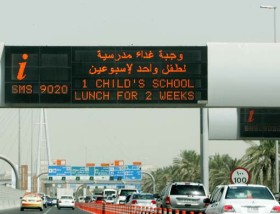
During the event she also announced that she will host the ‘Dubai Cares’ Walkathon, scheduled for October 19 to be attended by members of the public as well as sporting personalities and well-known names from the world of art and culture in the UAE.
“Dubai Cares is an opportunity for all of us – regardless of our race, religion or ethnic background – to bring together the different communities in Dubai’s multicultural landscape to support a common cause and contribute to a greater purpose,” Shaikha Maitha said during her address before the diverse crowd at the Dubai World Trade Centre on Wednesday evening.
“We recognise education as the best long-term solution to poverty alleviation in the developing world -educating children, especially girls, is the key to ending the global ‘cycle of poverty’.”
Present at the event to launch Shaikha Maitha’s participation were various sports personalities, artists and actors, including Abdullah Al Khair, who pledged their support for ‘Dubai Cares.’
Abu Dhabi congestion looms amid taxi shortage
Abu Dhabi congestion looms amid taxi shortage
By Samir Salama, Bureau Chief Published: September 28, 2007, 00:00
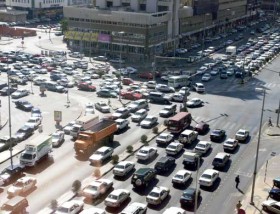
Abu Dhabi: As residents complained of an acute shortage of taxis in Abu Dhabi, a think tank has warned that the problem will worsen the traffic congestion in the city.
“A shortage in taxis will simply mean more and more people will opt to buy their own cars to rid themselves of the daily suffering of finding a cab,” said a report by the Emirates Centre for Strategic Study and Research.
The report expected that the implications of the problem will increase as time passes and that this will be reflected in worsening gridlocks.
This [predicted] increase in the numbers of cars happens at a time when the government is supposed to take measures to reduce them or at least maintain the present number, according to the report.
Statistics of the Abu Dhabi Chamber of Commerce and Industry put the increase in the number of new cars registered for the first time in Abu Dhabi at 380 per cent between 2002 and 2005, while the increase at the UAE level during the same period was 230 per cent.
A whopping 152,000 new cars were registered for the first time in Abu Dhabi in 2005 accounting for 43 per cent of the total number of cars registered across the country in the same year, compared with 40,000 cars registered in the city in 2002.
This makes the average annual growth in cars registered in Abu Dhabi around 95 per cent.
According to the ECSSR’s report, the curve of growth in the number of cars registered in the capital is ascending steeply, especially if the number of used cars registered in the city is taken into consideration.
The report expected that implications of the shortage in cabs will unfold within six months. Residents in Abu Dhabi have complained of queues being formed at bus stops, malls and in major streets everyday particularly at peak hours.
Many say they are compelled to wait for taxis for a long time in the scorching summer heat, with cars belching fumes and fraying tempers.
Refusal
Residents said even if they come across cabs, drivers refuse to take certain routes. Sahar Mohammad, 25, an Egyptian housewife, said for a 10- minute journey she had to wait for almost 60 minutes on Hamdan Street to take her children to school.
“Taxis are not available and most of the taxi drivers are very rude and arrogant and simply refuse to drive to my destination,” she said.
Varghese A., suggested that a proper public bus transport system like that in Dubai would help solve this problem. There is a lot of potential for this kind of city bus service.
Other residents complained that taxis are cashing in on people who had to move to suburbs such as Mussafah and Baniyas to escape rising rents.
Khalid Saleh Al Rashidi, general manager of the Taxi and Hire Car Regulation Centre, said there is no shortage of taxis in the city.
He told Gulf News the root cause of the problem is taxi drivers selectively taking routes which give them more revenue.
“The first batch of a new taxi fleet will hit the roads in November this year,” he said.
* 380% increase in the number of new cars registered in Abu Dhabi between 2002 and 2005.
* 230% increase in the number of new cars registered in the UAE between 2002 and 2005.
* 152,000 new cars registered in Abu Dhabi in 2005.
* 95% average annual increase in the number of cars registered in Abu Dhabi.
Humility and merit go together
Humility and merit go together
24 Sep, 2007, 0035 hrs IST,N K Vijayaraghavan, TNN
Sir Arthur Conan Doyle, in his Valley of Fear, observes: “Mediocrity knows nothing higher than itself but talent instantly recognises genius.” An old English proverb also notes, “Empty vessels make more noise”, while a Tamil aphorism conveys the message, Niraikudam thalumbathu (a vessel full of water doesn’t make gurgling sounds).
Indeed those who earnestly strive for excellence do not ever view others with a condescending or patronising look because they feel earnestly that they themselves have much to traverse in their own quest. They practically live out the message of the Tamil saint Avvaiyar, “What we have learned is just the size of a handful of sand; what we haven’t is as big as the entire sand in this vast earth.”
Egoism (ahamkara) is the root cause of all pride, vain boast and self-assumptions, which discount the merits in and accomplishments of others. In fact, in general, human nature is such that most tend to magnify their own sufferings, contributions made or help rendered. Many also lose themselves in orgies of self-pity, self-justification, self-aggrandisement, vain assumptions and fanciful imagination, through living in a fool’s paradise, evolved out of the hollowness, feelings of inadequacy and pretensions to superiority.
The seeking aspirant, on the other hand, is bestowed with a spiritual insight to look beyond his own limitations and thus be sensitised to the virtues, merits and beauty, which abound in the world around. Drawing thus from the cornucopia of blessings all over and obtaining lessons from others too, he becomes the prime beneficiary in his search for virtues and blessings, which would lead him on.
The beginning is thus through that self-effacing humility which admits to the deficiencies within and through a capacity to appreciate and learn from worthwhile things around. Such virtues cleanse the spirit of the retarding forces of egoism, pride and egotism.
This concept is conveyed brilliantly through a scene in the great Kannada film, Hamsagethe. The main character, Venkanna, in sheer ecstasy and gratitude within, embraces a tall rock, on the top of which a sparrow perches itself, as if to taunt him, “You have much to climb before you attain excellence.” Venkanna’s quest thereafter begins in right earnest.
The truly meritorious, not ever needing the crutches of self propagation, would obtain around him many to spread his fame. Indeed, when some one else blows your trumpet, the sound will carry twice as far!
Merits of adopting global accounting system in core sector
Merits of adopting global accounting system in core sector
25 Sep, 2007, 0303 hrs IST,P Rama Krishna,
Earlier, in most countries, while public sector operators were responsible for construction, operation and maintenance of infrastructure, including toll highways, toll bridges, power plants, water supply plants, airports, sea ports, etc, such infrastructure was financed through public budget appropriation.
Of late, in today’s expanding global economy, governments of several countries use a build-operate-transfer (BOT) model for the purpose. The BOT model allows private, foreign and national investors to finance, design, construct, upgrade and operate large-scale infrastructure and development projects.
In return, the operator (a private sector company) is granted the right to generate revenues from the infrastructure facilities for a specified term or concession period. These revenues enable the company to recover its invested capital and also earn a fair return on investment during the concession period, which may range typically from 10 years to 40 years. At the end of this period, assets of the BOT project are transferred, in good condition, to the government or to the local authority which granted the concession (i.e., grantor). This arrangement is articulated in a contract which delineates performance standards, mechanisms for adjusting prices and provisions for arbitrating disputes.
In India, successful public-private participation arrangements are emerging and it is estimated that to sustain economic growth, investments of $350-500 billion would be required in the next five years. While these service arrangements may assume any variety of forms, participation by both the grantor and operator, accompanied by an initial large investment, raises questions over the assets and liabilities to be recognised by the operator.
To facilitate this scenario, a reasonable framework of concessionaire agreements and specialised considerations for accounting and preparation of financial statements of these private sector entities should be prescribed.
Currently, from an Indian perspective, BOT assets are recognised as fixed assets and depreciated over the course of the BOT contract. This treatment does not fully exhibit the risks and rewards associated with the arrangement and also does not reflect the substance of the underlying arrangement rather than in form.
For example, the operator neither holds a leasehold right to nor owns the asset; he constructs the asset in accordance to the grantor’s specifications and he also complies with the grantor’s operation and maintenance requirements for the asset. In addition, he should also comply with the terms for transfer of the assets at the end of the concessionaire period as specified by the grantor. In such a situation, how would the operator be justified in recognising these assets as his own?
Further, in most of the cases, the initial development takes place over a time frame of 3-7 years. At this stage, the operator continues to provide services by building the infrastructure; therefore what is the justification for not recognising the revenues during this period? One can observe that there are more risks and efforts involved during the development phase rather than the operations phase. But the present Indian Accounting Standards permit revenue recognition only during the operation phase, but not during the development phase.
Infrastructure, within this context, is not recognised as property, plant and equipment of the operator because the contractual service arrangement does not convey the right to control the use of the public service infrastructure to the operator. The operator has the right to operate the infrastructure to provide service to the public, on behalf of the grantor, in accordance with the terms specified in the contract.
Internationally, the context for accounting for BOT projects has changed to one where the asset is recognised as a financial or intangible asset.
On November 30, 2006, the International Financial Reporting Interpretations Committee (IFRIC) issued IFRIC Interpretation 12-Service Concession Arrangements. This Interpretation provides guidance on accounting by private sector operators involved in the provision of public sector infrastructure assets and services. With effect from January 1, 2008, the standard is to internationally recognise the BOT asset as a financial asset or an intangible asset.
Various factors, including globalisation, encourage the migration of accounting to a more singular and common platform in terms of rules and standards. In this context, it would be prudent for infrastructure companies based in India to recognise BOT assets as intangibles, on par with their international peers.
To do this, Indian companies need to be educated about the benefits of recognising the service concession as a financial or intangible asset, which include greater synthesis and congruence with international standards. A more accurate and insightful view into how the BOT asset is recognised on the books.
Accounting for service concession arrangements commences from the time of bidding for a service concession. Research indicates that accounting issues are present across each stage of the value chain; these issues include, and are not limited to n Prior costs — bid costs, security deposits, consultant fees, etc.
n Construction and procurement of assets — recognition of intangible assets, recognition of financial assets, borrowing costs, special purpose entities, etc.
n Operations and maintenance — revenue recognition, exchange fluctuations, taxation, current and deferred income taxes, impact on credit rating by bank creditors, etc.
It is not only Indian companies who will have to be educated on the benefits of recognising service concessions as financial or intangible assets. Retail and institutional investors, financial services providers and the market as a whole must become aware of this new practice. Accounting firms will need to articulate to its clients and to financial services providers extending financing for such projects the merits of adopting the international system of accounting. Initially, there may be a certain amount of resistance to adopting the global standard, but accounting firms can address this by facilitating their clients and other parties to view the issue in a more holistic and accurate manner.
(The author is partner, Price Waterhouse)
Indonesia’s talks with ExxonMobil hit a hurdle
Indonesia’s talks with ExxonMobil hit a hurdle
Reuters Published: September 25, 2007, 23:45
Jakarta: Indonesia and ExxonMobil have halted negotiations on the disputed Natuna D-Alpha gas block, now controlled by the US company, an official at energy watchdog BPMIGAS said yesterday.
Talks on the offshore gas project, estimated to require investment of about $40 billion, have run into several problems, attracting the attention of foreign investors who are already wary of committing money to Southeast Asia’s biggest economy because of its weak legal system, bureaucracy and corruption.
The most recent setback over Natuna has arisen because the two parties involved cannot agree on how to split the gas produced, the official said, but other unresolved issues include the length of Exxon’s contract.
The Indonesian side is waiting for the government to issue new instructions before talks can resume.
Controlling issues
Exxon controls a 76 per cent stake in the Natuna block while Indonesian state oil and gas firm, Pertamina, owns 24 per cent and would like to increase its stake to half.
Indonesia also says that Exxon’s contract giving it that 76 per cent share has expired, whereas the energy major has said the contract is valid until 2009.
The BPMIGAS official said the two sides stopped talking recently because they could not agree on how to split the gas produced from the block.
“Indonesia wants a 65 per cent split for the government and 35 per cent for the contractor. Exxon has rejected the proposal because it wants more,” the official said.
Kuwait favours BP ahead of Shell as partner in China refinery plan
Kuwait favours BP ahead of Shell as partner in China refinery plan
Reuters / Published: September 25, 2007, 23:45
Kuwait City: Kuwait wants to drop Royal Dutch Shell as a partner and is instead considering BP in a project to build a $5 billion oil refinery in Guangdong in China, Kuwait’s state news agency Kuna reported yesterday.
Shell had hoped to gain a foothold in the domestic fuel market of the world’s second-largest energy consumer through the Guangdong plant, after an attempt to take a share in another refining project failed last year.
The refinery would be one of the largest joint venture investments in China, similar in size to the $5 billion refinery to be built by Exxon Mobil and Saudi Aramco in Fujian.
State-owned Kuwait Petroleum Corp (KPC) and China’s largest refinery Sinopec received preliminary Chinese government approval for the Guangdong plant last year.
In August, Sinopec said Shell and US Dow Chemical Co were also in talks to participate. There were several reasons KPC no longer wanted Shell involved, including objections from China’s National Development and Reform Commission, Kuna reported, citing Chinese sources. KPC was in talks on the project with BP, which had previously expressed interest, it said.
It was unclear why BP would be a better fit than Shell for the project. Analysts say Beijing is showing a preference toward teaming up with state-owned firms that can offer oil supply guarantees such as KPC, with less need for the technology or financing offered by oil majors such as Shell or BP.
“The issue has been dragging on for months,” said Kuwaiti energy analyst Kamel Al Harmi.
- ← Previous
- 1
- 2
- 3
- …
- 13
- Next →
 ClicksandWrites
You must be logged in to post a comment.