Job Hopping!!
Mr. Gopalakrishnan succeeds Mr. Ratan Tata as Chairman of Tata Sons
Ltd., the holding company for many of the Tata Bluechips like Tata
Steel, Tata Motors, Tata Power, Tata Chemicals, Voltas, etc.,
Possibly he is the first non-Tata person to head the Tata Empire.
The grass isn’t always greener on the other side!!
Move from one job to another, but only for the right reasons. It’s yet
another day at office. As I logged on to the marketing and advertising
sites for the latest updates, as usual, I found the headlines
dominated by ‘who’s moving from one company to another after a
short stint’, and I wondered, why are so many people leaving one job
for another?
Is it passé now to work with just one company for a sufficiently long
period?
Whenever I ask this question to people who leave a company, the
answers I get are: “Oh, I am getting a 200% hike in salary”; “Well, I
am jumping three levels in my designation”; “Well, they are going to
send me abroad in six months”.
Then, I look around at all the people who are considered successful
today and who have reached the top – be it a media agency, an
advertising agency or a company. I find that most of these people are
the ones who have stuck to the company, ground their heels and worked
their way to the top. And, as I look around for people who changed
their jobs constantly, I find they have stagnated at some level, in
obscurity!
In this absolutely ruthless, dynamic and competitive environment,
there are still no short-cuts to success or to making money. The only
thing that continues to pay, as earlier, is loyalty and hard work.
Yes, it pays!
Sometimes, immediately, sometimes after a lot of time. But, it does
pay.
Does this mean that one should stick to an organization and wait for
that golden moment? Of course not. After a long stint, there always
comes a time for moving in most organizations, but it is important to
move for the right reasons, rather than superficial ones, like money,
designation or an overseas trip.
Remember, no company recruits for charity.
More often than not, when you are offered an unseemly hike in salary
or designation that is disproportionate to what that company offers it
current employees, there is always unseen bait attached.
The result? You will, in the long-term, have reached exactly the same
levels or maybe lower levels than what you would have in your current
company.
A lot of people leave an organization because they are “unhappy”. What
is this so-called-unhappiness? I have been working for donkey’s years
and there has never been a day when I am not unhappy about something
in my work environment-boss, rude colleague, fussy clients etc.
Unhappiness in a workplace, to a large extent, is transient.
If you look hard enough, there is always something to be unhappy
about.
But, more importantly, do I come to work to be “happy” in the truest
sense?
If I think hard, the answer is “No”. Happiness is something you find
with family, friends, may be a close circle of colleagues who have
become friends.
What you come to work for is to earn, build a reputation, satisfy your
ambitions, be appreciated for your work ethics, face challenges and
get the job done.
So, the next time you are tempted to move, ask yourself why you moving
and what are are you moving into.
Some questions are:
* Am I ready and capable of handling the new responsibility? If yes,
what could be the possible reasons my current company has not offered
me the same responsibility?
* Who are the people who currently handle this responsibility in the
current and new company? Am I as good as the best among them?
* As the new job offer has a different profile, why have I not given
the current company the option to offer me this profile?
* Why is the new company offering me the job? Do they want me for my
skills, or is there an ulterior motive?
An honest answer to these will eventually decide where you go in your
career- to the top of the pile in the long term (at the cost of
short-term blips) or to become another average employee who gets lost
with time in the wilderness?
“DESERVE BEFORE YOU DESIRE” – Dr. Gopalkrishnan, Chairman TATA Sons.
Iran and Pakistan agree to gas accord without India
Iran and Pakistan agree to gas accord without India Reuters Published: September 30, 2007, 00:33
Tehran: Pakistan has agreed to details of a deal for buying gas from Iran, officials from both sides said on Friday, adding that the proposed tri-nation pipeline would be viable even if India, the third party, walked out.
India stayed away from last week’s talks in Tehran on the proposed $7 billion pipeline, saying it wanted to agree transit costs through Pakistan on a bilateral basis first, an Iranian official said. But he said India had not said it was quitting.
“The economics of the project will improve with Indian participation but … the project is economically viable as a bilateral project also,” Mukhtar Ahmad, the energy adviser to Pakistan’s prime minister, told reporters in Tehran.
Hojjatollah Ghanimifard, international affairs director of the National Iranian Oil Company (NIOC), said the three sides had previously planned for gas sales and purchase agreements (GSPAs) to be negotiated separately by India and Pakistan.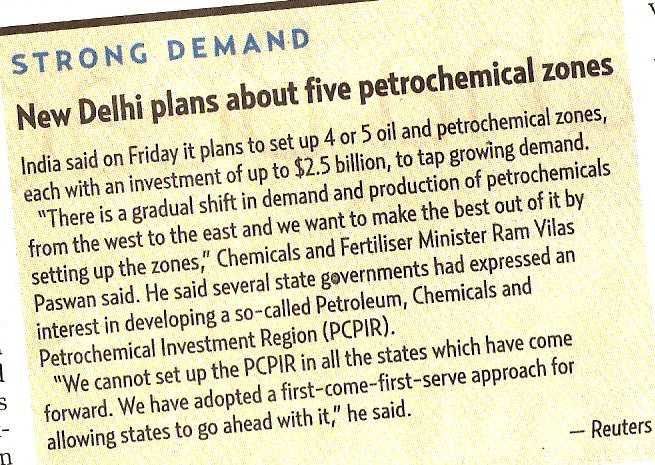
“So far, the information formally we have from the authorities of India is that they are willing to join us. They have just their internal problems, including that they need to finalise the transit fee with our good Pakistani friends,” Ghanimifard said after talks late on Friday.
Iran’s oil minister said on Wednesday his country would still sign a deal with Pakistan if India decided not to join.
Mukhtar said Pakistan and India had agreed in principle how to tackle issues like transportation tariffs and transit fees.
“We don’t see transit through Pakistan as a problem. We’ve had bilateral discussions with India on this subject,” he said, although he said more talks were be needed.
Speaking of Pakistan’s talks with Iran, Mukhtar said: “We have agreed upon everything that we needed to agree on with regard to the gas sales and purchase agreement and the inter-governmental framework agreement.”
He said the details would be drawn up in final documents to be examined at bilateral talks in Islamabad on October 15-19.
Mukhtar did not give details for the price of the gas agreed but said it would be linked to the price of oil. He also they also agreed on a price review clause – an issue that had been pending – but he did not elaborate.
In July, Ghanimifard said India and Pakistan had accepted Iran’s demand for gas price reviews based on market changes.
He denied reports by some Indian newspapers that the pipeline talks had failed after Iran demanded a review every three years.
The pipeline would initially carry 60 million cubic metres of gas daily to Pakistan and India, half for each country.
The pipeline’s capacity would later rise to 150 million cubic metres. Pakistan says it could want 60 million cubic metres for itself in the future.
Iran says it has completed 18 per cent of the work for the pipeline to bring gas from its South Pars field up to Iran-Pakistan border. Pakistan has yet to begin work on a 1,000 km stretch of the pipeline to link Iran with India.
Strong demand: New Delhi plans about five petrochemical zones
India said on Friday it plans to set up 4 or 5 oil and petrochemical zones, each with an investment of up to $2.5 billion, to tap growing demand.
“There is a gradual shift in demand and production of petrochemicals from the west to the east and we want to make the best out of it by setting up the zones,” Chemicals and Fertiliser Minister Ram Vilas Paswan said. He said several state governments had expressed an interest in developing a so-called Petroleum, Chemicals and Petrochemical Investment Region (PCPIR).
“We cannot set up the PCPIR in all the states which have come forward. We have adopted a first-come-first-serve approach for allowing states to go ahead with it,” he said.
China bets on Myanmar status quo for gas deals
China bets on Myanmar status quo for gas deals
Reuters Published: September 30, 2007, 00:33
Hong Kong: China struck an energy coup with a pipeline deal in Myanmar earlier this year but its cosy relationship with the ruling generals could come back to haunt it if the investment environment opens up, analysts say.
The military government of the impoverished southeast Asian state gets most of its export earnings from selling gas to Thailand and it has stepped up a drive to attract more foreign investment in the last three years.
But a week of unrest, in which at least 9 people died when troops broke up the biggest anti-government demonstrations in nearly 20 years, has raised the question of what might happen if the military government loses its grip on power.
“If the junta is overthrown -and that’s a very big if – clearly that might have an impact on China because it has invested a lot over the last 20 years,” said Ian Storey, a fellow at the Institute of Southeast Asian Studies in Singapore.
“We’re well into the grounds of speculation but if a more pro-Western government came into power they might seek to limit China’s involvement. China is an important ally of Burma and it won’t want to lose that.”

Myanmar is wedged between China and India, making it a small but juicy prize in a furious battle for energy between the world’s two most populous nations.
Its proven gas reserves amount to only 0.3 per cent of the world’s total, but a lack of exploration means the true figure could be much higher.
Chinese oil giant Petro-China appears to have won the last round by snatching a gas pipeline agreement from under India’s nose. It has sweetened the deal by talking to Myanmar about running an oil pipeline along the same route.
Such a pipeline would ease the passage of Saudi crude bound for China by cutting out the congested Malacca Straits, but would be dependent on the goodwill of the regime in Myanmar.
While China has been quietly trying to build ties with democratic and ethnic groups in Myanmar in recent years, Beijing has remained a steady friend to the ruling generals.
“If there was a change in government, there could be a rethink of the gas pipeline to China,” said Sanjeev Prasad at Kotak Securities.
Observers are not predicting an imminent change of government in Myanmar, but many other countries have experienced unexpectedly rapid changes of leadership in the last 20 years.
For the moment, the country’s biggest investors like Total and Thailand’s PTTET as well as South Korea’s Daewoo International Corp, operator of a multi-billion-dollar gas project under way, say it’s business as usual.
Kuwait shortlists firms for new refinery
Kuwait shortlists firms for new refinery
Reuters Published: September 30, 2007, 00:33
Kuwait: State refiner Kuwait National Petroleum Co (KNPC) yesterday announced firms pre-qualifying for the construction of the state’s planned 615,000 barrels per day (bpd) Al Zour refinery.
KNPC said last week Kuwait had approved a budget of about $14 billion for the construction of the refinery, the Middle East’s biggest, more than twice an initial cost estimate.
The tender was split into several construction packages for which the following firms pre-qualified, according to a KNPC statement published in local daily Al Qabas.
Tender details
A consortium of Italy’s Snamprogetti and Korea’s Hyundai Engineering & Construction, consortium of Japan’s JGC and Korea’s GS Engineering & Construction and consortium of Technip Italy, Foster Wheeler and Korea’s SK Engineering & Construction qualified for crude distillation units, sulphur removal and units to treat naphtha, kerosene and diesel.
For hydrogen production and recovery, sulphur industrialisation, units to treat diesel, etc, those qualified include a consortium of Technip Italy and Foster Wheeler Energy and Snamprogetti, consortium of Hyundai Engineering & Construction and Daelim Industrial Co, GS Engineering & Construction, WGI Middle East, SK Engineering & Construction and Petrofac International.
For tank storages, those qualified include consortium of CB & I and CBI Eastern Anstalt, Daelim Industrial, GS Engineering & Construction, SK Engineering & Construction and Petrofac International.
Fasting for the first time

Fasting for the first time
By Ruqya Khan, Gulf News Report Published: September 30, 2007, 00:33
Growing up means different things to different children. Some feel grown up when they are given responsibility, while others feel content when they are allowed to interact more closely with their elders. But what exactly is growing up all about? It’s a process of learning and understanding day to day life and accounting for one’s actions.
Though there is no set age to begin fasting, it becomes compulsory for every Muslim, male or female, after he or she reaches puberty. Often children as young as seven choose to fast.
Though they may not fast the entire month, this practice strengthens them mentally and spiritually.
Excited
Al Hajjaj Bin Habib is 9. He is in grade 4 at Al Hikmah Private School in Ajman. This year was his first fasting experience. He said: “I am very excited about fasting as all my classmates are fasting as well. I felt so proud of myself for having hung on till iftar time. As a means of encouragement I was given a monetary reward to save in my piggy bank and it was the ultimate treat. Last year I tried to fast, but was only able to fast half a day.”
“I’ve learnt that with intention and a strong will, desires can easily be defeated. Now I understand the pain of hunger and want to share the extra food left over with the poor at Al Ihsan Charity Centre.”
Ten-year-old Sidra Momin agreed. “On other days I would not feel hungry. My mum would have to force me to eat, but when I fasted I knew what the needy feel. 
Effort
“Now I don’t take my blessings for granted. It helped me realise how much effort my parents put into the day when they fast. I now enjoy helping my mother set the table, arrange the fruits, etc, at iftar time. It doesn’t feel like a chore anymore,” said Sidra.
“In Ramadan everything and everyone is different. We visit places like parks and mosques instead of the usual routine of spending time in the malls. My parents are more relaxed, dad comes home early and we get to meet with the family and friends more often during iftar gatherings. I like that. Plus, I get to select my clothes for Eid, which is great!”
Kahkashan Kareem, a grade 4 student at the Gulf Indian High School, said, “I think fasting makes us better people. We are able to wait from suhour to iftar to eat and drink. Plus, when I’m fasting I make sure I don’t get angry at my sisters – Safoora, 6, and Darakhshan, 12. In fact, my elder sister encourages me to be punctual for my prayers. She supports me and keeps me away from the mischief of my little sister.
“I think Ramadan is exciting. The relatives get together each weekend and I like to exchange ideas with my cousins about how we fasted, what we did at school, etc. I also enjoy the iftar spread – my favourite is chocolate juice. Mummy makes this by adding milk, cream and sugar to melted chocolate ice cream. It’s really yummy and easy to make.
“But that’s not all. We even get to go to the mosque for special Tharaweeh prayers. Sometimes I even attend dars (religious lectures) with my mother and aunts. Here the teacher tells us about the simple rules to follow and it’s said like stories from the Quran or Hadith (sayings of the Prophet Mohammad PBUH). It’s never boring.”
Patience
Mohammad Yousuf and Mohammad Khalid are cousins studying at Al Wataniya Private School. They started fasting on the first day of Ramadan. Yousuf is in grade 5.
He said, “Fasting takes a lot of patience. The first day I was miserable. I could not tolerate having my younger siblings come close to me after they had just eaten. I think my sense of smell had suddenly become stronger because I could smell what they ate or drank and it tempted me a lot.
But I was happy that I made it through the day just like my younger cousin, Khalid.”
Khalid added, “As usual we went to the grocery store that day and bought the goodies we liked, but didn’t eat them until after iftar time. Each year during Ramadan the whole family gathers at my uncle’s house to break the fast. On my first fast it felt really nice when everyone congratulated us. We have been promised a surprise gift after two weeks of fasting, I can hardly wait.
“Most of my friends in school are fasting so I don’t feel out of place during recess. I think school days are easier to go by without food and drink because there is a fixed schedule, we study, play, come home tired, rest and then ready ourselves for the evening meal with the family. But on weekends there is little to do except smell the aroma of dishes in the kitchen.”
Did you know?
Fasting is compulsory for all Muslims once they reach puberty.
However, many children, some as young as 7, also fast during Ramadan.
They may fast only a few days or a few hours.
Children can also attend prayers at the mosque and religious lectures with their family members.
UAE details Nov oil export cut due to maintenance
UAE details Nov oil export cut due to maintenance
(Reuters)26 September 2007
TOKYO/SINGAPORE – Abu Dhabi National Oil Co (ADNOC) told at least one customer on Wednesday it would halve term November exports of its three offshore crudes due to field work, blunting the impact of OPEC’s planned output rise.
ANDOC, the main oil producer in OPEC-member the United Arab Emirates (UAE), notified at least one refiner in Japan that it was reducing supplies of its Umm Shaif, Lower Zakum and Upper Zakum crudes by about half, a trading source told Reuters.
The notice was the first to confirm the extent to which planned maintenance would affect exports from the emirate, which pumped about 2.6 million barrels per day (bpd) last month. Two other Japanese refiners and one in Southeast Asia had yet to receive the note.
ADNOC had said on Sunday that oilfield maintenance would reduce oil production by 600,000 bpd in November.
Oil traders had earlier said as much as 810,000 bpd of output could be shut in for two to three weeks during the peak of the maintenance.
The three fields, in which Exxon Mobil Corp, Total and BP hold equity stakes, produce a total of just over 1 million bpd, according to recent estimates.
Production at the UAE’s biggest field, onshore Murban, will not be affected, the oil trader said. BP, Royal Dutch Shell, Total and Exxon Mobil are partners there.
The trader added that ADNOC had been selling extra supplies to help its customers build up stocks ahead of the maintenance, which comes just as refiners are bracing for peak winter demand, particularly in Japan, the world’s second-biggest importer, which relies on UAE crude for nearly a quarter of its supplies.
“ADNOC’s commitments to its term clients are all met by advancing the majority of liftings, and some deferments that have been re-scheduled by mutual agreement,” the state oil company said on Sunday in a statement.
Maintenance at the country’s Ruwais refinery from late December through February may also allow the UAE to free up more supplies for export following the November work.
The supply reduction in the three grades had been expected for months and traders had earlier identified the three fields as the 530,000-bpd Upper Zakum, the 250,000-bpd Lower Zakum and the 280,000-bpd Umm Shaif.
Saudi Arabia persuaded the Organization of the Petroleum Exporting Countries to raise output by 500,000 bpd at a meeting earlier this month in a gesture to consumer nations worried by the economic impact of record-high oil prices.
U.S. crude for November delivery was up 23 cents at $79.76 a barrel by 0723 GMT, off a record high of $83.90 hit last Thursday.
Give it a thought before signing up
Give it a thought before signing up
By Rania Oteify, Features Editor Published: September 28, 2007, 23:14
Please sign here, and here and there. Do you hear this request often? I guess you do if you are financially active, i.e. opening bank accounts, requesting credit cards or finance, or just filling forms.
But as common as it is, the request is usually alarming for me. It is not that I don’t sign my credit card slips with only a quick glance at the price, but in different contexts, I do require longer thinking periods which may extend to days. Why? Because a signature, in a way, formalises or legalises a document even in non-financial situations. I don’t see the argument that you signed a document without reading it standing in a court of law. So, be patient when you’re asked to sign and think of the consequences.
Face value
In many banks, whether local or international, there are common practices which fall in a grey area, and can get you in trouble. One of them is asking clients to sign blank cheques to secure loans and credit cards.
You may be right when you think: “This is a reputable bank with thousands of clients, international branches and much bigger business than mine. Who am I to ask them to change a policy?” But you can always ask, and if they don’t accommodate your request, you’ve the option of walking out of the deal. But if you decided to go along with the trust line that the bank isn’t in the business of tricking people, try to keep it to the absolute minimum. After all, remember that your signature on a blank cheque will grant you credit now, but in case of default, the bank can fill this cheque with the outstanding amount and penalties in addition to the accumulated interest.
Sign now, fix it later
Everyday, we sign documents which may not be as serious as financial ones but they are still sort of contracts which may bring not so nice surprises later on your credit card statements. For example, a friend who was renting a car in Dubai told me the agent asked for all the normal stuff: photocopies of his passport, driving licence and a credit card authorisation. Then she handed him the form for the payment which quoted a price Dh600 higher than the agreed price. Her excuse was: This document doesn’t matter, we will charge your card the correct amount. “So why do you ask me to sign a document that doesn’t matter?” he furiously asked. Here she decided to contain his anger. “No problem. Please sign here and we will fill it with the correct numbers later,” she said, pointing to a blank document.
He found it pointless to argue with her, so he collected his documents and walked out. He definitely did the right thing. Why should he willingly sign a document which quotes the wrong price or another with no price at all while car rental companies are aplenty? Even though credit card transactions can be negotiated and voided, he would not be in a good position since they have a document carrying his signature.
For my loved ones
Co-signing on other people’s credit documents isn’t a good idea. However cruel it might sound to advise someone to say no to a friend or a child, it may be the right thing to do. People do default on their loans – check the statistics. This doesn’t mean you should not consider helping them if you can. But take your time to find out whether you can afford it or not. An additional car payment of Dh1,000 a month for a car that you’re not driving may not be a good surprise. If you do want to help and are willing to bear the burden if things don’t work out for your loved ones, then go ahead and sign here, and here and there.
A signature, in a way, formalises or legalises a document. Be patient when you’re asked to sign and think of the consequences.
Adnoc notifies on supply cut
Adnoc notifies on supply cut
(Reuters) 27 September 2007
TOKYO/SINGAPORE — Abu Dhabi National Oil Co (Adnoc) told at least one customer yesterday it would halve term November exports of its three offshore crudes due to field work, blunting the impact of Opec’s planned output rise.
Adnoc, the main oil producer in Opec-member the United Arab Emirates (UAE), notified at least one refiner in Japan that it was reducing supplies of its Umm Shaif, Lower Zakum and Upper Zakum crudes by about half, a trading source said.
The notice was the first to confirm the extent to which planned maintenance would affect exports from the emirate, which pumped about 2.6 million barrels per day (bpd) last month. Two other Japanese refiners and one in Southeast Asia had yet to receive the note.
Adnoc had said on Sunday that oilfield maintenance would reduce oil production by 600,000 bpd in November.
Oil traders had earlier said as much as 810,000 bpd of output could be shut in for two to three weeks during the peak of the maintenance.
The three fields, in which Exxon Mobil Corp, Total and BP hold equity stakes, produce a total of just over 1 million bpd, according to recent estimates.
Production at the UAE’s biggest field, onshore Murban, will not be affected, the oil trader said. BP, Royal Dutch Shell, Total and Exxon Mobil are partners there.
The trader added that Adnoc had been selling extra supplies to help its customers build up stocks ahead of the maintenance, which comes just as refiners are bracing for peak winter demand, particularly in Japan, the world’s second-biggest importer, which relies on UAE crude for nearly a quarter of its supplies.
“Adnoc’s commitments to its term clients are all met by advancing the majority of liftings, and some deferments that have been re-scheduled by mutual agreement,” the state oil company said on Sunday in a statement.
Maintenance at the country’s Ruwais refinery from late December through February may also allow the UAE to free up more supplies for export following the November work.
The supply reduction in the three grades had been expected for months and traders had earlier identified the three fields as the 530,000-bpd Upper Zakum, the 250,000-bpd Lower Zakum and the 280,000-bpd Umm Shaif.
Saudi Arabia persuaded the Organisation of the Petroleum Exporting Countries to raise output by 500,000 bpd at a meeting earlier this month in a gesture to consumer nations worried by the economic impact of record-high oil prices.
U.S. crude for November delivery was up 23 cents at $79.76 a barrel by 0723 GMT, off a record high of $83.90 hit last Thursday.
Abu Dhabi set to take giant leap forward
Abu Dhabi set to take giant leap forward
By Himendra Mohan Kumar, Staff Reporter Published: September 28, 2007, 00:00
Abu Dhabi: The imminent arrival of Hollywood entertainment giant Warner Bros in Abu Dhabi with a theme park is in line with the positioning of the emirate as a “world-class place that has it all” and over time, tourist arrivals to the UAE are expected to see strong growth, market analysts told Gulf News.
“This is yet another feather in the cap for Abu Dhabi, after the announcement of Formula One, arrival of top world-class universities, setting up of industrial zones and a museum from France, things that tourists love to see,” said one analyst.
On Wednesday in a multi-billion dollar deal, real estate developer Aldar Properties PJSC, one of the largest companies by market capitalisation in the UAE, US-based Warner Bros and the Abu Dhabi Media Company forged a long-term strategic alliance in New York aimed at Abu Dhabi’s digital transformation.
“Abu Dhabi will soon become like Dubai, a very attractive place to live in for professional people with all the goodies available in one place. This would also give a boost to the real estate projects in the UAE, particularly in Abu Dhabi,” said another analyst.
Shortly after the deal was signed, Aldar chairman Ahmad Ali Al Sayegh told Gulf News that the proposed money committed would be invested over the next five years.
Aldar and Abu Dhabi Media Company together will invest 50 per cent of it, while the remaining 50 per cent will be invested by Warner Bros.
“We are going to build an integrated entertainment and media infrastructure that will be respectful to our culture and values,” said Al Sayegh. “This is a regional partnership that will cover the entire Middle East.”
In a joint statement, Aldar, Warner Bros and Abu Dhabi Media said their alliance covers the creation of a theme park and hotel and jointly owned multiplex cinemas, as well as the formation of a joint venture fund to finance films and to develop and publish video games, heralding the growth of new media in the national capital.
Additional areas
Beyond the businesses specifically outlined in Warner Bros’ initial agreement with Aldar and Abu Dhabi Media Company, the companies will explore additional areas in which they can work together, including ventures such as production facilities, digital content distribution and retail opportunities in the Gulf.
Aldar will coordinate and oversee physical construction of both the theme park and hotel. Groundbreaking for the theme park and hotel is expected in 2009.
Warner Bros International Cinemas will develop, design and manage jointly owned multiplex cinemas in Abu Dhabi to be built by Aldar. Initial plans call for the construction of four cinemas in Al Ruwais, Al Ain, Yas Island and the Central Market in Abu Dhabi, which will be Warner Bros-branded and themed, featuring iconic characters and titles from Warner Bros’ classic and contemporary film libraries. Groundbreaking for the multiplex cinemas at the Central Market Development has taken place and they are due to open in the first quarter of 2010.
WBIC currently operates cinemas in Italy and Japan and manages the Mann Theatres chain in the United States.
The film production fund, a 50-50 venture, calls for the development and production of mutually agreed-upon, broad-appeal films, with Warner Bros retaining worldwide distribution options/rights. Separate from this arrangement, Warner Bros Pictures International will work with Abu Dhabi Media Company to develop and produce a slate of Arabic-language films for local and pan-Arabic distribution.
 ClicksandWrites
You must be logged in to post a comment.