Spendometer to manage your budget
Spendometer to manage your budget
19 Nov 2007, 1457 hrs IST,ANI
LONDON: Young people who want to keep themselves free from debt can use the newly introduced device, Spendometer.
The device, which is available from website moneybasics.co.uk, enables mobile phone users to budget via their handsets.
For using the device, the mobile phone users need to enter their target maximum weekly spend, which can be divided into categories such as lunch, clothes and alcohol.
Any amount of money spent is then entered by category and the device sends a text message alert if the users exceed their spending limits.
“By making money management easy with mobile phones, we hope to help millions to keep better control of their money,” Scotsman quoted Malcolm Hurlston, chairman of the charity Credit Action, as saying.
Dubai Motor Show 2007
Dubai Motor Show 2007
Al fresco motoring at its finest: Maybach’s latest Landaulet, unveiled for the first time in the world.




Red hot: Rolls Royce’s jaw-droppingly spectacular Phantom Drophead Coupé.

A Rolls Royce black model 1975, Shaikh Hamdan Bin Hamdan Al Nahyan collection, on display at the Dubai Motor Show.

Ford A model 1928, Shaikh Hamdan Bin Hamdan Al Nahyan collection, on display at the Dubai Motor Show.
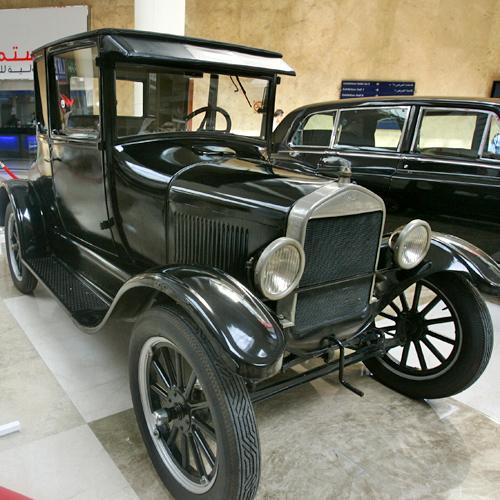
Shouja, Shaikh Hamdan Bin Hamdan Al Nahyan collection, on display at the Dubai Motor Show.

Trains of thought
Trains of thought
Trains of thought
November 17, 2007 Posted by Sanjay Bangar at 12:57 AM in Offbeat
Being a Railwayman people often ask me several questions about train travel. How much time have you spent travelling in trains? Which is the longest journey? And so on.
I’ve travelled an estimated 200,000 km by train in 15 years of first-class cricket. Nowadays, because of the BCCI’s tie-up with airlines companies, most teams travel by air. It takes away the charm of the journey because in a flight everyone is only keen to get to the destination. The whole pleasure of a journey is lost. Railways is probably the only team to still use trains throughout the season.
The Indian Railways is the largest mass transport system operating in the world in terms of travellers per day and every Indian has memories of train journeys. For us cricketers, it’s no different.
During journeys there’s a lot of interaction between players, a fact crucial in a sport like cricket. Long-term friendships are formed when one interacts with colleagues, understanding each other’s background, education, siblings and family. These journeys made team bonding much easier. One understands there is more to life than just cricket.
Our experience of trains usually corresponds with the progress made in our careers. Earlier when a player used to get picked for Under-15, Under-17 or his University team, he used to travel in second class compartments. When he progressed to the Ranji Trophy almost all players travelled second AC.
If one made it to the zonal team (for the Duleep or Deodhar Trophy) the tickets are given by organisers but with no guarantee of berth confirmations. I remember vividly a journey in 2000 when ten players of a Central Zone team were booked in an AC compartment from Kanpur to Delhi after a Duleep Trophy match. But only one ticket was confirmed. It was on that one ticket, with some help from co-passengers that we managed to spend the night in the most awkward conditions. It caused a lot of discomfort to all concerned.
You also need to endure some really long journeys. My longest journey has been for 52 hours from Guwahati to Mumbai in 1999. It was after a Duleep Trophy game and I was all by myself, going back home. I spent close to three nights in the train and it passed through so many unknown stations. It was a very lonely experience.
Another problem relates to the massive kit-bag and luggage we need to carry to games. The trains usually tend to be jam-packed and there isn’t much place to store our belongings. In hindsight one acknowledges the tolerance, humility and acceptance of co-passengers, which made it possible for us to travel. People usually used to grant us special status by making adjustments once they realised we were cricketers.
Teamwork also came to our rescue on many occasions. If we had to alight at a station where a train stops for a very short period, we used to form a queue from the seats to the exit and pass on the luggage from one guy to the other. It not only saved us paying exorbitant amounts of money to the porters but also had another big advantage. You could very easily separate a selfish character from a selfless character during these journeys. A selfish character was one who would turn a blind eye once his luggage alighted on the platform.
A related aspect is the allotment of room partners when teams are put up in hotels. Most coaches and managers try and work it out on the following basis – either it’s a senior with a junior to enhance the learning process, or it’s openers sharing a room, fast bowlers being put together, or (in Railways’ case) players being grouped according to their zones. It produces some interesting situations when one member of the room has had a great day and the other a bad one. It’s tough to party when you’ve score a big hundred but seen your room-mate failing on the day. It’s those times when you understand what a great leveller cricket can be and how failure isn’t too far away if you lose focus.
ONGC Mittal under scanner in Nigeria
ONGC Mittal under scanner in Nigeria
17 Nov, 2007, 0128 hrs IST,Rajeev Jayaswal, TNN
RIYADH: ONGC Mittal Energy (OMEL) — a joint venture between ONGC and LN Mittal group — seems to be have run into trouble in Nigeria. The new government in that country has decided to review oil block contracts awarded by the previous regime following allegations of irregularities.
According to top Nigerian officials, there are apprehensions over licences won by OMEL.
Based on the apprehensions, the company’s deals in the country are under scanner. According to official sources, the deals under review include two blocks — 285 and 279 — awarded to OMEL.
Confirming the move to ET, Nigeria’s minister of state for energy (petroleum) Odein Ajumogobia said, “We are reviewing award of blocks by the previous government. There were complaints about the procedure used in awarding some of the blocks, and we are now investigating that.”
He, however, did not specify the identity of the blocks. Official sources, however, said that the two blocks awarded to OMEL are also under review, he said.
While there was no formal confirmation about the identity of the blocks and the companies involved, industry sources said some domestic and foreign entities that obtained licences to explore oil in the energy-rich African nation through ‘back door’ may end up losing them.
OMEL had won rights to explore in OPL 279 and OPL 285 in 2005 after committing investment of $6 billion in an 1,80,000-barrels-per-day greenfield refinery, a 2,000 mw power plant and a railway line running from east to the west of Nigeria. OMEL paid a signature bonus of $50 million for OPL 285 and $75 million for OPL 279.
OMEL was given preferential bidding rights for another block (OPL 250) in another licensing round that happened just before the change in the government. The company, however, did not submit a bid for the block.
Preferential bidding rights are like the first right of refusal where the company has the right to match the highest bid for the block and bag the exploration acreage. It is understood from the sources that OMEL did calculate the political risk and opted out of the deal.
Iraq flares up on Reliance deal with Kurdish govt
Iraq flares up on Reliance deal with Kurdish govt
16 Nov, 2007, 0056 hrs IST,Rajeev Jayaswal, TNN
RIYADH: Iraq has threatened to bar Reliance Industries (RIL) from oil deals for signing oil block contracts in the Kurdish region. RIL recently executed two production-sharing contracts (PSC) with the Kurdistan Regional Government (KRG), covering petroleum exploration activities in the Rovi and Sarta blocks in the Kurdistan region of Iraq.
Iraqi oil minister Hussein Al-Shahristani said on Thursday that Iraq’s federal government does not recognise the deal. “The contracts have no standing with the Iraqi government. The companies that have signed the contracts with the Kurdish region may compromise chances of getting future contracts in Iraq,” he replied on the sidelines of the third Opec summit when asked about the RIL oil deals.
The oil deals seem to have angered Baghdad, which opposes a unilateral crude oil block selloff in the absence of a national oil law. The federal government of Iraq had urged the regional government of Kurdistan against signing an oil deal till the new national oil law was passed in Iraq Parliament.
Reacting to the development, RIL said its agreement with the autonomous KRG conformed to law. “The two exploration blocks in northern Iraq in Kurdistan region, for which we have signed the agreement, are within the legal framework,” RIL said in a statement issued here.
“RIL has always maintained highest cordial relationship with the government of Iraq and all other stakeholders in the countries where we operate. We will continue to do so in future,” the statement said.
Al-Shahristani said any independent deal with KRG would face difficulty in exporting oil from the region as Iraq would not allow its oil to be exported. Kurdistan lies in the north of Iraq and does not have a port for export of oil. Companies producing oil in the region have to necessarily go to southern ports that come under the administrative control of the federal government of Iraq.
On November 8, RIL announced it had executed two contracts with KRG covering petroleum exploration activities in the Rovi and Sarta blocks. Under the terms of the contract, Reliance Exploration & Production DMCC, a wholly-owned subsidiary of RIL, would serve as the operator. The blocks measuring 450-500 sq km are highly prospective and have almost 80% oil-bearing structure.
According to sources, RIL is likely to make a discovery soon. The company had paid a signing amount of $15.5-17.5 million for the blocks. While announcing the deal, RIL president (international operations) Atul Chandra had said, “We are pleased to reach an agreement with the KRG on the two PSCs.
We hope and believe this will be an investment that will provide long-term benefits to all the stakeholders.” RIL has established a local office in Erbil and has undertaken extensive geological work over the past year in the Kurdistan region.
Yoga as you like it: Mind that headache

Yoga as you like it: Mind that headache
By Bharat Thakur, Special to Unwind
Published: November 09, 2007, 23:39
Migraine debilitates one for hours and, although there is no cure, yogic asanas can help reduce the pain.
Migraine is a vascular headache caused by the inflammation and irritation of the nerve endings. This results from the expansion of the blood vessels on the surface of the brain.
Acute pain may be felt on one or both sides of the head, at the back of the neck, around the eyes or in the face or in the sinuses.
This pain can be severe and, if left untreated, can last from as little as four hours to even 72 hours.
The pain is often preceded by a sensory warning sign or the seeing of an aura, flashes of light or getting blind spots. A tingling sensation in the arms and legs may also serve as a warning.
Triggers for migraine attacks vary from person to person. The factors causing it include stress, certain foods, weather changes, odours, change in sleeping habits and hormonal fluctuations.
Yoga therapy for migraine generally focuses on prevention, which also includes stress reduction.
Yoga can also help reduce the headache by providing relief to sensory overload and relaxing your mind.
Pranayama for migraine
Yoga places much importance on breathing. Not only do pranayamas strengthen the lungs and improve oxygen levels, they also help restore and gradually balance the flow of prana or vital energy to the brain and soothe the nerves.
Kapalbhati pranayama
Exercise
Sit back on your heels, place palms on knees and hold the back straight.
Exhale forcefully and rapidly in quick successions through the nose, pulling the stomach towards the spine as you exhale. Inhalation is automatic and should be passive between every two exhalations.
Practise 30 to 50 inhalations at a stretch.
Repeat 3 times.
Nadi shodhana pranayama (Alternate-nostril breathing)
Exercise
Sit in padmasana. To do that, sit with legs stretched out and back held straight.
Bend one leg and place the foot on opposite thigh. Bend the other leg and place the foot on the thigh of the bent leg. Place your hands on your knees.
Curl the forefinger and middle finger of your right hand. Close your eyes and practise deep breathing.
Close your right nostril with the thumb and place the ring finger between eyebrows. Inhale to a count of 5.
Now, close the left nostril with your ring finger. Hold your breath for a count of 10.
Raise your thumb between eyebrows and to a count of 10 slowly exhale through right nostril.
Now, breathe in again through the right nostril to a count of 5. Close the right nostril with your thumb and hold your breath to a count of 10. Place ring finger between eyebrows and exhale through left nostril to count of 10.
Repeat complete cycle.
Kriyas for migraine
Kriyas rid the body of toxins and strengthen the 72,000 nadis which are energy channels in our body and form a kind of electrical circuit.
Jal neti
Exercise
Use a neti pot or a long-stemmed teapot.
Add 1 teaspoon salt to 1/2 litre lukewarm water and fill the neti pot.
Stand relaxed with legs apart, bend forward and tilt your head to one side as shown. Keep the mouth open so you can breathe through it.
Place the nozzle in the nostril that is facing upwards and slowly pour water into it. The water will flow out through the other nostril.
Straighten up, blow nose gently to remove any mucous.
Now, close one nostril and rapidly exhale 10 to 15 times through the other.
Repeat with other nostril.
Lastly, inhale and exhale rapidly 10 to 15 times with both nostrils open.
Inverted asanas for migraine
During migraine there is decreased blood flow to the brain. Inverted asanas help loosen the cervical and shoulder areas and also increase blood flow to the brain.
Caution: Those suffering from hernia, high blood pressure, heart conditions and severe back problems should not carry out these exercises.
Sarvangasana (Shoulder-stand pose)
Exercise
Lie flat on your back, arms by the sides. Slowly raise both legs to a 90 degrees position.
Lift your hips and back off the floor and bring the legs towards your head, supporting the hips with your hands.
Slowly lower the hands and bring legs to 90 degrees. Support the whole body on shoulders so that the trunk and legs are in a straight line. Keep your chin pressed to the chest.
Hold for 30 to 60 seconds.
Lower your back and legs without jerky movements.
(More asanas on migraine next week)
– Bharat Thakur is the founder of Bharat Thakur’s Artistic Yoga. For questions on yoga, write to dubai.artisticyoga@gmail.com. For information, log on to http://www.bharatthakur.com
Change in rules for shifting jobs
Change in rules for shifting jobs
By Rayeesa Absal and Wafa Issa, Staff Reporters GULF NEWS
Published: November 16, 2007, 00:10
Abu Dhabi: The Ministry of Labour has amended rules for sponsorship transfer allowing expatriates to change their jobs without having to spend one year with their original sponsors, a senior official said on Thursday.
Humaid Bin Deemas, Assistant Undersecretary at the ministry, told Gulf News that earlier an exemption from the minister was needed in order to be able to transfer sponsorship before completing one year.
“However, since two weeks exemptions are no longer needed but the NOC from the previous sponsor is still a prerequisite and the applicant will have to pay a fee of Dh500 for each month remaining to complete this mandatory period. The procedure could be done at the customer service counter at the ministry and applicants no longer need to approach the minister’s office,” said Bin Deemas.
Khalil Khoury, the Director of Work Permits Department, said as per the rule, anybody wishing to transfer sponsorship before completion of the mandatory period specified by the MOL would have to pay a fee of Dh3,000. Apart from this a fee of Dh500 would have to be paid for each month remaining to complete this mandatory period.
He added that the cost of sponsorship transfer depends on the qualification of the concerned employee. For instance, a person with Master’s degree would have to pay Dh1,500 for approval while a person with low educational qualification will have to pay Dh 5,000 for the same. The cost of approval of internal work permit to move to another company owned by the same sponsor is Dh500.
New counter
“Even before the new rule was implemented, people could transfer their sponsorship without completing the mandatory period with their sponsors, but this required the approval of the Assistant Undersecretary. With the new rule in place, people can complete the sponsorship transfer procedures at the counter itself, after obligatory fines are paid,” Khoury said. A new counter has been opened at the MOL to accept applications.
The original sponsor should sign in the application for cancellation, which means the consent of the sponsor is essential to facilitate the transfer process.
Not many people are availing this facility, said Khoury, citing high costs as the reason. “We have not received many requests to facilitate sponsorship transfer because of the high costs involved. Labourers and workers in the low-income group would find it hard to shell out so much money for this purpose.”
Two amazing children
Two amazing children
CD Verma New Delhi, November 16, 2007 for The Hindustan Times
They were two youngsters, a brother and a sister. The boy aged 12 and the girl aged 15, were in school uniform. They were carrying heavy school satchels.
They behaved like children of respectable parents. Like us, they too were waiting for the bus. A state bus, bound for Chandigarh, arrived. The bus ploughed through the crowd, scattered the passengers helter-skelter and came to a screeching halt.
The commuters charged at the bus and scampered into it. In the flurry and scurry the two children patiently waited for their turn. They were the last to board. The youngsters occupied the seat in front of me. The girl handed over a 50-rupee note to me to pass it on to the conductor via other passengers, for two tickets to Ashram, New Delhi.
The note was handed over by commuters to the conductor, who in the same way dispatched the tickets and the balance amount back to the children. The gir1counted the balance returned by the conductor, looked at the value of the ticket, and counted the balance again.
Discovering that the conductor had returned Rs 1.50 in excess, she directed the younger brother to return the excess amount to the conductor The boy got up from his seat, slowly waded through the crowd of passengers, reached the conductor and returned it. The conductor nodded his head in appreciation.
All this while I watched the two in admiration. And so did the crowd. However, after some time the girl again started counting the money. On recalculation, she found that the conductor had in fact paid Rs 2.50 and not Rs 1.50 in excess.
She once again asked her brother to go to the conductor. The boy returned another rupee to the conductor. Their exemplary conduct caused a big whisper of approbation among the commuters who marveled at the conscientious youngsters. Spontaneously, I caressed their heads.
The kids responded with “Thank you.” Then they got down at Ashram, leaving us philosophising about the moral ‘sanskars’ the children might have imbibed from their parents.
Idli boy steals the show
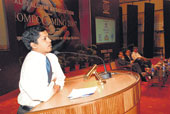
Idli boy steals the show
– Entrepreneur holds aspiring managers in thrall
from The Telegraph, Culcutta
Jamshedpur, Nov. 18: A packed Tata auditorium listened with rapt attention to Sarathababu Elumalai, who was here to share his rags-to-riches story during the XLRI annual Homecoming ceremony.
The youth from Chennai, an IIM graduate who refused a brilliant job to start a catering service, said: “I was born in a family of five children in Chennai and my mother worked with the government’s mid-day meal schemes. The money was not sufficient to sustain the large family, so she set up a small idli shop near our home in one of the slum areas of Chennai.”
The founder of FoodKing Catering Services, which today serves home-made hygienic food to offices in Ahmedabad and Goa, recalled how in Class IX his teachers had to persuade him hard not to quit studies.
From selling idlis on the pavements of Chennai to binding books for students, Elumalai had done it all till he reached BITS, Pilani. “I had never heard of the institution as we never got such an exposure. Someone told me that if I study there I will get a job,” he said.
After the engineering degree and a three years’ stint in the corporate world, Elumalai moved to IIM (A).
“The kind of salary and position an IIM graduate is offered is very difficult to turn down. But if I had not taken such a decision, I would have never been able to start my business,” he said.
The business, which started with a mere Rs 5,000 and a small kiosk at Ahmedabad, has today spread to over six branches employing over 175 people whose only job is to supply nutritious home-made food to corporates.
“It was an idea that I chanced upon during my internship at Pilani when I learnt that 30 per cent of the country’s population go to bed without food,” he said.
“More than working for somebody I wanted to give jobs to people like me, who did not have other means of livelihood.”
Soon his company would venture into other cities and provide employment to at least 15, 000 people.
And while Sarathababu surprised everybody with his stories, XLRI today too put its first step in the same direction. After almost three years of negotiations, the much talked about Social Entrepreneurship Trust (SET) was formed today.
Aimed at funding and supporting innovative social entrepreneurship ideas, the trust which is the first of its kind would also work for different tribal upliftment projects in Jharkhand and would provide scholarships to tribal youths for further studies.
While B.L. Raina, managing director, Tinplate is the founder trustee and chairman of the trust, XLRI director, N Caisimir Raj will be the director of the trust. In total the trust would have about seven corporate heads as trustees from, across the country including a few XLRI faculty members.
Kerala and Dubai formally launch Smart City project
Kerala and Dubai formally launch Smart City project
By Akhel Mathew, Correspondent GULF NEWS
Published: November 16, 2007, 18:14
Kochi: Smart City Kochi, the Kerala government’s most ambitious IT venture, was formally launched by the Kerala Chief Minister V.S. Achuthanandan and Dubai-based Tecom Executive Director Fareed Abdul Rahman.
Achuthanandan and Rahman laid the foundation stone for the project. Tecom Executive chairman Ahmad Bin Byat, however, could not attend the function.
Estimated outlay
The project, which involves an estimated outlay of Rs16 billion (Dh1.5 billion) and is being established on about 246 acres at Kakkanad in Kochi city, is expected to provide about 90,000 direct jobs and have a built-up space of 8.8 million square feet within a decade.
The entire project is being visualised on the lines of Dubai Internet City and the Dubai Media City, officials said.
Achuthanandan said this was the first major IT infrastructure project being developed by a public-private partnership in Kerala after two successful IT parks set up in the public sector – the Technopark in Thiruvananthapuram and the Infopark in Kochi.
Achuthanandan said the project would provide jobs to the local youth.
He added there were several enquiries from investors following the signing of the agreement with the Smart-City Dubai authorities.
Rahman said SmartCity Kochi was expected to be “a significant hub of excellence in the knowledge-based industry”. He added the SmartCity in Kerala and another being set up in Malta would be key hubs of the global SmartCity concept.
He praised Kerala’s vast talent pool and appreciated the state government’s support for IT projects.
 ClicksandWrites
You must be logged in to post a comment.