UAE
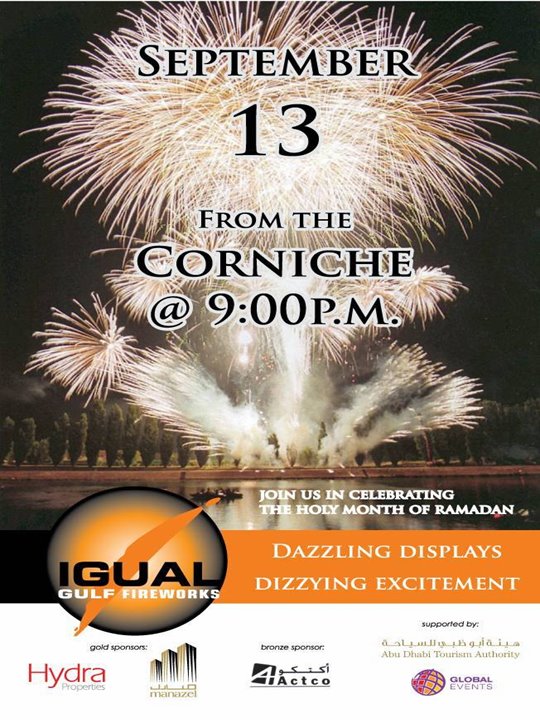
Ramdan Fire works at Abu Dhabi Corniche














 In order to mark the beginning of the Holy month of Ramadan, a display of fireworks was organised at the Abu Dhabi Corniche by the Abu Dhabi Tourism authority. Enjoy a few moments of that wonderful event.
http://www.youtube.com/get_player
Why we fast in Islam

Why we fast in Islam
By Najla Al Awadhi, Special to Gulf News Published: September 12, 2007, 23:38
You mean you can’t even drink water?” a friend asked me this question with a bewildered look on her face, she couldn’t believe that fasting during the month of Ramadan meant I would not drink or eat from sunrise to sunset for an entire month.
As my friend stood there looking bewildered, I thought, is it really that hard to believe that Muslims refrain from food and drink during the fast? We fast the whole day knowing that we will be ending our fast with the setting of the sun, and in the context of a world where many live in poverty, where hunger and thirst for many become a way of life, our fasting really is a simple duty. This is the spirit of Ramadan, it is about understanding the feeling of hunger, it is about building empathy, self-restraint and piousness.
For myself, and for all devout Muslims, Ramadan holds such deep teachings; it is not a month about food, or about socialising in the evenings in Ramadan tents, or watching Ramadan shows on TV, Ramadan is about learning compassion, it’s about “cultivating our piety”.
What is Ramadan?
Ramadan is the ninth month of the Islamic lunar calendar (hijri calendar), we consider it to be the most holy and spiritually-beneficial month of the Islamic year. Ramadan is the month when the first verses of the holy Quran were revealed.
Fasting in the month of Ramadan is one of the five pillars of Islam, and all Muslims who are mentally and physically able and that have reached puberty are required to fast during this month.
Those who are sick, travelling, pregnant, menstruating or nursing women, are not required to fast, however, those who are unable to fast for these reasons must make up the days they missed fasting upon recovery or return, or after weaning.
In the month of Ramadan, we begin the fast with the sunrise and end the fast with the sunset, or with the fourth Muslim prayer of the day (maghrib prayer). The fast is ended each evening with a meal called iftar and the last meal we have is in the morning right before dawn which is called suhur.
Spiritual experience
The fast of Ramadan is not about physical deprivation, it is meant to be deeply spiritual experience. In the holy Quran it is stated that the purpose of the fast is to develop a quality which in Arabic we call taqwa.
Taqwa can be defined as, “worshipping God as if you see Him, because if you don’t, He sees you”. Taqwa is about cultivating an awareness that God is always watching. For example, when I fast nobody but God knows if I actually have observed the entire fast or if I secretly cheated. So in order to resist the temptation to cheat during the fast, I must remember that God is always watching and will see any lapse.
This sense of taqwa is carried over into other areas of our lives, hence by fasting we foster a habit of piousness, self-restraint, and an inner-balance. For devout Muslims Ramadan is a month of worship; prayer and recitation of the Quran during this month are pivotal, and it is common practice during this month to provide food/iftar to others especially the poor on a daily basis.
Today is the first day of Ramadan and over a billion people will be observing the fast during this holy month.
Whether you will be fasting or not, I hope that the lessons that Ramadan teaches of taqwa, compassion, piousness and charity will remain with you, and not just during this holy month, but I hope that you will carry these lessons with you every day of your life.
Najla Al Awadhi is a member of the UAE parliament (the Federal National Council), Deputy CEO Dubai Media Incorporated, and General Manager of Dubai One TV.
DNRD will work all day during Ramadan
DNRD will work all day during Ramadan
By Mary Nammour / KHALEEJ TIMES 13 September 2007
DUBAI — The working hours of the Dubai Naturalisation and Residency Department (DNRD) during the holy month of Ramadan will be from 9am to 5.30pm while the Follow-up and Investigation Section (FIS) in Jumeirah will receive amnesty seekers from 9am to 2pm and from 9pm to 2am daily. This was announced yesterday by DNRD Director Brigadier Mohammed Ahmed Al Marri.
“Our new work timings have been fixed to cope up with the potential rush that might come up as a result of the shorter working hours during Ramadan. We also want to make sure that processing the applications of amnesty seekers will continue to be as smooth as possible,” Brig Al Marri said.
“DNRD staff will also be working from 9am to 5.30pm at the external branches, including the passport sections at the Jebel Ali Free Zone and the Naturalization and Residency Sections at Bin Souqat Shopping Centre, Abu Hail and Dnata,” he added.
He also noted that the new timings would be applicable to the customer service departments, including the Entry Permit for work, visit and tourist visas, the Residence Sections, the Naturalization and Passport Section, the Establishments Sections, online services and the e-gate for both individuals and establishments.
Visitors found working will face ban for life
Visitors found working will face ban for life
By Ahmed Abdul Aziz and Lana Mahdi/ KHALEEJ TIMES 13 September 2007
ABU DHABI — Expatriates who entered the country on visit visas and are found working in companies will face a life ban, Assistant Under-Secretary in the Ministry of Labour (MoL) Obaid Rashid Al Zahmi stated yesterday.
“The ministry is studying imposing punishments on violators of labour rules and finally decided that visit visa holders, if found working in the country, will face a life ban,” explained Al Zahmi.
The decision was taken after MoL inspectors found that people on visit visas were still working in the country.
During the inspection campaign, which began immediately after the amnesty period ended on September 2, the inspectors found more than 250
companies violating the law by employing visit visa holders.
Al Zahmi pointed out that the companies must abide by the law when they need to import manpower.
“They must apply for the renewable temporary work permit of three-month validity, or get employment visa,” he added. This will protect the labourers’ rights because if they work on a visit visa they cannot demand their dues and rights.
The workers who come on employment visa or temporary work permit can go to the MoL and demanding their rights, including cost of medical treatment in case of an accident.
In another important announcement yesterday, Al Zahmi said the ministry will from January 2008 stop issuing work permits to companies which do not open bank accounts for their employees.
Opening of bank accounts for workers is being made compulsory to ensure protection of workers’ rights, he added.
Meanwhile, the Deputy Director of Naturalisation and Residency Department in Al Ain, Col. Nasir Al Awady Al Minhaly, said that during Ramadan the department will work in two shifts from 9.00am to 2.00pm and 2.00pm to 5.00pm.
Abu Dhabi unveils 2030 growth plan
Abu Dhabi unveils 2030 growth plan
(Wam) 13 September 2007
ABU DHABI — The President, His Highness Shaikh Khalifa bin Zayed Al Nahyan, was briefed on the Abu Dhabi development plan until 2030 at his Bateen Palace here yesterday.
General Shaikh Mohammed bin Zayed Al Nahyan, Crown Prince of Abu Dhabi and Deputy Supreme Commander of the UAE Armed Forces, attended the briefing.
Shaikh Khalifa expressed his satisfaction about the development plan of the capital city, Abu Dhabi, and implementation of work projects to develop the country at par with the developed countries of the world. He listened to the detailed briefing about the plans and objectives and how to execute them by Khaldoun Khalifa Mubarak, Chairman of the Abu Dhabi Executive Authority.
The move is in response to the need for a well-studied, accurate planning amid huge development and growing population of the Abu Dhabi emirate.
Mubarak said the “plan is based on sustainable development that reflects economic and environmental situation and preservation of the natural environment of coasts and deserts. It also covers transport and communication networks as per international standards and in line with the values and traditions of the UAE”.
He said that the plan has been set for a city that will be inhabited by three million people by year 2030 and with infrastructre that meets such a growth, adding that the plan includes construction of metro and internal train network.
“The interior part of the city will be expanded through road network paralell to the islands to create a new commercial area on Al Sowah and Al Reem Islands,” Mubarak said.
After the briefing, Khalifa issued instructions on provision of all means of comfort, including more parks, convenient transport, preservation of the UAE environment and making the UAE an attractive cultural, commercial and tourist hub.
Ramadan begins tomorrow
Ramadan begins tomorrow
By a staff reporter / KHALEEJ TIMES 12 September 2007
ABU DHABI — The holy month of Ramadan begins tomorrow and Thursday, September 13, will be the first day of the month of fasting, the moon sighting committee announced yesterday.
The committee said in a statement following its meeting held under the chairmanship of Mohammed bin Nakhira Al Dhahiri, Minister of Justice, that Wednesday, September 12, will be the 30th day of Shaaban.
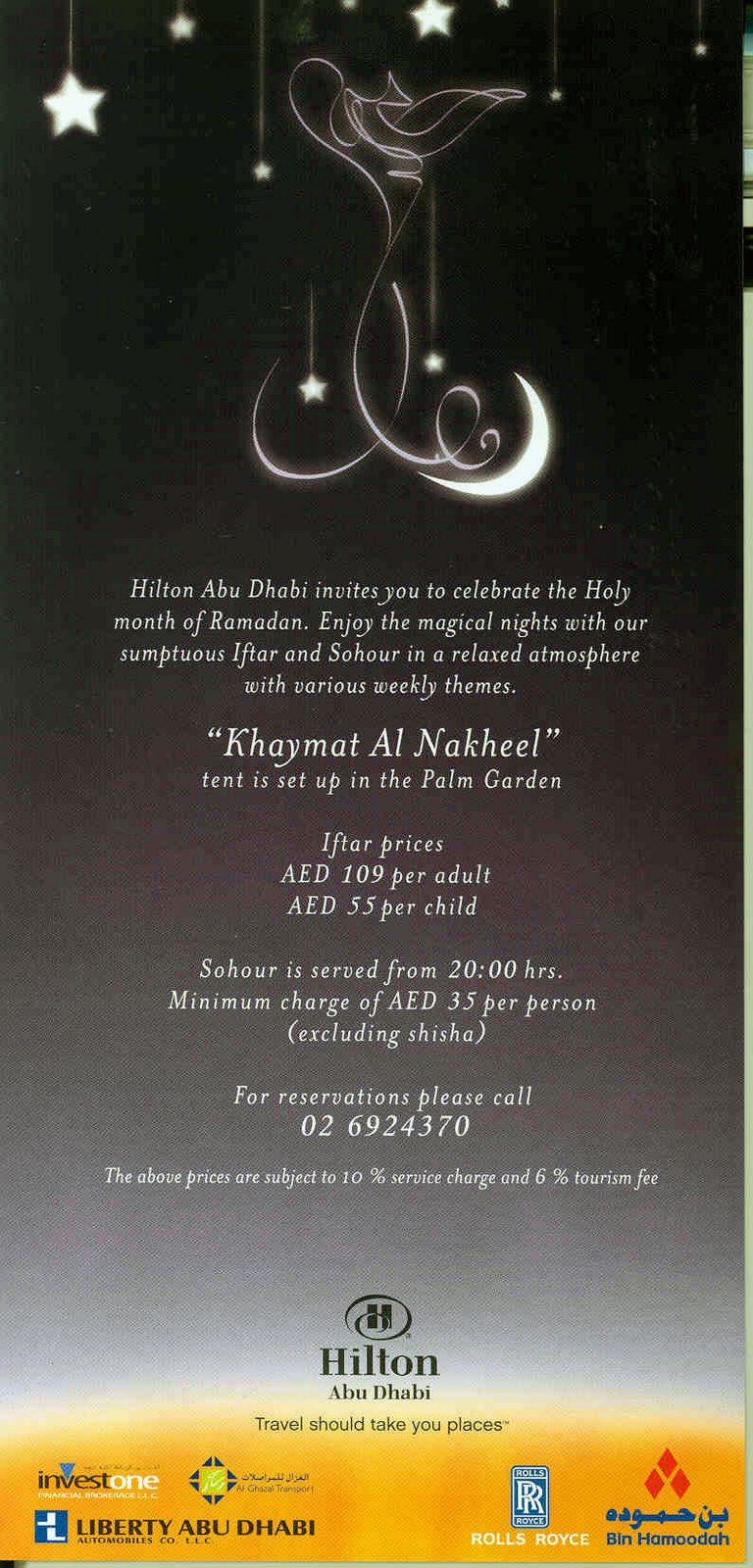
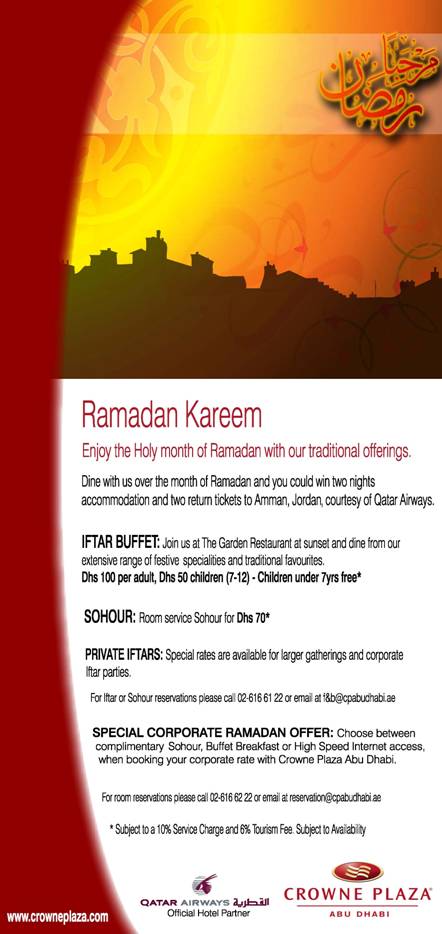
Ramadan Special offers
30% of women in UAE have osteoporosis
30% of women in UAE have osteoporosis
By Dina El Shammaa/GULF NEWS 05 September 2007
Abu Dhabi: Around 30 per cent of women in the UAE suffer from the common bone disease osteoporosis, said Dr Shivanand Shetty, an orthopedic surgeon at the New Medical Centre.
The age of onset is around 50-years-old. Osteoporosis is a major risk factor for fracture. Dr Shetty spoke to Gulf News regarding reasons behind developing osteoporosis. Risk factors that enhance osteoporosis include smoking, excessive alcohol consumption, lack of calcium in one’s diet and lack of exercise.
However, osteoporosis can be avoided at an earlier stage, said Dr Shetty. Until the age of 30 there is constant turnover of the bone in the skeletal system. Bone formation and resorption takes place at an equal rate.
Diet
Peak bone mass (adequate deposit of calcium in the bone) is reached by the age of 30. To achieve peak bone mass one needs a diet adequate in calcium, vitamin D and good exercise during the early phases of life. Osteoporosis runs in families; having a parent or sibling with osteoporosis puts a person at greater risk.
“I advise patients to drink a lot of milk and consume dairy products as well as green vegetables. One whose diet is not adequate in calcium requires calcium supplements and regular exercise,” said Dr Shetty.
One of Dr Shetty’s patients, Shahnaz Ihsan, a housewife, aged 56, spoke to us regarding her experience with osteoporosis.
“Exactly three years ago I started to feel immense pain in my back, my bones were cracking and I visited the doctor who prescribed medicine .. and now feel so much better,” she said.
Ihsan advised other woman to seek medical help if they start to suffer menopausal
symptoms.
Do you wish to know more about Osteoporosis? Read on:
Osteoporosis
Normal bone is dense and strong. Bones with osteoporosis become porous because of deterioration of the bone tissue, which leads to bone fragility and increase in fracture risk.
Bone undergoes a process of constant remodeling consisting of the breakdown of old bone and re-building of new bone. This resorption (by osteoclasts) and formation (by osteoblasts) occurs at an approximately equal rate thereby maintaining strength of the entire skeleton.
Around the ages 30-35, peak bone mass is attained and the process of bone loss begins. The greater the bone mass accrued prior to this time, the less chance exists for complications from bone loss later.
Osteoporosis is the most type of bone disease and affects both men and women. The condition is characterized by low bone mass, loss of bone architecture, and reduced bone strength. Because people with osteoporosis have brittle bones, they are at increased risk for developing fractures. The most common types of fractures in people with osteoporosis include spinal vertebral fractures, hip fractures, and wrist fractures.
There are two types of osteoporosis:
Primary osteoporosis – bone loss that occurs as a consequence of the normal aging process and most often affects postmenopausal women.
Secondary osteoporosis – bone loss that occurs as a consequence of other factors such as a chronic medical condition, nutritional deficiency, or certain types of medications.
There is currently no cure for osteoporosis. The best treatment available for osteoporosis is prevention. The goals of treatment of patients with osteoporosis include:
To slow the progression of the disease once it has started.
To minimize the risks of complications that may cause pain and reduction in function.
Exercise and attention to safety issues help to maximize mobility and reduce the risk of falls and fractures.
Currently, in the United States, several medications are approved by the U.S. Food and Drug Administration (FDA) for the prevention and treatment of osteoporosis and are considered as first-line medications. These medications include:
* Biphosphonates
* Raloxifene
* Nasal calcitonin
* Teriparatide

Another fire in Jebel Ali

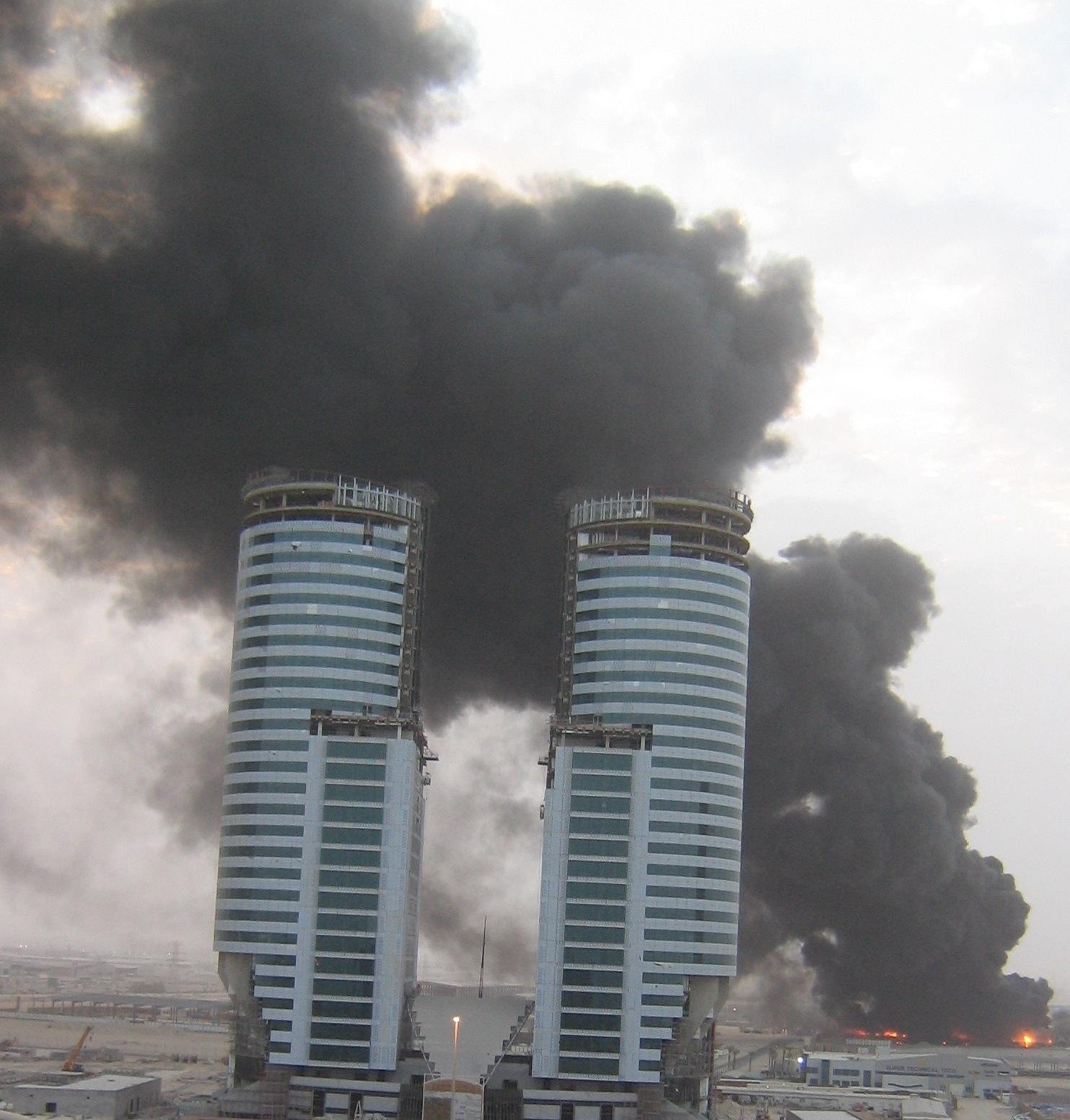

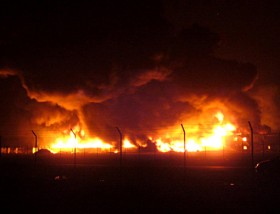
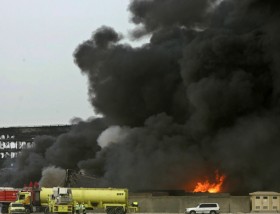
Another fire in Jebel Ali
By Alia Al Theeb, Staff Reporter / GULF NEWS Published: September 10, 2007, 15:15
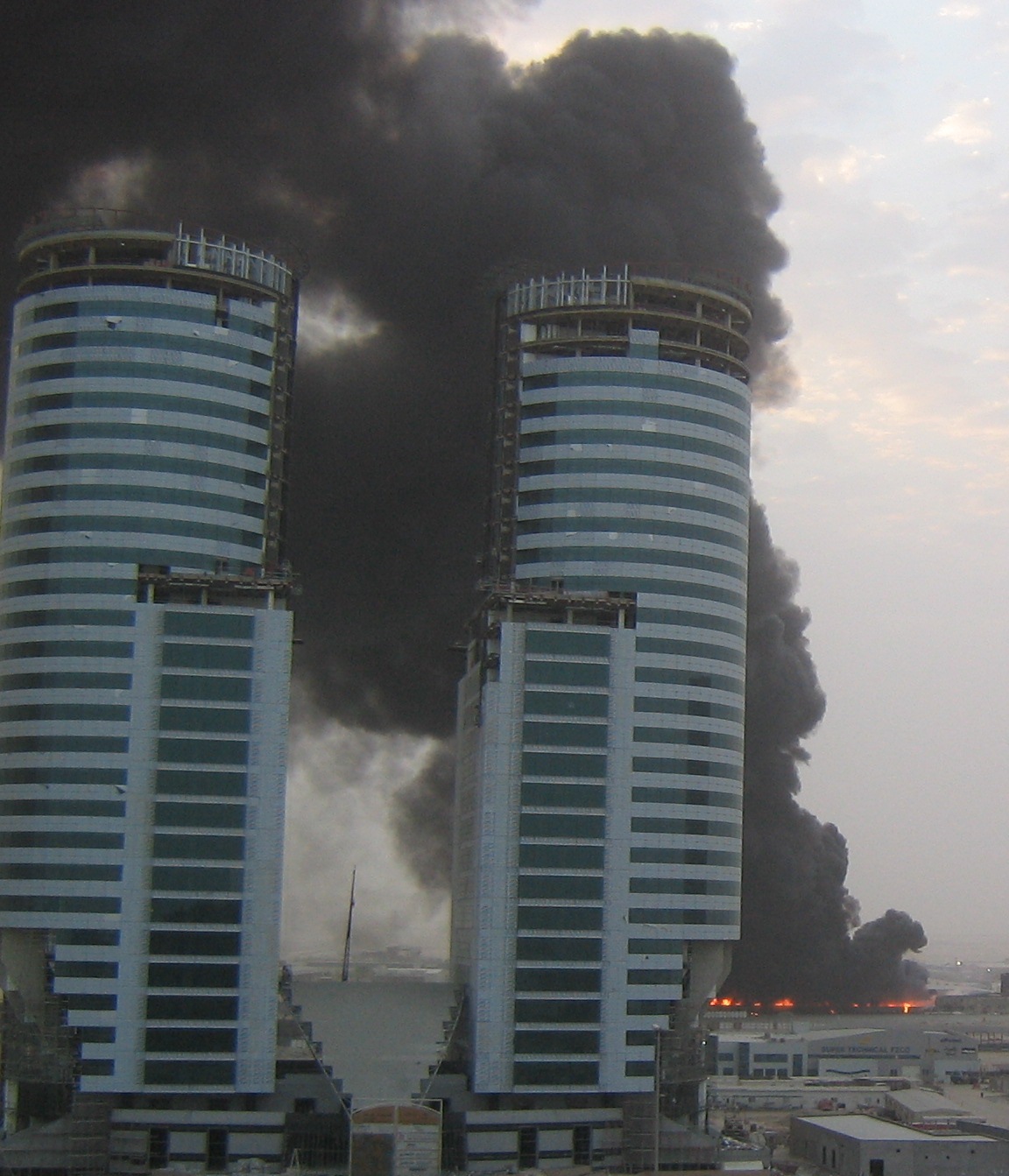
Dubai: A plastic packaging factory was gutted in a massive fire that broke out in its premises in Jebel Ali Industrial Area 3 early yesterday morning.
No one was injured in the incident.
The fire was brought under control by civil defence and fire fighting teams from Al Quoz, Jebel Ali Jumeirah and Al Karama more than three hours after the blaze started.
The cause of the fire at the United Flexible Packaging Co. Ltd. in Jebel Ali Free Zone (South Zone) was unknown.
Preliminary investigations revealed that the fire started in the middle of a hall where a machine and plastic materials were stored. The fire spread to the offices located at the entrance of the factory.
Dubai Civil Defence’s operations room said it received a report from Dubai Police’s Operations Room at 3.17am regarding the fire. Firefighting teams from Al Quoz stations arrived to the scene at 3.43am. The factory for plastic and packaging contained tonnes of flammable materials.
Brigadier Rashid Thani Al Matroushi, Director of Dubai Civil Defence, supervised the firefighting operation which lasted two hours and 48 minutes.
The fire was brought under control at 6.39am. The fire gutted machines, plastic materials as well as a container loaded with plastic materials. The company manufactures and exporters flexible laminates, laminated rolls, pre-formed pouches and pre-punched lids.
Ramadan – Understanding the true spirit of the fasting month

Understanding true spirit of the fasting month
By Samir Salama, Bureau Chief GULF NEWS Published: September 10, 2007, 00:16
Abu Dhabi: Feasting their eyes on cuisine on dinner tables during Ramadan shows how far removed Muslims are from the true spirit of this holy month.
The month of fasting is in fact a time of giving, patience and tolerance for Muslims.
For more than a billion Muslims around the world, it should be the time for devotion to God and self-restraint, when communal nightly prayers are conducted and the basic teachings of Islam are emphasised and Ummah (Islamic nation) consciousness is heightened.
As the ninth month of the lunar Islamic calendar, Ramadan comes 11 days earlier each year on the Gregorian calendar and the duration of the fast changes depending on which season the holy month falls in.
The start of Ramadan, as that of all Islamic months, is based on the sighting of the new moon, the hilal, which is why the crescent is often used as an unofficial symbol of the month. The moon sighting is also the reason that the start of Ramadan differs from one country to another, but many opt to follow Saudi Arabian sightings to be able to mark the holy days together.
Five pillars
As one of the five pillars of Islam, fasting during Ramadan, which is considered one of the highest forms of worship, is obligatory for those Muslims past the age of puberty who are mentally and physically fit and not travelling, as long as it does not cause them physical or mental harm.
Those who cannot fast during Ramadan, owing to health or other reasons, may fast in other months, or feed the poor.
But a Ramadan fast is not a simple abstention from food, drink and sex during daylight hours.
A fast consists of a true and verbal intention that must be recited, as well as a package of dos and don’ts which are specifically emphasised during the month.
Fasting, or sawm (literally refrain), which did not become obligatory until 624 AD, offers an opportunity for Muslims to cleanse the body and mind.
It promotes the principle of sincerity by keeping the individual away from arrogance.
Among the greatest benefits is the lesson in self-restraint and discipline that could be carried forward to other aspects of a person’s life, such as work and education.
The lengthy nightly prayer called Taraweeh is an important element of rituals during the month.
Since it is a time of piety and high religious consciousness, it would be considerate for non-Muslims to dress and behave modestly, avoiding animated behaviour that could cause offence.
Those who want to understand the holy month better could consider involving themselves in the spirit of the month, which would be welcomed by most Muslims. Saying ‘Ramadan Kareem’ to Muslims and attending a fast-breaking feast, or iftar, would be appreciated by most.
Work hours in the private sector are shortened by two hours for Muslims and non-Muslims. The public sector will function from 9am to 3pm.
Live music is banned through the month.
Shopping malls and supermarkets are expected to be open late at night.
A typical day
A typical day of fasting begins with waking up before dawn to have a meal called the suhoor before the start of the fasting day. At sunset, Muslims usually break their fast upon the call for Maghreb (sunset) prayers with another meal called iftar. Prayers are conducted five times through the day, as they are on all days, and an extra set of prayers called Taraweeh is conducted after Isha or night prayers.
Tips for non-Muslims
Since it is a time of piety and high religious consciousness, it would be considerate to dress and behave modestly, avoiding animated behaviour that could cause offence.
Those who want to understand the holy month better could consider involving themselves in the spirit of the month, which would be welcomed by most Muslims. Saying ‘Ramadan Kareem’ to Muslims and attending a fast-breaking feast, or iftar, would be appreciated by most.
Since cultural consciousness is also high during the month, Ramadan can be a good time to connect with the local and Muslim cultural scene by attending the various musical and social events, as well as trying local and regional cuisine that is popular during the month of fasting.
Arabic speaking non-Muslims wishing to learn more about the region and its people will notice that Arabic television channels change their programming to a new schedule dedicated for Ramadan, when some of the most popular celebrities in the Arab world feature in some of the most-watched soap operas, historic series, as well as religious, cultural and musical shows. 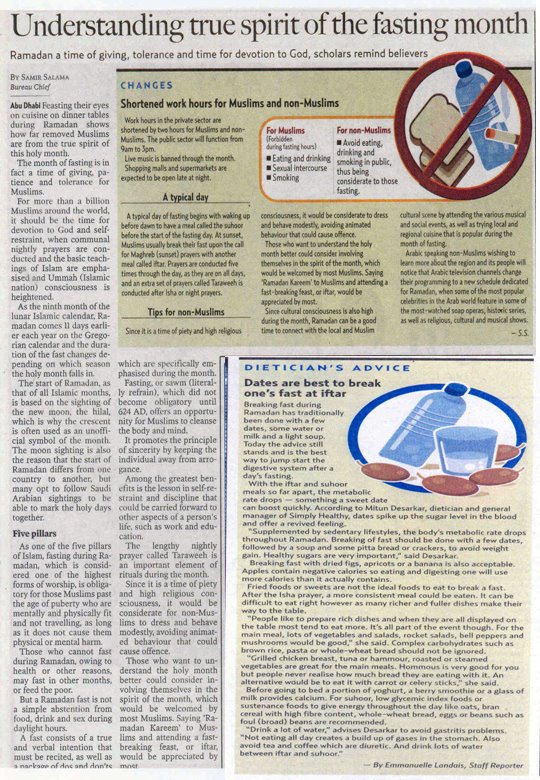
 ClicksandWrites
You must be logged in to post a comment.