TQM
Abu Dhabi reveals long term urban plan
Abu Dhabi reveals long term urban plan
By Samir Salama Bureau Chief and Ahmed A. ElewaStaff Reporter Published: September 19, 2007, 15:28
Abu Dhabi: A Dh600 billion master development plan for Abu Dhabi for the next quarter of a century was announced by the emirate’s Urban Development Council yesterday.
The Plan Abu Dhabi 2030: Urban Structure Framework Plan sets out a strategic approach to develop the emirate’s most dynamic economic sectors and envisages a growth of the UAE capital’s populations to over three million by that year.
General Shaikh Mohammad Bin Zayed Al Nahyan, Abu Dhabi Crown Prince and Deputy Supreme Commander of the UAE Armed Forces, said the plan provides a strong and comprehensive foundation for the development of Abu Dhabi, in a strategic and coordinated way. 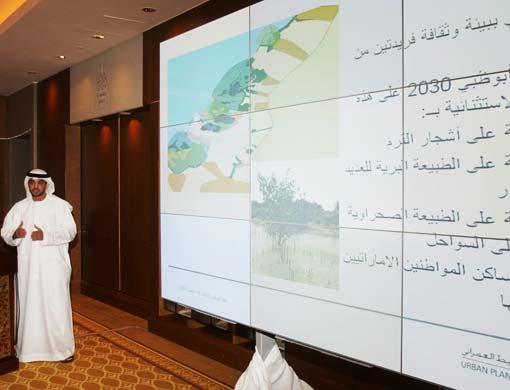
“It will ensure that future generations will continue to enjoy and be inspired by ongoing access to the desert, sea and natural assets that are integral to our national identity, while building a global capital with its own rich cultural heritage,” Shaikh Mohammad said following the release of the plan. 
“The execution of the plan has begun already eight months ago, and it started with the detailed study aiming at developing Abu Dhabi as one of the best international cities,” commented Falah Al Ahbabi, who has been appointed general manager for UPC. The plan projects a population of three million people residing in Abu Dhabi by 2030, and sets the framework of the necessary infrastructure, housing, recreational, and business sectors to cater for such population.
The plan includes inter-city train network and metro lines, specifies land uses, building heights and transportation plans for Abu Dhabi, said Falah Al Ahbabi, director-general of the Abu Dhabi Urban Planning Council, authorised to oversee implementation of the plan.
Urban Planning Council set up
President His Highness Shaikh Khalifa Bin Zayed Al Nahyan has issued in his capacity as Ruler of Abu Dhabi, a new law setting up the Abu Dhabi Urban Planning Council (UPC). As per law No. 23 for 2007, the UPC shall be an independent corporate entity enjoying financial and administrative independence and full legal status to operate. 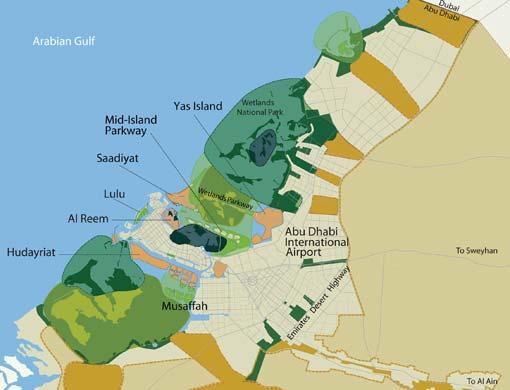
The council is to be chaired by General Shaikh Mohammad Bin Zayed Al Nahyan, Abu Dhabi Crown Prince and Deputy Supreme Commander of the UAE Armed Forces. Shaikh Khalifa also issued Decree No. 22 for 2007, setting up the Abu Dhabi Future Energy Company, a joint-stock company, and the Masdar Science and Technology Institute. The company’s shares will be completely owned by Mubadala Development, WAM reported.
Effectively executing restructuring plans

Effectively executing restructuring plans
By Sanjiv Anand, Special to Gulf News Published: September 18, 2007, 23:50
This is the kind of stuff that can grey your hair quickly. It doesn’t win you popularity contest. The benefits are not immediate. The rumour mills can often beat you. Bottomline, it’s not for the faint-hearted. I have been fortunate to have led a number of them over the years, and am still living to tell the story.
There are a number of ways to execute this. My style is to do it quickly and surgically.
Firstly structure follows strategy, and any transformation needs to be driven by the way forward strategy approved by the Board and the CEO.
Furthermore since new structures result in role changes, to get the management team to approve them is inappropriate – remember they are conflicted. It’s all very well to say that they will take a corporate/impartial view of it – that’s all theory. They tend to very much look at it from their own perspective, and also tend to think of the structure in context of the existing strategy and processes. The closest you will get to an impartial reviewer of new structure is the board, and potentially the CEO.
The CEO often also has to be reminded to wear the corporate hat, and not be swayed by his close colleagues within the management team. HR should also be involved at the appropriate point.
There is always pressure to announce it to the larger audience. The CEO is bombarded, people indicate they are nervous. My view is you only communicate when you are clear what you want to communicate and to whom.
Those who are performing well, are never nervous. The ones that are nervous tend to be ones who are unsure of their performance, and they need to be nervous. The first presentation should be a summary of the strategy to the overall senior management team. This gives them context to the organisational change that is about to come. I have never opened out a new structure to a management forum – all hell tends to break lose, and people immediately start jockeying.
Then a set of one-on-one meetings needs to happen with those to be reassigned. HR gives them a letter confirming their new position. Also have their new job description ready, and a presentation outlining the role and strategy of the unit/role they are about to take over.
Handover
These meetings need to be back-to-back and finished over a couple of days, and as much as possible the cutover date to the new position should be within four-seven days of being handed the letter. Also preferably, as many are done on the same day the better. People will also say that they need more time to handover.
My view is core handover should happen, the rest can happen when the person is in the new role, after all he/she hasn’t left the organisation. On the day of the cut-over, make sure you set up a help desk, so that the employees can walk over and ask questions/clarifications once in the new position. Without delay targets need to be provided for the new position, and potential an incentive should be announced for those who will facilitate effectively the organisational change.
The above works well where you are not cutting headcount. Restructuring with a headcount reduction – well, that’s another story. Get your helmets on, it’ a story for another day !
– The writer is managing directorof Cedar Management Consulting International.
Multi-million dirham education initiative launched
Multi-million dirham education initiative launched
Staff Report / GULF NEWS Published: September 19, 2007, 15:33
Dubai: His Highness Shaikh Mohammed Bin Rashid Al Maktoum, Vice President and Prime Minister of the UAE and Ruler of Dubai has launched a multi-million dirham initiative to educate more than a million children worldwide.
“Dubai Cares,” is being launched during the holy month of Ramadan, with the aim of raising money from across Dubai’s diverse community to provide children in some of the world’s poorest countries with a primary education.
The campaign is being spearheaded by Shaikh Mohammed and his children, who will be unveiling a number of initiatives to be held over the coming six weeks.
According to organisers, in addition to the aim of raising money for those less fortunate around the world, ‘Dubai Cares’ also seeks to get Dubai’s community, including individuals and the private sector, involved in the project, instilling a sense of social cohesion.
“I expect both Emiratis and expatriates to compete in charity and to participate in any way you find suitable…In our country, we added to our Arab and Islamic tradition a diversity of values represented by the diverse mixture we have here of companies, cultures and nationalities from all over the world,” Shaikh Mohammad said at the launch.
Below is the full text of Shaikh Mohammad’s speech at the launch of a multi-million dirham initiative to educate more than 1 million children worldwide.
Ladies and Gentlemen
First, let me congratulate you on the occasion of the Holy Month of Ramadan. I pray that God will give each of us the strength to fulfill our duties during the Holy Month, the desire to absorb its values to the core of our being, and the integrity to ensure these values are reflected in our deeds.
Ramadan is a blessed month for Moslems around the world. Our hearts fill with shared joy in our religion, our souls are lifted and we are swayed by the spirit of the Holy Month to offer mercy and compassion.
Let the enduring spirit of Sadaqah (Charity) be the guiding light for our actions throughout the Holy Month. Let it shape our good intentions so they become deeds whose consequences are positive, immense and far reaching.
Education offers one of the clearest and most effective ways to turn good intentions into actions that change the lives of people immeasurably and for the better. The satisfaction to be gained from a single act that helps the needy or curbs injustice can be immense. Imagine how much stronger that satisfaction must be if that act helps – as only education can – to free generation after generation from grinding poverty.
The patrons of education leave a lasting mark on history. The opening of the first school in the UAE in 1903, for example, is a defining moment in the history of the nation and continues to be regarded as one of the greatest events in the country’s modern history. Our history books record the contributions of UAE’s education pioneers such as: Mohammed bin Ahmad Dalmouk, Khalaf bin Oteiba, Ali Mahmoud, Mohammed Zeinal and a host of others.
The names of those pioneers who put their efforts into opening schools and providing the funding to support education, will be longest remembered and are an undeniable part of our history. Those who forget their responsibilities towards their community are soon forgotten.
Brothers and Sisters,
Education holds out hope for the future, enrichment for the present, and dignity for mankind. It helps us to communicate with each other. It helps nations to hurdle the barriers to understanding. It provides a solid basis from which societies can grow and flourish.
God Almighty said: “O mankind! We have created you from a male and a female, and made you into nations and tribes, that you may know one another. Verily, the most honourable of you with Allâh is that (believer) who has At-Taqwa”. (Al Hujurat – 13)
But, could the ignorant communicate with the educated? Do societies that continue to accept widespread illiteracy have any chance to bridge the gap between themselves and the educated world?
Education, through its ability to open eyes to new possibilities and extend horizons, offers a channel for communication between humans, a necessity as the Holy Quran tells us.
The importance of education has increased tremendously in the “Knowledge Age”. Promoting education and providing the support it needs to flourish are now prerequisites for global development. Those who are deprived of education will inevitably fall behind and dwell in a shadowland. They will never know the true essence of their religion, nor learn its valuable teachings. They will always be dependent on others and face the prospect of becoming burdens on themselves, their societies and the whole world.
Brothers and Sisters. Since the era of the late Sheikh Zayed and Sheikh Rashid, may God ensure their souls rest in peace, the UAE has been committed to offering support and help to our fraternal brothers and sisters in the Arab and Moslem worlds across Africa and Asia. The country’s contributions were made in many fields, and especially in the field of education.
From early on in our history pioneering UAE businessmen have appreciated the importance of education. Mr. Juma Al Majid, for example, has been an outstanding role model. His support for education has resulted in Mr. Juma being considered an outstanding figure and a celebrated patron across the Arab and Islamic Worlds.
The UAE’s remarkable successes at various local and regional levels have increased its prominence as an economic and cultural bridge between the East and the West. By accepting this crucial role we accept at the same time the duty to promote education in its entirety.
Last May, I launched the “Mohammed Bin Rashid Al Maktoum Foundation” for human development. Knowledge and Education are key components of the vision and mission of the foundation and underpin its activities. We expect the Foundation to become a showcase for the benefits of long term education initiatives for humanity in general and for our region in particular.
Today, I seize this opportunity presented by the Holy Month of Ramadan to announce the “Dubai Cares” campaign, which focuses on supporting education for children in a number of the world’s poorest countries.
I invite you to take part and support this campaign. I strongly believe that together, we can reshape the future of underdeveloped countries in the region and globally. The campaign’s mission is to help spread education in these countries by securing necessary funds.
Building new schools and classrooms, providing books, food and medical care for unprivileged children are among the campaign’s key objectives.
Brother and sisters. Eight years ago, the international community set the millennium development goals all countries pledged to fulfill. One of the main goals was to guarantee that every child will receive a basic education by the end of 2015. The realities on the ground are not promising and it looks unlikely that this goal will be met on time.
There are 120 million school-age children across the world who do not have access to education. A third of the children in developing countries cannot complete five years of education, the minimum required to achieve basic literacy.
Unfortunately, the biggest proportion of these deprived children are in Asia and Africa, especially in the Islamic world and the neighboring countries. This is in spite of the value placed on education in our holy book, as the first Aya that was sent to the world was a call for reading: IQRA’A.
Even the holy sayings of our prophet place education on the same level as worship, and even at a better place.
Brothers and Sisters. Thanks to Allah, we, in the UAE, enjoy a high standard of living. One of the secrets of our success and progress has been our ability and readiness to create opportunities and seize them in a timely fashion.
But opportunities do not grow on trees and cannot be achieved by wishing or dreaming. They are attained by taking the one clear path – the path of knowledge.
Education is the bulldozer that makes this path navigable, guiding people along its course and towards their destination. Knowledge gives people the chance to live in pride, progress and prosperity.
Expanding education in all of our emirates, and encouraging thousands upon thousands of university and higher colleges graduates, from our boys and girls, is the solid platform on which we will achieve progress and prosperity.
Advancing education remains an unquestionable priority. We have started the race against time to achieve an Emirati education that meets the highest international standards.
This Dubai Cares campaign, that I am launching today, seeks to shine the light of knowledge and dispel the darkness of ignorance. Its aim is to give the children of poor countries hope for the future and opportunities to break the cycle of poverty that threatens to entrap them and consign their families to a life with no real future.
Through education they can become positive contributors in the prosperity of their communities and countries.
Brother and sisters. Wherever ignorance reigns so does poverty, illness, misery and despair, and people start believing in fiction and illusions. The worst disease in this world is the unbreakable partnership between ignorance and poverty.
This partnership is the source of all evil from which many countries suffer and it is the root of persecution, and the main reason for divisions in the world between a wealthy North and a poor South, between advanced countries and deprived countries, between societies that know, and societies that do not know.
The only way to break this partnership between ignorance and poverty is by relentlessly attacking ignorance and by exerting every effort to spread education. We are doing our duty, regardless of the fact that many countries have resigned from playing their role in combating illiteracy worldwide and the international community is not able to fulfill its promises.
We are doing what we see as our duty by our religion, our traditions, our humanity and our deep belief that the person who turns his back on the suffering of his brothers and sisters doesn’t deserve to be called as human.
Therefore I am confident that you will participate in Dubai Care initiative for education.
I expect you, Emiratis and expatriates, to compete in charity and to participate in every way you find suitable. And I expect from the private sector a substantial contribution, including the international corporations and their offices in the UAE.
In our country, we added to our Arab and Islamic values a bright international horizon with a diverse mixture of companies, cultures and nationalities from all over the world.
This mixture offers a successful model of coexistence and collaboration. We are all invited today to develop this model and give it a humanitarian dimension through our collaborative donation to our brothers and sisters who are less fortunate than our Emirati nationals and the expat residents who have helped our country and helped themselves to achieve what they could not in their home countries.
Today, I announce the start of Dubai Cares campaign, empowered by your will and determination.
I am pleased to announce that I, together with my sons and daughters, will participate actively to ensure the success of this campaign.
I expect everyone to participate personally and that you will motivate your family members to contribute as well, so we can all fulfill our duty in what pleases our Creator and our own conscience. We need to implant the culture of donation in our society and give our children a heritage that incorporates the noble values that we inherited from our ancestors and which have now become one of the highest universal values. These values gain more territory every day.
They have new heroes every day, competing for the welfare of their brothers and sisters in humanity.
Corporate affair: Make yourself count
Corporate affair: Make yourself count
Most people at the workplace inhabit the far extremes of the spectrum: They either behave like sheep or treat others like them. While the former appear inordinately conditioned by their childhood morals to never come across as pushy, demanding, fussy or impatient, the latter seem to reckon that high decibels and absolutism are the only levers of advancement in a dog-eat-dog world.
The ever-elusive golden median, the trait of assertiveness that has for long been the staple of personal development experts, psychotherapists and self-help books alike, is being increasingly hailed as the make-or-break leadership quality. And yet, in a society split across plastic politeness and presumptive boldness, assertiveness continues to take a bad rap.
In a series of studies carried recently by the Journal of Personality and Social Psychology, Daniel Ames of Columbia Business School and Francis Flynn of Stanford Graduate School of Business have reported a trend that assertiveness seldom qualified as leadership strength when colleagues evaluated one another. On the contrary, it often got bracketed as a weakness, either because the person came across as too aggressive or a pushover. And while the right balance may just be the stuff boardroom role models are made of, striking it is indeed difficult.
Sulajja Firodia Motwani, managing director, Kinetic Motor Company, draws attention to the fluid interpretations of assertiveness at the workplace. “If you are in a leadership role, it is your ability to manage your team effectively so that you can discharge your responsibility effectively. If you are a part of the team, it is your ability to express your thoughts and contribute to team discussions in a meaningful and equal manner. If you are representing your employer in outside meetings or negotiations, assertiveness means communicating your preferences and effectively guarding your interests,” she says.
“One is not being assertive if, in response to someone else’s aggressiveness, one finds oneself doing things that one does not want to do because they are unethical, outside authorised codes of conduct, or outside the job description,” opines Dr Hemant C. Sashittal, a professor of management at the Rochester, New York-based St. John Fisher College.
“Overt assertiveness is when one tries to make a point and change the behaviour of others by trying to argue and win one’s point of view without any public invitation to scrutinise their argument for logic and data, and without offering hard, confirmable evidence to support one’s argument.”
“Assertiveness inevitably conjures up negative images of aggression and combativeness,” avers Rajiv Narang, CMD, Erehwon Innovation Consulting. “This form of assertiveness creates defensiveness and negatively impacts relationships and results, and becomes the greatest block to innovation. Positive assertiveness is the courage needed to express a disconnect with a ‘different point of view’ or with another person’s style of engagement. It is the capacity to not say ‘yes’ when you mean ‘no’ or ‘maybe’; it is the willingness to put forth a radical, unconventional idea without the fear of ridicule; it is the ability to openly express disagreement with a superior without antagonising him or her.”
“Assertiveness is when we weigh others’ rights as well as ours equally,” explains Dr. Sanjay Chugh, senior consultant psychiatrist. “This means being truthful to ourselves and respectful towards others. Assertiveness at the workplace does not mean that we say no to some work because we don’t feel like doing it. It just means that we stand up for ourselves, do not let others trample upon us, and ask for whatever we think is our right. At the workplace, like elsewhere, compromising on things that are important to us will only suffocate us.”
Ames states that an individual’s personality has a strong bearing on his assertiveness. Extroverts, for instance, are likely to be assertive. Often, he observes, people tend to affiliate themselves with like personalities, who then reinforce their behaviour. Experts cannot emphasise enough the need for periodic reality checks on one’s assertiveness. Business psychologists suggest that seeking feedback from colleagues and bosses on how one is perceived or taking stock of whether one is getting the desired results are among the best ways to figure out if one is not being assertive enough or being too assertive in a self-serving manner.
According to Narang, most Indian organisations suffer from a ‘public agreement or public silence’ and ‘private disagreement’ culture. “This breeds mistrust and suspicion and completely dilutes innovative possibilities. Most Indian organisations, both the new players and the legacy organisations, have a hierarchical culture that kills the openness needed to nurture positive assertiveness,” he points out.
As Marie Reid and Richard Hammersley write in Communicating Successfully in Groups: A Practical Guide for the Workplace: “More assertive people tend to have good self-esteem, compared to passive or aggressive people, because self-esteem and assertion are inter-related.”
Ames points out that while overly assertive people tend to be too optimistic and assume too much on other people’s behalf, pushovers may be pessimistic and fear angry reactions to their questions. Changing these attributes, he believes, is more about changing one’s expectations. Ames explains that possessing the right amount of assertiveness is also a matter of reading a situation and fine-tuning one’s style accordingly.
So what degree of assertiveness is indeed right for the workplace? Sulajja Firodia Motwani says that there are three steps to this ladder: assertive, aggressive and abrasive. “The ‘assertive’ is important, I like the ‘aggressive’ too, but I draw a line at ‘abrasive’,” she says. “To me, ‘aggressive’ indicates a strong will and the wish to impose that will, and that isn’t necessarily bad. But it can be a fine line between aggressive and abrasive. Abrasive is when you begin to rub people the wrong way through your attitude and that’s not professional.”
Dr Sashittal thus describes the hallmark of proper assertiveness: “First, is trust being built after every exchange of information? Second, is value being created after every exchange of information? Third, have you maintained your integrity? Fourth, and most important, when people agree in a meeting, does that agreement reflect a deep-seated internal commitment? If people are browbeaten into submission, they sabotage the implementation,” he concludes.
Abu Dhabi unveils 2030 growth plan
Abu Dhabi unveils 2030 growth plan
(Wam) 13 September 2007
ABU DHABI — The President, His Highness Shaikh Khalifa bin Zayed Al Nahyan, was briefed on the Abu Dhabi development plan until 2030 at his Bateen Palace here yesterday.
General Shaikh Mohammed bin Zayed Al Nahyan, Crown Prince of Abu Dhabi and Deputy Supreme Commander of the UAE Armed Forces, attended the briefing.
Shaikh Khalifa expressed his satisfaction about the development plan of the capital city, Abu Dhabi, and implementation of work projects to develop the country at par with the developed countries of the world. He listened to the detailed briefing about the plans and objectives and how to execute them by Khaldoun Khalifa Mubarak, Chairman of the Abu Dhabi Executive Authority.
The move is in response to the need for a well-studied, accurate planning amid huge development and growing population of the Abu Dhabi emirate.
Mubarak said the “plan is based on sustainable development that reflects economic and environmental situation and preservation of the natural environment of coasts and deserts. It also covers transport and communication networks as per international standards and in line with the values and traditions of the UAE”.
He said that the plan has been set for a city that will be inhabited by three million people by year 2030 and with infrastructre that meets such a growth, adding that the plan includes construction of metro and internal train network.
“The interior part of the city will be expanded through road network paralell to the islands to create a new commercial area on Al Sowah and Al Reem Islands,” Mubarak said.
After the briefing, Khalifa issued instructions on provision of all means of comfort, including more parks, convenient transport, preservation of the UAE environment and making the UAE an attractive cultural, commercial and tourist hub.
Tackling your anger

Anger is a letter short of the word – ‘Danger’. Ask where your anger is coming from. What is it that makes you mad? Try to tackle it at it’s root cause. Recognising situations that spark your fuse can make it easier to avoid or work through them.
Relax
Simple relaxation techniques such as deep breathing and meditating can help calm you down.
Think out-of-the-box
Your thinking becomes confused and exaggerated, when you’re angry. Most situations do not portend the end of the world, so try to put happenings in perspective.
If you slow down, you might find a way to solve the problem. The world is not out to get you, even though it may seem like it.
Thinking logically might not alter the reality of the situation, but may keep your anger from exaggerating the problem.
Solve 
Channelising your anger towards solving the problem or trying to cope with the situation is the way out.
You can’t stop it from raining, but you can open your umbrella and stay dry.
Listen
Listening (though that is the last thing you want to do!) what the other person is as important as getting your point across. In fact you may sound exaggerated, hurtful, or aggressive. Say what you want the other person to hear-they may already know you’re angry. Then, listen carefully to the response.
This will help you stay calm-not to mention you improve your chances of resolving the problem.
Change your environment
<
Move out of the milieu you were in. Try indulging yourself in any activity that will give you some time to cool down. A calm, rational mind and body will make better decisions.
Learning to manage and control your anger will surely make you healthier and happier for the rest of your life.
Using Fear To Your Advantage
Using Fear To Your Advantage
Facing your fears can help you achieve successes you never knew were possible
A friend of mine worked for a large Indian telecommunications company. After about six years of working there, he found that the initial excitement had died down and that his learning and growth had plateaued. That was when he received an offer to start up operations of a new entrant. The initial meetings clearly indicated to him that the role would be exciting. In fact, this was just what he was looking out for. There would be many challenges, especially since the company was new. At the same time, there would be tremendous learning.
However, after about three long months of discussions, my friend decided not to accept the offer. The reason he gave me was ‘fear’. He loved the job description but was afraid. He was afraid of stepping out of his comfort zone, of losing himself in unfamiliar territory, and of starting something entirely new. Fear made him flee from a great opportunity.
Fear happens to all of us and most of us normally react in one of two ways. We either flee, wherein we try to run away, or we hide and freeze, where we do not know what to do and are paralysed. These make people let their fears play on their minds and allow them to reach uncontrollable levels — leading to anxiety and pessimism. Like my friend who decided to give up on his opportunity, they continuously tell themselves, “I do not want to take risks. I do not want to do anything that I fear. It does not matter whether I am growing or learning, as long as I am safe in this old place where I have no fear.” But the problem is that, with time, your fears only get worse. You even begin to start fearing things that have absolutely no risks attached to them. You end up losing out on all the great opportunities in life.
How Do We Tackle Fear?
As the lines of a recent television commercial go, ‘at the end of fear, there is success’. The commercial shows two youngsters who are excited by an opportunity to tackle their fear. They react by fighting it, and enjoy every moment of the experience. Can we do this? Yes, of course. Think about adventure parks and horror movies where we pay good money to be scared out of our wits. We find this fear exciting. We deliberately trigger automatic reactions of fear in order to experience the thrill.
Like any other emotion, fear has both positive and negative aspects. Negative fear is debilitating. Positive fear is exhilarating. Life is boring without fear. Successful leaders constantly search for new, risky ventures. They even consciously focus on doing things that other people are afraid to do; go places where others fear to tread. Counteract the discomfort of fear by focusing on the positive side — the learning and the growth that every event generates. See events in a positive light that would give you power to overcome your fears and help you accomplish what you want to do.
People think that fear is paralysing and reduces your potential. Actually, the opposite is true. Fear can generate super-human feats. Have you not heard stories where normal people fought valiantly to save their friends and family from grave danger? Facing fear is empowering for leaders. It gives you strength you never knew you had. Fear is only damaging when you run away and do not confront it.
People avoid fear in order to preserve independence. Fear is only enslaving when someone else is purposefully trying to be fearsome and controlling. But the fear of reality — the possibility of missed opportunities — can motivate you to get to where you want to be. Rather than being afraid about losing security, comfort and predictability, start fearing about losing out on opportunities; start fearing about getting nowhere in life. Be afraid of being mediocre. Be afraid of waking up one morning and saying to yourself: “Why did I waste my life?” Use fear to your advantage. Fears accompany you until the threshold. Beyond that there is no fear, just success.
ON LEADERSHIP: SANGEETH VARGHESE for Business World.
The author is a leadership scholar from the LSE and founder of LeadCap. His book, Decide to Lead: Eight Decisions That Can Make You A Leader, will soon be published by Businessworld. will soon be published by Businessworld. He can be contacted at sangeethv@leadcap.org
Use More To Have More
Use More To Have More
The more you use your abilities, the more you will be able to benefit from them.
We often wonder why people who are already capable are blessed with more, while most others live average lives. How can a Jack Welch also be a successful speaker, author and columnist? And how could Vikram Sarabhai, the father of India’s space programme, simultaneously be a successful physicist, businessman, educationist and statistician? How could he possibly create institutions as diverse as the Indian space research organisation (ISRO) and the Indian institutes of management (IIM)? Are people like Welch and Sarabhai blessed with extraordinary talents, or does something else tip things in their favour?
Human capabilities can be divided into two broad sorts: Obvious capabilities are those that we are conscious about. We exhibit and utilise these every day. Our obvious capabilities are pretty much on display all the time. Or they could be discovered with very little effort. They are embedded in our basic tendencies. For example, from an early age, Bill Gates had always showed a deep interest in computing. When he set up Microsoft with co-founder Paul Allen, Gates knew that his strengths were in computing and that was where he invested his time and money. How a college drop-out used his passion to become the richest man in the world is plainly visible to everyone.
Hidden capabilities are different from obvious capabilities. They can be developed only by wilful determination, requiring some amount of effort before their discovery. To discover your hidden capabilities, you would have to boldly embrace opportunities, even when you are not sure. This requires you to be aware of the new opportunities you are exposed to. By being at the helm of the world’s largest software corporation, Bill Gates was constantly thinking about the future of technology to give his company a competitive edge. That led him to the broader realm of how technology could change the world. His thoughts were no longer limited to emerging technology, but he was now imagining the future. He was constantly building and improving it. He was no longer just a computer geek, but a management guru —evangelising the latest management techniques. A futurist — defining the way things would be. An author — writing about how things are changing and even a world reformer — driving projects that were changing lives for the better.
How can you improve your obvious capabilities and discover hidden capabilities? The basic law regarding your hidden and obvious capabilities is the Law of Use and Possess. According to this law, if you use more, you have more; if you use less, you have less.
Use more to have more: Very simply, the more you exploit opportunities around you, the more you will come across them. If you utilise the immediate, short-term opportunities that you come across rather than wait for that perfect situation, you will receive more long-term opportunities. If you did not start out on the first conquest, you would never have had the opportunity for more. That one initiative told you about your warring capabilities and your leadership qualities; and legions fell before you. If you had instead chosen to stay put and deal with your kingdom, you would never have gone out and made the whole world your kingdom. The more you use your capabilities, the more you reveal about yourself, to yourself.
Use less to have less: You could also choose to destroy your capabilities by running away from situations; by never learning or by never making an effort. You squander away your capabilities — and they are never again able to regain their original shape. The less you use your capabilities, the less you will benefit. Slowly, you will lose all that you had once owned.
As a leader, choose more. When situations demand, face them by investing your capabilities wisely. As you develop them, more doors will open up for you. Only in this way would you improve your existing capabilities and discover more hidden ones.
ON LEADERSHIP: SANGEETH VARGHESE for BUSINESS WORLD
The author is a leadership scholar from the LSE and founder of LeadCap. His book, Decide to Lead: Eight Decisions That Can Make You A Leader, will soon be published by Businessworld. He can be contacted at sangeethv@leadcap.org
The Practical Side of Leadership
Leadership as you see it:
Leadership, at the end of the day, boils down to taking the right decision at the right time. A leader needs to set the direction, get buy-in from the team, and then align the company to achieve the goals. Helping set the balance between short-term and long-term goals, between achieving day-to-day numbers and teamwork is also important.
In addition to leading the team, it is important to have skills in change management, have a more participative style of management and being able to build relationships at all levels. You have short-term and long-term relationships; you have strategic and operational relationships. A leader should be able to identify and manage each one of them. I learnt how to juggle between short-term and long-term relationships, between managing our growth goals, and also investing in long-term and high impact projects like Shiksha for school education and Bhasha for enabling technology in major local languages. One needs to have leadership at various levels — operational and strategic. Operational leadership is about here and now. It is about producing short-term results that are visible. Strategic leadership is broader and is more at a change level. An organisation requires both of these.
Leadership in the US and India:
In my experience, I have noticed US companies focusing a lot more on the excellence of their middle management. Middle management is the layer that ensures operational excellence — the visible results that we were talking about. The top management formulates the vision, sets the direction with clear goals, and helps drive change. Mid-management operationalises the vision and makes the changes a practical reality. People at this level tend to have been in the company for a long time compared to junior management, who are relatively new, and hence the mid-managers tend to get taken for granted. They can get jaded and demotivated easily. It is very important that any organisation focus on them and make them effective.
Another observation I have made is that, in India, we don’t tend to differentiate between types of leaders themselves. Most of the time we rely on people who have already done well in large organisations to drive incubations or start-ups. But this will not always work. Running and producing results in an already established company is a different ball game compared to starting up a new entity or division. One needs the right type of people for the right type of job. The right type of leader can determine the difference between success and failure.
Leadership style:
I demand excellence, I demand stretch results. I am very involved with my team, whether it is a three member team or a 300-member team.
How do you demand excellence? There are two ways. Giving the team highly challenging assignments and goals is one way. Another way is to take a small number of good people and give them really crazy assignments. Give them a very tough and nasty job. There is a risk in the second method that I will lose some of them in the process. But I will definitely get to stretch and derive excellence from the rest. This produces great leaders. Both approaches work well.
I have a high amount of humility, focus on team building and focus a lot on communicating and reaching out to all levels in the organisation.
The excitement of being a leader:
The fulfilment and satisfaction derived from the hard work, the frustrations and the challenges, the success and, eventually, seeing your team and institution grow and create a broad impact, is tremendous. Being a leader in tough, challenging situations brings out the best in me. You give me a choice of assignments and I will gravitate towards the one in which I will learn the most, usually the toughest. This definitely brings many challenges. But I, for one, would rather die trying than not try to make the impossible possible. I will do things that I have not done before. I will go to places where I have not gone before. You give me the charge of a $1 billion company and ask me to grow it to $1.5 billion in the next 5 years. No doubt it has its own challenges, but I will not find that as exciting, as the things are mostly in place. But give me a company with lots of problems — operational, cultural, strategic — I will take it; for the learning, for the challenges.
Development of a vision:
When the company (Microsoft) decided to back me up for Project Shiksha in 2002, we were struggling as to what to do in the educational field. Some team members from Redmond were conducting focus groups to understand the needs better. As I went through the results, I realised there was a big gap in what was required in India and what was being done. That helped me formulate our vision for Shiksha — seeing a better future for India and then betting on it. The idea for Project Bhasha came up while Bill Gates was visiting India for the first time in 1997. We were passionate about a software localisation programme. People were really apprehensive about making software in Hindi. But Bill Gates could see our vision and, according to him, Microsoft is not here in India to serve just the creamy 2-3 per cent. We need to be broadbased and reach out to more people. Once that was agreed, I wanted to do all languages — 14 of them. I tried selling it to the headquarters and they thought I was crazy. But at the same time they saw the passion and agreed. So, vision is really about seeing the shape of the future and betting on it. It is also about keeping your ear close to the ground and watching out for early trends.
Handling the change agents of technology and leadership:
I love technology. I use technology as a great tool to help me lead from anywhere, anytime and at all levels, help me respond rapidly to our customers, partners and my team.
I am very adaptable and a quick learner. Throw me into a new environment and I learn quickly and ramp up fast. I am also highly optimistic and can see the positive opportunities in most situations. These qualities help a long way when dealing with change.
Author: Rajiv Kaul (for Business World)
Rajiv Kaul became the managing director of Microsoft India when he was just 31, at an age when most of his peers were in middle management positions. At Microsoft he saw the dot com boom and the subsequent bust. He also conceptualised and implemented projects like Shiksha and Bhasha, which continue to have a high impact on Microsoft’s future. In his last assignment at Microsoft, Rajiv was at the software giant’s Redmond headquarters leading the emerging markets group. Currently Rajiv is excited about his new move, as a partner in Actis, a leading private equity investor in emerging markets. Rajiv looks forward to using his skills and knowledge in each of the regions that Actis operates.
Abu Dhabi Awards winners to get honours

Abu Dhabi Awards winners to get honours
By Dina El Shammaa, Staff Reporter/GULF NEWS Published: August 28, 2007, 18:43
Abu Dhabi: The winners of the Abu Dhabi Awards 2007 will be honoured in mid-December.
The nominations for ‘2007 awards’ will be held between September 9 to October 7. The judging period will be held in October and November, which will be followed by an awards ceremony.
General Shaikh Mohammad Bin Zayed Al Nahyan, Crown Prince of Abu Dhabi and Deputy Supreme Commander of the UAE Armed Forces, will present an award to the ten winners at the Emirates Palace by mid-December.
The awards will mainly go to the top ten nominees recognized by residents and citizens for their humanitarian acts and contributions to the society.
“The award honors citizens and residents who have contributed to building a greater sense of community and social welfare within Abu Dhabi. Everyone is given the chance to nominate those whose goodness knows no limits and in doing so share in their goodwill,” said Mariam Ameri from the Organizing Committee in Abu Dhabi.
All nominations are reviewed individually and reported by a nomination panel. This is then reviewed by a judging committee comprising senior government officials. The merit of those people nominated will determine the final number of awards given.
The nomination process requires completing a “nomination form” available at stands in 26 key locations, including malls in Abu Dhabi and Al Ain. The form can either be faxed or posted back and there are no limits to the number of people one person can nominate.
“Let your voice speak of their actions, in honouring people in this way. The awards raise awareness of the value of such contributions and in turn encourage others to make similar contributions,” stressed Amiri.
The 2006 awards received over 50,000 nominations, up from 42,000 in 2005. Three winners of the 2005 awards were present at the conference and spoke to the media.
“I never thought or expected to win this award. I received a call to bring along my husband and children to attend the event. They never gave me details. I only knew I was one of the winners when they announced my name that same day,” said Amira Al Shaibani.
Al Shaibani received nominations for her efforts in 1982 in a project to build a sports centre for children with special needs in the UAE.
Huda Kanoo, was nominated for her efforts in establishing the Abu Dhabi Classical Music and Arts Foundation in 1996 and a music library at the National Library in Abu Dhabi.
In addition, she launched an award carrying her name as a contribution to urge students to participate and compete at the Abu Dhabi Festival for Classical Music.
Dr. B.R. Shetty known for his medical achievements established the New Medical Center (NMC) Hospital with branches in Abu Dhabi, Dubai and Sharjah.
He also opened the National Hospital, New National Medical Centre, NMC Specialty Hospitals and NMC Family Clinic that treats over one million patients a year.
“My father came to this country in 1973 with only 8 Dollars in his pocket. If it weren’t for this country offering opportunities and opening their arms to him he wouldn’t have succeeded in helping others and we wouldn’t have received this award today,” said one of Shetty’s daughters who represented him in his absence.
About the ADA 2007 Awards
-Through the commitment of the President His Highness Sheikh Khalifa Bin Zayed Al Nahyan, Abu Dhabi has chosen to celebrate compassionate individuals who have silently volunteered their time to build and support the community of Abu Dhabi.
-The Emirate of Abu Dhabi recognizes the accomplishments of individuals through the Abu Dhabi Awards 2007, which marks the third year of awards.
-2005 was the inaugural year of the event
Vision
To make the Emirate of Abu Dhabi a better place, where humanity and goodness are cherished and celebrated.
Mission
To encourage and motivate citizens and residents of the Emirate of Abu Dhabi to reach out and help each other live more fulfilling and rewarding lives.
Who can nominate
-Residents and citizens of the Emirate of Abu Dhabi, including Al Ain and the Western Region.
-Those who know someone whose goodness has contributed to the community and spirit of Abu Dhabi.
Why Participate?
-Recognize and celebrate citizens and residents of the Emirate of Abu Dhabi who have contributed to building a greater sense of community and social welfare within Abu Dhabi.
-The awards raise awareness of the value of such contributions and in turn encourage others to make similar contributions.
The Nomination Process
-Going to any of the many nomination stations across the Emirate of Abu Dhabi including roving nomination stations
-Filling out a nomination form, these are currently being delivered to homes across the UAE and can be returned by post, fax or by placing them in collection boxes placed at the nomination stations.
-Visiting http://www.abudhabiawards.ae
-Filling out your nomination form and faxing it 800-333-00
Previous winner summaries
Winners 2006
Ahmad Khalifa Al Suwaidi
Dedicated his life and money to the welfare of the local community. He played an important role in the union of the UAE and was personal advisor to the Nation’s late father
Shaikh Salem bin Ham Al Amri
Strong supporter of the protection and welfare of the UAE
Contributed immensely to the protection and welfare of the nation both before and after the union and contributed to the social development in Abu Dhabi through the National Consultative Council
Shamsa Hazim Al Muhairi
Active member of the Abu Dhabi Women Development Association. Al Muhairi created awareness on the importance of women’s education and other social problems facing today’s community. Al Muhairi also launched a health program in the Emirate in cooperation with UNICEF and was pivotal in the establishment of the UAE Women Affairs bureau in 1991
Ahmed Awad Kareem
In collaboration with the Abu Dhabi Municipality, contributed to developing several important infrastructure projects in the Emirate including the establishment of the current industrial area
Sana’a Darwish Al Kitby
Dedicated her efforts to supporting people with special needs, women in the Emirate and autistic children. She contributed to the establishment of the General Women’s Union and the Abu Dhabi Women’s Development Association
Dr. Izzeidein Ibrahim Mustafa
Established several cultural and social associations, including the Women’s Union in the UAE
Wahida Ibrahim
Contributed to the education sector by providing free classes to special students and organized fund raising activities to support her school
Ahlam Yahya Al Shateri
Created a platform for parents, teachers and children to better use their time and better understand each others needs. Al Shateri delivers seminars to promote loyalty to the country and charitable causes
Shaikha Siddeeqa Al Qasimi
One of the first UAE women graduates and a leader in supporting education and her school is now known as being one of the best governmental schools in the country. Al Qasimi focused on educating women and helping them excel in their communities and businesses and promoted principles of equality and ethics among her students
Winners in 2005
Dr Rawdha Al Mutawa
Established the Abu Dhabi Business Women Council, Chairwoman of the Gulf Business Committee and a member of the board of directors of the UAE Red Crescent
Strong supporter of National business women
The Late Abdul Jaleel Mohammad Al Fahim
His desire to help others led him into the trading business to allow him the means and resources to fulfill his selfless goals. His activities and generosity contributed to the economic backbone of the Emirate of Abu Dhabi
Amira Al Shaibani
In 1982 Amira Al Shaibani spearheaded a project to build a sports centre for children with special needs in the Emirate.
She also launched the Olympics for children with special needs.
Colonel Edward Wilson
Supervised and trained the first defense battalions between 1964 and 1968, which evolved into the UAE Armed Forces
Established the Royal Stables, whose first cornerstones were laid by the late Shaikh Zayed bin Sultan Al Nahyan
Major General Hamad Al Khaili
The late Shaikh Zayed civil escort until the establishment of the Special Guards in 1971. He joined many training courses and was promoted up the military ranks till he received the rank of Major General. A sleepless soldier, man of strength and careful protector of the safety of the leader
Huda Kanoo
Established the Abu Dhabi Classical Music and Arts Foundation in 1996 and a music library at the National Library in Abu Dhabi. Kanoo launched an award carrying her name as a contribution to urge students to participate and compete at the Abu Dhabi Festival for Classical Music
Pat & Marian Kennedy
Established the first hospital in Al Ain. Their efforts significantly contributed to the reduction of mortality rates, particularly among infants, and raised the birth rates during the many years they spent in Abu Dhabi. At least 4,000 babies came to life by virtue of their efforts.
Major General Khalfan Al Rumaithi
Served Abu Dhabi for 45 years and occupied many military posts from the day he joined the Trucial Oman Scouts.
Founded the Emiri Guards. This service earned him the UAE first-class medal
Sally Benge
Sally approached the Future Centre to provide help for a group of children from Central Hospital. Sally looks after them all day, every day in return for the Future Centre taking them in and giving them homes. She has since adopted and sponsored other children
B R Shetty
His sense of purpose and determination culminated in the establishment of the NMC Hospital in Abu Dhabi, the first of its kind in the country, with branches in Dubai and Sharjah following that. These hospitals along with National Hospital, New National Medical Centre, Abu Dhabi, the state of the art NMC Specialty Hospitals in Abu Dhabi, Dubai, Al Ain and NMC Family Clinic, Dubai treat over one million patients a year
- ← Previous
- 1
- …
- 38
- 39
 ClicksandWrites