Information – Health +
Don’t ignore child’s chest discomfort
NEW DELHI: Ignoring your adolescent child’s chest discomfort or presuming it to be muscular pain might be dangerous as it could actually be a precursor to a major heart attack.
Given the higher propensity in Indians towards cardiac ailments as compared to people of other races, there is an urgent need to make people aware of the danger from an early age, doctors say.
Nineteen-year-old Prakash Gupta (name changed) from East Delhi suffered extensive heart attack and was admitted to a hospital in Noida. Angiography showed blockage of major artery and significant dysfunction of his left ventricle.
Don’t ignore child’s chest discomfort
28 Sep 2008, PTI
It was later revealed that the boy had suffered from chest discomfort lasting for half-an-hour two months prior to the attack. However, it was diagnosed as muscular pain then.
In another case, 17-year old Sunil, who underwent coronary angiography at a heart institute following a heart attack had to undergo angioplasty.
The analysis of these patients and that of some others showed that all of them had suffered from chest discomfort which was misdiagnosed as muscular pain, leading to heart attacks in the following months that could have been averted by timely action.
“Other cases of individuals slightly over 20 years of age point to a common thread of a history of chest discomfort, which was overlooked and the high risk children suffered from massive heart attacks with poor functioning of the pumping chamber due to block in major artery,” said Dr Purushottam Lal of Noida’s Metro hospital.
Pistachio nuts keep heart healthy
Pistachio nuts keep heart healthy
28 Sep 2008, ANI
WASHINGTON: Eating pistachio nuts every day can keep your health hale and hearty, says a new study.
According to researchers at Penn State conducted the study to investigate the way pistachios lower cholesterol.
“We investigated mechanisms of action to explain the cholesterol-lowering effects of the pistachio diets,” says Sarah K. Gebauer, recent Penn State Ph.D. recipient, currently a post-doctoral research associate, USDA Beltsville Human Nutrition Research Center.
The researchers conducted a randomized, crossover design, controlled feeding experiment to test the effects of pistachios added to a heart healthy moderate-fat diet on cardiovascular disease risk factors.
Controlled feeding experiments provide all the food eaten by study subjects for the duration of the study segment.
The participants began the study by eating a typical American diet consisting of 35 percent total fat and 11 percent saturated fat for two weeks.
They then tested three diets for four weeks each with about a two-week break between each diet. All three diets were variations on the Step I Diet, a cholesterol-lowering diet in general use.
The diets included, as a control, a Step I Diet with no pistachios and about 25 percent total fat and 8 percent saturated fat. The pistachio enhanced diets were Step I Diets with 10 and 20 percent of the energy supplied by pistachio nuts, respectively.
The 10 percent pistachio diet had 30 percent total fat and 8 percent saturated fat and the 20 percent pistachio diet had 34 percent total fat and 8 percent saturated fat.
The participants ate half their pistachios as a snack and the rest incorporated into meals.
The researchers report in the most recent issue of the American Journal of Clinical Nutrition that “Inclusion of pistachios in a healthy diet beneficially affects cardiovascular disease risk factors in a dose-dependent manner, which may reflect effects on Stearoyl CoA Desaturase (SCD).”
The researchers used the ratio of two fatty acids, 16:1 and 16:0 in plasma as a marker for SCD, an enzyme that is involved in the body’s synthesis of fatty acids.
“SCD is an important enzyme involved in cholesterol metabolism,” says Gebauer.
Wanna reduce stress? Chew gum
Wanna reduce stress? Chew gum
WASHINGTON: Chewing gum was found to help relieve anxiety, improve alertness and reduce stress among individuals, according to a new study. The study, led by Andrew Scholey, professor of Behavioural and Brain Sciences, Swinburne University, Australia, was done on the Defined Intensity Stressor Simulation (DISS), a multi-tasking platform which reliably induces stress and also includes performance measures, while chewing and not chewing gum.
While chewing gum, participants reported lower levels of anxiety. They showed a reduction in anxiety as compared to non-gum chewers by nearly 17% during mild stress and nearly 10% in moderate stress. Participants experienced greater levels of alertness when they chewed gum. The improvement in alertness over non-gum chewers was nearly 19% during mild stress and eight per cent in moderate stress.
Stress levels were also lower. Levels of salivary cortisol (a physiological stress marker) in gum chewers were lower than those of non-gum chewers by 16% during mild stress and nearly 12% in moderate stess. Chewing gum resulted in a significant improvement in overall performance on multi-tasking activities. Both gum-chewers and non-chewers showed improvement from their baseline scores.
However, chewing gum improved mean performance scores over non-gum chewers by 67% during moderate stress and 109% in mild stress
End fast ‘with healthy food – not fast food’
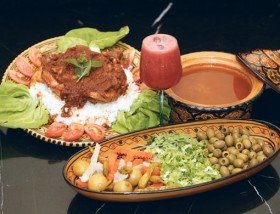
End fast ‘with healthy food – not fast food’ By Nina Muslim, Staff Reporter GULF NEWS Published: August 30, 2008, 23:47
Dubai: Changing one’s diet during Ramadan with a focus on eating more fruit and vegetables and drinking less caffeine, is ideal to remain healthy and energised, a nutritionist has said.
This year’s Ramadan, when Muslims are required to abstain from food and drink from sunrise until sundown, is set to be uncomfortable as it falls during September – at the tail-end of the hot and humid summer season.
Kelly Lynch, dietitian at Welcare World’s City Hospital, told Gulf News that many tended to consume “incorrect foods” during Ramadan.
“People often complain about symptoms such as constipation, gastric acidity and increased cholesterol during fasting. These symptoms are all due to people eating the incorrect foods,” she said. She said this is due to breaking the fast with high-fat foods, especially saturated animal fats, salt and refined carbohydrates, such as white bread and sugary foods.
These contribute to high cholesterol levels, while constipation is caused by dehydration and inadequate fibre intake. She advised people to consume one to two pieces of fruit after each meal, in addition to hummus and vegetables, to gain their vitamins, water and fibre.
“Any vegetable-based foods are good for you as long as they are not fried in fats and oils – salads like tabouleh and couscous are all healthy alternatives to fast foods,” she said.
Drinking less coffee is also advisable. Coffee, she said, is a diuretic and can further dehydrate a person. Coffee addicts, she suggested, should switch to tea as it contains less caffeine.
Recognising autism in your child
Recognising autism in your child
Medical researchers are exploring different explanations for the various forms of autism but no single cause has yet been ascertained.
Autism is a neurological disorder defined as a developmental disability significantly affecting verbal, non-verbal communication, and social interaction usually evident by age three that significantly affects a child’s educational performance.
According to the National Institute of Mental Health between 2 and 6 per 1,000 people have some form of autism. It occurs four times more commonly in boys than girls.
Symptoms
* Engagement in repetitive activities and stereotyped movements
* Resistance to environmental change or change in daily routines
* Unusual response to sensory experiences, examples: loud noises, light, certain textures of food or fabric
* Communication problems (using and understanding language)
* Difficulty relating to people, objects, and events
* Unusual play with toys and other objects
* Children with autism vary widely in ability, intelligence, and behaviour
* Nearly 40-50% with autism do not talk
* Others often use a language that include repeated phrases or conversations
Diagnosis
Diagnosis should be made by a professional experienced in the evaluation of children with developmental disorders (clinical psychologist, pediatric neurologist etc).
Diagnosis is based on the history of the child’s development provided by those who know the child well, as well as clinical observation of the child No blood tests or brain tests conclusively identify the presence of autism. No definitive diagnosis can be made before age three. Autism is also frequently accompanied by mental retardation
Medical researchers are exploring different explanations for the various forms of autism but no single cause has yet been ascertained.
Current research links autism to biological and neurological differences in the brain, and to the sufferer’s genes. Licensed psychologists can administer tests that are specially designed to look at a child’s problem solving skills without language. Tasks include – matching pictures, sort by category, remember series of pictures, duplicate design with blocks etc.
A certified speech language pathologist (SLP) can evaluate a child’s ability to use these kinds of non – verbal communication like looking, pointing, gesturing, or making sounds.
Medication
No medication can cure autism, and no one medication is recommended for individuals with autism
Medicines are helpful only for specific target symptoms associated with autism like aggression towards self and others, seizures etc.
Behaviour modification techniques and functional analysis of the child’s problems are taught to parents through education and discussion by the therapist.
Dr Varsha Dutta
The author is a clinical neuropsychologist, BGS Global Hospitals and can be contacted on 9986113090
Incense sticks linked to cancer
Incense sticks linked to cancer
27 Aug 2008, 0013 hrs IST,REUTERS
NEW YORK: Burning incense may create a sweet scent, but regularly inhaling the smoke could put people at risk of cancers of the respiratory tract, researchers reported.
In a study of more than 61,000 ethnic Chinese living in Singapore who were followed for up to 12 years, the investigators found a link between heavy incense use and various respiratory cancers.
The findings are published in the medical journal Cancer on Monday.
Incense has been used for millennia in many cultures’ religious and spiritual ceremonies. In Asia, people commonly burn incense in their homes – a practice that is becoming more popular in western countries as well.
Incense is usually derived from fragrant plant materials, like tree bark, resins, roots, flowers and essential oils. Past research has found that burning these materials can produce potentially cancer-causing substances, including benzene and polyaromatic hydrocarbons.
However, no studies until now had linked the practice of burning incense to an increased cancer risk over time, according to the researchers, led by Jeppe Friborg of the Statens Serum Institute in Copenhagen.
For their study, the researchers followed 61,320 Singapore Chinese men and women between the ages of 45 and 74 from the Hokkien or Cantonese dialect group. All of the subjects were cancer-free at the outset.
Participants reported on their typical incense use, including how often they burned it in their homes and for how long – only at night, for instance, or all day and night.
Over the next 12 years, 325 men and women developed cancer of the upper respiratory tract, such as nasal, oral or throat cancer. Another 821 developed lung cancer.
The researchers found that incense use was associated with a statistically significant higher risk of cancers of the upper respiratory tract, with the exception of nasopharyngeal cancer. However, they observed no overall effect on lung cancer risk.
Those who used incense heavily also had higher rates of a type of cancer called squamous cell carcinoma, which refers to tumors that arise in the cells lining the internal and external surfaces of the body. The risk was seen in smokers and nonsmokers.
Study participants who used incense in their homes all day or throughout the day and night were 80% more likely than non-users to develop squamous cell carcinoma of the entire respiratory tract.
Tips to prevent back pain
Tips to prevent back pain
Tuesday August 12 2008 09:57 IST Express Features
WHAT can cause low back injuries?
Many things can cause low back injuries-muscle strain or spasm, sprains of ligaments (which attach bone to bone), joint problems or “slipped disk”.
A slipped disk (also called a herniated disk) happens when a disk between the bones of the spine bulges and presses on nerves. This is often caused by twisting while lifting.
What can I do for relief when I’ve hurt my lower back?
The best position for relief when your back hurts is to lie on your back on the floor with pillows under your knees, with your hips and knees bent and your feet on a chair, or just with your hips and knees bent. This takes the pressure and weight off your back. You may need 1 to 2 days of this sort of rest for a hurt back.
What else can I do for relief?
Heating pads can help to relax painful muscle spasms. Ice packs and massages may also give relief. Nonprescription medicines that reduce pain or swelling include aspirin, acetaminophen (brand name : Tylenol), naproxen (brand name : Aleve), ketoprofen (brand name : Orudis), and ibuprofen (brand name : Motrin).
You can talk to us if you have:
Your leg, foot, groin or rectal area feels numb
You have fever, nausea or vomiting, stomachache, weakness or sweating
You lose control over going to the bathroom
Your pain was caused by an injury
Your pain is so instense you can’t move around
Your pain doesn’t seem to be getting better after 2 to 3 weeks
Tips for preventing Back Pain
Don’t lift by bending over. Lift an object by bending your knees and squatting to pick up the object.
If you must sit at your desk or at the wheel of a car or truck for long hours, break up the time with stops to stretch.
Wear flat shoes or shoes with low heels (1 inch or lower).
Exercise regularly. An inactive lifestyle contributes to lower back pain.
The Back and Neck Clinic
No. 1 B Block 2nd Avenue, Anna Nagar East, Chennai – 600102 Phone : 044-26204455.
Now, a do-it-yourself device for breast cancer detection
Now, a do-it-yourself device for breast cancer detectionFriday August 1 2008 12:24 IST ANI
LONDON: Women in Scotland can now carry out breast cancer checks in the four walls of their house, thanks to a new device developed with the help of Scottish Government funding.
Called Breastlight, the device is manufactured by PWB Health, in Dumbarton, and requires the user to shine a bright red light through the breast to show up any changes, such as lumps which may be cancer.
Launched recently in the market, the device was developed using a grant of 165,000 pounds from the Smart:Scotland awards scheme.
However the benefits of the 79 pounds device are being questioned by cancer charities, which claim that women do not need complex equipment to be aware of changes in their breasts.
This hand-held device works by shining a strong, harmless light through the breast. The light passes through the tissue and reveals dark areas where blood is present, i.e. it lights up the veins.
In case there is a dark cluster, the developers say this is a potential abnormality that should be checked out by a doctor.
PWB Health indicated that Breastlight is not a replacement for a mammogram and encourages women to attend screening when invited.
Antonia Dean, of Breast Cancer Care, said the device could make people believe that lumps were the only signs of breast cancer.
“Currently, there is no proof or sufficient clinical evidence that the Breastlight product results in earlier detection of breast cancer, increases survival or is any more helpful than the normal practice of being breast aware,” she said.
Chin up for a slender neck
Chin up for a slender neck
By Bharat Thakur Published: July 25, 2008, 23:42
The double chin is one of the more common cosmetic problems today. It is caused by a layer of subcutaneous fat that accumulates around the neck.
This layer of fat sags and creates a wrinkle, giving the appearance of a second chin.
There are three main reasons why a double chin develops:
Excessive weight
Some double chins are caused by weakness in the muscles of the face, neck and jaw. Incorrect posture often results in such weakness.
Age is definitely a big factor. As a person starts ageing, his or her skin starts losing its elasticity. This leads to a double chin.
Simpler ways
Going under the surgeon’s knife is not the only way to get rid of this problem. A balanced diet and regular exercise are effective and less drastic.
In cases where bad posture is the cause, exercises and correction techniques can reduce the double chin. This is where yoga can help.
Yogic asanas strengthen and tighten the neck and jaw muscles, and help reduce the double chin.
Today’s article describes some asanas meant for the chin area.
The exercises stretch and contract the muscles connecting the chin to the neck. Your awareness of the chin area is key to getting results.
The intensity of the exercises, along with your focus, will remove that nagging double chin and enhance your facial features.
Ushtrasana (camel pose)
Kneel with knees a little apart, feet stretched out.
Lean back, place palms on soles of feet as shown. If difficult, hold right heel with right hand and then left heel with left hand.
Push the abdomen forward, drop head back and arch backwards to as far as you can.
Hold as long as comfortable, breathe normally.
Slowly release one hand, then other and return to start position.
Bhujangasana (cobra pose)
Lie on stomach, keep legs straight, feet together, soles pointing upwards, forehead on floor.
Place palms to side of shoulders, elbows tucked in close to body.
Inhale and slowly raise head and upper body, straighten arms as shown. Hold the position, breathing normally.
Exhale as you slowly return to start position.
Veerabhadrasana (warrior pose)
Stand with legs wide apart and hands on hips.
Turn one leg and upper body to one side and bend front knee.
Raise arms straight up over the head, palms held together.
Lower the hips and bend backwards as much as comfortable. Look up.
Hold for 10-30 seconds.
Repeat with other leg.
Neck exercises
Sit with legs stretched out, back straight.
Bend one leg, place ankle on opposite thigh close to groin. Bend other leg and place ankle on thigh of bent leg, close to groin. Place your hands on your knees.
If you find the above posture (Padmasana or lotus pose) difficult, sit comfortably with legs crossed.
Close eyes, keep body straight. Slowly drop your head towards left shoulder — don’t turn the head or lift the shoulders.
Raise the head and drop towards right shoulder as above.
Slowly move the head as far back as comfortable. Do not strain.
Slowly bring head up and move it forward so chin touches chest.
Gently turn the head left so chin is in line with the shoulders.
Now gently turn the head to the right as far as comfortable.
Slowly rotate the head clockwise down to chest, to the right, back, to left side in a relaxed, smooth, rhythmic, circular movement.
Now, gently rotate anti-clockwise — in opposite direction.
Note: Those who have severe back and shoulder conditions and people with peptic ulcers, hernia or hyperthyroidism should avoid these asanas. Pregnant women, too, should avoid these exercises.
Au revoir double chin! A beautiful and slender neck is now just a few asanas away.
— Bharat Thakur is the founder of Bharat Thakur’s Artistic Yoga. For questions on yoga, write to dubai.artisticyoga@gmail.com. For more information, log on to http://www.bharatthakur.com
Chennai centre to offer kidney transplants across blood groups
Chennai centre to offer kidney transplants across blood groups
Sunday July 20 2008 20:36 IST IANS
CHENNAI: A hospital in this Tamil Nadu capital city on Sunday inaugurated a centre that will conduct complex kidney transplants using Japanese technology where the donor and the recipient need not have the same blood groups.
The MIOT group (Madras Institute of Orthopaedics and Traumacare) has started the Institute of Nephrology in collaboration with the Tokyo Women’s Medical University, which has pioneered advanced kidney transplant technologies for many decades.
Normally when the donor and the recipient have different blood groups, the recipient’s body develops antibodies against the donor’s blood. The patient’s body then rejects the organ. Blood group matches are, therefore, imperative in organ transplants.
The institute will offer “kidney transplants across blood groups”. This means, anyone can donate a kidney to anyone, the blood group of donor and recipient do not have to match.
The procedure can revolutionise kidney transplant in India, where according to an AIIMS study every year 150,000 new kidney patients are added to the existing burden and diabetes and blood pressure cause a large number of kidney failures.
“This will hugely increase India’s kidney donor pool,” said P.V.A. Mohandas, the managing director of MIOT Hospital.
“We have entered into a knowhow and technology exchange understanding with the Japanese university,” he added.
“Japan is a pioneer in the field of incompatible blood group transplants,” Kazunari Tanabe, head of department of urology at the Graduate School of Medicine in the Tokyo Women’s Medical University, said here Sunday.
“Japan wants to associate with other Asian countries for further research in this technology and that is why we have decided to associate with this Indian institution,” Tanabe said.
The MIOT Institute of Nephrology, set up with an initial funding of about Rs.100 million, will provide about a 100 dialysis a day and will have two dedicated operation theatres for nephrology cases. It starts off with about 30 transplants a month.
Of every hundred patients treated at the institute, 20 will be poor patients whose treatment will be subsidised.
 ClicksandWrites
You must be logged in to post a comment.