Information – Health +
Chocolate is injurious to bones
Chocolate is injurious to bones
25 Jan 2008, 1109 hrs IST,PTI
NEW YORK: Chocolate, the most widely and frequently craved food, may be good for your heart. But, if a study is to be believed, its regular consumption could weaken your bones and raise the risk of suffering a fracture.
A team of researchers has carried out the study and found that people who eat chocolates daily are likely to have less dense and weak bones, which in turn could increase the risk of health problems such as osteoporosis and fracture.
“Cocoa and chocolate have been promoted as having a range of beneficial cardiovascular properties. But the effect of chocolate intake on other organ systems has not been studied,” according to lead researcher Jonathan Hodgson of the University of Western Australia.
In fact, according to him, though chocolate contains flavones and calcium, both linked to having a positive effect on bone density, it also contains oxalate an inhibitor of calcium absorption and sugar, linked to calcium excretion.
The team came to the conclusion after analyzing the effect of chocolates on a group of 1,000 women aged between 70 and 85, who were randomly assigned either calcium supplements or a matched placebo for a period of several weeks.
During this period, the participants were also asked to keep a dairy of how often they consumed chocolate.
STROKE IDENTIFICATION
STROKE IDENTIFICATION:
During a BBQ, a friend stumbled and took a little fall – she assured everyone that she was fine (they offered to call paramedics) …..she said she had just tripped over a brick because of her new shoes.
They got her cleaned up and got her a new plate of food. While she appeared a bit shaken up, Ingrid went about enjoying herself the rest of the evening.
Ingrid’s husband called later telling everyone that his wife had been taken to the hospital – (at 6:00 pm Ingrid passed away.) She had suffered a stroke at the BBQ. Had they known how to identify the signs of a stroke, perhaps Ingrid would be with us today. Some don’t die…. they end up in a helpless, hopeless condition instead.
It only takes a minute to read this…
A neurologist says that if he can get to a stroke victim within 3 hours he can totally reverse the effects of a stroke…totally . He said the trick was getting a stroke recognized, diagnosed, and then getting the patient medically cared for within 3 hours, which is tough.
RECOGNIZING A STROKE
Thank God for the sense to remember the ‘3’ steps, STR . Read and Learn!
Sometimes symptoms of a stroke are difficult to identify. Unfortunately, the lack of awareness spells disaster. The stroke victim may suffer severe brain damage when people nearby fail to recognize the symptoms of a stroke .
Now doctors say a bystander can recognize a stroke by asking three simple questions:
S * Ask the individual to SMILE.
T * Ask the person to TALK and SPEAK A SIMPLE SENTENCE (Coherently)
(i.e. It is sunny out today)
R * Ask him or her to RAISE BOTH ARMS.I
f he or she has trouble with ANY ONE of these tasks, call 911 immediately and describe the symptoms to the dispatcher.
New Sign of a Stroke ——– Stick out Your Tongue
NOTE: Ask the person to ‘stick’ out his tongue.. If the tongue is ‘crooked’, if it goes to one side or the other ,that is also an indication of a stroke.
A cardiologist says if everyone who gets this e-mail sends it to 10 people; you can bet that at least one life will be saved.
Left side is the right side to get out of bed
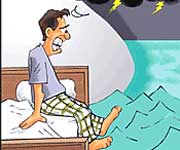
Left side is the right side to get out of bed
Sydney, UNI:
Sleep scientists, feng shui experts and psychologists analysed the best way to get up in the morning and have claimed ”Left is best”.
Just don’t jump out of bed as you get up after a good night sleep but make a habit of leaving your duvet from the left side.
According to a recent study, getting out of bed on the left side is the right side.
Sleep scientists, feng shui experts and psychologists analysed the best way to get up in the morning and have claimed ”Left is best”.
Feng shui expert Jan Cisek said getting out of the bed on the left side led to progress in family, health, money and power.
The left side helped humans to think rationally about the day ahead, the Australian quoted psychologist Pete Cohen as saying.
”The right side of the brain is responsible for emotions like fear and stress which only dilute your potential for having a positive experience,” he said.
Want bulging muscles? You need cholesterol
Want bulging muscles? You need cholesterol
New York: Cholesterol may play a role in increasing muscle mass and help in muscle repair, show the results of a new study.
Cholesterol is a waxy, fat-like substance that occurs naturally in all parts of the body. The liver manufactures it from the fat consumed by us.
High cholesterol level in the body is known to cause several illnesses, including heart disease. However, researchers at the Texas A&M University have found that it may also be beneficial.
The researchers studied 55 men and women, aged between 60 and 69, who were healthy non-smokers and were able to perform exercise tests.
Three days a week for 12 weeks, participants performed several exercises, including stretching, stationary bike riding and vigorous weight lifting, according to a report posted on the website of the university.
At the conclusion of the study, the researchers found that there was a significant association of dietary cholesterol and change in strength. In general, those with higher cholesterol intake also had the highest muscle strength gain.
“Lower cholesterol levels can actually reduce muscle gain with exercising. More cholesterol may result in a more robust inflammatory response. We know that inflammation in some areas, such as near the heart, is not good, but for building muscles it may be beneficial, and cholesterol appears to aid in this process,” lead researcher Steven Riechman said.
Achieve calmness with meditation
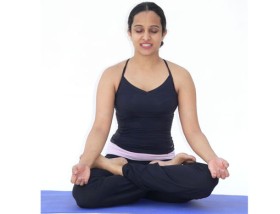
Achieve calmness with meditation
By Bharat Thakur, Special to Unwind / GULF NEWS / Published: January 11, 2008, 23:40
All over the world, people are turning to meditation — some seeking answers and the meaning of life while others practise it for its stress-relieving benefits.
With so many different techniques being taught, the question is — what really is meditation?
Let’s start with what we know. It is a scientifically proven fact that meditating regularly has immense health benefits.
In fact, the significant difference in health parameters between those who practise meditation and non-meditators is sufficient for anybody to start a simple practice.
Ask any doctor and he or she will gladly tell you how people who meditate are less prone to heart attacks and other diseases.
For a healthy mind
We must understand that all diseases are rooted in the mind — being psychosomatic in nature.
So, while we devote a lot of time and attention to the body and how we look, we must also spend time relaxing the mind and delving into the more subtle areas of our being.
Research also shows that people who meditate display lower stress levels than those who do not.
So, where does yoga fit into all this? Yoga begins with the physical body and goes deeper within, to the core of the being.
Most of you must be familiar with the different postures of yoga — asanas, the often crazy-looking movements that contort the body.
In fact, there are 8.4 million asanas. They are there just to make the body flexible and strong to master one meditation asana, that in which the practitioner can sit comfortably meditating for a long time.
Similarly, pranayama (breathing) practices train the mind and the body’s energy system for dhyaan (meditation).
Yoga has always been a spiritual science in India. It is only in the last 100 years that modern science and medicine have studied and understood the health benefits of yogic practices.
Therefore, today we see people taking up yoga to reduce high blood pressure or control diabetes.
Deeper understanding
This is good for all, but one must not forget that, ultimately, all yoga practices will direct the person to a calmer state of mind and an infinitely deeper understanding of oneself.
This deep understanding of who you really are is the scope and final goal of meditation.
So begin a yoga practice and slowly delve deeper into life’s eternal question — “Who am I?”
Wishing you all the best in your search.
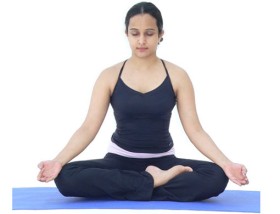
Meditation asanas
The main purpose of meditation asanas are to allow the practitioner to sit for extended periods of time without moving the body and without experiencing discomfort.
Only when the body has been steadied for some time will the benefits of meditation be felt. Deep meditation requires the spinal column to be straight and very few asanas can satisfy this condition.
Sukhasana
(Easy pose)
Sit with the legs stretched out in front.
Bend the right leg and place the foot under the left thigh.
Bend the other leg and place the foot under the other thigh.
Place the hands on the knees.
Keep the head, neck and back upright, but without straining.
Close the eyes.
Relax the whole body — the arm should be relaxed and not held straight.
Ardh padmasana
(Half-lotus pose)
Sit with the leg stretched out in front of the body.
Bend one leg and place the sole of the foot on the inside of the opposite thigh.
Bend the other leg and place the foot on top of the opposite thigh.
Without straining, try to place the upper heel as near as possible to the abdomen.
Adjust the position so that it is comfortable.
Keep the back, neck and head straight.
Close the eyes and relax the whole body.
Padmasana
(Lotus pose)
Sit with the legs stretched out in front.
Slowly and carefully, bend one leg and place the foot on top of the opposite thigh.
The sole should face upwards and the heel should be close to the pubic bone.
When this feels comfortable, bend the other leg and place its foot on top of the opposite thigh.
Ideally, the knees should touch the ground in the final position.
The head and spine should be straight and shoulders relaxed.
Place hands on the knees.
Close the eyes and relax the whole body.
Vajrasana
(Thunderbolt pose)
Kneel on the floor.
Bring the big toes together and keep the heels separate.
Lower the buttocks onto the inside surface of the feet with the heels touching the sides of the hips.
Place the hands on the knees, palms down.
The back and head should be straight but not tense.
Avoid excessive backward arching of the spine.
Close the eyes and relax the arm and the whole body.
Bharat Thakur is the founder of Bharat Thakur’s Artistic Yoga. For questions on yoga, write to dubai.artisticyoga@gmail.com. For information, log on to http://www.bharatthakur.com
Organisational Stress Tips
Organisational Stress Tips
The effects of Organisational Stress:
Stress reduces morale, performance and productivity of the workforce.
Stress increases poor timekeeping.
Stress increases workplace absenteeism which has a knock domino effect on colleagues who have to cover.
Stress is a major contributor to staff turnover resulting in additional recruitment and retraining costs.
Insurance premiums increase with increased stress claims.
Litigation costs for stress claims are increasing.
Absence
20% (approx 5 million) workers feel very or extremely stressed at work (Bristol survey 1998-1999)
563,000 people are actually suffering from work related stress anxiety and depression. Second only to musculoskeletal disorders. (Household survey 2001/2)
Length of time taken off 29 days per case. (Household survey 2001/2)
Cost
Ill health from work – cost to Britain is £2.5 billion. Cost of stress to British industry is £350 – 370 million (1995 review)
Cost of stress to British society as a whole £3.7 – 3.8 billion.(1995 review)
Legal Implications
Under the Health and Safety at Work Act etc (1974) employees now have a legal duty to ensure health and safety is not at risk due to excessive and sustained levels of stress.
Under the Management of Health and Safety at Work Regulations 1999 employees are required to carry out regular risk assessments. This now includes risk assessments for work related stress.
Guidance from the HSE (June 2001) explains how stress should be tackled in the workplace following the HSE 5 step to risk assessment process.
To help organisations implement this the HSE have produced Management Standards and accompanying guidance. These Standards are not new legislation but are intended to help organisations fulfil their legal obligation.
So what can you do?
Following are 10 tips for managers to help reduce organisational stress:
1. Adopt the attitude that stress is not a weakness and try to develop this culture in your own department.
Nobody is perfect we all have too much pressure from time to time. Stress can affect anyone given an accumulation of circumstances. Foster the mind set that it is not a weakness to seek help if we are not coping- it is a strength to admit it and do something about it. Promote it as a developmental issue. Handling stress is a proactive intervention to prevent ill health of the employee and the organisation.
2. Ensure that you yourself are not suffering from stress.
A stressed manager has a “knock on effect throughout the organisation.” Dealing with your own stress will prevent your staff from suffering and results in a more relaxed and productive atmosphere.
3. Analyse your own management style and behaviour (honestly); ask is your management style causing any stress?
* Good management is the best proactive way of reducing organisational stress
* A good manager
* Ensures a realistic knowledge of the workload and the time it should take
* Sets individual work objectives and targets, consults and discusses before setting
* Gives clear effective instructions
* Makes sure he/she define roles and tasks adequately – discusses priorities
* In times of high workload prepares workforce for this
* Varies work where possible and provides opportunities for individuals to influence the way they do there jobs
* Delegates effectively (and not just the boring bits!!)
* Ensures staff have adequate training to do a good job. Coaches where training is not possible
* Gives fast feedback. Both positive and negative. Praises when appropriate. Does not shy from giving negative feedback. Gives constructive criticism when criticism is necessary
* Be approachable – really. Admits to own weaknesses and takes responsibility for own mistakes
* Be honest which of these could you improve upon?
4. Regularly do an informal risk assessment of your staff to check nobody is subjected to work related stress.
Think of yourself in your employees shoes. What causes your staff stress may be healthy pressure to you, but do not belittle it. Just because it is not a problem for you does not mean it is not a problem for them. Remember They may cope easily with issues that cause you stress.
5. Provide information to staff telling them where to go for help and what to do if they are suffering from stress.
6. Encourage staff to attend a personal stress management course or provide staff with tips to help themselves.
7. Carry out a risk assessment process to reduce stress in your department.
Familiarise yourself with the HSE guidelines for tackling work related stress.
* Determine the causes of stress in your organisation
* Communicate these to staff and involve staff in finding solutions
* Put an action plan into place and regularly review your progress making amendments where necessary.
8. Improve communication.
* Where possible keep workforce informed of all changes and major decisions
* Listen to your staff. Hear what they are saying
* Observe your staff, you learn a lot from watching
* Talk to your staff informally and regularly. It will be easier for them to come to you or for you to approach them if there is a problem.
9. Help your staff to cope with change no matter how big or how small.
* Before introducing change listen to views and opinions of staff. How will it be for them?
* Where possible update workforce on any changes taking place
* Explain the reasons for the changes
* Identify those who resist change and help them accept, listen to doubts and fears, explain, coach, boost self esteem
Check how things are progressing during and after change.
10. All in all create an environment that promotes well being.
Remember relaxed and happy employee will work more effectively thus increasing performance and productivity. This will inevitably result in increase the organisational performance.
10 tips to reduce your stress
10 TIPS TO REDUCE YOUR STRESS
Introduction
According to the Health and Safety Executive stress is :
“The reaction people have to excessive pressures or other types of demands placed upon them. It arises when they worry the cannot cope.”
The HSE distinguish between stress and pressure. Pressure is seen as positive and improves our performance. However, when pressure becomes too much or too prolonged it turns to stress. It is important therefore that we try to achieve a balance. We need to feel stimulated and involved but need to act to ensure that our pressures do not get too great or accumulate.
The HSE definition does not however take the concept of perception into the equation. As different people perceive the same event in different ways this is extremely important. For example, some people will see an event such as public speaking as extremely stressful while others will see it as a challenge. We therefore can cause our own stress by the way we perceive a situation. – The way we see life, our perceptions may affect our receptivity to stress.
Exposure to prolonged or extreme pressure whether real or perceived can lead to behavioural changes and to physical and psychological problems.
Causes of stress may be short term, longer term or ongoing. Short term pressures are pressures which are short lived and from which we can easily recover e.g. a traffic jam or a disagreement with a teenage daughter. Longer term and on going pressures are more of a problem as we have less opportunity to recover. For example caring for an elderly or sick relative can have a great effect on our health and well being as the stressor is there continuously and we perceive we have no respite.
So what can we do ?
Try to manage your balance between pressure and stress by adapting your behaviour and thinking. Also make sure you take time out to recover from the pressures you find yourself under. Exercise and relaxation are paramount.
Tips for preventing pressure turning to stress
1. Adopt a healthy lifestyle – If we eat a healthy diet, exercise regularly and ensure we get adequate rest our body is better able to cope with stress should it occur.
2. Know your limitations and do not take on too much. We cause ourselves a great deal of stress because we do not like to say no to people. We like people to like us and do not want to let people down. We then end up doing more than we should. Learn to be assertive and how to say no without upsetting or offending people.
3. Determine what causes you stress and try to change your behaviour to reduce it
4. Avoid unnecessary conflict. Don’t be too argumentative. Is it really worth the stress? Look for win – win situations. Look for a solution to a dispute where both parties can achieve a positive outcome.
5. Learn to manage your time more effectively – We waste a lot of time doing unimportant tasks. Prioritise your day and do the important jobs first. The unimportant ones can wait, and often they will disappear completely leaving you time to do other things. Also do not put off the unpleasant tasks. Every time we think about them we cause ourselves stress. Give an unpleasant task a high priority and do it first.
6. Practice saying No without feeling guilty
7. Take time out to relax and recharge your batteries – You will perform much better after a break and easily make up the time you used relaxing.
8. Try to see things differently – If something is bothering you try to see it differently. Talk over your problem with somebody before it gets out of proportion. Often, talking to somebody else will help you see things from a different and less stressful perspective. Try to see the funny side of a situation. Laughter is a great stress reducer.
Accept the things you cannot change. – When things cause us stress, try to change the situation. Sometimes however, this is not possible. If this proves to be the case recognise this and accept things as they are.
9. Find time to meet friends. Friends help us see things in a different way. The activities we engage in with friends usually help us relax and we will often have a good laugh. Laughter is a great stress reducer. It boosts the immune system which is often depleted during stress. If you do become stressed engage in some form of physical activity and relaxation technique. Physical activity will work off the biochemical and physical changes that occur within your body due to stress. Relaxation helps your body return to its normal healthy state. Good relaxation techniques include breathing exercises, massage and a variety of complimentary therapies.
10. Avoid alcohol, nicotine and caffeine as coping mechanisms. – Long term, these faulty coping mechanisms will just add to the problem. For example, caffeine is a stimulant and our body reacts to this with the stress response.
Prolong your life by 14 years
Prolong your life by 14 years
9 Jan 2008, 0003 hrs IST,REUTERS
LONDON: People who drink moderately, exercise, quit smoking and eat five servings of fruit and vegetables each day live on average 14 years longer than people who adopt none of these behaviours, researchers said on Tuesday.
Overwhelming evidence has shown that these things contribute to healthier and longer lives, but the new study actually quantified their combined impact, the British team said.
“These results may provide further support for the idea that even small differences in lifestyle may make a big difference to health in the population and encourage behavior change,” the researchers told.
Between 1993 and 1997 the researchers questioned 20,000 healthy British men and women about their lifestyles. They also tested every participant’s blood to measure vitamin C intake, an indicator of how much fruit and vegetables people ate. Then they assigned the participants – aged 45-79 – a score of between 0 and 4, giving one point for each of the healthy behaviours.
After allowing for age and other factors that could affect the likelihood of dying, the researchers determined people with a score of 0 were four times as likely to have died, particularly from cardiovascular disease.
The researchers, who tracked deaths among the participants until 2006, also said a person with a health score of 0 had the same risk of dying as someone with a health score of 4 who was 14 years older.
The lifestyle change with the biggest benefit was giving up smoking, which led to an 80% improvement in health, the study found. This was followed by eating fruits and vegetables.
Moderate drinking and keeping active brought the same benefits, Kay-Tee Khaw and colleagues at the University of Cambridge and the Medical Research Council said.
“Armed with this information, public-health officials should now be in a better position to encourage behaviour changes likely to improve the health of middle-aged and older people,” the researchers wrote.
Detect breast cancer at home
Detect breast cancer at home
11 Jan 2008, 1541 hrs IST,PTI
LONDON: A wonderful gift to the women of the world could soon be unveiled with researchers envisaging a technology to detect breast cancer as easily as a home pregnancy test.
Researcher Dr Charles Streckfus (CORR) said it could prove invaluable in picking up the disease in its earliest stages, when it is easiest to treat. Used during routine dental check-ups, it could spot cases of the disease which could otherwise go unnoticed until too late.
“This could be something women could use in between mammograms and if something looks suspicious, they could jump on it,” Dr Streckfus said, adding “If you had this particular test side by side with mammography, it will take the worry out for women.”
By analysing the saliva of 30 women, a third of whom had breast cancer, the researchers from University of Texas Dental Branch at Houston identified 49 proteins whose levels change depending on a women’s breast health.
The patterns of protein levels make it possible to distinguish between healthy women and those with breast tumours. Benign and malignant tumours can also be separated, the journal Cancer Investigation reports.
The test, which is around five years away from the market, would use antibodies to detect the proteins, and provide a near-instant result, cutting out the need for time-consuming lab work.
“As well as accepting invitations to regular breast screening, it is vital that women of any age are breast aware throughout their life, by being familiar with how their breasts normally look and feel so that any changes can be picked up quickly and reported to their doctor without delay,” Antonia Dean of the Breast Cancer Care was quoted as saying by the Daily Mail of Britain.
Fingers length signify arthritis risk
Fingers length signify arthritis risk
3 Jan 2008, 1638 hrs IST,ANI
WASHINGTON: A study of index to ring finger length ratio (2D:4D) has revealed that having uncommonly long ring fingers raises the risk of developing osteoarthritis, the most common form of arthritis that results in severe pain in the joints.
Researchers at the University of Nottingham in the UK say that their finding is particularly applicable to women with long ring fingers.
For their study, the researchers recruited 2,049 case subjects, all of whom had clinically significant symptomatic OA of the knees or hips, requiring consideration of joint replacement surgery. The study also involved 1,123 controls who neither had OA nor a history of any joint disease.
The study population was comprised of both men and women, with an average age of roughly 67 years for cases and 63 years for controls.
Radiographs of both knees and the pelvis were obtained for all participants. Every participant also underwent separate radiographs of the right and left hands.
The researchers assessed the 2D:4D length ratio from radiographs using three methods – a direct visual comparison of the 2 finger ends, the measured ratio from the base to the tip of the upper finger joints, and the measured ratio of the metacarpal bone lengths.
They found that men were 2.5 times more likely than women to have the index finger shorter than the ring finger.
The relationship between 2D:4D length ratio and OA was then assessed using blind comparisons of hand radiographs with both knee and hip radiographs from random case and control samples, combined with statistical analysis and odds ratios.
It was found that people with index fingers shorter than the ring fingers had an increased risk of OA involving any part of the knee or the hip, and including the presence of arthritic finger nodes.
The risk of knee OA in participants with index fingers shorter than their ring fingers, was nearly double that of the risk for participants without this pattern. Women with this finger pattern had a greater risk of knee OA than men.
The researchers also found that the smaller the 2D:4D upper finger joint ratio, the greater the risk of OA of the tibiofemoral knee joint, among participants of both sexes.
Finally, after adjusting for established OA risk factors – age, sex, body mass index, joint injury, and lack of physical activity – the strong association of smaller 2D:4D length ratio with the risk for knee OA, was deemed independent.
“The 2D:4D length ratio appears to be a new risk factor for the development of OA. Specifically, women with the ‘male’ pattern of 2D:4D length ratio – that is, ring finger relatively longer than the index finger – are more likely to develop knee OA,” said Dr M Doherty, the study’s leading researcher.
He, however, admits that the “underlying mechanism of the risk is unclear, and merits further exploration.”
 ClicksandWrites
You must be logged in to post a comment.