Information – Health +
New way to tell age through eyes
New way to tell age through eyes
REUTERS
LONDON: A new way to decipher a person’s age by looking into the lens of the eye could help forensic scientists identify bodies, Danish researchers said on Tuesday.
Their new technique uses radiocarbon dating to measure special proteins known as lens crystallines that develop around birth and remain unchanged for the rest of our lives. They are the only part of the body apart from teeth that do so. The researchers correctly identified the ages of 13 people within one-and-a-half years by analyzing a carbon isotope called carbon 14 trapped inside the crystallines, they reported in the journal PLoS One.
“In forensics we are always looking for ways to identify deceased persons,” said Niels Lynnerup, a forensic scientist at the University of Copenhagen, who led the study. “We found with this method you can determine almost to the year, the year of birth.”
Scientists have long used radiocarbon to date fossils or bones. More recently, researchers have applied the technique to tooth enamel to tell the age of people who have recently died, Lynnerup said. The technique employed in the lens analysis is based on the sudden increase in atmospheric carbon 14 beginning in the 1950s until a test ban a few years later when the Soviet Union and the United States began testing nuclear bombs.
These experiments more than doubled the amount of atmospheric carbon 14, which gradually began to decline toward normal levels after the ban, Lynnerup said.
Scientists have recorded these levels annually, giving the Danish team a benchmark to date a person’s birth by matching the corresponding year in which the carbon 14 atmospheric content was as high as in the person’s eye lens. The researchers also said their technique could one day help scientists in other fields date proteins and other molecules in the body to determine when cancer tissues or cells develop.
Music therapy for stroke patients
Music therapy for stroke patients
REUTERS
LONDON: A little Beethoven is good for the brain, according to a Finnish study published on Wednesday showing that music helps people recover more quickly from strokes.
And patients who listened to a few hours of music each day soon after a stroke also improved their verbal memory and were in a better mood compared to patients who did not listen to music or used audio books, the experts said. Music therapy has long been used in a range of treatments but the study published in the journal Brain is the first to show the effect in people, they added.
“These findings demonstrate for the first time that music listening during the early post-stroke stage can enhance cognitive recovery and prevent negative mood,” the experts, who were led by a psychologist from University of Helsinki, wrote. Strokes are one of the worldwide leading causes of death and permanent disability.
First 3 hours after stroke crucial
First 3 hours after stroke crucial
ANI
WASHINGTON: A new study has found that the first three hours at the start of a stroke are crucial for the treatment of the victim.
The study found that rhe damage caused by stroke can be reduced by giving tPA treatment, the only approved treatment for stroke caused by blood clots in the brain, to the patient. If given intravenously within the first three hours of the start of a stroke, or injected directly into the brain within six hours, tPA can break up clots and stop or slow the damage caused by strokes. The analysis showed that delay kept many patients away from receiving tPA.
“Efforts to speed up patients’ arrival at the hospital are absolutely crucial. We have very effective treatments; we just need to get patients to the hospital as fast as possible,” said Lewis Morgenstern, professor of neurology, emergency medicine and neurosurgery at the U-M Medical School. Morgenstern added a person experiencing a stroke really needed to get to a hospital within two hours of the start of a stroke to have the best chance of receiving tPA.
7 easy ways to avoid a cold
7 easy ways to avoid a cold
January 31, 2008 | 17:42 IST Source: rediff.com
Cold and flu season seems to be upon us. Everywhere you look there are people sneezing, wheezing or looking downright miserable thanks to a stuffy nose, sore throat or heavy head — and there seems no way of escaping it. However, if you are determined to keep the common cold at bay, try these seven easy-to-do steps.
The hands-off approach: According to the health portal commoncold.org, the cold virus resides in the nose and is most contagious during the first three days of a cold. So, if you have a cold, try not to use your hands to shield a sneeze or cough. The nasal secretions will transfer the virus to your hands and then on to everything else you touch.
If you haven’t yet fallen prey to the cold virus, the first thing to do keep your hands clean. For most of us, at work, at home or outdoors, it’s impossible to keep your hands as clean as they could possibly be. The best thing to do is avoid touching your nose, mouth and face.
The cold virus can be transferred even from brief contact with a person suffering from a cold or a contaminated surface, so try wash your hands as often as you can or buy a hand sanitiser available at almost all medical stores.
Liquids: Mayoclinic.com recommends you ensure your liquid intake is high. Whether in the form of water, juices or soups, the fluids will help flush out the toxins in your system and keep illness at bay.
Air it out: For most city-dwellers, air conditioned offices and homes are inescapable. While this modern convenience is no doubt a blessing, it can also be a Pandora’s box of illnesses. Thanks to the recirculated air, germs tend to reside in air-ducts with no place to go. If colds and coughs seem to be afflicting colleagues or relatives constantly, get your the ducts cleaned professionally and open the windows to let in some fresh air in. Health portal webmd.com recommends getting a regular dose of fresh air particularly during winter.
Work it out: The internet abounds with studies and articles that demonstrate the benefits of regular exercise to the human immune system. Even 20 minutes of aerobics or moderate-intensity physical activity at least five days a week can make a world of difference to your body’s energy levels and immunity.
Get a vitamin boost: Studies have found that a regular intake of vitamins, particularly vitamin C, boosts the immune system. If you’re not the pill-popping type, load up the natural way with plenty of green leafy vegetables, the red and yellow variety help too.
Cut down on smoking and drinking: According to webmd.com, statistics show that heavy smokers are more prone to colds and suffer more severe bouts.
Heavy alcohol consumption dries out the body, taking away valuable fluids. This again makes you susceptible to the cold virus. So, if you can’t kick the habit completely, make sure to cut down your consumption to improve your chances of staving off cold.
Relax: Stress impacts your immune system, making you more vulnerable to infections and illnesses, says most research on the subject. While it is easier said than done, there are methods by which you can teach yourself calming techniques, the most popular of which is yoga. Practice these techniques regularly to keep your mind and body in peak condition.
Health and work stress: The link
Health and work stress: The link
By Carole Spiers, Special to Gulf News Published: February 04, 2008, 23:31
In the wake of last week’s biggest-ever health conference in the Gulf, I notice a new report from the UK confirming what many stress consultants have suspected for years, but never been able to prove – that stress is a factor in coronary heart disease (CHD).
As this, in turn, follows last month’s statement by UAE health official Dr. Ali Ahmad Bin Shakar, that 41 per cent of the country’s deaths are caused by heart disease, with a tripling of the problem expected over the next 20 years, the new findings should be essential reading by corporate managements.
Based on a 12-year study of more than 10,000 civil servants, this major research project demonstrates the strongest link yet between work stress and the biological mechanisms underlying CHD.
The most significant finding was that stress directly activates the pathways controlled by the nervous system, the endocrine glands and their hormones. Workers who suffered greater stress at work were liable to have lowered heart-rate variability, poor vagal tone and abnormally high morning levels of the stress-hormone, cortisol.
Significantly, these effects were independent of stress-linked behaviours – unhealthy lifestyles of little or no exercise and poor diet, with their effects on the metabolic system – which accounted for only 32 per cent of the syndrome.
As a professional stress consultant, I would naturally remind corporate businesses that they have plenty of opportunity to train their HR departments in the many specialist areas of stress management (organisational change, time-management, diversity, bullying behaviour etc.), as well as providing their other employees with seminars and presentations that generate a culture of stress awareness.
For those who are not ready to make the necessary investment, however, let me suggest how you may be able to relieve employee stress through a few everyday interventions that cost nothing.
These are the little acts of good manners, appreciation, common decency and consideration that can lubricate workplace life out of all proportion to the effort involved. This is how to generate a spirit of ‘give’, not just ‘get’. It’s done by encouraging people to love their work – or indeed to work with love, as in the words of Khalil Gibran, ‘Work is love made visible’.
The chairman or MD in particular firm should take a little time to ‘walk the talk’, showing an interest in people’s jobs, always remembering names correctly (which carries far more impact than you may think), and generally making every person feel valued.
Certainly, employee health in the UAE faces many side-effects arising out of its breakneck commercial growth. That’s a constructive thought to leave you with, as stress management moves firmly one step higher up the national agenda.
– The writer is a BBC broadcaster and motivational speaker, with 20 years’ experience as CEO of Carole Spiers Group, an international stress consultancy based in London.
Key points: Impact
* Stress has been shown to impact on heart disease.
* Stress management is vital in countries like UAE where heart disease is rising.
* Invest in specialist help or reduce stress through your own interventions.
Soft drinks up risk of gout: Study
Soft drinks up risk of gout: Study
PTI
LONDON: It has long been considered as a disease of the rich. But, no more. Gout can affect all those who have a sweet tooth, according to a new study.
A team of international researchers has carried out the study and found that high consumption of sugar-loaded soft drinks and fruit juices substantially ups the risk of gout which is a painful joint disease.
According to the team, the risks associated with these fizzy drinks are worse than hard liquor.
“This is the first study and a very large one, linking the commonly consumed products to this common disorder. We’ve found that if you have high consumption of fructose, your gout risk is doubled. And that’s due to easily available sugary beverages,” lead researcher Hyon K Choi of the British Columbia University was quoted by the British media as saying.
The researchers came to the conclusion after following more than 46,000 men aged above 40 with no previous history of gout over a period of 12 years – the participants’ intake of soft drinks, fruits and fruit juices was monitored.
The team found that the risk of developing gout was 85 per cent higher among men who drank two or more cans of soft drinks daily than those who consumed less than one a month – this is greater than the risk linked to drinking spirits.
Men who consumed large amounts of fruit juice or fructose-rich fruits, such as apples and oranges, also had a higher risk of the condition. However, those who drank diet soft drinks showed no extra risk.
“These findings support the importance of recommending a reduction in fructose intake in patients with hyperuricaemia and gout in order to reduce the risk of gout,” according to co-researcher Gary Curhan of the Harvard Medical School.
The results of the study have been published in the British Medical Journal .
Hospital puts anti-abduction system in maternity ward
Hospital puts anti-abduction system in maternity wardBy Mariam M. Al Serkal, Staff Reporter GULF NEWS Published: January 29, 2008, 23:39
Dubai: Dubai’s only public maternity hospital implemented a system to prevent baby theft after some babies were abducted from their bassinet, Gulf News has learnt.
A security bracelet is attached to the babies’ ankles that have a sensory barcode which is linked to all nursery stations and security offices at Al Wasl Hospital, which implemented it last year.
Diaa Hassan, Consultant, Quality and International Accreditation, Al Wasl Hospital, told delegates at the Hospital Design and Upgrade Conference at Arab Health that the anti-abduction system is a standard procedure required by the Joint Committee International.
“The baby anti-abduction system has been implemented for the past year, and there were two to three cases of abduction in the country,” she said, but refused to elaborate.
The most publicised baby snatching case in the UAE was in December 2005, when an Indian doctor abducted a new-born Iraqi boy at Al Qasimi Hospital in Sharjah. A nurse spotted the doctor walking away with the baby and alerted the authorities. The gynaecologist served six months in jail followed by deportation.
With regard to preventing hospital-acquired infections, Hassan said that it was difficult to prevent because the maternity ward is always receiving many family members. “It is difficult to control the number of visitors at the hospital because of the culture in the region. When someone delivers all the family comes in,” she said.
She noted that it was highly unlikely for patients to receive hospital acquired infections because all infectious cases are transferred to Rashid Hospital.
‘Starving mothers may have addictive kids’
‘Starving mothers may have addictive kids’
Babies born to starving mothers may develop addictive disorders later in life, Dutch researchers said after examining men and women born during a period of famine.
A famine called “Hunger Winter” hit Netherlands during the winter of 1944-1945, near the end of World War II, in which over 20,000 people died.
Researchers from the Dutch mental healthcare organisation Bouman Geestelijke Gezondheidszorg (GGZ) and the Erasmus University in Rotterdam examined men and women born in Rotterdam between 1944 and 1947.
They found that children whose mothers had suffered severe food shortages and starvation during their early pregnancy were significantly more likely to be receiving treatment for addictive disorders, reported science portal Science Daily.
Modern brain research has shown that if the brain is not able to develop at normal rates while the child is in the womb, neuro-developmental abnormalities can occur that give rise to susceptibility to addiction.
“Exposure to famine beyond the first three months did not result in a higher risk of addiction, which supports the view that the first trimester is crucial in the development of the human brain that is involved in addictive behaviour,” lead researcher Ernst Franzek said.
Jog daily, increase life span
Jog daily, increase life span
Indo-Asian News Service
Daily jogging may help you stay biologically young and live nine more years than those who don’t jog, researchers in US have suggested.
A regular exercise is already known to provide several health benefits. Regular exercise also helps prevent heart disease, blood pressure, stroke, diabetes and depression.
In the new study researchers at King’s College London and in the US studied ageing in 2,401 twins and found that there was a difference of about nine years of ageing between those who exercised regularly and those who did not.
It happened even after considering other influences, including body mass index (BMI), smoking and socio-economic status (SES), according to the researchers, online edition of Daily Mail reported.
“The US guidelines recommend that 30 minutes of moderate-intensity physical activity at least five days a week can have significant health benefits” the study said.
“Our results underscore the vital importance of these guidelines. They show that adults who partake in regular physical activity are biologically younger than sedentary individuals,” lead researcher Lynn Cherkas said.
Benefits of jogging
It speeds up the digestive system and helps get rid of digestive trouble.
It counteracts depression.
In order to be an effective means to loose weight, the jogging sessions must be at least half an hour and be repeated fairly often.
Jogging makes you sleep better.
Abu Dhabi’s oldest hospital on its last legs
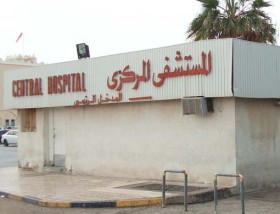
The Central Hospital is part of the Shaikh Khalifa Medical Centre and was the only hospital in Abu Dhabi till Al Jazeera Hospital was set up by the mid-70s.
Abu Dhabi’s oldest hospital on its last legs
By Dina El Shammaa, Staff Reporter GULF NEWS Published: January 28, 2008, 00:11
Abu Dhabi: Central Hospital, the oldest hospital in Abu Dhabi, is slated to be demolished by the end of next week.
The 40-year-old hospital located near Shaikh Khalifa Medical Centre (SKMC), was the only hospital in Abu Dhabi till Al Jazeera Hospital was set up by the mid-70s, said the management of SKMC.
Two crucial sections at Central Hospital – the Urgent Care section and the Renal Unit Dialysis (RUD) – are being transferred.
The Urgent Care section is scheduled to be transferred to the new Khalidiya Urgent Care Centre (KUCC) at SKMC, which will service patients the same day the Central Hospital is closed.
The urgent case section is meant to relieve the ER section at SKMC which receives a large number of patients suffering from accidents, heart attack, renal-related cases and others. The ER section has 28 beds in the surgical ward with 10 beds at the Children’s Accident Section. Seven new beds are to be added, to increase the current bed capacity to 45 for adults and children.
During the first ten months of last year, the ER ward treated 72,091 patients, including 24,368 children.
The KUCC will have 20 doctors specialised in emergency related cases, 43 nurses and 59 technicians, with a total of 19 rooms.
The second department to be transferred, the Renal Unit Dialysis (RUD), will be re-located in the medical pavilion, formally known as Al Jazeera Hospital.
The RUD will continue treating non-Emiratis. The section will have 17 new dialysis machines. Five more machines are to be added soon.
Healthcare: SKMC employs 4,600
* Shaikh Khalifa Medical Centre (SKMC) consists of a 550-bed Acute Care Hospital, a 120-bed Behaviour Sciences Pavilion, an 88-bed Abu Dhabi Rehabilitation Centre, 10 primary healthcare centres, and more than 12 specialised outpatient clinics. SKMC employs about 4,600 caregivers and administrators from 62 nationalities.
* The various sections at the SKMC are Shaikh Khalifa Surgical Pavilion; Shaikh Khalifa Medical Pavilion; Outpatient Specialty Clinics; Primary healthcare (PHC) facilities; Abu Dhabi Rehabilitation Centre; Abu Dhabi Blood Bank and Diabetes Centre.
Urgent Care patients include less life-threatening cases that need not be admitted to the Emergency Room ward (ER).
 ClicksandWrites
You must be logged in to post a comment.