HSE
Most companies sticking to midday break rule

Most companies sticking to midday break rule
By Wafa Issa, Fuad Ali and Nasouh Nazzal, Staff Reporters GULF NEWS Published: July 02, 2008, 00:08
Dubai/ Fujairah/Ras Al Khaimah: Ministry of Labour inspectors across the country went out two hours prior to the start of the midday break to spread awareness about the implementation of the rule while the majority of companies showed commitment on the first day of its enforcement.
Maher Al Oabed, head of the Inspection Unit at the ministry, said that the ministry’s main focus this year was to educate companies and workers on the rule.
Reduced
“We are hoping by going out earlier in the day the number of violations will be reduced this year,” said Al Oabed.
First implemented in 2005, the midday break rule orders that all outdoor work to be stopped from 12.30pm to 3pm during July and August.
——————————————————————————–
——————————————————————————–
The majority of companies that did not take workers to their accommodation provided on-site shaded rest areas and some even provided fans.
“To have a fan in the rest place is very good because you really get refreshed after the break,” said an Indian worker.
However, some workers were spotted resting in an aluminum box in Dubai and labourers in Fujairah were spotted under the shade of a Portakabin at one of the sites as they sought refuge from the searing midday heat.
In Ras Al Khaimah Inspectors from the Labour Department yesterday registered 11 violations against companies for breaking the midday break rule.
Saeed Al Nuaimi, who heads the department, said that the labourers were found working during the banned hours of noon to 3pm and the inspectors registered the violations against the workers’ sponsoring companies.
Health Drive
Sun safety
As many as 250,000 labourers, working with 150 companies across the UAE, will benefit from an awareness campaign aimed at educating labourers about taking care of their health while working under the hot summer sun.
The Ministry of Labour (MoL) in association with the New Medical Centre (NMC) Group, is organising the campaign. Launched yesterday, the campaign complements the midday break rule. It focuses on educating labourers on simple and practical measures to avoid dehydration and illness.
A team of experts, including doctors from the NMC Hospital will visit labour accommodation. “Our agenda is to guide and educate the labourers for the sake of their health and well-being,” said Humaid Bin Deemas, undersecretary at the ministry.
The Ministry of Health has been asked to inform the MoL about any cases of heat-related illness or death, said Deemas.
– By Rayeesa Absal, Staff Reporter
Death on roads ‘due to financial stress’
Death on roads ‘due to financial stress’
By Nasouh Nazzal,Staff Reporter GULF NEWS Published: July 02, 2008, 00:08
Ras Al Khaimah: The Traffic and Licensing Department has attributed the sharp increase in the number of deaths on the road in the first half of this year to rising prices and the burdens put on drivers.
The minds of drivers are preoccupied, considering many issues, the least of which is safe driving, a department official said.
Fifty people of different nationalities died in road accidents here in the first half of this year, registering a 47 per cent increase compared to the first half of the previous year where 34 people died in road accidents.
According to traffic statistics released yesterday by the Traffic and Licensing Department, 40 per cent of fatalities involved Emiratis, with 20 dying in road accident in the first half of this year, along with 30 others of various nationalities.
Colonel Hassan Al Braiki, the Deputy Director of the Traffic and Licensing Department said drivers’ minds were preoccupied with their responsibilities and domestic daily troubles.
He added that failure to focus on driving made them unaware of speed limits, traffic regulations and signs which could secure their safety and that of others. Colonel Al Braiki said the number of vehicles licensed and registered had sharply increased in Ras Al Khaimah and the current road infrastructure could not accommodate them. This has also contributed to the rise in road accidents.
The majority of fatalities on the road is due to the fact that motorists are preoccupied by thoughts about their responsibilities and domestic troubles.
Mid-day respite for workers from today
Mid-day respite for workers from today
By Riyasbabu and Ahmed Abdul Aziz (Our staff reporters)KHALEEJ TIMES 1 July 2008
DUBAI/ABU DHABI — Beginning today, the Ministry of Labour (MoL) will enforce the mid-day break rule for labourers, banning outdoor work between 12.30pm and 3pm daily during the months of July and August.
However, this year, work at construction sites, where concrete mix pouring is being done (which needs non-stop work for 10 hours), electricity and water maintenance in buildings, and other light activities under shade at workshops, will be allowed during the break time, the MoL yesterday clarified.
The mid-day break will also not stop work in emergencies on roads or disasters as well as at oil and petroleum companies.
Humaid bin Deemas, Acting Under-Secretary of the MoL, told Khaleej Times yesterday that the employers who are exempted from the mid-day break must establish shades and provide umbrellas, cold drinking water, lemon juices, salt capsules, and first aid mobile clinics to workers.
“All the companies in the country are aware about the rule that comes into effect July 1,” he said.
The rule is aimed at providing respite to construction workers from the scorching sun and high humidity during the peak summer months.
The MoL started implementing the mid-day break rule since 2005 as part of its commitment to ensuring the health and safety of workers.
According to the law, companies violating the rule for the first time will be fined Dh10,000 and their status will be transferred to ‘C’ category for three months and all of their new visa applications would be blocked.
If a company is found violating the law for the second time, a fine of Dh20,000 will be slapped and its status will be downgraded for six months.
If the company violates the law the third time, the fine will be Dh30,000 and its work licence will be suspended for one year.
New medical tests from today
New medical tests from today
By Asma Ali Zain (Our staff reporter) KHALEEJ TIMES 1 July 2008
DUBAI — Effective today, expatriates will have to undergo a new set of medical fitness screening tests before acquiring their residency or employment visas.
According to the new Government Federal Law No 7/2008, people renewing/applying for a residence or employment visa will have to undergo a number of medical fitness screenings for diseases including HIV, Hepatitis B & C, Tuberculosis and Syphilis. Two more tests —Hepatitis C and Syphilis — have been added to the existing three for which expatriates were already being screened before being granted a residency or employment visa.
Though the X-ray and blood tests were already being conducted, two more screening methods have also been added that include the urine and stool tests. Vaccination for Hepatitis B has also been made compulsory.
However, if a person is found unfit and suffering from any of these diseases, he/she is likely to be deported. The decision applies to the Ministry of Health, and the health authorities of Abu Dhabi and Dubai.
Maitha Al Bustani, Head of the Medical Fitness Centre at the Department of Health and Medical Services (Dohms), said that the new rules come into effect starting July 1. “According to the decision taken by the Minister of Health Humaid Al Quttami, the rules are being implemented on a trial basis for three months, and may be subject to change in the coming months,” she explained.
A group of professionals who are especially under the scanner include food handlers, nannies, housemaids, educators/teachers, and people who work in restaurants and heath fields due to the sensitivity of their profession.
“If housemaids are found to be disease-carriers, it’s the decision of the sponsor either to send them back or get them treated,” she added.
A new fee structure for the screenings is also in place. All residents will either be required to hold a health card that will cost Dh300 -a fee that remains unchanged- or a valid health insurance policy.
Tests for HIV, TB, and Hepatitis B & C will be carried out for Dh250, while Dh50 each will be charged for stool and urine tests, and only for the first dose of the Hepatitis vaccine. The other two required doses will be administered free of charge over a period of six months.
“If the resident does not hold a health card and has a valid health insurance policy, Dohms will charge Dh200 to attest the insurance before the screenings are done,” she explained.
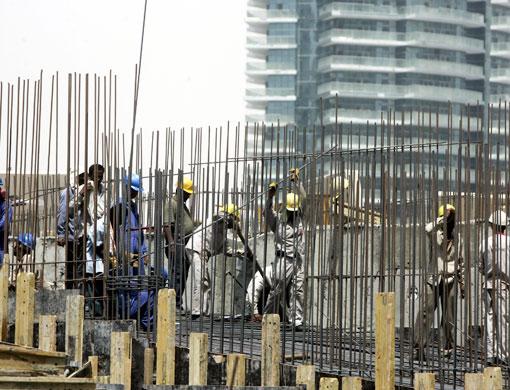
Midday break rule takes effect on Tuesday
Midday break rule takes effect on Tuesday
By Wafa Issa, Staff Reporter GULF NEWS Published: June 30, 2008, 23:37
Dubai: Workers hope that this year the midday break, which takes effect from Tuesday, will offer respite from the soaring heat as they have been promised shaded areas.
Ebrahim Abdul Al Mona’m, an Egyptian worker, said that this year his company will provide a cool room which he and his coworkers can rest in during the midday break.
“It is good that we can rest in a cool room especially as the midday break makes our day longer as we have to compensate for the three hours in the evening,” he said.
The Ministry of Labour has warned that companies that do not provide a shaded rest area for their workers on site during the midday break will be penalised.
Last year workers complained that they did not have an appropriate place to rest.
Gopal Krishnan, an Indian worker, said that to have a shaded place to rest in during the day would protect the workers from heatstroke.
“It is really hard to work during midday but it is also hard to sit outside without shade but this year things will be different if the company provide a shaded place to rest in,” he said.
While many workers were well aware of the break, others were not sure if it would be implemented this year.
Jibu, an Indian worker, did not know if the midday break was to be implemented this year.
“I know that there was a break last year but this year so far nobody has said anything, if the engineer tells us to stop work tomorrow we will stop otherwise we will continue to work as usual,” he said.
Shajalal, a Bangladeshi worker, said that he did not know of any break.
Spreading awareness on the importance of the midday break will be the main priority for the Ministry of Labour this year, said a senior official.
Humaid Bin Deemas, Acting assistant undersecretary at the ministry, said in a statement, that to guide and educate companies on the importance of the midday break would be the main priority for this year.
Companies across the country have pledged to adhere to the decision although some say the ministry should play a bigger role in educating workers.
Ammar Touqan, Public Relation Manager at Arabtec which has some 40,000 workers, said they are providing the necessary requirements as per the rule but said that the ministry should play a bigger role in educating workers.
Stephen Wyngaard, Safety Department Manager at Al Shafar General Contracting, which has 13 sites and more than 14,000 workers said they had set up rest places at all their sites.
Wissam Ajjaoni, a site manager at Terna SA Engineering, said they had prepared a cool basement for workers to rest in.
Heatstroke cases down
The midday break rule was first implemented in 2005 as per a ministerial decision that stipulated all outdoor work should come to a halt between 12.30 and 4.30pm during the hottest months of July and August.
In the following year the break was reduced by one and half hours but the Ministry of Labour cracked down hard on companies that did not abide by the rule. Since 2006 the break has been fixed between 12.30 to 3pm.
The aim of the decision is to protect workers from the soaring heat of the hottest period of the day in July and August. Heat exhaustion cases have dropped significantly since the implementation of the decision.
While there was an average of 5,000 cases a month in 2004, the cases dropped to 1,500 in 2005. Cases dropped to a record low last year where only 82 cases and two deaths were registered, according to previous Gulf News reports.
Penalty
More than 1,200 companies violated the edict on midday breaks in 2005. The number has declined since then with the ministry’s Inspection Unit reporting 862 violations in 2006 and 617 in 2007.
Firms found violating the rule for the first time will face a fine of Dh10,000, and transactions will be suspended for three months. Firms in category C will have their transactions suspended for six months.
Second time violators will face a fine of Dh20,000 and have their category downgraded to C as well as have their transactions suspended for six months.
If firms are found violating for the third time, a fine of Dh30,000 will be levied and the company will be downgraded to C and transactions will be stopped for one year.
UAE hospital to pass on heat-related worker cases to labour ministry
UAE hospital to pass on heat-related worker cases to labour ministry
By Nina Muslim, Staff Reporter GULF NEWS Published: June 29, 2008, 23:41
Dubai: Heat cases coming into the Rashid Hospital Trauma Centre from 12.30pm to slightly after 3pm will have to provide details of their company, their work and their location as a way to catch midday break rule violators.
The two-month midday break, during which time labourers are not allowed to work, begins on Monday. The Ministry of Labour implemented the rule, in its fourth year, to prevent heat-related illnesses due to working during the hottest part of the day.
Dr Viktor Mikhaeel Butros, surgical specialist in-charge at the Trauma Centre, told Gulf News the centre would be collecting the data from labourers who come in during those hours.
“We will include company names so we will know who is violating the law. We will also get the location and [the type of work] they’ve been doing,” he said.
He added the centre would continue taking this information for labourers who come in after 3pm, which is when the midday break ends, saying heat-related illnesses take time to develop.
Previously, the centre only took the name, age and nationality of the patient. At the end of the two-month period, the data will be made available to the Labour Ministry.
More than 1,200 companies violated the Ministry of Labour’s edict on midday breaks in 2005. The number has declined since then with the ministry’s Inspection Department reporting 862 violations in 2006 and 617 in 2007.
First-time violators will be fined Dh10,000. The company’s status will also be downgraded for three months and any visa applications will be blocked. Second-time violators will get a fine of Dh20,000 and downgraded for six months. Third-time violators will be fined Dh30,000 and their work permit suspended for a year.
Dr Butros said so far, there had been “very few” heat cases, unlike last year, which recorded 82 cases and two deaths. The centre also recorded 16 cases in July last year. No data for August was available.
Surviving summer
In preparation for the hot season, Dr Viktor Mikhaeel Butros, surgical specialist in-charge at the Trauma Centre, advised residents and labourers alike to remain hydrated, drink plenty of water and electrolytes, be it at work or at play.
He also said people should stay in the shade as much as possible and be aware of the symptoms of heat exhaustion and heat stroke, such as high core body temperature, dizziness, lethargy, nausea and confusion.
If left untreated, it can lead to death. The elderly, children under four years old and obese people are also vulnerable.
We will include company names so we will know who is violating the law. We will also get the location.”
Germany is world’s greenest country: Report
Germany is world’s greenest country: Report
London, PTI:
Germany has been named the world’s greenest country in a global energy report, days after the government passed a new round of environmental laws in its effort to meet ambitious carbon dioxide reduction targets.
According to the report by British Petroleum, while global energy consumption, driven by China, America and India, rose by 2.4 per cent in 2007, Germany managed to slash its use by 5.6 per cent in the same year as compared to 2006.
“Issues such as energy security, energy trade and alternative energies (are) at the forefront of the political agenda worldwide.
“Continued weakness in oil supply and increasing demand highlight the challenges we all face in maintaining secure energy supplies,” BP Chief Executive Tony Hayward was quoted by ‘The Daily Telegraph’ as saying.
But while the BP world energy report confirmed that Germany made one of the world’s biggest cuts in nuclear energy last year, with use falling 16 per cent on 2006 levels, it also revealed that oil and gas use was slashed too.
Only coal consumption increased, as Germany’s total energy use fell by 5.6 per cent, according to the report.
It may be mentioned that while passing new environmental laws recently, German Chancellor Angela Merkel described them as “crucial for climate protection” and said they would help the country reduce its 1990 level of emissions by 40 per cent come 2020.
The laws, which target high polluting lorries and make energy saving designs compulsory for homes built after 2009, should allow Germany to shave 35 per cent off 1990 emissions.
Govt warns about ill-effects of mobile phone radiation
Govt warns about ill-effects of mobile phone radiation
Monday June 16 2008 22:05 IST PTI
NEW DELHI: Warning people about harmful effects of radiation from mobile phones, the government has asked service providers and makers to avoid promotional advertisements showing vulnerable segments like children and pregnant women using cell phones.
The electromagnetic waves emitted from mobile phones can seriously damage the tissues of the users’ brain, according to recent guidelines issued by the ministry of telecommunication.
The draft guidelines suggested measures like limited usage of mobile phones by children, pregnant women and people suffering from heart ailments. In India, the growth of mobile phones is very high and may cross 500 million by 2010-end, and a large chunk of the users are children.
Many parents provide mobile phones to their children for safety reasons, and to keep connected with them all the time. The guidelines say that mobile phones/radio terminals radiate radio frequency energy that heats up the tissues which may be possibly harmful to human health.
During use, mobile phones are usually kept closer to the ear which is very near to the brain giving rise to fears that continuous use of mobile phone for longer duration may damage some brain tissues.
The report advises people to use hands-free, if longer use is unavoidable and recommends that children below 16 should be discouraged from using cell phones as the tissues of children are tender and are likely to be more affected.
Govt: No cellphone ads with children
Govt: No cellphone ads with children
Sanchita Sharma, Hindustan Times
New Delhi, June 17, 2008
Concerned by the health fallouts of cellphone radiation, the government has drafted guidelines asking manufacturers and service providers to avoid advertisements showing children and pregnant women using cellphones. There are about 250 million cellphone users in India.
Last year, the Union Ministry of Health and Family Welfare had also asked the Indian Council Of Medical Research to conduct a long-term study on the hazards of cellphone use and abuse.
The Hindustan Times was the first to report this on October 6, 2007.
Ministry of Telecommunications draft guidelines say electromagnetic waves emitted from mobile phones can seriously damage the tissues of the users’ brain and prescribe limited use by children, pregnant women and heart patients. “Mobile phones are being used by very young children over long periods, causing problems like headaches and short-term memory loss,” says Union Health and Family Welfare Minister Anbumani Ramadoss.
“There is still no data available worldwide on long-term use. Cellphones emit low levels of radiofrequency (RF) energy while being used and even lower RF in stand-by mode. But since long use can cause RF to heat tissue and cause biological effects, we need to know its impact,” says the minister.
Ministry of telecommunication guidelines say RF energy can harm human health by heating up tissues, prompting many doctors to advise people not to talk for long or keep cell phones in the breast pocket (near the heart) or trouser pocket (near the crotch).
“Conversations should be kept brief and hands-free sets used as far as possible. People with implants such as pacemakers should take basic precautions such as not carrying the phone in their breast pocket just over the pacemaker,” says Dr K. K. Aggarwal, chief cardiologist at Moolchand Hospital.
Three large international studies have been published on cellphone safety since December 2000. The studies investigated any possible association between the use of wireless phones and primary brain cancer, tumours of the brain or salivary gland, leukaemia, or other cancers. None of the studies found any harmful health effects, but since the average period of phone use in these studies was around three years, none could answer questions about long-term exposure.
As a precaution, several governments – such as the UK – recommend children under 16 years to limit cellphone even though no scientific evidence that any health hazard exists.
Tension in cockpit on way to Bangalore
Tension in cockpit on way to Bangalore
13 Jun 2008, 0229 hrs IST, V Ayyappan,TNN
CHENNAI: Fifteen minutes after take-off from Kamaraj domestic airport and just easing into a cruising altitude at 25,000 feet, the pilot of a Chennai-Bangalore aircraft peers at the panel of his navigational aid, tuned into the 112.3 mhz VOR (Very High Frequency Omni Range) signal from Bangalore. To his surprise and shock, he finds he is just 20 nautical miles from the Bangalore international airport. Frantic checks reveal that he is still 90 nautical miles from Bangalore airport but the equipment is picking up another signal of the same frequency — from the naval air station at Arakkonam.
This is a typical scenario encountered by pilots flying the Chennai-Bangalore or Tirupati-Bangalore route ever since the airport opened at Devanahalli, near Bangalore.
When the new airport was set up, the communications division of the Airports Authority of India (AAI) selected the same frequency used by the naval air station at Arakkonam, a first in aviation history anywhere in the world.
Hence, aircraft often mistake Arakkonam for Bangalore and vice versa. While flying the 150-nautical-mile distance from Chennai to Bangalore, aircraft track the wrong VOR for seven to eight minutes while covering a distance of 30 to 40 nautical miles at cruising altitude. AAI officials have acknowledged the problem and said they would “sort it out.”
This becomes a safety hazard when the radar fails and air traffic controllers are forced to depend on the position relayed by pilots. “When the radar fails at Chennai, air traffic controllers ask for the position of the aircraft to plot the flight path. There is the risk of the pilot reading out the wrong information displayed in front of him. This could be catastrophic,” said a pilot flying in the sector.
Though there have been no near-misses so far, “this is a high risk scenario because the Chennai radar fails sometimes. If we get wrong information about the status of an aircraft, there is a possibility of flight paths crossing,” said an air traffic controller. AAI failed to check whether any other airport was using the frequency before they assigned it for Bangalore.
 ClicksandWrites
You must be logged in to post a comment.